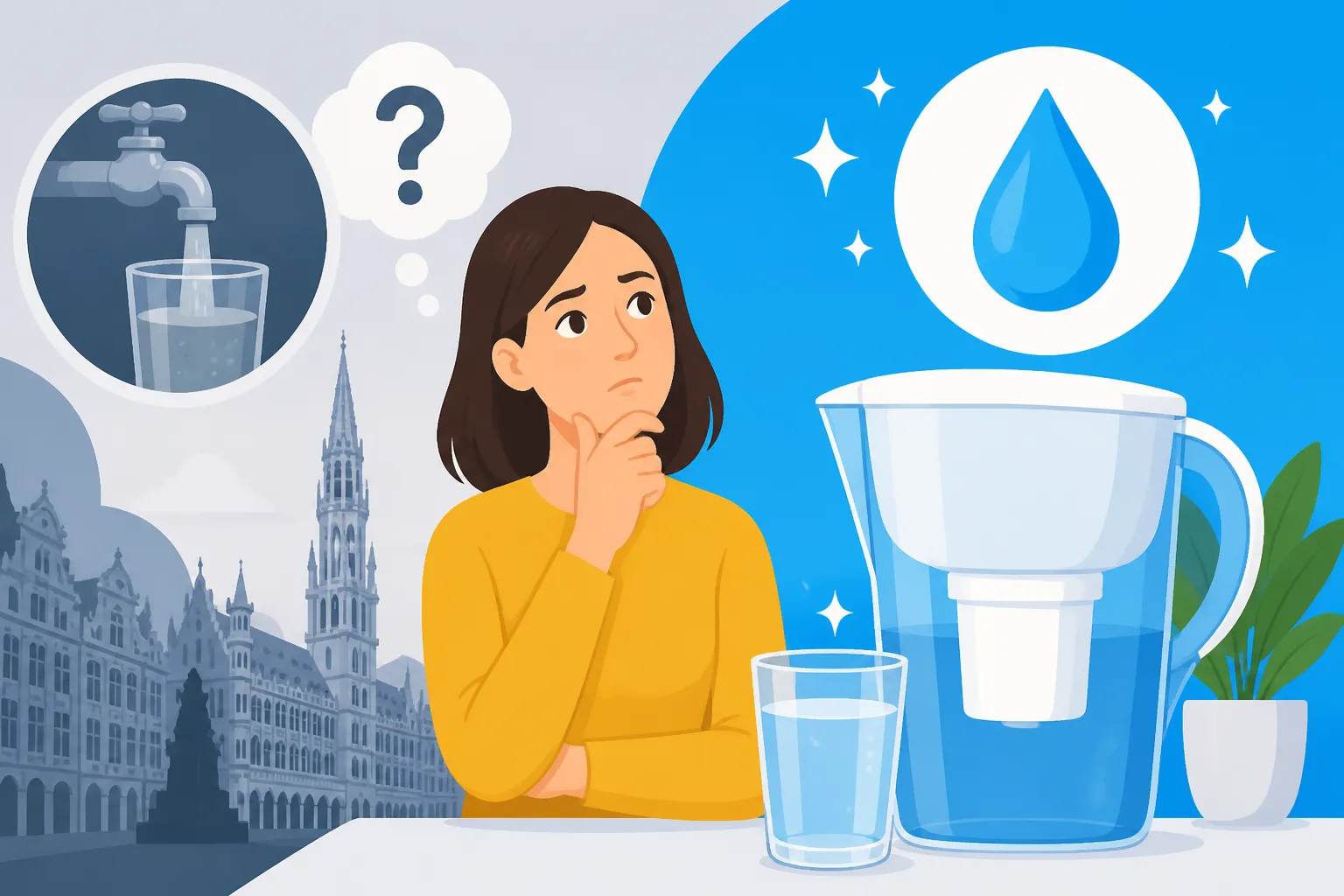
Getting Clean Drinking Water: Do You Need a Brita Filter in Brussels?
Staring at the white, crusty buildup in your brand-new kettle after just three days in Ixelles is a rite of passage for every expat. I remember my first week in Brussels, frantically googling if the water was even safe to drink because of that distinct mineral aftertaste. This guide breaks down the reality of Brussels tap water so you can stop lugging heavy plastic bottles up four flights of stairs.
The Reality of Water Quality in the Capital
The first thing you need to know, and I cannot stress this enough, is that tap water in Brussels is perfectly safe to drink. It is one of the most strictly monitored substances in the country. Vivaqua, the intermunicipal water company, performs thousands of tests annually to ensure that the water flowing into your apartment meets or exceeds all European safety standards. When you are just moving in and perhaps browsing HousingAnywhere for a long-term rental, you might notice that modern apartments often tout their water systems as a perk, but even in the older, charming buildings of Saint-Gilles, the water is chemically safe.
However, "safe" and "pleasant" are two very different things. The water in Brussels is famously "hard." This means it has a high concentration of dissolved minerals, specifically calcium and magnesium. While these minerals are actually beneficial for your health, they are the culprits behind the chalky taste that many foreigners find off-putting. If you are coming from a place with soft water, your first sip of Brussels tap water might feel a bit "heavy" or even slightly metallic.
Furthermore, because Brussels is an old city, the infrastructure within your specific building can play a role. While the city pipes are well-maintained, the internal plumbing of a 19th-century maison de maître might still have older pipes that affect the flavor. This is why many expats immediately look for a filtration solution. You can easily find various testing kits on Amazon Belgium if you want to be 100% sure about the lead levels in your specific kitchen, but generally, the city-wide quality is top-tier.
The Hard Truth About Hard Water and Limescale
The real enemy in Belgium isn't bacteria; it is "calcaire" or limescale. This is the white residue that appears on your faucets, inside your kettle, and on your showerhead. Brussels water typically sits at around 30 to 40 French degrees of hardness. To put that in perspective, anything over 30 is considered "very hard." I learned this the hard way when my expensive espresso machine gave up the ghost after only six months of use.
Limescale doesn't just affect the taste of your tea; it impacts your Cost of Living in Belgium 2026: Budgeting for Cities and Families because it forces your appliances to work harder. A heating element coated in scale requires more energy to reach the same temperature. If you are trying to manage your Standard vs Bi-Hourly Electricity Meters: Day and Night Tariffs efficiently, you need to ensure your water heater and kettle are scale-free. The minerals also interfere with soaps and detergents, meaning you often have to use more shampoo or laundry liquid to get a decent lather.
Then there is the physical impact. Many expats complain about "the Brussels frizz" or dry, itchy skin during their first few months. The high mineral content can strip the natural oils from your hair and skin, making it feel like you are constantly battling a losing war with moisturizer. This is the primary reason why people look beyond basic pitchers and start considering shower filters or whole-house softeners. If you are struggling with these issues, it is worth checking the Everyday Rules in Belgium: Garbage Sorting, Noise, and Etiquette to see how your building handles communal maintenance, as water softening systems are often a point of discussion in apartment syndicates.
Is a Brita Filter Actually Necessary
If your main concern is the taste of your drinking water, a Brita filter—or any equivalent activated carbon filter—is usually the most cost-effective and immediate solution. These filters are designed to reduce chlorine (which is added in small amounts to keep the water sterile) and certain heavy metals, but most importantly, they significantly soften the "edge" of the water's flavor. You can pick up a starter pitcher and a pack of filters on Amazon Belgium for a relatively small investment compared to a lifetime of bottled water.
In my experience, using a filtered pitcher makes a massive difference in the quality of your coffee and tea. Limescale can actually mask the subtle notes of high-quality coffee beans. By filtering the water first, you are protecting your small appliances and improving your morning ritual. It is a simple habit to get into: fill the pitcher, wait two minutes, and then use that for everything from boiling pasta to filling your gym bottle.
However, a pitcher is not a magic wand for your whole life. It won't help your skin in the shower, and it won't prevent your dishwasher from scaling up. If you are settling in for the long haul, you might want to look into tap-mounted filters or even under-sink systems. These offer a higher flow rate and are more convenient for cooking. When you are first setting up your home and using your Airalo data to navigate the city, a quick trip to a local hardware store like Brico or Gamma will show you the range of filtration options available for different budgets.
Maintenance and the Expat Descaling Ritual
In Belgium, descaling is not an occasional chore; it is a monthly ritual. If you ignore it, you will eventually need to call for help, and finding the right professional can be tricky. You might find yourself searching for Finding English-Speaking Plumbers and Electricians via RingTwice just because your pipes are clogged with mineral deposits. To avoid this, you need to become friends with white vinegar (vinaigre blanc).
White vinegar is the "Swiss Army Knife" of Belgian housekeeping. It is cheap, eco-friendly, and incredibly effective at dissolving calcium. Once a month, I fill my kettle with a 50/50 mix of water and vinegar, bring it to a boil, and let it sit for an hour. The scale literally disappears. You should do the same for your coffee machine (check the manual first) and even soak your showerhead in a bag of vinegar overnight. This simple step will save you hundreds of euros in replacement costs over the years.
For your larger appliances, like the washing machine and dishwasher, you should use specialized descaling tabs. Also, keep an eye on your Boiler Maintenance (Entretien Chaudière): Tenant Duty in Belgium. In many rental contracts, the tenant is legally responsible for the annual or biennial servicing of the boiler. If the technician finds the heat exchanger is completely blocked by scale because you didn't maintain it, you might be on the hook for the repair bill.
Comparing Your Drinking Water Options
When you first arrive, the sheer variety of bottled water in Belgian supermarkets like Delhaize or Colruyt can be overwhelming. Belgians love their bottled water, but the environmental and financial costs add up quickly.
| Water Source | Taste Quality | Limescale Level | Environmental Impact | Yearly Cost (Est.) |
|---|---|---|---|---|
| Straight Tap | Moderate/Chalky | Very High | Negligible | €5 – €10 |
| Brita/Carbon Filter | Good/Clean | Moderate | Low (Cartridges) | €80 – €120 |
| Bottled (Spa/Bru) | Excellent | None | Very High | €400 – €600 |
| Under-sink System | Excellent | Low | Low (Yearly Filter) | €200 – €300 |
As you can see, the "Straight Tap" option is practically free, but the "Brita" route offers a significant jump in taste quality for a modest price. If you are currently Renting in Belgium: Apartments, Contracts, and Tenant Rights (2027), check if you are even allowed to install an under-sink system; most landlords are fine with it as long as it is non-destructive, but it is always better to ask first.
Drinking Water Out and About in Brussels
One of the most common shocks for new expats is the lack of free tap water in restaurants. Unlike in France or the USA, asking for "a glass of tap water" is often met with a firm "no" or a confusingly high charge. You will find more details in our guide on Waterl'eau vs Tap Water: Ordering Free Water at Belgian Restaurants, but the general rule is: expect to pay for a bottle.
However, the city is slowly changing. There are more public water fountains appearing in parks and near major metro stations. If you are out exploring the city, I highly recommend downloading one of the Essential Belgian Apps to Download: SNCB, Itsme, Payconiq, and TooGoodToGo, as some local community apps now include maps of "Free Tap" locations where businesses allow you to refill your bottle for free.
If you are a student or a remote worker, most libraries and co-working spaces provide filtered water dispensers. It is becoming a standard perk in the "EU Bubble" offices as well. So, while you might have to pay for your water during a fancy dinner at Place Lux, you can usually keep yourself hydrated for free throughout the rest of the day if you carry a reusable bottle.
Practical Steps for Your First Week
If you have just arrived and you're still living out of a suitcase while checking your Airalo connection to stay in touch with family, here is your water action plan:
- Buy a Kettle and Vinegar: Do not buy an expensive kettle yet. A basic one and a large jug of white vinegar from the cleaning aisle will be your best friends.
- Taste the Tap: Pour a glass, let it sit for a minute (to let any residual chlorine evaporate), and taste it. If you can handle the taste, you've just saved a lot of money.
- Order a Filter: If the taste is too mineral-heavy for you, get a filtration pitcher. You can have one delivered the next day via Amazon Belgium.
- Check Your Skin: If you notice your skin getting dry, look for a "low-poo" or moisturizing shampoo to counteract the hard water until you can decide on a shower filter.
- Locate Your Stopcock: Make sure you know how to turn off the water in your new apartment. In old Brussels buildings, the valve is often in a weird place like the basement or behind a panel in the bathroom.
Living in Brussels is an incredible experience, but it does require some "administrative" adjustments to your lifestyle—and water management is a big one. Once you conquer the calcaire, you’ll find that the tap water here is a reliable, safe, and sustainable way to stay hydrated.
Disclaimer
The information provided in this guide is for informational purposes only and based on personal expat experiences and current public data. Water quality can vary by building and district. Always consult with your landlord or a professional plumber regarding the installation of filtration systems or the maintenance of appliances in your specific residence. For health concerns related to mineral intake, please consult a medical professional.