Stricter Citizenship Rules for Moroccan Applicants in 2026
The road to Belgian citizenship can often feel like navigating a labyrinth, especially for those of us from non-EU countries. If you're a Moroccan national in Belgium hoping to naturalize, you're likely already aware that the rules are shifting, and not always in a more straightforward direction. This guide aims to demystify the increasingly stringent requirements coming into effect in 2026, offering practical advice and empathetic insights to help you prepare.
Understanding the Shifting Landscape of Belgian Nationality Law
Belgium's approach to nationality has been in constant evolution, reflecting broader European trends and internal debates about integration, security, and identity. For expats, especially those from outside the European Union, this means that the goalposts for becoming a Belgian citizen can feel like they're always moving. It's a frustrating reality, and if you've been here for a while, you've probably seen at least one round of changes.
A Brief History of Belgian Citizenship for Non-EU Citizens
Historically, Belgian nationality law has swung between periods of greater openness and stricter control. For decades, it was relatively accessible compared to some other European nations. The 1980s and 1990s saw reforms aimed at simplifying the process, particularly for second and third-generation immigrants. However, in the 21st century, the pendulum has undeniably swung towards more stringent requirements. Starting with the nationality code reforms in 2013, the emphasis shifted significantly from mere residency to demonstrable "integration" into Belgian society and a clear commitment to economic participation. This meant more paperwork, more proof, and a far more detailed assessment of one's life here. The process started to demand not just your presence, but proof of your active involvement, your language skills, and your contribution to the social security system. Every few years since, minor tweaks and interpretations have further tightened the screws, often leaving applicants feeling bewildered and insecure about their long-term prospects.
The Rationale Behind Stricter Requirements
The official reasoning behind these stricter measures often cites a need to ensure that new citizens are truly integrated into Belgian society, self-sufficient, and understand the core values of the country. Governments typically argue that strong language skills are essential for employment and social cohesion, while economic participation proves a commitment to the Belgian welfare system. There's also a stated goal of combating potential fraud related to civil status documents. While these intentions might sound reasonable on paper, for many applicants, particularly from countries like Morocco, it often feels like a moving target. It can translate into a heavier administrative burden, longer processing times, and a general sense that their legitimate aspirations for citizenship are being met with increased suspicion. The feeling of being scrutinized more intensely than others is a common and valid complaint among many non-EU expats.
Specific Challenges for Moroccan Applicants in 2026
While the general tightening of nationality rules affects all non-EU citizens, Moroccan applicants, unfortunately, face additional layers of complexity due to specific regulations and ongoing administrative issues. It's not uncommon to hear stories of frustration and delays that seem disproportionate, and it’s important to understand why this is the case.
Heightened Scrutiny of Documentation and Authenticity
One of the most significant hurdles for Moroccan applicants stems from the intense scrutiny applied to civil status documents issued in Morocco. These include birth certificates, marriage certificates, divorce decrees, and family composition certificates. Belgian authorities, particularly the Immigration Office (Office des Étrangers/Dienst Vreemdelingenzaken) and the public prosecutor's office, have long expressed concerns about the authenticity and reliability of certain documents originating from some non-EU countries, including Morocco. This concern has led to a policy of systematic and often lengthy verification procedures.
What does this mean in practice? It's not enough to simply provide the original document and a certified translation. You can't just walk into the commune with your Moroccan birth certificate and expect it to be accepted at face value. Instead, these documents are often subjected to in-depth investigations, sometimes involving direct contact with Moroccan authorities via the Belgian embassy or consulate. This process is time-consuming and can add months, or even years, to your citizenship application. You might be asked for additional corroborating evidence or for documents that prove the chain of custody and authenticity of your original certificates. It's a bureaucratic black hole that many find incredibly frustrating and opaque. For vital documents, ensure you use sworn translators, and services like RushTranslate can provide certified translations that meet Belgian standards, but even with perfect translations, the verification process can still be lengthy.
Proving "Durable Ties" and Integration
Beyond the paperwork, Moroccan applicants can also face greater challenges in demonstrating "durable ties" and social integration, which are increasingly crucial for Belgian nationality. While language proficiency and economic participation are standard requirements, the interpretation of "social integration" can sometimes feel subjective and more demanding for certain communities.
This can manifest in various ways. For instance, simply having a long residency might not be enough. You might be asked for more extensive proof of your participation in local community life, membership in Belgian associations, volunteer work, or even extended family ties within Belgium. While not explicitly targeting any single nationality, the historical and cultural background of some Moroccan communities in Belgium means that they might be perceived as having weaker ties to mainstream Belgian society, even if this isn't objectively true for individual applicants. This often puts the onus on the applicant to go above and beyond in documenting every aspect of their integrated life, from school reports for children to proof of active participation in a local sports club. It’s about building a comprehensive narrative of your life in Belgium that leaves no room for doubt about your commitment.
The Role of Consular Verification Stamps
A significant pain point for Moroccan applicants is the necessity of "consular verification stamps" for many civil status documents. This isn't a new requirement, but it's becoming even more strictly enforced, adding another layer of bureaucracy and potential delays.
Here's how it generally works: any Moroccan document you submit for your Belgian citizenship application must first be legalized by the Moroccan Ministry of Foreign Affairs and then by the Belgian Embassy or Consulate in Rabat or Casablanca. This process involves physically presenting the documents to the Belgian diplomatic mission, which then verifies their authenticity by cross-referencing with Moroccan civil registries. This consular stamp is essentially Belgium's way of saying, "We've checked this, and it seems legitimate."
However, this process is far from seamless. The Belgian consular services in Morocco are often overwhelmed, leading to long waiting times for appointments and document processing. Applicants sometimes report that documents previously accepted are now being questioned, requiring them to go through the legalization process multiple times. Furthermore, if there are any discrepancies or questions regarding the original Moroccan registration, the entire process can grind to a halt. This leads to immense frustration, as applicants are caught between two bureaucratic systems, often without clear timelines or direct channels for expediting their cases. It's a critical step that requires foresight, patience, and often, repeated trips or reliance on family members in Morocco to navigate the local administrative hurdles. You might find yourself needing to re-do these steps if the initial stamp is deemed insufficient by Belgian authorities.
Key Changes and What They Mean for Moroccan Applicants
The year 2026 brings further refinements and, in many cases, stricter interpretations of existing nationality laws. While some changes are general, their impact is often felt more acutely by specific groups, and Moroccan applicants should pay particular attention to these evolving standards.
Reinforced Language Proficiency Requirements
The Belgian nationality code has long required proof of language proficiency in one of the three national languages (Dutch, French, or German). However, 2026 is expected to see a reinforcement of these requirements, both in terms of the required level and the acceptable means of proof. While an A2 level has generally been the minimum for social integration, some regions or specific cases might start pushing for a B1 level, or at least a more rigorous assessment of the A2 level.
This means that casual conversational ability is no longer sufficient. You'll need solid, verifiable proof, typically through:
- Official Language Certificates: Diplomas from recognized Belgian language schools (e.g., CVOs, Centres de Promotion Sociale, or private institutions like Lingoda, if their certificates are officially recognized for this purpose) demonstrating at least an A2 or B1 level.
- Employment: Proof of having worked in Belgium for a certain period in a role that requires daily use of one of the national languages. This typically means accumulating 468 days of work in Belgium.
- Education: Certificates or diplomas from Belgian educational institutions where the language of instruction was Dutch, French, or German.
For Moroccan applicants, whose native languages are often Arabic and Berber dialects, achieving and proving proficiency in French or Dutch can be a significant undertaking. Many arrive with varying levels of French, but reaching a formally certified A2 or B1 requires dedicated study. The implications are clear: start your language courses early, aim for the highest level you can reasonably achieve, and ensure your certificates are from officially recognized bodies. The days of hoping your verbal skills will suffice are definitely over.
Stricter Economic Participation Criteria
Economic participation has become a cornerstone of Belgian nationality applications. For 2026, the criteria for proving sufficient economic integration are set to become even more clearly defined and, arguably, more demanding. The general rule is to demonstrate 468 days of paid work within the five years preceding your application, showing consistent contributions to Belgium's social security system. However, for those who haven't consistently worked or have had breaks, this can be a real challenge.
What constitutes "economic participation" is being narrowed down. Periods of unemployment, even if compensated by benefits, might be scrutinized more closely or simply not count towards the required days. Furthermore, the type of employment might also come under review, with a preference for stable, declared employment over occasional or informal work. For Moroccan applicants, who may have faced periods of unemployment or worked in sectors with less stable contracts, meeting these strict requirements can be particularly difficult. It requires meticulous record-keeping of your payslips, work contracts, and social security statements to build an undeniable case. Any gaps in employment need to be explained and ideally mitigated by other forms of integration. If you’re self-employed, proving your contributions and income to social security is paramount. The government wants to see that you’re a contributing member of society, not just a resident.
Impact on Family Reunification Pathways
While the primary focus is on individual citizenship, the stricter nationality rules can have indirect but significant repercussions for family reunification. When a non-EU citizen applies for family reunification with a Belgian national or resident, the Belgian sponsor often needs to prove sufficient resources, adequate housing, and sometimes, even integration. If a Moroccan spouse is seeking to join their partner in Belgium, and the Belgian partner is a naturalized citizen who faced these stricter rules, it sets a precedent for the entire family's journey.
Furthermore, if the naturalized parent's journey to citizenship was delayed or made more difficult by complex documentation or integration requirements, this can affect when their children might be eligible to acquire Belgian nationality through declaration. Children born in Belgium to non-Belgian parents can often acquire nationality if one parent has held legal residency for a certain period and makes a declaration. However, if that parent's own journey to stability and citizenship was protracted, it pushes back the timeline for their children. It’s a cascading effect that touches on the entire family unit. It reinforces the need for meticulous planning and understanding of all requirements, from initial visa applications to the final steps of naturalization. For medical coverage for the whole family, especially during these periods of uncertain immigration status, companies like Cigna Global can offer comprehensive private health insurance options to ensure peace of mind.
Navigating the Application Process Amidst New Rules
With these stricter rules on the horizon, navigating the Belgian citizenship application process requires more than just filling out forms. It demands proactive preparation, meticulous attention to detail, and a clear understanding of what authorities are now looking for. It's about building a robust case that stands up to intense scrutiny.
The Importance of Flawless Documentation and Professional Translations
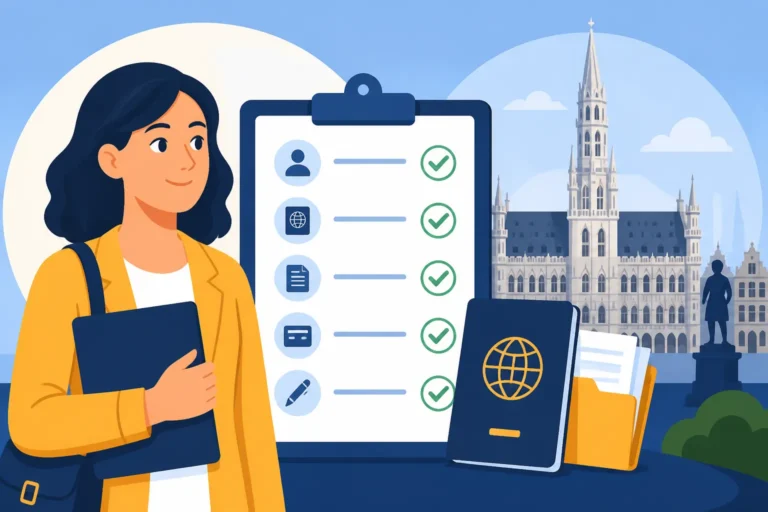
I cannot stress this enough: your documentation must be absolutely perfect. This is where many applicants, especially those from countries with different administrative standards, face their biggest hurdles. Every single foreign document – birth certificates, marriage certificates, divorce decrees, criminal record checks – must be:
- Original and Recent: Authorities often demand documents issued within a certain timeframe (e.g., the last six months).
- Legalized/Apostilled: Depending on the country, documents must bear an apostille or be legalized by the Belgian embassy or consulate in the country of origin. For Moroccan documents, as discussed, this includes consular verification stamps.
- Translated by a Sworn Translator: Any document not in French, Dutch, or German must be translated by a sworn (or "beëdigd"/"assermenté") translator registered in Belgium. A simple translation won't cut it. Services like RushTranslate specialize in certified and sworn translations, ensuring your documents meet the exacting standards of Belgian authorities. This is not an area to cut corners. An incorrectly translated name or date can lead to an immediate rejection or endless delays. Always get multiple copies of your certified translations.
Errors or omissions in this stage are almost guaranteed to lead to rejection or significant delays. Imagine waiting months, only to be told your birth certificate's translation is not acceptable. It's soul-crushing, but entirely avoidable with proper care. It's a key aspect that differentiates success from failure. Remember the process for Translating Medical Records from Your Home Country to French/Dutch is similar in its requirement for sworn translators.
Gathering Proof of Integration and Economic Activity
Beyond documents proving your identity and civil status, you need to compile compelling evidence of your social integration and economic participation. This isn't just a tick-box exercise; it's about painting a picture of your life in Belgium.
For Social Integration:
- Language Certificates: As mentioned, official certificates are paramount. Enroll in recognized language schools.
- Education Diplomas: Any diplomas from Belgian schools or universities.
- Professional Integration: Proof of stable employment, employment contracts (CDI preferred), payslips, and social security statements showing continuous contributions. Remember, this is about hitting those 468 working days.
- Community Involvement: Membership cards from sports clubs, volunteer work certificates, proof of participation in local cultural events, or parent-teacher associations.
- Housing Stability: Long-term rental agreements or proof of property ownership. Your commune registration history is also vital.
For Economic Activity:
- Payslips and Employment Contracts: For employees, these are crucial. They demonstrate your income and your contribution to the social security system.
- Tax Assessments (Avertissements-Extraits de Rôle): These documents from the FPS Finance prove you've been declaring your income and paying taxes.
- Social Security Statements: These can often be retrieved from your mutuelle or directly from the national social security office (RSZ/ONSS).
- For Freelancers: You'll need proof of your registration at the Crossroads Bank for Enterprises (CBE/BCE), VAT registration, social security fund payments, and detailed invoices demonstrating your consistent professional activity and income.
Start collecting these documents now, even if you’re not ready to apply. Keep them organized in a dedicated file. The more evidence you have, the stronger your case. Understanding How to Read Your First Belgian Payslip (Fiche de Paie) can also help you track your contributions.
Seeking Legal Counsel and Expert Advice
Given the increased complexity and specific scrutiny for Moroccan applicants, consulting with an immigration lawyer or a specialized expert is highly recommended. While it's an added expense, it can save you immense stress, time, and ultimately, money by avoiding costly mistakes.
An experienced lawyer can:
- Assess your specific situation: They can evaluate your existing documents and identify potential weak spots in your application.
- Advise on document legalization: Provide precise instructions on the exact legalization process for your Moroccan documents.
- Help compile evidence: Guide you on what specific proof of integration and economic activity will be most convincing.
- Navigate the process: Deal directly with the commune, the Immigration Office, or even the public prosecutor’s office if issues arise.
- Appeal rejections: If your application is rejected, a lawyer can help you understand the grounds for refusal and assist with lodging an appeal.
Don't wait until you've received a rejection to seek help. A proactive approach with legal guidance from the outset is often the best strategy to overcome the specific hurdles faced by Moroccan applicants. They can provide invaluable insight into Appealing a Single Permit Rejection: Legal Timelines or other negative decisions.
Preparing for the New Realities
Living in Belgium as an expat, particularly from a non-EU country, often means constantly adapting to new rules and bureaucratic challenges. The current shift towards stricter citizenship requirements for Moroccan applicants underscores the need for a pragmatic and resilient approach.
Proactive Steps for Future Applicants
If you are a Moroccan national in Belgium and plan to apply for citizenship in the coming years, here are some proactive steps you should consider taking right now:
- Intensify Language Learning: Don't just aim for the minimum A2. Strive for B1 or even B2 in your chosen national language. Enroll in classes, immerse yourself, and get those official certificates. Many Belgian regions offer subsidized language courses, and platforms like Lingoda can offer flexible learning options.
- Secure Stable Employment: Prioritize stable, declared employment. If you are on a fixed-term contract (CDD), try to transition to an indefinite one (CDI). Accumulate those 468 days of social security contributions diligently.
- Document Everything: Keep meticulous records of everything: payslips, tax assessments, utility bills, rental contracts, language course attendance, membership cards, volunteer certificates, and even significant cultural event tickets. Think of it as building your life story in Belgium, piece by documented piece.
- Verify Civil Status Documents Early: Do not wait until you are ready to apply for citizenship to start the legalization and consular verification process for your Moroccan documents. Begin this process years in advance if possible. Address any discrepancies or missing information from your original records immediately.
- Build Local Ties: Actively participate in your local community. Join a sports club, volunteer for a local charity (ASBL/VZW), attend local festivals, or take an adult education course. These demonstrate tangible integration beyond just working and living here.
Mental Resilience and Support Networks
Let's be real: navigating Belgian bureaucracy, especially with these added layers of scrutiny, can be incredibly draining. The constant worry, the endless paperwork, the long waits, and the potential for unexpected setbacks can take a significant toll on your mental and emotional well-being. It’s okay to feel overwhelmed and frustrated; many expats do.
Cultivate mental resilience by:
- Joining Expat Support Groups: Connect with others who are going through similar experiences. Sharing stories and advice can be incredibly validating.
- Seeking Professional Help if Needed: Don't hesitate to reach out to mental health professionals if you feel the stress is becoming unmanageable. Many English-speaking therapists are available in Belgium. Your physical and mental health are paramount. For robust health coverage that can support you, especially if your public mutuelle coverage isn't fully active or you desire more extensive options, exploring private health insurance providers like Cigna Global could be a good idea. They can offer peace of mind during stressful periods.
- Focusing on What You Can Control: While the overall process might be opaque, focus on preparing your documents perfectly, improving your language skills, and integrating into your local community.
- Celebrating Small Victories: Every document acquired, every language level passed, is a step closer to your goal. Acknowledge your progress.
Remember, you're not alone in this journey. Belgium can be a wonderful place to live, but the path to full citizenship often tests the patience and resolve of even the most determined individuals. Stay informed, stay prepared, and lean on your community for support.
| Requirement Category | General Requirements (Pre-2026 Baseline) | Stricter Expectations for Moroccan Applicants (2026 Onwards) |
|---|---|---|
| Residency | 5+ years of legal residency | Still 5+ years, but emphasis on continuous, uninterrupted legal status. |
| Language | A2 level (oral proficiency) | Rigorous A2 assessment, increasing push towards B1, formal certificates mandatory. |
| Economic Activity | 468 days of work in 5 years (employees) | Strict verification of all 468 days, less tolerance for unemployment/gaps. Scrutiny on nature of employment. For freelancers, clear proof of social security contributions and declared income. |
| Social Integration | Proof of participation (e.g., courses) | More extensive proof of active community involvement, demonstrable local ties, family integration efforts. |
| Civil Documents | Original + sworn translation + apostille | Original + sworn translation + mandatory consular verification stamps from Belgian embassy in Morocco (lengthy process). Higher scrutiny for authenticity checks. |
| Fees | €1,030 registration fee | €1,030 (indexed) + potential legal fees + significant translation/legalization costs. |
| Processing Time | Typically 4-12 months | Potentially much longer (12-24+ months) due to document verification. |
The €1,030 Fee for Belgian Citizenship: Payments and Indexing remains a constant, but other costs are likely to increase with added requirements.
Disclaimer
This guide provides general information based on current regulations and anticipated changes. Nationality law is complex and subject to interpretation and future amendments. It is crucial to consult with the specific commune where you reside, the Belgian Immigration Office (Office des Étrangers/Dienst Vreemdelingenzaken), or a qualified immigration lawyer for personalized advice regarding your individual situation. The author and publisher are not liable for any actions taken based on the information provided herein.