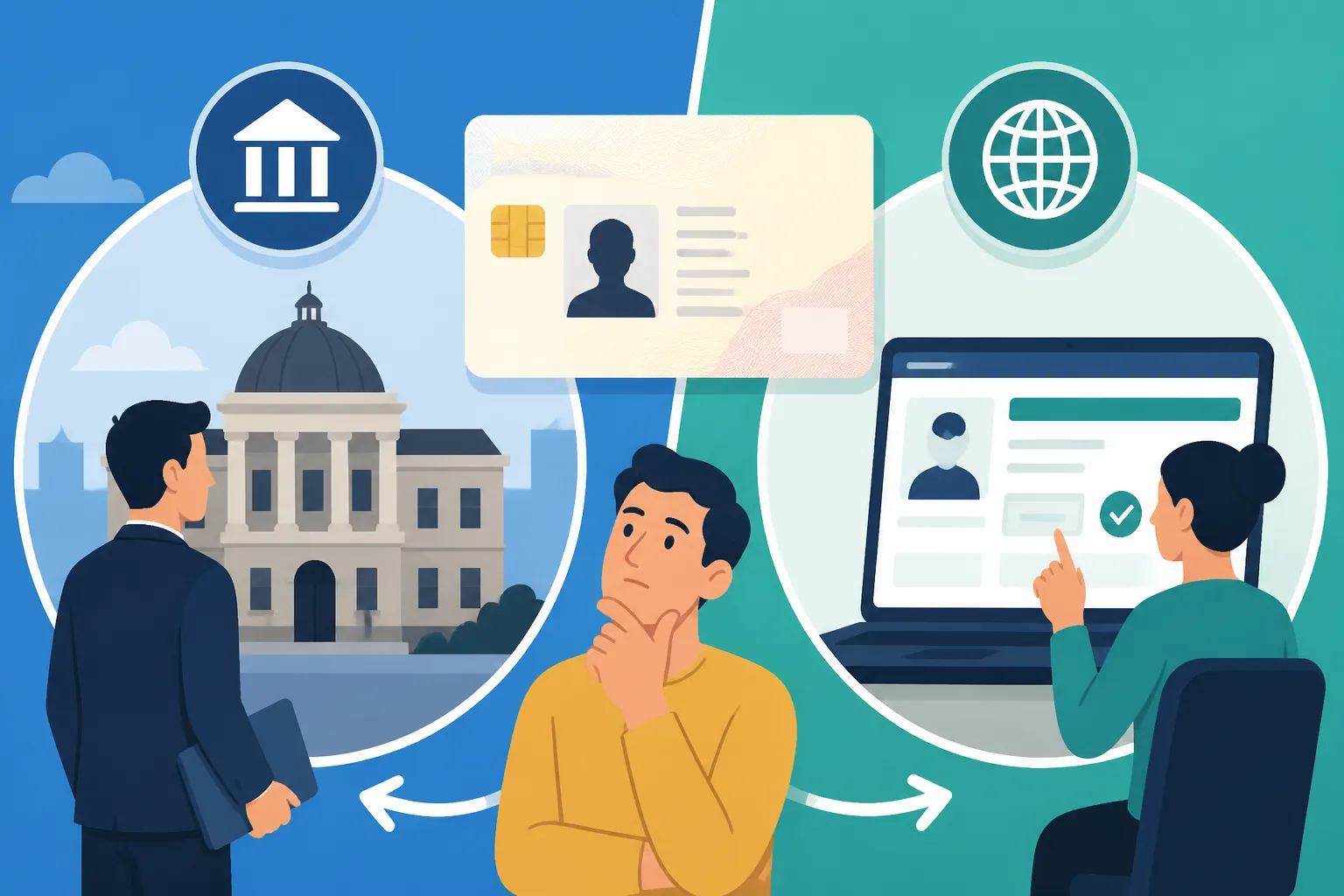
Applying for the Professional Card (Freelance Visa) via Embassy vs Portal
Oh, trying to navigate the waters of becoming a freelancer in Belgium? Trust me, I’ve been there, staring at endless forms and trying to decipher whether my carefully prepared documents would pass muster. It feels like you need a degree in Belgian bureaucracy just to get started! This guide is here to shed some light on the Professional Card application process, specifically comparing the traditional embassy route with the increasingly popular online portal, helping you understand which path might be smoother for your unique freelance dream.
Understanding Belgium's Professional Card for Freelancers
Before we dive into the 'how,' let's clarify the 'what' and 'why.' The Belgian Professional Card, or carte professionnelle in French or beroepskaart in Dutch, is essentially your golden ticket to self-employment in Belgium if you're a non-EU/EEA citizen. It’s not just a formality; it’s a rigorous assessment of your business idea, your financial viability, and your potential contribution to the Belgian economy. Think of it as convincing the Belgian authorities that you're not just here for a good time, but for a good business time.
Who Needs a Professional Card?
Simply put, if you're from outside the European Union (EU) or the European Economic Area (EEA), including Switzerland, and you want to work independently in Belgium, you must obtain a Professional Card. This applies whether you're planning to be a full-time freelancer, a consultant, an artist, or even a small business owner. It's a fundamental requirement, and trying to skirt around it is just asking for trouble down the line. Even if you're already in Belgium on a different visa, like a spouse visa for example, if you intend to move into self-employment, this card will likely be a mandatory step. If you're a student looking to make the leap to self-employment, you might want to look into the Search Year Visa (Orientation Year) for Graduating Students first, which could offer a transitional period.
Key Requirements and Eligibility
The eligibility criteria for the Professional Card are pretty robust. It's not enough to just want to be your own boss; you need to demonstrate that you can be.
- Sufficient Means of Subsistence: This is crucial. You need to prove you have enough financial resources to support yourself and any dependents without becoming a burden on the Belgian social security system. The exact amount can vary and is indexed annually, but it's usually significantly higher than what's required for a student visa or even some employee visas. You'll need bank statements, possibly a forecast of your income, and a solid financial plan within your overall business strategy.
- Professional Qualifications: Depending on your field, you'll need to show you have the necessary diplomas, certifications, or professional experience. If you’re a web developer, your portfolio and past client testimonials will be vital. If you’re a physiotherapist, your degree and professional registration from your home country will be paramount. Sometimes, getting your foreign degrees legalized for visa processing might be necessary, and services like RushTranslate can be invaluable here to ensure your documents are properly translated and certified.
- No Criminal Record: As with most visa applications, you’ll need a clean criminal record from your home country and any other countries where you've resided for a significant period.
- Medical Certificate: A standard medical certificate confirming you’re in good health and don’t pose a public health risk is usually required. This is a common part of most long-stay visa applications in Belgium. Getting medical certificates for a Belgian visa application is a routine step, but it must be done by an approved doctor.
- Proof of Adequate Housing: While not strictly a professional card requirement, it's a critical component of your overall long-stay visa (Visa D) application that accompanies the Professional Card. You'll need to demonstrate that you have a place to live, whether it's a rental agreement or proof of accommodation.
The Business Plan: Your Foundation
This is arguably the most critical component of your Professional Card application. It's not just a formality; it's a detailed blueprint of your freelance venture and how it will benefit Belgium. The Belgian authorities want to see that your business isn’t just viable but also adds value.
Your business plan should typically include:
- Executive Summary: A concise overview of your business idea, goals, and why it will succeed.
- Detailed Description of Your Activity: What exactly will you be doing? Who are your target clients? How will you market your services?
- Market Analysis: Who are your competitors? What is your unique selling proposition? What’s the demand for your service in Belgium?
- Financial Projections: This is where you lay out your expected income, expenses, and how you will sustain yourself. Be realistic, but also demonstrate growth potential. This is also where you'll justify your "sufficient means" requirement.
- Economic Impact: This is key. How will your business contribute to Belgium? Will you create jobs (even if just for yourself initially, perhaps for future hires)? Will you export services? Will you fill a niche? Will you pay significant taxes? They want to see tangible benefits.
- Location and Resources: Where will you operate from? Do you have the necessary equipment?
This isn't a simple, back-of-the-napkin idea. It needs to be well-researched, thorough, and convincing. Think about it from the perspective of an official looking for concrete evidence that you're a solid investment for their country. This document is so vital that it significantly impacts the success of your application for the Professional Card (Freelance Visa) via Embassy vs Portal.
The Traditional Route: Applying Via a Belgian Embassy or Consulate
For many years, this was the standard way to apply for your Professional Card. You'd gather all your documents, make an appointment, and submit everything in person at the Belgian diplomatic post in your home country or country of legal residence.
The Application Process: Step-by-Step
Let's break down how this usually works:
- Gather Your Documents: This is the first, often overwhelming, step. You'll need all the documents proving your eligibility: your passport, birth certificate, criminal record check, medical certificate, proof of funds, academic diplomas, professional references, and, of course, your meticulously crafted business plan. Don't forget that many non-European documents need to go through the Apostille vs Legalization process, depending on Belgium's agreements with your home country.
- Translation and Legalization: Any documents not in French, Dutch, or German (Belgium's official languages) will need to be translated by a sworn translator. This is where services like RushTranslate become critical to ensure official acceptance. After translation, some documents might require further legalization or an apostille.
- Lodge the Application: You typically make an appointment at the Belgian Embassy or Consulate in your country. During this appointment, you'll submit your application form (Visa D long-stay application) along with all supporting documents. You'll also pay the administrative fee for the visa and the Professional Card processing fee. Be prepared for a detailed interview where they might ask probing questions about your business plan and intentions.
- Regional Approval: Unlike some visas, the Professional Card isn't solely approved by the embassy. Your application, especially the business plan, is sent to the relevant regional economic department in Belgium (Flanders, Wallonia, or Brussels-Capital Region) for assessment. This is a crucial step where the economic viability and impact of your project are scrutinized.
- Immigration Office Approval: If the regional department gives a positive opinion, the file then moves to the Belgian Immigration Office (DOFI) for a final check on immigration criteria, such as your background and means of subsistence.
- Visa Issuance: Once all approvals are in place, the embassy will issue your Visa D, which will have a validity that allows you to travel to Belgium and complete your registration.
- Arrival and Commune Registration: Upon arrival in Belgium, you have a strict 8-day rule after arrival to register at the Commune (town hall) in your place of residence. This is where you exchange your Visa D for your actual residence permit (an 'A' card initially) and obtain your Belgian eID card. During this process, you'll also officially register your professional activity with the Crossroads Bank for Enterprises (BCE/KBO).
Advantages and Disadvantages of the Embassy Route
Advantages:
- Personal Touch: You get to interact directly with embassy staff, who can sometimes clarify minor doubts or point out missing documents on the spot.
- Familiarity: For many, the idea of a physical submission feels more tangible and less prone to digital glitches.
- Initial Visa D: The embassy directly issues your long-stay visa (Visa D), meaning you arrive in Belgium with your initial entry permit already secured, streamlining your initial registration at the commune.
Disadvantages:
- Time-Consuming: The back-and-forth between the embassy, regional economic department, and immigration office can make processing times very long. It's not uncommon for it to take several months, sometimes even longer than Family Reunification Processing Times.
- Travel Required: If there's no Belgian embassy or consulate in your immediate vicinity, you might incur significant travel costs and time to submit your application.
- Paperwork Burden: This route traditionally involves a lot of physical paperwork, copies, and certified translations.
- Limited Transparency: Tracking Your Visa Status on the DOFI (Immigration Office) Website is possible once it hits the central office, but the initial stages through the embassy can feel like a black box.
The Modern Approach: Applying Through the Online Portal
In recent years, Belgium has significantly modernized its immigration processes, and the online portal has emerged as a more streamlined way to apply for certain permits, including the Professional Card. This digital shift aims to reduce administrative burdens and speed up processing.
Navigating the Digital Platform
The specific online portal for the Professional Card generally falls under the "Working in Belgium" portal or similar regional digital platforms (for instance, dedicated portals for Flanders, Wallonia, or Brussels economy departments). The key difference here is that you often apply directly to the regional economic department first, rather than via an embassy.
- Business Plan Submission (Online): You will upload your detailed business plan and all supporting documents directly to the relevant regional online portal. This is the primary point of entry for the Professional Card application itself. You'll create an account, fill out digital forms, and meticulously upload every single required document.
- Regional Assessment: The regional economic department (e.g., Brussels Economy and Employment, Flanders Department of Work and Social Economy) will review your business plan and all supporting documentation. They'll assess its viability and economic contribution. This step is equivalent to the regional approval in the embassy route.
- Positive Decision (or Refusal): If your business plan is approved, you'll receive a positive decision regarding your Professional Card. This is not your visa yet, but a crucial step. If it's refused, you'll get reasons and information on how to appeal.
- Visa D Application (Post-Approval): Crucially, even with a positive Professional Card decision via the online portal, you still need to apply for a long-stay Visa D at the Belgian Embassy or Consulate in your home country. The online approval grants you the right to the Professional Card, but the Visa D is your entry permit. You will present your online approval letter as a key document for your Visa D application.
- Visa D Issuance & Arrival: Once the embassy processes your Visa D (which should be faster with the Professional Card approval in hand), you can travel to Belgium.
- Commune Registration: Similar to the traditional route, you must register at your local commune within eight days of arrival to obtain your residence permit and eID. You'll then finalize your business registration.
Advantages and Disadvantages of the Online Portal
Advantages:
- Efficiency: The online system is generally designed to be more efficient, potentially leading to faster initial processing of the Professional Card itself.
- Convenience: You can submit your application from anywhere with an internet connection, saving travel time and costs to an embassy.
- Digital Tracking: Many online portals offer better transparency, allowing you to track the progress of your application in real-time.
- Reduced Paperwork: While you still need to prepare documents, the submission is digital, reducing the need for physical copies and certified mail until the Visa D stage.
Disadvantages:
- Dual Process: The biggest drawback for many is that a positive decision from the online portal does not bypass the need for a physical Visa D application at an embassy. This means you still have two distinct steps, potentially causing confusion or delays if not managed carefully.
- Technical Glitches: Like any digital system, online portals can have their quirks, upload limits, or technical issues that can be frustrating.
- Less Direct Support: While there are helpdesks, the immediate, face-to-face clarification you might get at an embassy is absent.
- No Visa D Assurance Upfront: You don't get your entry visa until after the Professional Card is approved and you've completed the embassy step. This means you can't book travel with certainty until the second stage is complete.
Comparing the Two Routes: Embassy vs. Online Portal
So, which path should you choose? It's not a straightforward answer, as both have their merits and drawbacks. It really boils down to your personal circumstances, where you're located, and how comfortable you are with digital processes versus traditional ones.
Key Differences to Consider
| Feature | Traditional Route (Embassy/Consulate) | Modern Route (Online Portal) |
|---|---|---|
| Initial Submission | Physical submission of all documents (Visa D + Professional Card) | Digital submission of Professional Card documents to regional portal |
| Visa D Timing | Visa D is part of the initial submission, issued by the embassy. | Visa D is applied for after Professional Card approval, at the embassy. |
| Regional Review | Embassy forwards documents to regional economic department. | Direct submission to regional economic department. |
| Primary Advantage | Single point of contact for initial application; Visa D issued upfront. | Convenience, potential speed for Professional Card approval, digital tracking. |
| Primary Drawback | Slower overall processing; travel to embassy often required. | Two-step process (online approval then embassy Visa D); can still be lengthy. |
| Transparency | Limited until case reaches Immigration Office. | Often better digital tracking for the Professional Card application. |
| Language Barrier | May encounter more language support at larger embassies. | Requires strong understanding of Belgian languages or good translation tools. |
| Document Flow | All documents bundled from start. | Professional Card documents first, then a subset for Visa D. |
Making the Right Choice for Your Situation
Given these distinctions, here's some guidance:
- If you prioritize convenience and digital management, and are comfortable with a two-step process (online first, then embassy), the online portal might be for you. This is especially true if you are located far from a Belgian embassy or consulate. You can tackle the substantive business plan approval from your home, then just pop to the embassy for the final Visa D stamp once approved.
- If you prefer a more traditional, single-point-of-entry approach, and you live near a Belgian embassy or consulate, the embassy route might feel more comfortable. This route can feel more secure as your Visa D is part of the initial request, meaning you have an entry permit pending approval of your entire file. However, be prepared for potentially longer overall waiting times as the embassy acts as an intermediary for the regional assessment.
Realistically, the end result is the same: you need a positive Professional Card decision and a Visa D to enter Belgium and establish your freelance business. The "online portal" route simply separates the Professional Card approval from the Visa D application more explicitly. Many expats find the online route slightly less opaque once the application has been lodged, though the initial business plan writing and submission demands remain the same.
Regardless of the route you choose, preparing meticulously is paramount. Make sure your business plan for the Belgian Professional Card (Freelance Visa) is watertight and your supporting documents are perfectly in order.
Post-Approval: Your Next Steps in Belgium
Congratulations, you've received your Professional Card approval and your Visa D! The journey isn't over, but the biggest hurdle is behind you. Now, it's time to set up your life and business in Belgium.
Registering at the Commune
This is a critical first step upon your arrival. You have eight days to register at the commune (municipal office or stadhuis/maison communale) of your intended residence. This isn't just a suggestion; it's a legal obligation.
- Appointment: Book an appointment as soon as you know your arrival date. Many communes, especially in larger cities like Brussels or Antwerp, require appointments well in advance.
- Documents: Bring your passport with the Visa D, a valid rental contract (or proof of accommodation), and potentially passport photos. They'll also want to see your Professional Card approval letter.
- Police Check (Contrôle de Quartier): After registration, a local police officer will often visit your declared address to confirm you actually live there. Don't worry, it's a routine check, not an interrogation! What Happens if You Are Not Home for the Police Address Check? Don't panic, they usually leave a note for you to contact them.
- National Register Number and eID: Once your residency is confirmed, you'll receive your National Register Number (NNN or Numéro National/Rijksregisternummer). This number is your key to Belgian life – for healthcare, taxes, banking, and pretty much everything. Soon after, you'll be invited to pick up your physical Belgian eID Card, which is your official proof of residence and often needed for online services like Itsme.
Remember, your Residence Registration: Annexes, Communes, and the eID Card is a fundamental step for all newcomers.
Setting Up Your Business
With your eID in hand, you can now finalize your business registration.
- Crossroads Bank for Enterprises (CBE/BCE): You need to register your freelance activity with the CBE. This involves choosing your legal status (usually "natural person" or sole proprietor for freelancers), defining your NACE codes (which classify your business activity), and obtaining your enterprise number. You can often do this through a business counter (guichet d'entreprises/ondernemingsloket) like Xerius, Acerta, or Partena, which can also help you with social security affiliation.
- VAT Number: If your annual turnover exceeds a certain threshold (currently €25,000 for most activities), you'll need to apply for a VAT number. Your business counter can assist with this too. Even if you're below the threshold, you might opt for a VAT number if you deal with B2B clients who are VAT-registered.
- Social Security Affiliation: As a freelancer, you'll need to join a social insurance fund (like Xerius, Acerta, Partena, etc.) and pay quarterly social security contributions. These contributions fund your future pension, healthcare (once you join a mutuelle like Cigna Global's partners), and other social benefits. Understanding the nuances of Choosing Between Full-Time Freelance and Complementary Status is important here, especially if you're transitioning from employed work.
- Bank Account: Open a professional bank account. While you might use your personal account for a while, it's good practice to separate business and personal finances early on.
- Insurance: Consider professional liability insurance, which is crucial for many freelance professions. While home insurance (Assurance Habitation) and family liability insurance (Assurance Familiale) are standard for all residents, specific professional coverage might be mandatory or highly recommended.
The journey to becoming a freelancer in Belgium is undeniably complex, but with careful planning and an understanding of the processes, it's a rewarding one. Good luck!
Disclaimer
The information provided in this guide is intended for general informational purposes only and does not constitute legal, financial, or immigration advice. While we strive to keep the information up-to-date and accurate, laws and regulations in Belgium regarding visas, professional cards, and business setup are subject to change without notice. We strongly recommend consulting with a qualified immigration lawyer, a business counter (guichet d'entreprises), or the relevant Belgian authorities (e.g., the Immigration Office, regional economic departments, or a Belgian embassy/consulate) for advice tailored to your specific situation. Reliance on any information provided in this guide is solely at your own risk.