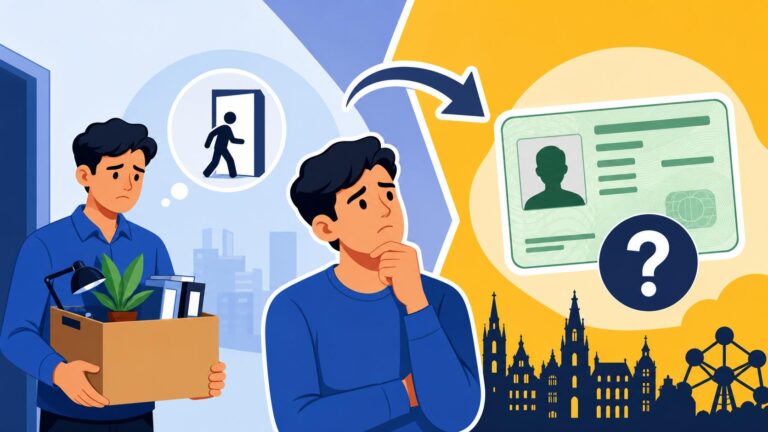
How the CPAS/OCMW Can Assist Unemployed Foreigners
Navigating unemployment in a foreign country is a terrifying experience that leaves you feeling incredibly vulnerable and isolated. I remember the gut-punch sensation of sitting in my small Brussels apartment, staring at a stack of bills and an expired work contract, wondering if I would be deported for being broke. This guide explains how the CPAS/OCMW works to support foreigners in financial distress and how to access their services without losing your mind.
What is the CPAS/OCMW and Why Does It Exist
In Belgium, the social safety net is divided into two main categories: social security (which you pay into via your salary) and social assistance (which is a catch-all for those who fall through the cracks). The CPAS (Centre Public d’Action Sociale) in French, or OCMW (Openbaar Centrum voor Maatschappelijk Welzijn) in Dutch, is the local public agency tasked with ensuring that every resident lives a life consistent with human dignity.
The Localized Nature of Social Aid
One of the most confusing things for newcomers is that there isn't one "national" CPAS office. Every single one of Belgium’s 581 communes has its own independent CPAS/OCMW office. This means that if you live in Ixelles, you cannot go to the office in Uccle. The quality of service, the wait times, and even the "vibe" of the social workers can vary wildly from one municipality to another. This localization is meant to ensure that the aid is tailored to the specific cost of living in your neighborhood, but it also means you are tethered to where you are officially registered.
The Philosophy of Human Dignity
Unlike many other countries where welfare is seen as a "handout" with heavy stigma, the Belgian constitution explicitly states that everyone has the right to lead a life in conformity with human dignity. The CPAS isn't just about giving you a check; it is legally obligated to help you with housing, health, and professional integration. However, as an expat, this "right" is often balanced against your residency status, which is where things get complicated.
Eligibility for Foreigners Can You Actually Get Help
This is the million-euro question. Whether you can get help depends heavily on your nationality and the type of residence permit you hold. If you are an EU citizen, your rights are generally stronger, but you still need to prove that you are not an "unreasonable burden" on the social assistance system. For non-EU citizens, the situation is even more nuanced.
Residency Status and the Right to Aid
To receive financial aid (the "Revenu d'Intégration" or Living Wage), you generally need to be registered in the population register and have a valid residence permit. If you are on a Single Permit (Gecombineerde Vergunning) Overview for 2027 and lose your job, your permit is often tied to that employment. Once the employment ends, your right to stay—and thus your right to CPAS—becomes a ticking clock.
Non-EU residents with long-term residency (Type D or L cards) have almost the same rights as Belgians. However, if you are here on a family reunification visa or a student visa, the CPAS will look at your "guarantor" first. If someone signed a document saying they would support you financially, the CPAS will legally pursue that person for the money before they give you a cent of public funds.
The Means Test and Resource Assessment
The CPAS will conduct an exhaustive "enquête sociale" (social inquiry). They will look at every bank account you own (including those abroad), your property, your car, and even the income of the people you live with. If you are living with a partner who earns a decent salary, the CPAS will likely deny you financial aid, as they view the household as a single economic unit. They will also check if you are eligible for How to Claim Unemployment Benefits (Chômage) as a Foreigner first, as CPAS is always the "last resort" after all other options are exhausted.
Types of Assistance Available for Unemployed Foreigners
The CPAS is much more than just a monthly payment. When I was navigating the system, I was surprised to find that they could help with everything from unpaid electricity bills to the cost of a new pair of glasses.
Financial Aid: The Integration Income
If you have no resources, the CPAS provides a monthly "Revenu d'Intégration." The amount depends on your family situation: whether you live alone, live with others (cohabitant), or have a family with dependent children. This money is meant to cover your basic needs—food, rent, and utilities. In exchange, you will likely have to sign an "Integration Contract," where you agree to look for work or take training courses.
Medical and Pharmaceutical Support
Healthcare in Belgium is excellent, but the out-of-pocket costs can add up. The CPAS can cover your "Mutuelle" (health insurance) premiums if you can't afford them. They can also provide a "Réquisitoire," which is a document that allows you to go to the doctor or pharmacy for free, with the bill sent directly to the CPAS. This is vital because Is Health Insurance Mandatory for Foreigners in Belgium?, and being uninsured is a major risk. For those without legal residency, they offer "Aide Médicale Urgente," which covers urgent care even if you don't have a visa.
Employment and Training Services
One of the best things the CPAS does is fund "Article 60" contracts. This is a special type of employment where the CPAS effectively becomes your employer, placing you in a job at a non-profit, a communal service, or a social enterprise. The goal is to get you enough working days to qualify for standard unemployment benefits (Chômage) later on. They also frequently pay for language classes or professional certifications.
If your French or Dutch isn't up to par, they might suggest using platforms like FrenchPod101 or DutchPod101 for supplemental learning, or even professional tutoring through Lingoda to speed up your integration. For those looking to pivot careers, they sometimes authorize and even subsidize reskilling through Coursera or Udemy, provided the course leads to a "bottleneck profession" (a job with high demand in Belgium).
| Type of Aid | Eligibility Criteria | Common Benefit |
|---|---|---|
| Financial (Living Wage) | Legal residence + no income | Monthly stipend based on household |
| Medical Assistance | Inability to pay medical bills | Coverage of Mutuelle and prescriptions |
| Housing Aid | Risk of eviction or homelessness | Help with rental deposits (Garantie) |
| Employment (Art. 60) | Unemployed + CPAS recipient | Guaranteed job to regain social security rights |
| Heating/Energy Fund | High utility bills in winter | One-off payments to Engie/Luminus |
Navigating the Application Process Step-by-Step
The application process is notoriously slow and bureaucratic. You will need to be your own strongest advocate, as social workers are often overworked and may not be familiar with the specifics of every expat visa type.
Step 1: Initial Registration and the 8-Day Rule
You must visit the CPAS office of the commune where you are officially registered. I cannot stress this enough: check your Registering at the Commune: The 8-Day Rule After Arrival status first. If your address isn't updated, they will reject your application immediately. You will usually have an intake interview where they give you a list of about 20 documents to provide.
Step 2: The Social Inquiry (The Enquête Sociale)
A social worker will be assigned to your case. They will likely visit your home to verify that you actually live there and to see your living conditions. They will ask to see your bank statements for the last three to six months. Do not try to hide a "secret" savings account; the CPAS has the power to check the National Bank’s registry of accounts.
Step 3: The Decision (Committee Meeting)
After the inquiry, your social worker presents your case to a committee (the Conseil de l'Action Sociale). You have the right to be heard by this committee, though most people choose not to. They have 30 days from the date of your application to give you a decision. If they approve it, the aid is usually backdated to the day you first walked into the office.
Potential Risks and Impact on Residency Status
Here is the "veteran expat" warning that the government won't tell you directly: taking CPAS money can, in some cases, jeopardize your future in Belgium.
The "Unreasonable Burden" Clause
For non-EU foreigners on temporary residence permits (like family reunification or certain work permits), the Immigration Office (Office des Étrangers) is notified if you receive social assistance. Belgian law allows them to withdraw your residence permit if they deem you to be an "unreasonable burden on the social assistance system." This usually only happens if you claim aid within the first three years of your stay, but it is a very real risk you must discuss with a legal expert or the Expat Welcome Desk in Brussels before applying.
Impact on Citizenship and Long-Term Residency
When you eventually apply for Becoming a Belgian Citizen: Naturalization Rules and 2026 Updates, you must prove "economic participation" (usually 468 days of work in the last five years). Periods of receiving CPAS do not count toward this requirement, although "Article 60" work contracts usually do. Similarly, for Permanent Residency (PR) in Belgium: Types and Timelines, you often need to show "stable and regular resources," and CPAS aid is the opposite of that.
If you feel you are being unfairly treated or pushed out of the workforce, it's worth investigating whether you are Handling Discrimination in the Belgian Recruitment Process, as the CPAS can also provide legal pointers for such cases.
Practical Tips for Your CPAS Meeting
- Bring a Translator: If you don't speak the local language fluently, bring a friend. While some social workers speak English, they are not required to, and technical legal terms are easy to misunderstand.
- Organize Your Paperwork: Use a physical binder. Bring your eID, lease agreement, last three bank statements, proof of job search efforts, and any "Annex" documents from the commune.
- Show "Good Will": The CPAS is more likely to help if you show you are doing everything possible to find work. Show them your enrollment in Lingoda or your certificates from Udemy or Coursera.
- Ask for the "Garantie Locative": If you are moving and can't afford the three-month rent deposit, the CPAS can often act as your guarantor or provide a bank-style guarantee (e-DEPO).
- Follow the Integration Contract: If they tell you to attend a Social Integration Course (Inburgering/Parcours d'Intégration) for PR, go. Failure to follow the contract can result in your aid being cut off.
Disclaimer
The information provided in this guide is for informational purposes only and does not constitute legal or immigration advice. Belgian immigration laws and social assistance regulations are subject to frequent changes and vary by region (Flanders, Wallonia, and Brussels). Always consult with a qualified immigration lawyer, a social worker at your local CPAS/OCMW, or an official government representative before making decisions that may affect your residency status or financial situation. Enrollment in private learning platforms like Lingoda, FrenchPod101, DutchPod101, Coursera, or Udemy does not guarantee eligibility for social aid or work placement.