Registering at the Commune: The 8-Day Rule After Arrival
Arriving in Belgium as a foreigner often feels like stepping into a beautiful, albeit complex, labyrinth of administrative tasks. And perhaps no task causes more immediate stress than the infamous "8-day rule." Believe me, I've been there, heart pounding, convinced I was already behind schedule before my bags were even unpacked. This guide is here to walk you through the often-confusing process of registering at your local Commune, making sure you understand every step and avoid those panicked moments.
The Immutable 8-Day Rule Explained
The "8-day rule" is one of those Belgian administrative peculiarities that can feel both arbitrary and absolutely critical, all at once. It's the first hurdle many of us face, and it sets the tone for your official life here. Ignoring it simply isn't an option if you want to settle down properly.
What Exactly is the 8-Day Rule?
Legally speaking, if you are a non-EU citizen intending to stay in Belgium for more than three months, or an EU citizen planning to reside here for an extended period, you are generally required to register your presence with the local municipal administration – the “Commune” (in French) or “Gemeente” (in Dutch) – of your place of residence within eight working days of your arrival. This isn’t just a suggestion; it’s a legal obligation rooted in Belgian law to ensure everyone residing in the country is officially accounted for. It’s how the Belgian state acknowledges your presence and begins to integrate you into their system, leading eventually to your residence permit and all the rights that come with it. Think of it as your official welcome to the administrative side of Belgium.
Why This Rule Causes Expat Panic
Oh, the panic! It’s real. You’ve just moved to a new country, you’re battling jet lag, trying to find your way around, maybe grappling with a new language, and then this ticking clock of eight days starts. What if you can’t get an appointment? What if you don’t have all the documents? The reality is that the eight-day rule is often challenging to meet due to a confluence of factors: the bureaucracy itself, which can be slow; the varying processes across different communes; and the sheer volume of new arrivals, especially in major expat hubs like Brussels, Antwerp, and Ghent. Many communes require appointments, and these can be booked out weeks in advance, making the literal eight-day compliance almost impossible for many. This disconnect between the legal requirement and practical reality is a major source of frustration for newcomers.
Who Needs to Register and Who is Exempt?
Broadly, anyone planning to stay for more than three months needs to register. This includes both EU and non-EU citizens, though the specific procedures and required documentation differ significantly.
* **Non-EU Citizens:** If you’ve arrived on a long-stay Visa D for work, study, or family reunification, you absolutely *must* register. This is the critical step to convert your visa into a residence permit. Your ability to start working or fully integrate depends on it.
* **EU Citizens:** While you have the right to reside in Belgium, if you plan to stay beyond three months, you are also expected to register your presence. The process is usually simpler, often involving fewer documents and no police check.
* **Short-Stay Visitors:** If you are on a short-stay Schengen visa (Type C) or are from a visa-exempt country and intend to stay for less than 90 days, you typically don’t need to complete a full registration at the commune. However, some hotels or landlords might still require a declaration of arrival (Annex 3, for instance), but this is not the full residence registration we’re discussing here. It’s always best to clarify with your specific commune if you’re borderline or unsure.
Navigating the Commune Appointment Labyrinth
Once you understand the urgency, the next step is often the most daunting: securing that all-important appointment. This isn't like booking a table at your favorite restaurant; it requires persistence and a good understanding of how local administrations operate.
Finding Your Local Commune and Its Quirks
Belgium is divided into many communes, and each one, while adhering to federal laws, can have its own specific procedures, opening hours, and even required documents. What works in Brussels might be different in Antwerp or a small Walloon village.
* **Brussels:** As the capital, Brussels is made up of 19 different communes (e.g., Ixelles, Etterbeek, Saint-Gilles, Uccle, Brussels City). You must register in the commune where you actually live. Each of these 19 communes operates independently, and their efficiency (or lack thereof) can vary wildly. Some might have English-speaking staff, while others might expect you to speak French or Dutch.
* **Flanders and Wallonia:** Outside of Brussels, you’ll find communes like Ghent, Leuven, or Liège. Their processes are generally more uniform within their respective regions, but still retain local flavor. For example, some smaller communes might still rely heavily on paper forms and in-person visits, while larger cities are moving towards more online services. It’s always best to check the specific website of *your* commune, often listed as “Ville de [Commune Name]” or “Gemeente [Commune Name]”. Look for sections related to “Étrangers” (Foreigners) or “Dienst Vreemdelingenzaken” (Foreigners’ Service).
Booking Your All-Important Appointment
This is where the rubber meets the road. Due to high demand, especially in expat-heavy areas, getting an appointment within eight days can be incredibly challenging.
* **Online Systems:** Many larger communes, like Brussels City or Ghent, now have online booking portals. This is usually the most convenient method. Be prepared for slots to fill up fast. Some communes release new slots at specific times (e.g., first Monday of the month), so it’s worth checking regularly.
* **Phone Calls:** If online isn’t working, try calling. Be patient, as hold times can be long, and you might need to try multiple times. Having some basic French or Dutch phrases ready can be a huge help, or ask a friend to assist.
* **In-Person Visits:** In some smaller or less digitally advanced communes, walking in might still be an option, but it’s becoming rarer. Even if you can walk in, you might only be able to book an appointment for a later date, not necessarily to complete the registration then and there.
* **Tips for Success:** Start trying to book your appointment as soon as you have a confirmed address, even before you arrive in Belgium if the commune allows it. If you have trouble getting an immediate slot, still make the earliest possible appointment you can. Keep a record of your attempt to book within the 8-day period (e.g., a screenshot of the booking system showing no available slots, or a call log). This can sometimes serve as proof of your good faith effort, though it’s not a guaranteed waiver.
Essential Documents to Gather
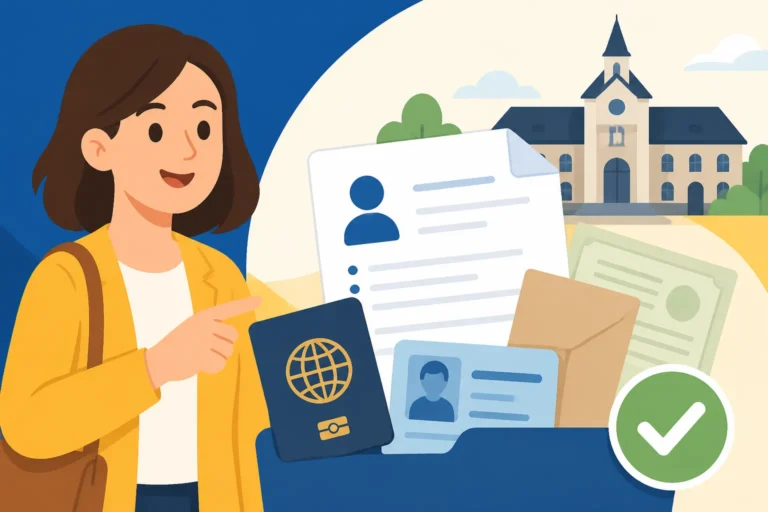
This is non-negotiable: you need to arrive prepared. Missing even one document can mean a wasted trip and having to re-book. The exact list can vary by commune and your nationality, but here’s a general overview.
| Document Type | EU Citizen (Standard) | Non-EU Citizen (Standard) | Notes |
|---|---|---|---|
| Identification | Valid Passport or National ID Card | Valid Passport | Always bring the original. Make sure it has at least 6 months validity. |
| Visa/Permit Proof | N/A | Valid long-stay Visa D (stamped in passport) | This is crucial for non-EU citizens. |
| Proof of Address | Rental contract (signed), deed, or invitation letter from host | Rental contract (signed), deed, or invitation letter from host | The contract must be registered. If staying with someone, ensure they provide an official invitation letter (e.g., an Annex 3bis if applicable) and their ID. |
| Passport Photos | 1-2 recent, compliant photos | 1-2 recent, compliant photos | Ensure they meet Belgian standards (light background, no glasses unless medically necessary, recent). |
| Proof of Solvency | Varies (e.g., employment contract, bank statements) | Employment contract, scholarship letter, blocked account details, "prise en charge" (Annex 32) | For students, this is often a Blocked Account or a "prise en charge" from a guarantor. For workers, your signed employment contract is usually sufficient. |
| Criminal Record | N/A (usually not required for initial registration) | Original legalized criminal record certificate | Often required for the visa application itself, but sometimes requested again by the commune. Must be issued within 6 months and translated. |
| Birth/Marriage Cert. | Varies (e.g., if adding family) | Original legalized birth/marriage certificate (if applicable for family reunification) | If applying for family reunification or adding family members, these are essential. Must be translated by a sworn translator. RushTranslate can help with certifying translations. |
| Medical Certificate | N/A (usually not required for initial registration) | Original medical certificate | Similar to the criminal record, usually part of the visa application, but have it handy. Make sure it's issued within 6 months of application. |
| Administrative Fee | Varies (usually small or none) | Varies (e.g., €25-€35 for card issuance) | Check your commune's website for exact fees. Some communes might require cash, others accept Bancontact. |
Note on Translations: For any non-Belgian documents, especially birth certificates, marriage certificates, or criminal records, you will almost certainly need a sworn translation into French, Dutch, or German, depending on your commune's linguistic region. Services like RushTranslate can be invaluable here, providing certified translations that are accepted by Belgian authorities. Don't forget, these also need to be apostilled or legalized in your home country before translation for them to be valid.
The First Visit: What to Expect at the Commune
So you've wrestled an appointment out of the system and gathered your mountain of paperwork. Good job! Now for the actual visit, which can feel a bit like a game show where you hope you have the right answers.
The Initial Interview and Form Filling
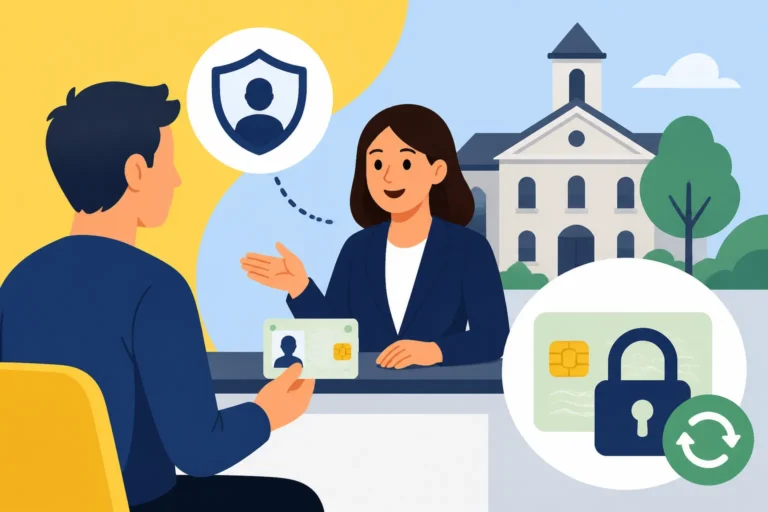
When you arrive, you’ll likely be directed to the “Service Étrangers” or “Dienst Vreemdelingenzaken.” You’ll meet with an official who will review your documents, ask you questions, and have you fill out forms.
* **Common Questions:** They’ll confirm your address, ask about your purpose in Belgium (work, study, family), your marital status, and your nationality. They might ask when you arrived and if you understand the registration process.
* **Language Considerations:** While many officials in Brussels or other large cities might speak some English, it’s not guaranteed. Having a basic grasp of French or Dutch, or bringing a friend who can translate, can significantly smooth the process. This is especially true for more complex questions or if you encounter an official who isn’t comfortable in English. If you need official support, remember that professional interpreters can be arranged, though this is less common for simple commune registrations.
* **Potential Pitfalls:** Ensure all your information matches your documents exactly. Any discrepancies, even minor spelling errors, can lead to delays or rejections. Be polite and patient; Belgian bureaucracy thrives on order and adherence to rules.
Provisional Registration: Annex 15 and Beyond
If your documents are in order and your application is accepted, you won’t immediately get your eID. Instead, you’ll receive a temporary document, most commonly an Annex 15 (Annexe 15/Bijlage 15) and Can You Work With It?.
* **What is an Annex 15?** This is a temporary certificate of registration (Attestation d’enregistrement) that serves as proof you have submitted your residence application. It’s usually valid for 45 days, but can be extended if the process takes longer.
* **What You Can Do With It:** An Annex 15 confirms your legal presence. If your visa (e.g., Single Permit) allows you to work, then the Annex 15, along with your valid passport and the original visa stamp, is generally sufficient to start working. You can also use it to open a bank account, although some banks might prefer the actual eID. You should always carry it with you as proof of your legal status.
* **What You Cannot Do With It:** You generally cannot use an Annex 15 for international travel outside the Schengen area. While technically it allows travel *within* Schengen, it’s advisable to have your physical eID for smooth border crossings and to avoid unnecessary questions. For any planned travel outside Schengen, wait for your permanent residence card.
The Waiting Game: From Provisional to Police Check
After your initial visit and receiving your Annex 15, the real waiting game begins. The commune now needs to verify your address. This leads us directly to the famous (or infamous) police check. This waiting period can vary greatly, from a couple of weeks to a couple of months, depending on the efficiency of your local commune and police force. Don’t be surprised if it takes longer than you expect.
The Infamous Police Check
Ah, the Contrôle de Quartier or police check. This is perhaps the most unique and often whispered-about part of the Belgian residence registration process. It's not a scare tactic; it's a very real step to confirm your declared address.
What is the Contrôle de Quartier?
Once you’ve registered at the commune, your file is passed to the local police district. A police officer (often called the agent de quartier or wijkagent) will visit your declared address to verify that you actually live there. Their purpose is simple: to confirm that the address you provided to the commune is indeed your primary residence. They want to ensure you’re not using a fictitious address or trying to register somewhere you don’t actually reside. They typically look for your name on the doorbell or mailbox and might ask a neighbor if they’ve seen you. They might also ask a few basic questions if you open the door.
Preparing for Your Police Visit
This is where some expats get a bit anxious, but it doesn’t have to be.
* **Be Home:** The most crucial thing is to *be home* when they visit. The police often don’t make appointments. They simply show up during working hours. If you’re frequently out, try to arrange for someone to be home, or leave a note on your door stating when you’re usually available.
* **Name on Doorbell/Mailbox:** Ensure your name is clearly visible on your doorbell and mailbox. This is a common and often overlooked detail. If your name isn’t there, the officer might assume you don’t live there and leave a note, or worse, report that they couldn’t confirm your residence, delaying your process significantly.
* **What if You Miss It?** If you miss the officer, they will usually leave a notice in your mailbox asking you to contact them to schedule a new visit or confirm your presence. *Do not ignore this note!* Contact them immediately. Failure to respond could lead to your application being rejected.
The Importance of a Valid Address
Your address is the cornerstone of your Belgian administrative life. It’s not just for mail; it dictates which commune processes your documents, which police district oversees your area, and ultimately, where you pay your municipal taxes.
* **Consequences of Incorrect Information:** Providing a false or temporary address that you don’t genuinely reside at can lead to serious problems, including rejection of your residence application, fines, or even issues with future visa renewals.
* **Proof of Residence:** Beyond your rental contract, keep proof of utility bills (electricity, gas, internet) in your name once they’re set up. While not always asked for at the police check, they serve as excellent additional proof of your continuous residence at the declared address.
Receiving Your eID and Beyond
After the police confirm your residence, the gears of bureaucracy grind forward, slowly but surely, towards the ultimate prize: your Belgian electronic identity card (eID). This small plastic card is your gateway to almost everything in Belgium.
The Different Stages of eID Issuance
The journey to your eID often involves a few administrative steps:
1. **Police Confirmation:** Once the police confirm your address to the commune, your file progresses.
2. **Invitation to Apply:** The commune will then send you a letter (usually by regular post to your newly verified address) inviting you to return to the commune to finalize your eID application. This often involves paying the card fee and providing fingerprints and a signature.
3. **PIN/PUK Codes:** After this visit, you’ll receive *another* letter by post containing your PIN and PUK codes. These are vital for activating your card and using it for online services. Keep them safe!
4. **Card Collection:** Finally, you’ll be invited to pick up your physical eID card at the commune. Make sure to check the specific instructions for collection, as some communes require an appointment for this too.
The entire process, from your first registration to holding your eID, can take anywhere from a few weeks to several months. In some busy communes, it might even stretch to half a year. Patience is truly a virtue here.
Understanding Your Residence Card Type
The eID isn’t just one card; there are different types, each indicating your residence status.
* **A Card (Temporary Residence):** Most non-EU citizens initially receive an A card, which signifies temporary residence (e.g., for work, study, or family reunification). It’s typically valid for one year and needs to be renewed.
* **B Card (Permanent Residence):** After a certain period of continuous legal residence (usually five years for non-EU citizens, fulfilling specific conditions), you might be eligible for a B card, which grants unlimited stay. This is a significant step towards Permanent Residency (PR) in Belgium: Types and Timelines.
* **F Card (Family Reunification EU Citizen):** If you are a non-EU family member of an EU citizen residing in Belgium, you will typically receive an F card. This card also grants certain rights related to work and residence.
* **C and D Cards (Permanent & EU Long-Term):** These are also permanent residence permits, with the D card being the EU long-term resident status that offers greater mobility within the EU.
Understanding your card type is crucial as it defines your rights and obligations, including your eligibility for employment or access to certain social benefits.
Activating Your eID and Itsme
Once you have your physical eID and its PIN/PUK codes, the first thing you should do is activate it. You’ll do this at the commune when you pick it up, or sometimes at a dedicated terminal. This activation allows the chip on your card to function, enabling secure digital identification.
The next critical step is to set up Itsme Authentication: How to Set Up Belgium’s Vital Digital ID. Itsme is Belgium’s official digital identity app, allowing you to log into government websites (like MyMinfin for taxes or MyHealth.belgium.be for healthcare), sign documents digitally, and even bank online. Your eID is often the primary way to activate Itsme for the first time. It truly is indispensable for navigating modern Belgian life.
Common Pitfalls and Troubleshooting
Even with the best preparation, the Belgian administrative system can throw curveballs. It's not always smooth sailing, and knowing how to handle common issues can save you a lot of stress.
Language Barriers and Translation Services
Belgium is a multilingual country, and while English is widely spoken in expat circles, official communication with the commune often defaults to French, Dutch, or German, depending on the region.
* **The Challenge:** Expect forms, letters, and potentially even your commune official to communicate in the local language. This can be intimidating, especially if you’re new to the language.
* **Seeking Help:** Don’t hesitate to bring a friend who speaks the local language. For official documents that need translation (like birth certificates or academic diplomas for other processes), you’ll need certified translations. This is where services like RushTranslate become essential. They can provide sworn translations that Belgian authorities will accept, ensuring your documents are understood and valid. Don’t try to Google Translate crucial paperwork yourself; it won’t be accepted.
Dealing with Delays and Bureaucracy
Delays are almost an unofficial part of the Belgian administrative experience. They happen, and they can be frustrating, especially when you’re trying to get on with your life.
* **Realistic Expectations:** The processing times quoted by communes are often optimistic. Factor in potential delays, especially during peak seasons (e.g., summer holidays) or in busy cities.
* **Follow-Up, Politely:** After a reasonable waiting period (e.g., a month after your police check, if you haven’t heard anything), it’s acceptable to follow up. Start with an email or phone call to the commune’s foreigners’ service. Always be polite, provide your file number (if you have one), and clearly state your query. Avoid calling every day; once every few weeks is usually sufficient. Sometimes, a gentle reminder is all it takes to nudge your file along.
* **Employer/University Support:** If you’re here for work or study, your employer’s HR department or your university’s international office can often provide invaluable assistance. They deal with these processes regularly and might have direct contacts or understand the specific nuances of your local commune.
The Consequences of Non-Compliance
While the 8-day rule might feel like an arbitrary deadline, ignoring it can lead to tangible problems.
* **Fines:** Although not always immediately enforced, fines can be levied for late registration.
* **Visa Issues:** For non-EU citizens, failing to register can delay or even jeopardize your residence permit application, potentially impacting your legal right to stay or work in Belgium. You might find yourself unable to open a bank account, sign a phone contract, or access certain public services.
* **Long-Term Problems:** Unregistered presence can complicate future administrative tasks, such as applying for Permanent Residency Card Types: B, C, D, K, and L Cards Explained or even Becoming a Belgian Citizen: Naturalization Rules and 2026 Updates. It’s always best to be officially “on the books” from the start. Moreover, having adequate health coverage like Cigna Global ensures you’re protected while navigating these administrative processes and beyond. It’s better to be fully covered than to risk medical debt while waiting for your public health insurance to kick in after registration.
Disclaimer
The information provided in this guide is for general informational purposes only and does not constitute legal advice. While we strive to keep the information up-to-date and accurate, Belgian immigration and administrative laws can change. Always consult the official websites of the Belgian Immigration Office (Office des Étrangers/Dienst Vreemdelingen Zaken) or your local commune, or seek advice from a qualified immigration lawyer for your specific situation.