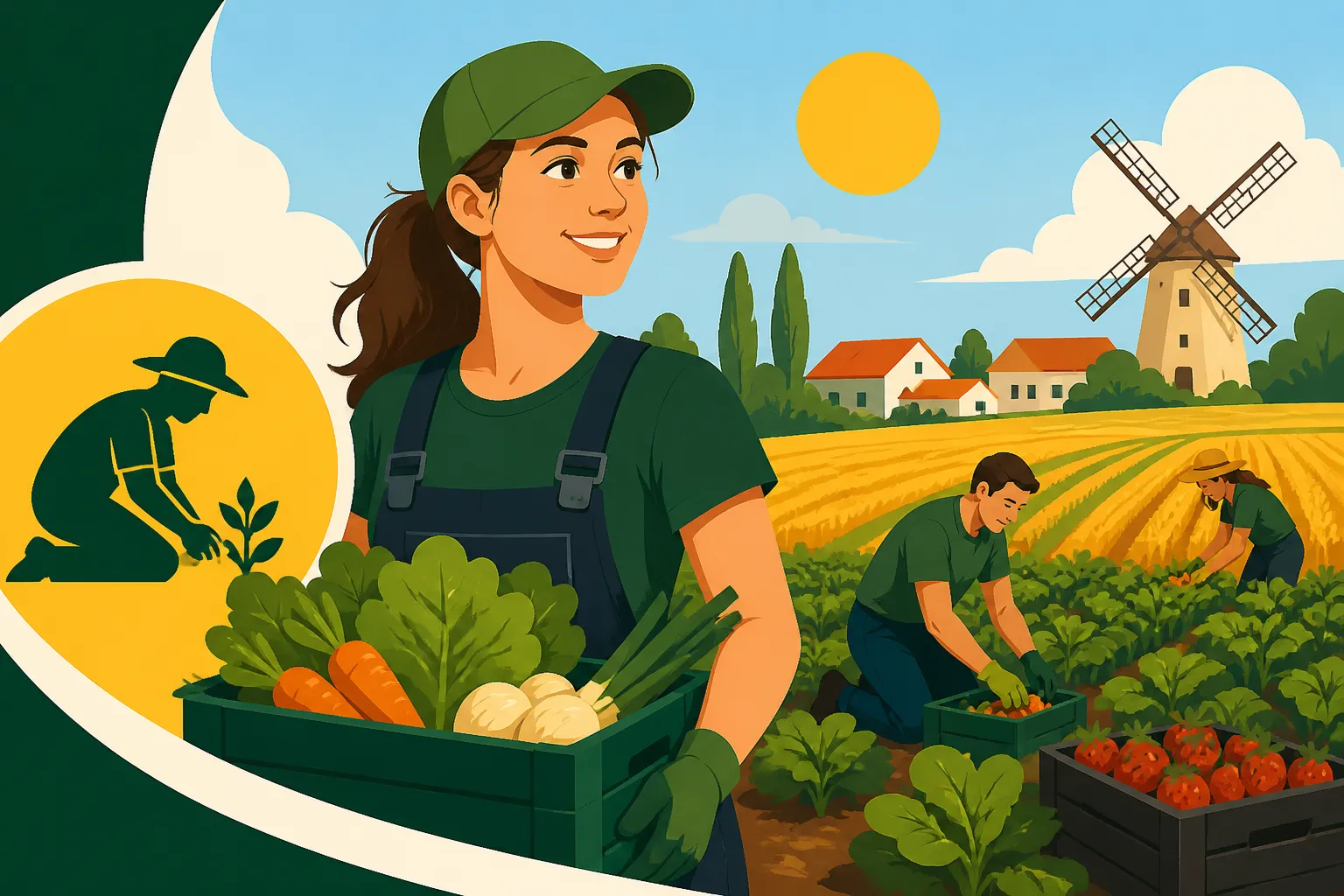
Finding Seasonal Farm Work in Flanders During Harvest Season
Finding a job in Belgium when you do not yet speak fluent Dutch can feel like hitting a brick wall of bureaucracy and rejection. When I first arrived in Flanders, I spent weeks staring at job boards that demanded "perfect trilingualism" for even the most basic office roles. This guide breaks down the reality of seasonal farm work as a viable, accessible entry point into the Belgian labor market during the harvest season.
The Agricultural Landscape of Flanders
Flanders is the northern, Dutch-speaking region of Belgium, and it is an absolute powerhouse when it comes to agriculture, particularly fruit and vegetable production. For an expat or a newcomer, this sector represents one of the few areas where the "language barrier" is significantly lowered, provided you are willing to put in the physical labor. The Flemish countryside is dotted with massive greenhouses and sprawling orchards that require thousands of extra hands every year.
Key Crops and the Harvest Calendar
To find work, you first need to understand the rhythm of the Belgian seasons. The harvest season isn't just a single event; it's a rolling calendar that begins in early spring and stretches into the late autumn. If you are looking for work in April or May, you will likely find yourself in the "white gold" fields of Limburg picking asparagus. This is back-breaking work that involves carefully slicing stalks beneath the soil, but it pays well because of the precision required.
By June and July, the focus shifts to the legendary Belgian strawberries, particularly around the Hoogstraten area. These are often grown in tabletop systems in greenhouses, which saves your back but means working in high humidity. August and September are the "big" months for most seasonal workers because of the top-fruit harvest. This is when the massive pear and apple orchards of the Haspengouw region—often called the Tuscany of the North—need picking. Pears, especially the Conference variety, are a major export for Belgium, and the picking window is incredibly short, usually lasting only two to three weeks.
Geographical Hubs for Seasonal Jobs
If you are serious about finding work, you need to look at specific provinces. Limburg is the undisputed king of fruit, centered around cities like Sint-Truiden and Borgloon. These towns are essentially the nerve centers of the harvest season. Flemish Brabant, specifically the area around Hageland, is another major player. If you are based in Antwerp, the northern "Noorderkempen" region is your best bet for greenhouse work and berries.
When you are Working in Belgium as an Expat: Jobs, Culture, and Hiring (2027), understanding these regional specializations saves you from wasting time applying to farms in industrialized zones where agriculture is minimal. I remember hopping on a train from Brussels to Sint-Truiden without a plan, only to realize that the most successful pickers had already scouted the specific "veiling" (auction houses) where farmers congregate.
Navigating the Legal and Administrative Framework
Belgium loves its paperwork, and seasonal work is no exception. However, the system is designed to be relatively flexible for the agricultural sector. You cannot simply walk onto a farm and start picking for cash; that is "black work" and can lead to heavy fines for both you and the farmer.
The Seasonal Worker Card and the 100 Day Rule
In Belgium, seasonal agricultural work is governed by a specific social security regime. Most workers operate under what is known as a "plukkaart" or picking card. This system allows you to work for a set number of days—historically 65, but often extended to 100 days depending on the current federal labor agreements—at a lower social security contribution rate. This is a massive benefit for the farmer, which is why they are so keen to hire seasonal staff.
You must ensure that your employer registers you correctly from day one. This registration links to your National Register number if you are a resident, or a BIS number if you are a temporary visitor. If you are still waiting for your formal ID, you might find my guide on Accessing Belgian Healthcare Without an eID: Temporary Certificates useful, as it explains how the system tracks you before the plastic card arrives. Always ask the farmer if they are using the Dimona system to report your hours; this is the digital declaration that protects your rights.
Understanding Your Pay and Contributions
Seasonal workers often get confused by the "gross vs net" reality of Belgian wages. Because the social security contributions for seasonal farm work are lower than for a standard office job, your take-home pay is actually closer to your gross salary than you might expect. However, there is still a small deduction for Social Security Contributions: How Employers Deduct Health Costs that goes toward ensuring you are covered in case of a workplace accident.
Expect to be paid the minimum sectoral wage for agriculture, which is indexed annually. In 2026, this usually hovers around 11 to 13 Euros per hour. Some farms offer a "piece rate"—paying you per kilo of fruit picked—but Belgian law mandates that this must still result in at least the minimum hourly wage. I always recommend keeping a small notebook to track your own hours and the number of crates you’ve filled. It’s not that farmers are dishonest, but in the chaos of a peak harvest, mistakes happen.
How to Find and Apply for Farm Jobs
Finding the job is often the hardest part because many of these farms are family-run businesses that don't always post on LinkedIn or international job boards. You have to go where the farmers are.
Using VDAB and Specialized Portals
The VDAB (Vlaamse Dienst voor Arbeidsbemiddeling en Beroepsopleiding) is your best friend in Flanders. They have a specific section for "seizoensarbeid" (seasonal work). When Using VDAB (Flanders) and Le Forem (Wallonia) for Job Hunting, use keywords like "plukker," "oogst," or "landbouw." The portal often lists large-scale operations that need hundreds of workers at once.
There are also specialized websites like "Agri-Jobs" or the portal run by the Boerenbond (the Flemish Farmers' Union). These sites are almost exclusively in Dutch, so this is where you should start using tools like DutchPod101 to learn basic agricultural vocabulary. Even knowing the difference between "gezocht" (wanted) and "ervaring" (experience) will put you miles ahead of other applicants.
The Power of Direct Outreach and "The Veiling"
In the Belgian farming world, a phone call is worth ten emails. Farmers are busy; they are in the fields, not sitting behind a desk checking their inbox. If you find a farm address, the best approach is to show up in person or call them directly. If your Dutch is still a work in progress, you might want to look into Language Learning: French and Dutch Courses for Professional Growth to gain the confidence to make those calls.
Another "insider" tip is to visit the local "veiling" (auction house) like BelOrta in Sint-Katelijne-Waver or the fruit auctions in Sint-Truiden. Farmers congregate here early in the morning. While you can't go onto the auction floor, the surrounding cafes and supply stores are where the networking happens. I've known expats who found work just by chatting with a farmer at a local "Frituur" near the orchards.
Logistics, Language, and Life on the Farm
Seasonal work is physically demanding and often requires you to live far from the shiny centers of Brussels or Antwerp. You need to prepare for the reality of the Flemish countryside, which can be quite isolated if you don't have a plan.
Overcoming the Language Barrier
While you don't need to be fluent to pick pears, you do need to understand safety instructions and grading requirements. Farmers in Flanders are generally very proud of their language. While many speak English, showing effort in Dutch goes a long way. If you find yourself struggling to communicate with the foreman, taking a quick course on Udemy or Coursera regarding basic workplace communication or even a dedicated language app like FrenchPod101 (if you are working near the linguistic border) can be a lifesaver.
Most farms will have a mix of nationalities—often Polish, Romanian, and now more frequently, expats from outside the EU who are on a Single Permit (Gecombineerde Vergunning) Process for Workers. English often becomes the "lingua franca" in the fields, but the instructions for sorting the fruit will likely be in Dutch. If you confuse "eerste klasse" (first class) fruit with "industriefruit" (fruit for jam), you won't be invited back for the next season.
Accommodation and Commuting
This is the biggest hurdle. Many farms are not accessible by public transport. If you don't have a car, you need to find a farm that offers "on-site" housing. This usually consists of "wooncontainers"—modified shipping containers that are surprisingly comfortable and meet strict Flemish housing standards.
| Requirement | Description | Estimated Cost |
|---|---|---|
| Transport | Bike or second-hand car is essential for remote farms. | 100 – 2,500 EUR |
| Clothing | High-quality waterproofs and steel-toed boots. | 150 EUR |
| Housing | On-site containers or local "kot" rentals. | 200 – 450 EUR/month |
| Tools | Usually provided by the farmer (ladders, picking bags). | 0 EUR |
Before you sign anything, check if the cost of accommodation is being deducted from your wage. There are legal limits on how much a farmer can charge for housing. If you are staying in a nearby town, check the SNCB Trains, Trams, and Mobib Cards guide to see if there is a bus link (De Lijn) that reaches the rural zones. Often, farmers will organize a shuttle van from the nearest train station for their seasonal crews.
Financial Realities and Career Transition
Is seasonal work a long-term career? For most, no. But it is an excellent "bridge." It provides you with a Belgian work history, a social security record, and most importantly, time to plan your next move.
Budgeting for the Off-Season
The harvest is intense. You might work 50 or 60 hours a week for a month, and then suddenly, the work vanishes as the last apple is picked. You need to be disciplined with your earnings. Since you've likely been working under the seasonal regime, you may not immediately qualify for full unemployment benefits if you haven't worked enough days in the previous year.
Use the high-intensity months to save, and use the quieter months to upskill. While working in the fields, I used my evenings to take digital marketing courses on Coursera and Udemy. The physical labor during the day made the mental work at night feel like a welcome break. It's also the perfect time to commit to a more structured language program like Lingoda to prepare for a "fixed" job in the city.
Transitioning to Fixed Employment
Once you have a few months of farm work on your CV, you are no longer a "new arrival" with zero experience in the eyes of Belgian employers. You have proven you can show up on time, follow instructions in a multilingual environment, and endure the famously grey Belgian weather.
You can then start looking into more stable roles, perhaps in logistics or food processing, which are the natural next steps from the farm. Understanding Gross vs Net Salary in Belgium: Why the Difference is So Big will become even more important as you move into a standard contract. Many expats use the connections they made on the farm—sometimes with the farmer's own business network—to find their first warehouse or office role.
Finding Seasonal Farm Work in Flanders Disclaimer
This guide is intended for informational purposes only. Labor laws, visa requirements, and seasonal quotas in Belgium are subject to frequent changes by the regional and federal governments. Always verify your legal right to work in Belgium and ensure any employment contract complies with current Flemish labor standards. The author is not a legal or immigration professional.