Track Your Visa Status on the DOFI (Immigration Office) Website
Oh, the joy (and sometimes utter despair) of waiting for that all-important Belgian visa or residence permit! We've all been there, staring at our inboxes, refreshing government websites, and wondering if our lives are on hold indefinitely. It's a rite of passage for many expats, this limbo period, and one of the most frequent questions I get is, "How on earth do I know what's happening with my application?" Well, my friends, while the process can still feel like navigating a medieval labyrinth, this guide is here to demystify one crucial tool: tracking your visa status on the official Belgian Immigration Office (DOFI) website.
Understanding the DOFI (Immigration Office) Website
Let's start by getting acquainted with the main player in this bureaucratic drama: the Dienst Vreemdelingenzaken (DVZ) in Dutch or Office des Étrangers (OE) in French. Most expats just call it the DOFI or the Immigration Office. This is the federal body responsible for everything related to the entry, stay, residence, and removal of foreigners in Belgium. It's a huge, often overwhelmed, institution, and understanding its digital portal is key to staying sane during your application journey.
What is the DOFI and Why it Matters to You
The DOFI is not just some obscure government department; it's the gatekeeper to your life in Belgium. Whether you're applying for a work visa, a family reunification visa, or a student permit, your application eventually lands on their digital (or physical) desk. They are the ones who process your file, make decisions, and communicate those decisions, usually to the Belgian embassy or consulate in your home country, or directly to your local commune once you're already in Belgium. For anyone trying to establish a life here, the DOFI's decisions impact everything, from your ability to work and study to your right to access healthcare. They handle the initial entry authorization (Visa D) and then, often, the subsequent residence permit applications once you've arrived. The sheer volume of applications they handle means patience is a virtue, but tracking your status online offers a small window into their world.
Navigating the Official DOFI Portal
The main portal for checking your visa status is typically accessed through the FPS Home Affairs website, which houses the Immigration Office section. Navigating it can feel a bit like a treasure hunt, especially if you're not fluent in Dutch or French. Belgium, in its glorious multilingual complexity, often presents information in both official languages, and sometimes English, but not always consistently. Don't be surprised if you find yourself switching between Google Translate and the original text just to grasp the nuances. The portal isn't always the most user-friendly, with dense text and links that sometimes lead in circles. However, it's the official source, so it's where we must go. You're looking for a specific section, usually titled something like "Check the status of your visa application" or "Consult your file". Keep an eye out for keywords such as "Dossierstatus opvragen" (Dutch) or "Consulter le statut de votre dossier" (French).
Step-by-Step Guide to Tracking Your Visa Application Status
Alright, let's get down to brass tacks. You've sent off your application, perhaps to an embassy abroad or through your employer for a Single Permit, and now the waiting game begins. Here's how to try and peek behind the curtain using the DOFI website.
Gathering Your Essential Information
Before you even open your browser, make sure you have these critical pieces of information handy. Without them, you'll be hitting a brick wall.
- Your File Number (Dossiernummer/Numéro de Dossier): This is absolutely crucial. When you submit your application, either the embassy/consulate or your employer (if they are applying on your behalf) should provide you with a unique file number from the Belgian Immigration Office. It often starts with a letter (like "M" for Ministry or "H" for Highly Skilled) followed by a series of numbers (e.g., M/123456/XX/XX). This is your golden ticket. Without it, the online system simply won't find your file. If you haven't received one, contact the entity that submitted your application immediately.
- Date of Application/Submission: This helps narrow down the search, although the file number is usually enough.
- Date of Birth: A standard security measure to confirm your identity.
- Your Name: Ensure it matches exactly how it appears on your application documents.
Make sure you've also kept copies of everything you submitted. This includes your passport, any signed forms, and especially any medical certificates for a Belgian visa application or apostilled documents. Sometimes, having these to refer back to can clarify which file number applies to which application.
The Online Tracking Interface
Now that you have your details, here's the typical process to check your status:
- Go to the Official Source: Head to the official website of the Belgian Immigration Office. As of 2026, the primary public-facing portal for status checks is usually integrated within the FPS Home Affairs website, specifically under the Immigration Office section.
- Locate the Status Check Section: Look for a prominent link or button related to "Status of my application," "Visa status," or "Check your file." It might be in the main menu, under "Services," or directly on the homepage.
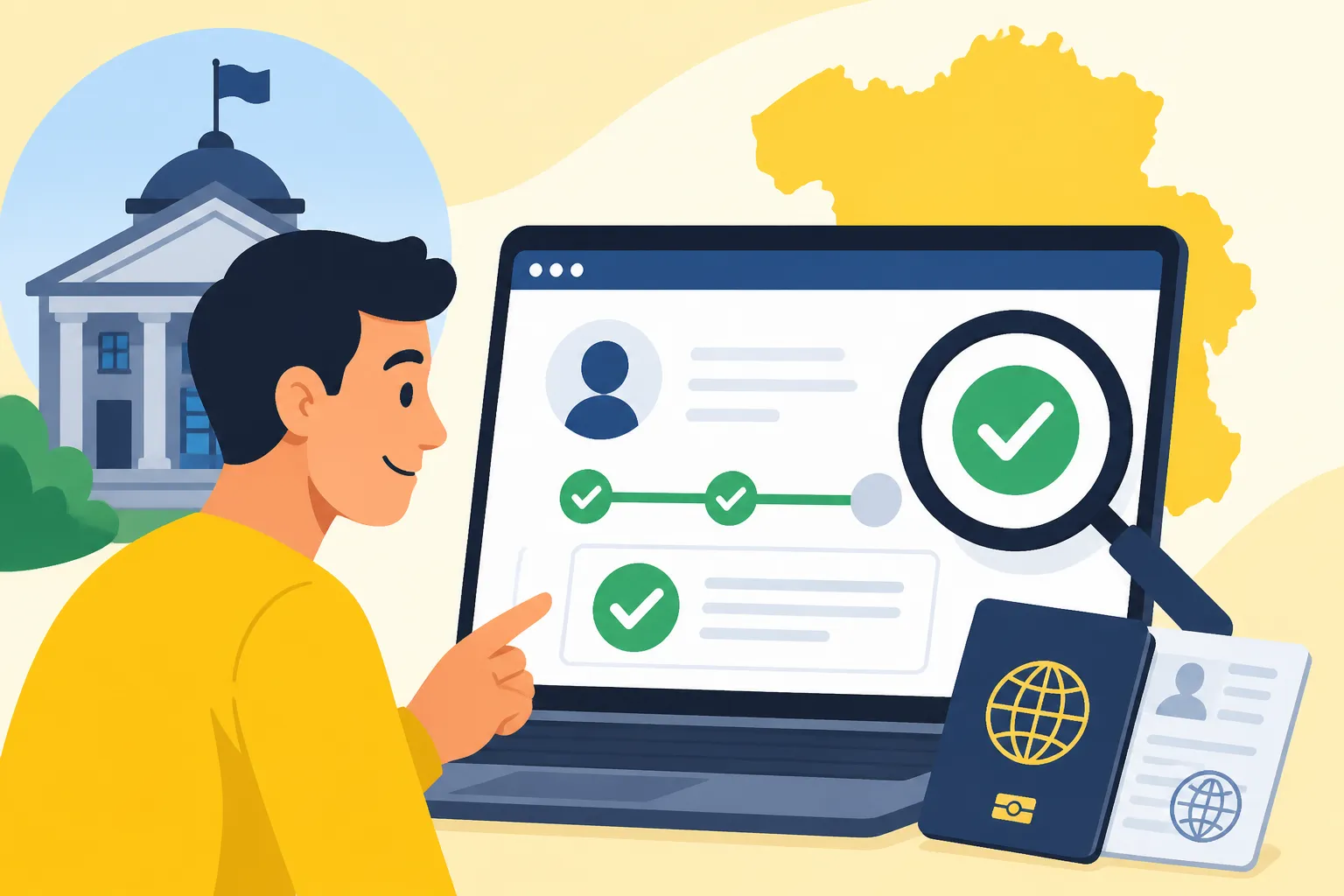
- Input Your Details: You'll typically be presented with fields to enter your file number, date of birth, and possibly your surname. Double-check that you enter the file number accurately, including any slashes or dashes, as even a tiny typo will return "file not found."
- Submit and Wait: Click the "Search" or "Consult" button. The system will then attempt to retrieve your file.
It's important to remember that this system might not be updated in real-time. There can be a delay between when a decision is made internally and when it reflects on the public portal. So, if you don't see an immediate update, don't panic just yet.
Deciphering Status Updates
The messages you receive on the DOFI portal can sometimes be vague, adding to the frustration. Here are some common statuses you might encounter and what they generally mean:
- "Dossier en traitement" / "Dossier in behandeling" (File in process/under treatment): This is the most common status for a long time. It simply means your application has been received and is somewhere within the DOFI's system. They are reviewing it, but no final decision has been made. This phase can last weeks or even many months, depending on the type of visa, the volume of applications, and the complexity of your case.
- "Avis favorable" / "Gunstig advies" (Favorable opinion/recommendation): This is great news! It means the Immigration Office has made a positive decision or recommendation regarding your visa. This status often precedes the actual visa issuance by the embassy or commune. For example, if you applied for a Single Permit, this might mean the work authorization part has been approved, and the residence permit aspect is moving forward.
- "Avis défavorable" / "Ongunstig advies" (Unfavorable opinion/recommendation): Unfortunately, this means your application has likely been rejected. The portal might not give the full reason, but it indicates a negative decision. You should then receive a formal rejection letter via mail, which will detail the grounds for refusal and explain your options for appeal.
- "Décision prise" / "Beslissing genomen" (Decision made): This means a final decision has been reached. It could be positive or negative. For positive decisions, you'll usually be informed by the embassy or consulate (if applying from abroad) or your local commune (if already in Belgium) to pick up your visa or residence card. For negative decisions, a formal letter will follow.
- "En attente de documents complémentaires" / "In afwachting van aanvullende documenten" (Awaiting additional documents): This means the DOFI needs more information from you to process your application. You (or your representative) should receive a letter or email detailing what's required. Respond promptly and precisely to these requests.
- "Clôturé" / "Afgesloten" (Closed): This can mean a few things. If your application was successful and you've received your visa/permit, it will be closed. If it was rejected, it will also be closed. Sometimes, if they don't receive requested documents in time, they might close the file due to non-response.
Beyond these simple statuses, you might also see references to "Annexes" – these are official forms and documents issued by the commune or DOFI. For instance, an Annex 15 (Annexe 15/Bijlage 15) and Can You Work With It? is often given to non-EU citizens while they await their eID card after registering at the commune. If your visa involves subsequent residence permit steps, your commune will be vital, and you might receive an Annex 8 after a positive police check.
Common Challenges and Troubleshooting When Checking Your Status
The DOFI website, while functional, isn't without its quirks. Expats often face a number of challenges that can make tracking their status a frustrating ordeal.
Dealing with Delays and No Updates
This is, by far, the most common complaint. You check every day, then every week, and the status remains "Dossier en traitement." It can feel like your application has disappeared into a black hole.
- Patience is a Virtue (Really!): Belgian bureaucracy is notoriously slow. Processing times can vary wildly depending on the type of visa, your nationality, and the current workload of the Immigration Office. For some visas, a few months is standard, for others, six months to a year isn't unheard of. Don't assume "no update" means "no progress."
- Check the Official Processing Times: The DOFI website does publish indicative processing times for different visa types. Find these on their site and manage your expectations accordingly. If you're well past the stated average, then it might be time to investigate further.
- Contact the Submitting Entity: If your application was submitted by an embassy, consulate, or your employer, they often have a direct line to the DOFI or can at least provide more nuanced information than the public portal. They might have received an email notification that hasn't yet updated publicly. For instance, if your employer handled your Single Permit (Gecombineerde Vergunning) Process for Workers, they will likely be the first to know of any updates.
Technical Glitches and Login Issues
Sometimes, the problem isn't the status but simply accessing the system itself.
- Browser Compatibility: The government portals often work best with specific browsers (like Internet Explorer in the past, now typically Chrome or Firefox). If you're having trouble, try a different browser or clear your cache and cookies.
- Correct URL: Always ensure you're on the official government website. There are many unofficial sites that might look similar but won't provide accurate information. Bookmark the correct page to avoid phishing attempts.
- File Number Format: As mentioned, ensure your file number is entered exactly as provided. Any deviation will result in an error. Sometimes people get confused between a simple reference number from an embassy and the actual DOFI file number. Make sure you have the latter.
- Temporary Outages: Like any website, the DOFI portal can experience temporary outages or maintenance periods. If it's not working, try again later.
When to Contact the Immigration Office Directly
Directly contacting the DOFI is often a last resort and can be challenging. Their phone lines are frequently busy, and email responses can be slow or generic.
- When Your Processing Time is Significantly Exceeded: If you're well beyond the published average processing times and have heard nothing from the submitting entity, it might be time for a polite inquiry.
- If You've Been Asked for More Documents and Haven't Received Confirmation: You want to ensure your additional documents were received and linked to your file.
- If There's an Obvious Error: For example, your name is misspelled, or the status seems completely illogical.
- How to Contact: The DOFI website usually provides contact information – phone numbers and email addresses. Be prepared for a long wait on the phone. When emailing, be concise, include all your relevant file numbers and personal details, and clearly state your question. Avoid sending multiple follow-up emails in quick succession, as this can further clog their system. While a helpful organization like Cigna Global might assist with health insurance once you're in Belgium, they generally cannot assist with visa status inquiries. For specific questions about document requirements, especially if they are foreign, you might need services like RushTranslate to ensure accurate translations, but they won't help you contact DOFI directly.
Beyond the Online Portal: Other Ways to Get Updates (and Why They're Less Ideal)
While the online portal is your primary tool, sometimes you might try other avenues. However, be aware of their limitations.
Checking with Your Local Commune
Once you are actually residing in Belgium and have registered your arrival (usually with an Annex 15), your local commune becomes your primary administrative point of contact. They are responsible for issuing your eID card and managing your local residence status.
- What they can do: If the DOFI has made a positive decision and instructed the commune to issue your residence permit (e.g., an A card, or an F card for family reunification with an EU citizen), the commune will contact you directly to process this. They can also tell you if they have received an instruction from the Immigration Office regarding your file.
- What they can't do: Critically, your commune generally cannot speed up the DOFI's processing time or force a decision. They are simply the implementing body for decisions made at the federal level. They don't have access to the internal processing stages of your visa application at the DOFI itself. Often, if you ask for a status update, they will simply tell you to check the DOFI website, which brings you full circle. They are, however, indispensable once you need to get your actual Belgian eID Card Types.
Contacting the Embassy or Consulate
If you applied for your long-stay (Visa D) visa from your home country, the Belgian embassy or consulate there was your first point of contact.
- Their role: They forward your application to the DOFI in Belgium and are typically the ones who issue the visa sticker in your passport once the DOFI has given a favorable opinion. They might also receive direct updates from the DOFI before the public portal is updated.
- Limitations: Once your application is forwarded to Belgium, the embassy's direct involvement in the processing usually diminishes. They become more of an intermediary. They can inquire on your behalf, but they are also subject to the DOFI's timelines. You might find that their responses are equally as general as the online status. If you're a student, the embassy or consulate often handles your Belgian Student Visa Guide: Admission to Arrival and Renewals before you even step foot in Belgium.
Engaging Professional Help
For complex cases or prolonged delays, sometimes hiring a professional immigration lawyer can be beneficial.
- When it helps: Lawyers specialized in Belgian immigration law often have a better understanding of the intricacies of the DOFI's processes, common pitfalls, and the legal arguments for challenging unfavorable decisions. They might also have established channels of communication or know precisely whom to contact within the DOFI for specific types of cases.
- Considerations: This comes with a cost, of course. For straightforward applications, it might not be necessary. However, if your visa is critical for your employment, or you're facing a rejection that you believe is unwarranted, an immigration lawyer can be invaluable for understanding Appeals and Rejections: What to Do if the Immigration Office Denies You. They can also guide you through proving something like "sufficient resources" for a Family Reunification Visas: Bringing Spouses and Children to Belgium.
Here's a quick summary table for how different entities relate to your visa status:
| Entity | Role in Visa Process | Access to Status Info | Ability to Influence/Speed Up |
|---|---|---|---|
| DOFI (Immigration Office) | Primary decision-maker for all long-stay visas | Direct, Internal | Full |
| DOFI Website (Public Portal) | Official online tool for applicants to check status | Limited (Public-facing updates) | None |
| Your Employer/Sponsor | Submits work permit/Single Permit application on your behalf | Often receives email updates before public portal | Can follow up directly with DOFI |
| Belgian Embassy/Consulate (Abroad) | Receives applications, issues visas after DOFI approval | Receives updates from DOFI, then informs applicant | Limited, acts as intermediary |
| Local Commune (in Belgium) | Registers your arrival, issues residence permits (eID) | Receives instructions from DOFI to issue permits | Cannot influence DOFI decisions directly |
| Immigration Lawyer | Advises on legal matters, communicates with DOFI on your behalf | Can gain deeper insights, make targeted inquiries | Can leverage legal knowledge to push cases |
Conclusion
Tracking your visa status on the DOFI (Immigration Office) website is an essential, albeit often frustrating, part of the Belgian expat experience. While it doesn't always provide the real-time granular updates we might wish for, it remains the most direct way to get an official indication of where your application stands. Remember to keep all your documentation organized, especially that crucial file number, and understand that patience is a truly Belgian virtue when dealing with bureaucracy. Don't be afraid to follow up through the correct channels if timelines are significantly exceeded, but prepare for the unique rhythm of Belgian administrative processes. Soon enough, you'll hopefully see that "Avis favorable" and be on your way to fully enjoying life in Belgium!
Disclaimer
Please note that this guide provides general information based on common expat experiences and publicly available information as of June 2026. Immigration laws and procedures in Belgium can be complex and are subject to change without prior notice. Always consult the official websites of the Belgian Immigration Office (DOFI/DVZ/OE), the FPS Home Affairs, and, if necessary, seek advice from a qualified immigration lawyer for your specific situation. This information should not be considered legal advice.