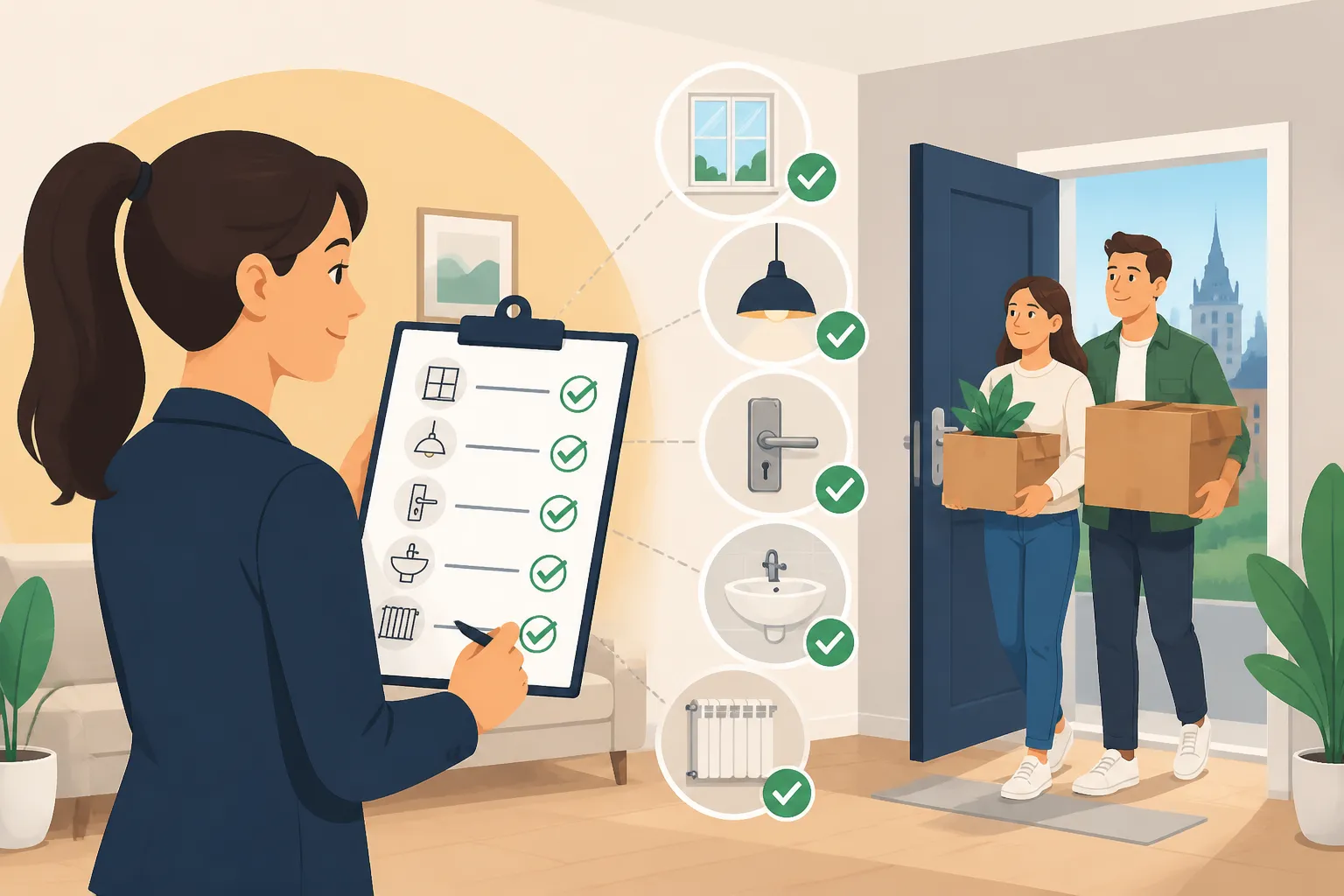
Inventory of Fixtures (État des Lieux): Why It’s Crucial Before Moving In
Landing in a new Belgian apartment often feels like a victory after weeks of battling Immoweb refreshes and competitive viewings, but the real administrative work begins the moment you get the keys. I remember standing in my first Ixelles studio, so distracted by the beautiful high ceilings that I completely missed the deep gouges in the parquet floor hidden under a rug—a mistake that cost me hundreds of euros three years later. This guide provides the deep-dive technical and practical knowledge you need to navigate the mandatory inventory process, protecting your deposit and your peace of mind.
Understanding the Legal Foundation of the État des Lieux
In the Belgian rental market, the état des lieux (inventory of fixtures) is not just a courtesy or a casual walk-through; it is a strict legal requirement. Under Belgian law, specifically reinforced by regional housing codes in Brussels, Flanders, and Wallonia, a detailed written report must be drawn up when the tenant enters the premises. This document serves as the only definitive proof of the property's condition at the start of the lease. Without it, the legal system leans heavily in favor of the landlord.
The Presumption of Good Condition
One of the most dangerous traps for expats is the "presumption of good condition." According to Article 1731 of the Belgian Civil Code, if no inventory is performed, the tenant is legally presumed to have received the property in the exact state it is in when they leave. This means if you move into a flat with cracked tiles or a broken window and fail to document it, the law assumes you broke them. When you go to reclaim your funds from The e-DEPO System: How to Deposit Your Rent Guarantee for Free, you might find yourself footing the bill for repairs that were never your responsibility.
The only way to overturn this presumption is through a rigorous, signed, and dated inventory. It is your primary shield against "deposit poaching." I have seen countless newcomers lose their entire three-month rent guarantee simply because they "didn't want to bother the landlord" with a long list of small scratches. In Belgium, the landlord is rarely being "mean" when they deduct these costs; they are simply following the legal document you both signed.
Mandatory Registration Rules
Many tenants are unaware that the inventory of fixtures must be registered alongside the lease contract. Since 2007, landlords are legally required to register the lease within two months of signing. The état des lieux should be attached to this registration. This is crucial because it provides a fixed date (date certaine) to the document, making it indisputable in a court of law or before a housing tribunal.
If your landlord fails to register the lease, there are specific advantages for the tenant regarding notice periods, but failing to register the inventory specifically puts you at risk during the move-out phase. When you are Registering Your Lease (Enregistrement du Bail): Whose Responsibility?, always ensure that the inventory photos and descriptions are included in the digital filing via MyMinfin. This ensures that the version of the document you have is the same one the tax authorities have, preventing any "surprise" edits later on.
Expert vs Amicable Inventories
You have two choices when performing an inventory: an amicable (à l'amiable) process or a professional expert led process. An amicable inventory involves you and the landlord walking through the property together, taking notes, and signing a document you’ve created yourselves. This is free and common for small studios or student kots. However, for a 3-6-9 Lease Contract: The Standard 9-Year Lease, I highly recommend hiring an expert (expert géomètre or expert immobilier).
A professional expert is neutral. They use standardized terminology and high-resolution photography to document every millimeter of the property. While there is a fee involved, it is usually split 50/50 between the tenant and the landlord. This fee is a small price to pay for a document that acts as an insurance policy against thousands of euros in potential claims. If you are booking through a platform like HousingAnywhere, check if their digital tools include a check-in feature that can supplement or facilitate this process.
The Practical Walkthrough: What to Inspect in Every Room
When you finally step into the apartment for the inspection, do not let the landlord or the expert rush you. Their job is to be efficient, but your job is to be meticulous. It is perfectly acceptable to spend two to three hours inspecting a three-bedroom house. Bring a high-powered flashlight—even during the day—to check the inside of cupboards, the back of radiators, and the corners of the ceiling.
Hidden Defects and Utility Checks
The most expensive problems in Belgian housing are often invisible at first glance. Start by checking the heating system. In Belgium, the tenant is responsible for the Boiler Maintenance (Entretien Chaudière): Tenant Duty in Belgium, but the landlord must provide a system that is functional at the start. Turn on every radiator and wait for it to get hot. If there is a "sludging" sound, it needs bleeding, which should be noted.
Check the water pressure in every tap and look for signs of "calcaire" (limescale) buildup. Limescale is the enemy of Belgian plumbing, especially in Brussels. If the taps are already scaled over, document it, or you may be charged for professional descaling later. Similarly, test every electrical socket. I always carry a small phone charger to ensure the outlets actually provide power. While you are at it, ensure your phone is connected; if you haven't sorted your local SIM yet, using an eSIM from Airalo can ensure you have data to upload your own backup photos to the cloud immediately.
Documenting Surfaces and Finishes
Belgian apartments often feature delicate materials like marble, solid oak parquet, or cement tiles. These are beautiful but notoriously easy to damage. When documenting floors, don't just write "scratches on floor." Be specific: "Three 5cm gouges in the parquet near the south window." If the walls have been freshly painted, look for "reprises" (patchy areas) or "fissures" (cracks).
Windows are another critical area. Check the "joints" (seals) for mold. In the damp Belgian climate, mold is a recurring nightmare for tenants. If there is even a tiny speck of black mold on the silicone in the bathroom or around the window frames, it must be in the report. If you don't, the landlord could claim you failed to ventilate the property properly, making you liable for a professional mold remediation bill. If you find minor issues that aren't dealbreakers, you can often find cleaning supplies or moisture absorbers on Amazon Belgium to keep the place in top shape from day one.
The Role of Detailed Photography
A picture is worth a thousand words, but in a Belgian court, a picture is worth your entire security deposit. The expert will take photos, but you should take your own. Take "context" shots of the whole room, followed by "detail" shots of every defect. Hold a coin or a ruler next to a scratch or a hole to provide a sense of scale.
Once the inspection is over, you usually have a few days (often 7 to 15 days, check your contract) to add "hidden" defects to the report. Use this time! Sleep in the apartment, use the shower, and cook a meal. If you realize the oven fan doesn't work or the toilet has a slow leak that wasn't apparent during the walkthrough, send an email to the landlord and the expert immediately to have it added as an addendum.
Managing the Costs and Professional Experts
The financial aspect of the état des lieux is often a point of confusion for expats. Because Belgium is a federal state, the rules can vary slightly, but the general practice regarding professional fees remains fairly consistent across the Brussels-Capital Region, Flanders, and Wallonia.
| Feature | Amicable (Self-Guided) | Professional Expert |
|---|---|---|
| Cost | Free | €150 – €450 (usually split 50/50) |
| Duration | 30 – 60 minutes | 2 – 4 hours |
| Legal Weight | High (if signed) | Very High (Indisputable) |
| Detail Level | Subjective / Basic | Objective / Exhaustive |
| Best For | Student kots / Short-term | Long-term family homes / High-end flats |
Who Pays for the Inventory Expert?
In almost all standard rental cases, the cost of the expert is shared equally between the landlord and the tenant. This is stipulated in the Belgian rental legislation. If a landlord insists that you pay 100% of the expert's fee, be cautious; this is often a sign they are trying to circumvent standard practice. The only exception is if you, as the tenant, insist on a specific, highly expensive expert against the landlord's wishes.
When budgeting for your move, don't forget to account for this fee alongside your first month's rent and your deposit. You will pay for an état des lieux d'entrée (entry) and again for an état des lieux de sortie (exit). While it feels like an extra tax on moving, it is actually your best defense against unfair deductions. If you are Moving to Belgium with Family: Housing, Schools, and Childcare, these small administrative costs are essential for protecting the larger sums of money you'll be committing to a family-sized home.
Finding a Reliable Expert in Brussels, Antwerp, or Ghent
If the landlord asks you to find the expert, you should look for someone certified by the Union Belge des Experts Immobiliers (UBEX). In Brussels, many experts are bilingual (French/Dutch), and many also speak excellent English given the international nature of the city.
In Antwerp and Ghent, the process is often handled with Flemish efficiency. You can search for an "erkende schatter-expert" to ensure they have the right credentials. Using a local expert is beneficial because they understand the specific quirks of regional housing—such as the humidity issues common in older Ghent canal houses or the specific parquet types found in Antwerp’s stately apartments.
Using HousingAnywhere for Short-Term Compliance
For those moving for a shorter period—perhaps a six-month corporate secondment or a master's degree—hiring a formal expert might seem like overkill. Platforms like HousingAnywhere often cater to this mid-term market and have built-in systems to help document the property condition. However, even with a digital platform, I always advise my fellow expats to print out a basic inventory template and have the landlord sign it on the day of the key handover. Never rely solely on "the photos on the website" as proof of condition; those photos were likely taken when the apartment was brand new.
Resolving Disputes During the Move-Out Process
The true value of the entry inventory is only realized when you are ready to leave. This is when the état des lieux de sortie happens. The expert (ideally the same one who did the entry report) will compare the current state of the apartment with the original document.
Normal Wear and Tear vs Tenant Damage
This is the most common battleground in Belgian rentals. You are not responsible for "usure normale" (normal wear and tear) or "vétusté" (age-related depreciation). For example, if the paint has faded slightly after nine years, that is the landlord's cost. However, if there are crayon marks or grease stains on the walls, that is tenant damage.
The expert uses a "vétusté" grid to calculate how much you should pay. If you burn a hole in a 10-year-old carpet, you shouldn't pay for a brand-new carpet. You should pay the "residual value" of the carpet. Having a detailed entry report allows the expert to see exactly how old the finishes were when you moved in. This ensures you are only paying for the damage you caused, not for the general aging of the building.
The Link Between the Inventory and the e-DEPO
Once the exit report is signed, any agreed-upon damages are deducted from your rental deposit. In the modern Belgian system, most deposits are held in The e-DEPO System: How to Deposit Your Rent Guarantee for Free. To release these funds, both the landlord and the tenant must log in (usually via Essential Belgian Apps to Download: SNCB, Itsme, Payconiq, and TooGoodToGo) and agree on the final amount.
If there is a dispute and the inventory is vague, the landlord may refuse to release the funds, leading to a stalemate. If you have a professional état des lieux, you can take the dispute to the Juge de Paix (Justice of the Peace). The judge will almost always rule based on the expert's report. Without that report, you are in a "he-said, she-said" situation that can drag on for months, leaving your money trapped in a state-blocked account.
Negotiation Strategies for Deposit Returns
If the exit report shows some damage, don't panic. You can often negotiate. For example, if the expert notes that the apartment wasn't cleaned to a "professional standard," the landlord might want to deduct €300 for a cleaning crew. You can offer to come back the next day and clean it yourself or hire a cheaper service.
However, this only works if you have the entry report to prove that the apartment wasn't "professionally clean" when you arrived. If the entry report says "Appartement en parfait état de propreté" (Perfectly clean condition) and you signed it, you are legally obligated to return it in that same state. This is why I always tell expats: never sign "perfect condition" unless the place is actually spotless.
Common Pitfalls and Expat Horror Stories
After years in the Belgian expat community, I’ve heard it all—from the landlord who claimed a 50-year-old door was "antique" to charge for a scratch, to the student who lost their deposit because they didn't document a missing lightbulb.
The Too Busy to Check Trap
The most common mistake is being too tired or stressed on move-in day to do the inventory properly. You've just arrived from another country, you're carrying suitcases, and you just want to sit down. The landlord says, "Everything is fine, don't worry, I'm a reasonable person."
Do not fall for this. Even the most "reasonable" landlord can change their tune when they see a €2,000 repair bill three years later. If the landlord is in a hurry, tell them you will perform your own check and send the photos within 48 hours. Ensure this right is written into your lease. In the meantime, get your utilities sorted by Setting Up Electricity and Gas: Engie, Luminus, and Peak Tariffs so you have light to actually see what you're inspecting.
Language Barriers in Legal Descriptions
Inventory reports are often written in highly technical French or Dutch. Terms like "éclat" (chip), "griffe" (scratch), or "traces d'humidité" (signs of damp) are crucial. If you don't understand a word in the report, do not sign it. Use a translation app or ask a local friend to help.
I once knew a couple who signed a report that described the kitchen as "équipée et en bon état." When they left, the landlord charged them for a missing microwave that was never there. They hadn't realized that "équipée" in that specific context included a list of small appliances mentioned in an appendix they hadn't read. If you find yourself in a bind with language, many local services can help you translate your Housing & Living documents to ensure you know exactly what you are agreeing to.
Handling Missing Keys and Meters
The état des lieux is also the moment you record the meter readings for water, gas, and electricity. This is vital. If you don't record the readings, the energy company will estimate your usage, often resulting in a massive bill at the end of the year.
Make sure the inventory also lists the exact number of keys you received. Belgian high-security keys (like those from Litto or Yale) can cost €100-€150 per key to replace because they require a special code card. If you receive three keys but the report says four, you will be paying for that "missing" fourth key when you leave. Document everything—even the number of remote controls for the garage or the "badges" for the bin room.
Summary Checklist for a Successful Inventory
To ensure you are fully protected, follow this streamlined workflow during your move-in phase:
- Confirm the Expert: Agree with your landlord on who will perform the inventory at least two weeks before moving in.
- Charge Your Devices: Ensure your phone is charged for photos and you have an internet connection via Airalo for immediate cloud backup.
- Bring Your Own Tools: A flashlight, a phone charger (to test outlets), and a measuring tape are essential.
- Test Everything: Run the dishwasher, check the oven, flush every toilet, and open/close every shutter (volet).
- Review the Draft: Never sign on the spot if the expert provides a digital tablet. Ask them to email the PDF so you can review the descriptions in detail at home.
- Register the Document: Ensure a copy of the signed état des lieux is sent to the registration office along with your lease.
- Keep a Backup: Store the final signed PDF and your original photos in a secure cloud folder (and perhaps a physical USB) for the duration of your tenancy.
By taking the état des lieux seriously, you are doing more than just filling out paperwork; you are asserting your rights as a tenant in the Belgian system. It is the single most important step in ensuring that your time in your new home ends as smoothly as it began.
Disclaimer
This guide is for informational purposes only and does not constitute legal advice. Belgian rental laws are subject to regional variations (Brussels, Flanders, Wallonia) and frequent updates. Always consult with a qualified legal professional, a certified property expert, or the official regional housing authorities before signing any binding documents or pursuing legal action.