Moving to Belgium with Family: Housing, Schools, and Childcare
Moving to Belgium with a family often feels like drowning in a sea of color-coded garbage bags and school enrollment lotteries. I remember standing in the rain outside a Brussels commune, holding a crying toddler and a folder of apostilled birth certificates, wondering if we would ever actually settle in. This guide simplifies the chaos of finding a family home, navigating the complex school systems, and securing childcare in the land of chocolate and bureaucracy.
Finding a Family Home in the Heart of Europe
Landing in Belgium with children in tow requires a different strategy than the solo expat experience. You aren't just looking for four walls and a roof; you are looking for proximity to parks, safe bike paths, and, most importantly, a manageable commute to schools that often start earlier than you might expect. The Belgian housing market is idiosyncratic, moving at a pace that can feel agonizingly slow until a "For Rent" sign (À Louer / Te Huur) suddenly disappears within hours of being posted.
Regional Nuances and Family Neighborhoods
When you first begin your search, the choice between Brussels, Flanders, and Wallonia will dictate more than just your address—it determines the language your neighbors speak and the local regulations you must follow. Brussels is the primary hub for international families, specifically the communes of Ixelles, Etterbeek, and the two Woluwes (Saint-Lambert and Saint-Pierre). These areas offer a dense concentration of parks like the Bois de la Cambre and easy access to tram lines.
For those seeking more green space and a suburban feel, the Flemish "green belt" (Vlaamse Rand) is highly popular. Towns like Tervuren, Overijse, and Waterloo (which is in Wallonia) are expat magnets because of their large houses and proximity to international schools. However, keep in mind that living in Flanders while working in Brussels might mean a language barrier at your local town hall. If you need a temporary solution while you scout these neighborhoods, platforms like HousingAnywhere can be a lifesaver for finding mid-term stays that allow your family to breathe while you hunt for a long-term lease.
The Apartment vs House Dilemma
In the city centers, especially Brussels and Antwerp, large apartments (known as "maisons de maître" or "herenhuizen" when they occupy an entire floor of an old townhouse) are common. These often feature high ceilings and parquet floors but may lack elevators or modern insulation. For families, the Lack of a private garden is usually the biggest drawback.
If you opt for a detached house (villa) in the suburbs, you gain space but inherit the responsibility of garden maintenance and higher heating costs. Belgian houses are notoriously "solid," built of brick and concrete, but older ones can be prone to humidity. Always check the EPC (Energy Performance Certificate) rating before signing. A house with a low rating will result in eye-watering gas bills during the grey Belgian winters. To help furnish these larger spaces quickly, using Amazon Belgium for basics like heaters, dehumidifiers, or child-safety gates is often more efficient than navigating a maze of industrial zones in a rental car.
Navigating the Rental Market Search
Most Belgians use a few key websites for their search, primarily Immoweb and Immovlan. However, for families, Facebook groups specifically for "Expat Housing Brussels" can yield results that haven't hit the main market yet. Be prepared for the "unfurnished" reality in Belgium. In this country, "unfurnished" literally means no light fixtures, no curtains, and occasionally, no kitchen appliances.
When you view a property, bring a "rental CV." Landlords are increasingly risk-averse and want to see proof of income, your residence permit status, and a bit about your family. Demonstrating that you are a stable, long-term tenant is your best leverage. Since you'll need to stay connected to map these locations and respond to landlords instantly, having a local data plan via Airalo ensures you aren't hunting for open Wi-Fi while standing on a rainy street corner in Uccle.
The Belgian Rental Maze and Legal Protections
Once you find the perfect house, the real administrative work begins. Belgium has some of the strongest tenant protection laws in Europe, but they come with a rigid framework that can be confusing for newcomers. You cannot simply "move in" with a handshake. There is a specific sequence of events involving registration, deposits, and inspections that must be followed to protect your rights.
Understanding the 3-6-9 Lease
The standard residential lease in Belgium is known as the 3-6-9 contract. While it is technically a nine-year lease, it is designed to give both parties long-term security. As a tenant, you can leave at any time, provided you give three months' notice. However, if you leave during the first three years, you will likely owe a financial penalty (three months' rent in the first year, two in the second, and one in the third).
This structure is a shock to many expats who are used to one-year renewable leases. It is vital to read our deep dive on Understanding the 3-6-9 Lease Contract: The Standard 9-Year Lease to understand how to negotiate "diplomatic clauses" that might waive these penalties if your company relocates you. Never assume a verbal agreement with a landlord will hold up in a Belgian court; if it isn't in the registered contract, it doesn't exist.
The Rental Guarantee and e-DEPO
You will be required to provide a rental guarantee, usually equivalent to two or three months of "base rent" (excluding charges). In the past, this was done via a blocked bank account that required both parties to visit a branch. Today, the Belgian government has modernized this through a digital platform.
I highly recommend using The e-DEPO System: How to Deposit Your Rent Guarantee for Free. It is a secure, government-managed portal that holds your money and ensures the landlord cannot access it without your consent at the end of the lease. It also saves you the hassle of trying to open a specialized bank account before you even have your Belgian residence card. Be wary of any landlord who asks for the deposit to be transferred directly to their personal bank account—this is a major red flag and often illegal.
The Inventory of Fixtures (État des Lieux)
In Belgium, the "inventory of fixtures" is a formal, legally binding document that describes the exact state of the property down to the last scratch on the floorboard. It is usually performed by a professional expert (expert immobilier), and the cost is split between the landlord and the tenant.
Do not treat this as a formality. If a mark isn't noted in the report when you move in, you will be charged for it when you move out. Take your own photos and ensure they are time-stamped. Review our guide on Inventory of Fixtures (État des Lieux): Why It's Crucial Before Moving In to see exactly what you should be looking for during that three-hour walkthrough. This document is your only defense when it comes to getting your deposit back years down the line.
| Expense Category | Estimated Cost (Family of 4) | Frequency |
|---|---|---|
| Rent (3-bedroom in Brussels) | €1,600 – €2,500 | Monthly |
| Utilities (Gas, Water, Elec) | €250 – €450 | Monthly |
| Rental Deposit | 2-3 Months' Rent | Once |
| Expert Inventory Fee | €150 – €300 | Once |
| Home Insurance | €20 – €40 | Monthly |
| Commune Registration Fee | €25 per person | Once |
Navigating the Education System
Belgium’s education system is world-class but notoriously complex due to its linguistic divide. There is no "national" school system; instead, the Flemish Community and the French Community each run their own independent systems. For expat families, this means deciding early on which linguistic path your child will follow, as switching later can be difficult.
Public Schools: French vs Dutch
Public education (enseignement officiel / officieel onderwijs) is free and generally excellent. The French-speaking schools (FWB) and Dutch-speaking schools (Vlaams Onderwijs) have different calendars, different curricula, and even different philosophies on homework and discipline.
If you live in Brussels, you can choose either system. Many expats choose the Dutch system (even if they don't speak Dutch) because it is perceived to have higher standards in mathematics and science, and it guarantees the child will become fluently bilingual (Dutch and French). However, these schools are often oversubscribed, and you may face a lottery system for enrollment. French-speaking schools are more numerous in Brussels and Wallonia and are often the default for those coming from other Francophone countries or those who want a softer immersion into the local culture.
International and European Schools
For families who are only in Belgium for a few years, international schools are a popular choice. These schools offer the International Baccalaureate (IB) or the British/American curricula, ensuring a seamless transition when you eventually move to your next posting. Brussels is also home to the European Schools (Schola Europaea), which are primarily for the children of EU institutional staff but occasionally accept private students if space permits.
These institutions provide a ready-made community for expat parents, which can be invaluable for your mental health during the first year. You can find more details on specific options in our guide to International Schools in Brussels: British, American, and European. Be aware that tuition fees at these schools are high, often ranging from €15,000 to €35,000 per year, so ensure your relocation package covers these costs before committing.
The Enrollment Process (Inscription)
Enrolling your child in a Belgian school is not as simple as showing up on the first day. In many communes, there is a specific "inscription" period, often in March or April, for the following September. If you miss this window, you may be relegated to a waiting list for your preferred school.
You will need several documents: the child's birth certificate (translated and apostilled if from outside the EU), proof of residency (your annex or eID card), and vaccination records. Belgium is very strict about vaccinations, especially the polio vaccine, which is the only one legally mandated for school attendance. If you are arriving mid-year, your options will be significantly more limited, and you may have to settle for a school further from your home until the next academic cycle begins.
Childcare Solutions for Working Parents
Childcare in Belgium is a "good news, bad news" situation. The good news is that it is heavily subsidized and high-quality. The bad news is that the waiting lists are legendary. In major cities, it is common for local parents to register their child for a crèche (nursery) the moment they see a positive pregnancy test.
Crèches and Childminders
There are two main types of formal childcare for children aged 0 to 3: the "crèche" (a larger facility) and the "accueillante" (a childminder who looks after a small group of children in their own home). Crèches are regulated by either Kind en Gezin (in Flanders) or ONE (in Wallonia and Brussels).
Subsidized spots are "income-related," meaning the price you pay depends on your household's total salary. This can make childcare incredibly affordable compared to the UK or the US. However, getting an income-related spot as a new expat is difficult. You may need to look at "private" crèches, which charge a flat daily rate (usually €30 – €60 per day). Even for these, you should start contacting facilities as soon as your move is confirmed.
Finding a Spot and Subsidies
To find a spot, you should use the centralized portals for your region (My.Childcare.brussels for Brussels). Don't rely solely on the digital system, though; nothing beats visiting a crèche in person with your child and a polite, persistent attitude. If you are struggling with the language, many crèches in the Woluwe areas are accustomed to English-speaking parents.
Once your child is enrolled, you are eligible for the "Groeipakket" or "Allocations Familiales." This is a monthly allowance paid to every child living in Belgium, regardless of the parents' nationality. This money is intended to help with the costs of raising a child and is paid automatically once you are registered at the commune. You can learn more about how to claim this in our article on Child Benefit (Groeipakket / Allocations Familiales) Payouts.
After-School Care (Garderie)
Once your child starts "école maternelle" (nursery school) at age two and a half, the childcare landscape changes. School hours in Belgium are typically 8:30 AM to 3:30 PM, which doesn't align with most corporate schedules. To bridge the gap, almost all schools offer "garderie" (after-school care) until 6:00 PM for a very small fee.
On Wednesdays, schools usually close at noon. This is a quirk of the Belgian system that catches many expats off guard. You will need to arrange for a "stage" (holiday camp) or find a local "babysit" for Wednesday afternoons. Many communes and local sports clubs offer specific Wednesday afternoon activities to help working parents manage this mid-week hurdle.
Healthcare for the Whole Family
Belgian healthcare is frequently ranked among the best in the world, but it operates on a "reimbursement" model that requires some initial paperwork. As a family, your first priority upon arrival is to ensure everyone is covered under a "Mutuelle" or "Ziekenfonds."
Registering with a Mutuelle
In Belgium, public health insurance is mandatory. You can choose from several providers like Partenamut, CM, or Helan. There is no difference in the basic coverage provided by these funds, as the rates are set by the government. However, different funds offer different "extra" benefits, such as larger refunds for sports club memberships, osteopathy, or prenatal classes.
As an expat, the registration process can feel like a circular logic puzzle: you need a bank account to register for the mutuelle, but you often need your residence documents to open the bank account. Follow our Mutuelle and Ziekenfonds: Public Health Insurance Registration Guide to navigate this without losing your mind. Once registered, you will receive "vignettes" (stickers) to put on your medical documents and eventually an ISI+ card for your children who don't yet have an eID.
Finding a Pediatrician and GP
Unlike some countries where you are assigned a doctor based on your catchment area, in Belgium, you have total freedom of choice. You can book an appointment with any General Practitioner (GP) or specialist. For families, finding a "conventioned" pediatrician is key. A conventioned doctor agrees to charge the official state-set rates, ensuring your out-of-pocket costs remain low.
It is highly recommended to register a "Global Medical Record" (DMG/GMD) for each family member with your chosen GP. This centralizes your medical history and grants you higher reimbursement rates for consultations. For specific advice on children's health, including the vaccination schedule, see Family Health in Belgium: Pregnancy, Birth, and Pediatric Care.
Pharmacies and Emergency Care
Pharmacies in Belgium are highly regulated and easily identifiable by a flashing green cross. They are your first port of call for minor ailments. Note that most medications, including strong painkillers and antibiotics, require a prescription. If you need a doctor outside of business hours, do not go to the ER for a simple fever; instead, call the "médecin de garde" (on-call doctor) service.
In a true emergency, the number to call is 112. Belgian operators are generally multilingual and can dispatch an ambulance or the MUG/SMUR (a specialized mobile intensive care unit). Be aware that ambulance transport is not free and is only partially covered by the mutuelle, so ensure you have adequate hospitalization insurance, often provided as a benefit by Belgian employers.
Daily Life and Community Integration
Integrating into Belgian life as a family is both easier and harder than it looks. While the "Belgian chill" means people generally leave you alone, it can also feel like a wall of polite indifference. Breaking through that wall usually requires joining the local community through schools, sports, or "commune" activities.
Transport and Mobib Cards
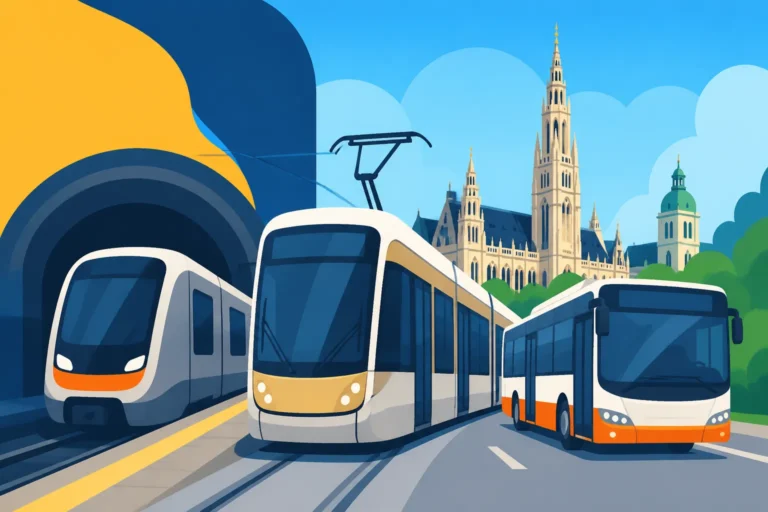
Belgium is a small country with a dense rail network, making it possible to live without a car, especially in the cities. For daily commutes, the STIB (in Brussels), De Lijn (in Flanders), and TEC (in Wallonia) provide comprehensive bus, tram, and metro coverage.
Every family member over the age of six will need a Mobib card. This is a central electronic card that you can load with various transport passes. Children under 12 often ride for free or at a significantly reduced rate, but they still need a registered Mobib card to pass through the metro gates. Check out The Mobib Card: How to Load Tickets for All Belgian Transport to set this up for your kids before their first day of school.
Making Friends and Expat Groups
The "school gate" is the primary social hub for expat parents. Don't be afraid to strike up a conversation, even if your French or Dutch is shaky. Most Belgians speak excellent English and appreciate the effort. Beyond the school, organizations like the "Brussels Newcomers" or "BCT" (Brussels Childbirth Trust) offer playgroups, coffee mornings, and support networks for families.
If you are struggling with the transition, remember that "culture shock" is a real medical phenomenon in the expat world. Taking time to explore the country—from the medieval streets of Bruges to the forests of the Ardennes—can help Belgium feel like home rather than just a temporary work assignment.
Managing the Paperwork (Commune Registration)
Within eight days of arriving in Belgium, you must present yourself at your local "Maison Communale" or "Stadhuis" to register your presence. This is the start of the process to get your eID (electronic identity card). For a family, this means bringing everyone's passports, marriage certificates, and birth certificates (legalized or apostilled).
The commune will then send a police officer to your home to verify that you actually live there. This "police check" is a quirky but mandatory part of Belgian life. Do not panic; the officer just wants to see your name on the doorbell and ensure the house is fit for habitation. Learn more about the timeline in Registering at the Commune: The 8-Day Rule After Arrival. Once this is done, you can finally set up Itsme Authentication: How to Set Up Belgium's Vital Digital ID, which will become your most-used app for everything from banking to checking your children's medical records.
Administrative Must-Dos Upon Arrival
The first 30 days are a whirlwind of appointments and "annexes." To keep your family sane, prioritize the tasks that grant you digital access to the state. Without a Belgian National Number (which you get upon registration), you are essentially invisible to the system.
- Commune Visit: Secure your Annex 15 or Annex 8. This is your temporary "golden ticket."
- Banking: Open a resident account. You'll need this for your salary, the rental deposit, and utility direct debits.
- Itsme Setup: As soon as you have your eID or a temporary token from the commune, activate Itsme. It replaces the need for a physical card reader in 90% of cases.
- Utilities: Transfer the electricity, gas, and water meters into your name. In Belgium, you don't "sign up" for a new service; you "take over" the existing connection from the previous tenant using a specific energy transfer form.
- Insurance: Purchase "Family Liability" insurance (Responsabilité Civile). It costs about €25 a year and covers you if your child accidentally breaks a neighbor’s window or knocks someone over with their bike. It is considered an essential "good father of the family" (bon père de famille) protection in Belgium.
Moving to Belgium with a family is a marathon, not a sprint. There will be days when the bureaucracy feels insurmountable and the rain seems permanent. But once you’re settled, with a "fritkot" nearby and a reliable mutuelle covering your back, you’ll find that Belgium is one of the most stable and nurturing places in the world to raise a family.
Disclaimer
This guide is intended for informational purposes only and does not constitute legal, financial, or professional advice. Belgian immigration laws, rental regulations, and school enrollment policies are subject to frequent changes. Always verify current requirements with your local commune, the Belgian Immigration Office, or a qualified legal professional before making significant life decisions.