Standard vs Bi-Hourly Electricity Meters: Day and Night Tariffs
Opening your first Belgian electricity bill can feel like a direct assault on your bank account, especially when you realize how much of your "gross" salary actually disappears into heating a drafty Ixelles apartment. I still remember the cold sweat I broke into when my first annual "regularization" bill arrived, demanding an extra 800 Euro because I hadn't understood how my meter worked. This guide solves the mystery of the Belgian energy grid so you can choose between standard and bi-hourly tariffs and stop overpaying for your morning coffee.
Decoding the Belgian Electricity Meter System in 2026
When you move into a new place, whether you found it through HousingAnywhere or a local agency, the electricity meter is often the last thing on your mind. You’re busy checking the Inventory of Fixtures (État des Lieux): Why It's Crucial Before Moving In and trying to figure out where the fuse box is. However, the type of meter installed in your basement or hallway dictates exactly how much you pay per kilowatt-hour (kWh).
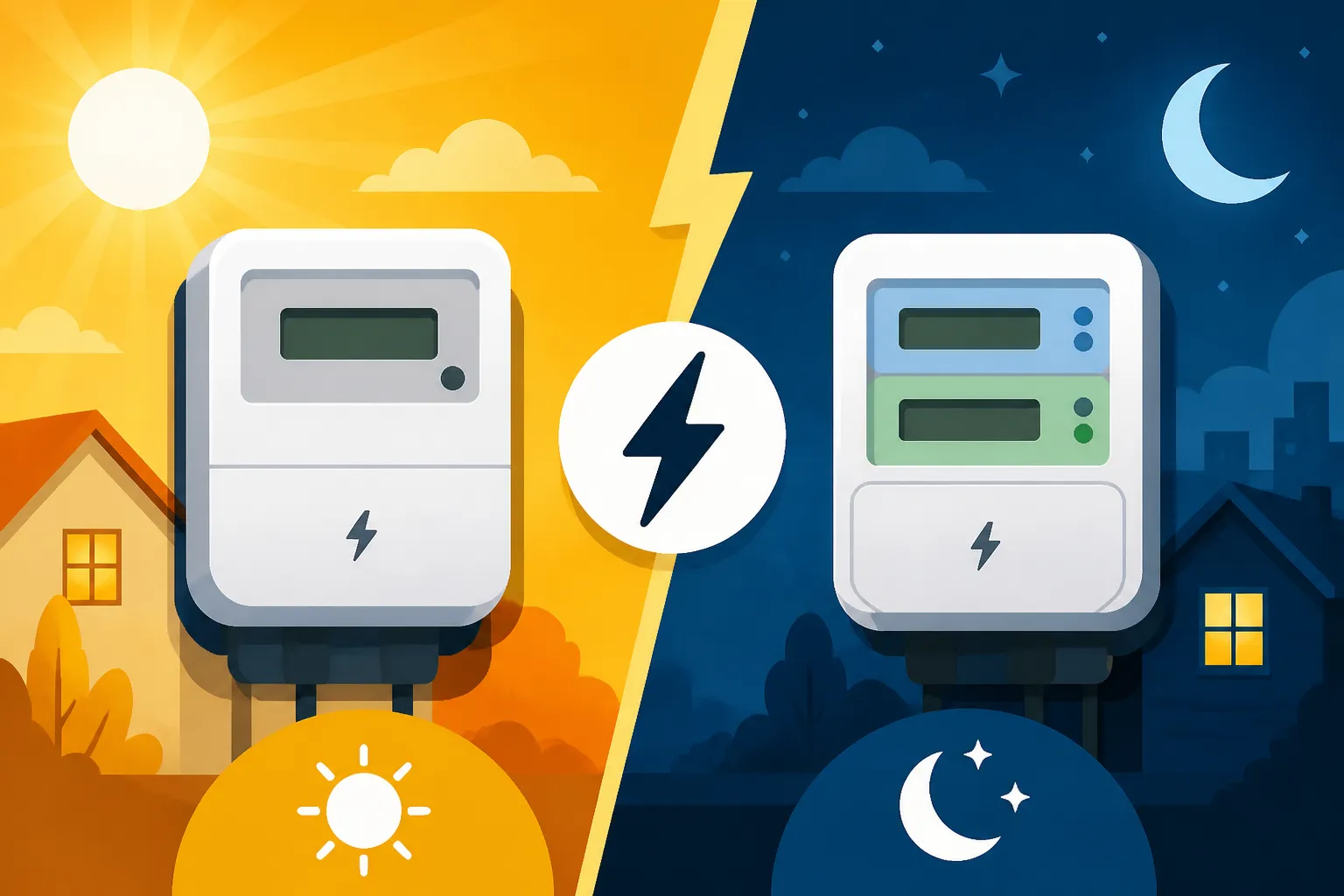
In Belgium, you will generally encounter three types of setups: the standard (mono-horaire), the bi-hourly (bi-horaire), and the increasingly common smart meter (compteur communicant or digitale meter). The standard meter is straightforward; it has one counter that spins regardless of the time of day. You pay a flat rate for every watt you consume.
The bi-hourly meter, conversely, features two different counters. One tracks your "Day" consumption (Heures Pleines / Piekuren) and the other tracks "Night and Weekend" consumption (Heures Creuses / Daluren). The logic used to be simple: electricity is cheaper at night when the factories are closed and the grid has surplus energy. While the price gap has narrowed due to the influx of solar energy during the day, the bi-hourly system remains a staple of Belgian domestic life.
If you are just settling in, you might also want to look into Utilities and Home Setup: Electricity, Water, Gas, and Internet to ensure your entire home is optimized. And if you’re waiting for your permanent Wi-Fi to be installed, using Airalo for an e-SIM can keep you connected while you research energy providers like Engie, Luminus, or TotalEnergies.
The Standard Meter: Simplicity at a Price
The mono-horaire meter is the "set it and forget it" option. You don't have to worry about what time you start the laundry or if you’re roasting a chicken at 2:00 PM on a Tuesday. The rate is consistent. For many expats living in small studios or those who work from home and use a lot of power during the day, this is often the most economical choice.
The primary benefit of the standard meter in 2026 is the lower "standing charge" or fixed annual fee. Because the grid operator doesn't have to manage two separate streams of data for your home, the administrative costs are slightly lower. If your total annual consumption is below 2,000 kWh—common for a single person in a well-insulated apartment—the savings from a bi-hourly rate might not even cover the extra fixed fees of the meter itself.
The Bi-Hourly Meter: The Night Owl's Best Friend
The bi-hourly meter is the classic Belgian "hack" for lower bills. Typically, the "Night" rate kicks in at 10:00 PM and runs until 7:00 AM on weekdays. The real kicker, though, is the weekend. From Friday night at 10:00 PM until Monday morning at 7:00 AM, every single spark of electricity you use is billed at the lower "Creuse" rate.
This system is perfect for families or those with high-energy appliances. If you have a dishwasher, a dryer, and an electric boiler, you can save significant money by simply setting your appliances to run after you go to bed. I spent my first year in Brussels running the washing machine at 11:00 PM every Sunday night just to take advantage of those weekend rates. It sounds like a hassle, but when you're looking at the Cost of Living in Belgium 2026: Singles, Couples, and Families, every ten Euro saved on utilities is ten Euro more for moules-frites.
Comparing the Costs: Standard vs Bi-Hourly Tariffs
To decide which meter is right for you, you need to understand the "30% Rule." Historically, energy experts in Belgium have suggested that if you can shift more than 30% to 35% of your total electricity usage to the night and weekend periods, the bi-hourly meter will save you money.
In 2026, the price difference between "Day" and "Night" rates is approximately 15% to 20%. While the Night rate is cheaper, the Day rate on a bi-hourly plan is actually higher than the flat rate on a standard plan. This is the trap many expats fall into. They sign up for a bi-hourly plan but continue to run their high-draw appliances during the day, effectively paying a "penalty" rate for their convenience.
| Meter Type | Best For | Typical Night Hours | Pros | Cons |
|---|---|---|---|---|
| Standard (Mono) | Remote workers, singles, small apartments | N/A | Lower fixed fees, no schedule stress | No potential for "weekend" savings |
| Bi-Hourly (Bi) | Families, EV owners, heavy appliance users | 10 PM – 7 AM + Weekends | Massive savings on weekends/nights | Higher "Day" rates than standard |
| Exclusive Night | Storage heaters (Old houses) | 11 PM – 6 AM | Lowest possible rate for heating | Only works for specific circuits |
It is also worth noting that your EPC Ratings (PEB): Why Energy Certificates Matter for Winter Heating will influence how much electricity you use. If you are in a poorly insulated "G-rated" apartment with electric heaters, a bi-hourly meter is almost mandatory, as you will want to "charge" your heaters at night when the price is lowest. You can find many energy-saving gadgets on Amazon Belgium, such as smart plugs that can be programmed to turn on devices only during off-peak hours.
The Shift Toward Smart Meters (Digitale Meters)
Belgium is currently in the middle of a massive rollout of digital or "smart" meters. In Flanders, Fluvius is leading the charge, and in many cases, you no longer have a choice—if they come to replace your old spinning dial, you get a digital one. In Brussels and Wallonia, the rollout is slower but accelerating.
The beauty of the digital meter is that it can act as both a standard and a bi-hourly meter without any physical changes to your home. You simply tell your energy provider which contract you want, and they flip a digital switch. This makes it much easier to test a tariff for a year and switch back if it doesn’t work for your lifestyle.
If you are Renting in Belgium: Apartments, Contracts, and Tenant Rights (2027), you should check with your landlord or the Registering Your Lease (Enregistrement du Bail): Whose Responsibility? documents to see who is responsible for any costs associated with changing a physical meter if it is not a mandatory digital upgrade.
Practical Steps to Optimize Your Electricity Usage
Regardless of which meter you have, there are cultural "rules" and practical steps you should follow to keep the peace and keep your bills low. For instance, Everyday Rules in Belgium: Garbage Sorting, Noise, and Etiquette dictate that while you might want to run your washing machine at 3:00 AM to save money on a bi-hourly meter, your neighbors in a thin-walled apartment building might not appreciate the spin cycle. Always check your building’s "Règlement de Copropriété."
Identifying Your Meter and Reading the Numbers
If you’ve just moved in, look at your meter. If you see two rows of numbers—one marked with a "sun" icon and one with a "moon"—you have a bi-hourly meter. If there is only one row, you are on a standard rate.
For bi-hourly users, the "sun" counter (Code 1.8.1 on digital meters) tracks peak hours, and the "moon" counter (Code 1.8.2) tracks off-peak. When you submit your readings once a year to Sibelga (Brussels), Fluvius (Flanders), or ORES (Wallonia), make sure you don't mix them up. I once swapped the numbers on my form and spent three months fighting a bill that claimed I had used 5,000 kWh at 2:00 PM on a Tuesday.
Managing High-Consumption Appliances
If you want to make the bi-hourly meter work for you, you need to be disciplined.
- Laundry: Only wash and dry clothes on Saturdays and Sundays.
- Dishwashing: Set the "Delay Start" timer on your machine to begin at midnight.
- Water Heating: If you have an electric boiler, ensure it is on a timer to heat up between 11:00 PM and 6:00 AM.
- Cooking: While you can’t exactly eat dinner at midnight, try to do your "meal prep" or heavy baking on the weekends.
If your apartment has an old boiler, remember that Boiler Maintenance (Entretien Chaudière): Tenant Duty in Belgium is your responsibility and an inefficient boiler will eat up any savings you make from your meter type. When buying new appliances to replace ones in a furnished flat, Buying Furniture and Appliances: IKEA, Krefel, and Second-Hand Shops often carry "A-rated" energy-efficient models that pay for themselves in energy savings within two years.
Which Tariff Should You Choose in 2026?
The decision ultimately comes down to your "at-home" profile. With more people working from home in Belgium than ever before, the standard meter is seeing a resurgence in popularity. If you are running two laptops, a second monitor, and a coffee machine for eight hours a day, the bi-hourly "Day" penalty might cost you more than the "Night" savings.
However, if you are a traditional office worker who is out of the house from 8:00 AM to 6:00 PM, the bi-hourly meter is almost certainly the winner. You are naturally using most of your power during the "Night" and "Weekend" windows anyway.
If you are unsure, I recommend starting with the standard rate. It’s easier to calculate your budget, and you won’t feel guilty for doing a load of laundry on a Wednesday afternoon. After six months, check your consumption. If you notice that you naturally use a lot of power on the weekends, call your provider and ask to switch to a bi-hourly contract. In the world of 2026 digital meters, this is often just a phone call away and requires no technician visit.
Disclaimer
The information provided in this guide is for informational purposes only and based on energy market conditions in Belgium as of June 2026. Energy prices, grid regulations, and smart meter rollout schedules are subject to change by regional regulators (Brugel, VREG, CWaPE). Always consult with your specific energy provider and review your individual contract terms before making changes to your utility setup. This content does not constitute financial or legal advice.