Renovating Properties: EPC Subsidy Applications for Energy Upgrades
Staring at a G-rated energy certificate while feeling a draft whistle through your century-old Brussels window frames is a rite of passage for many expats. I remember shivering through my first winter in a high-ceilinged Ixelles apartment, wondering why my heating bill looked like a mortgage payment. This guide breaks down how to navigate Belgium's complex EPC subsidy systems to make your home energy-efficient without draining your savings.
Understanding the EPC Landscape and Why It Matters for Renovations
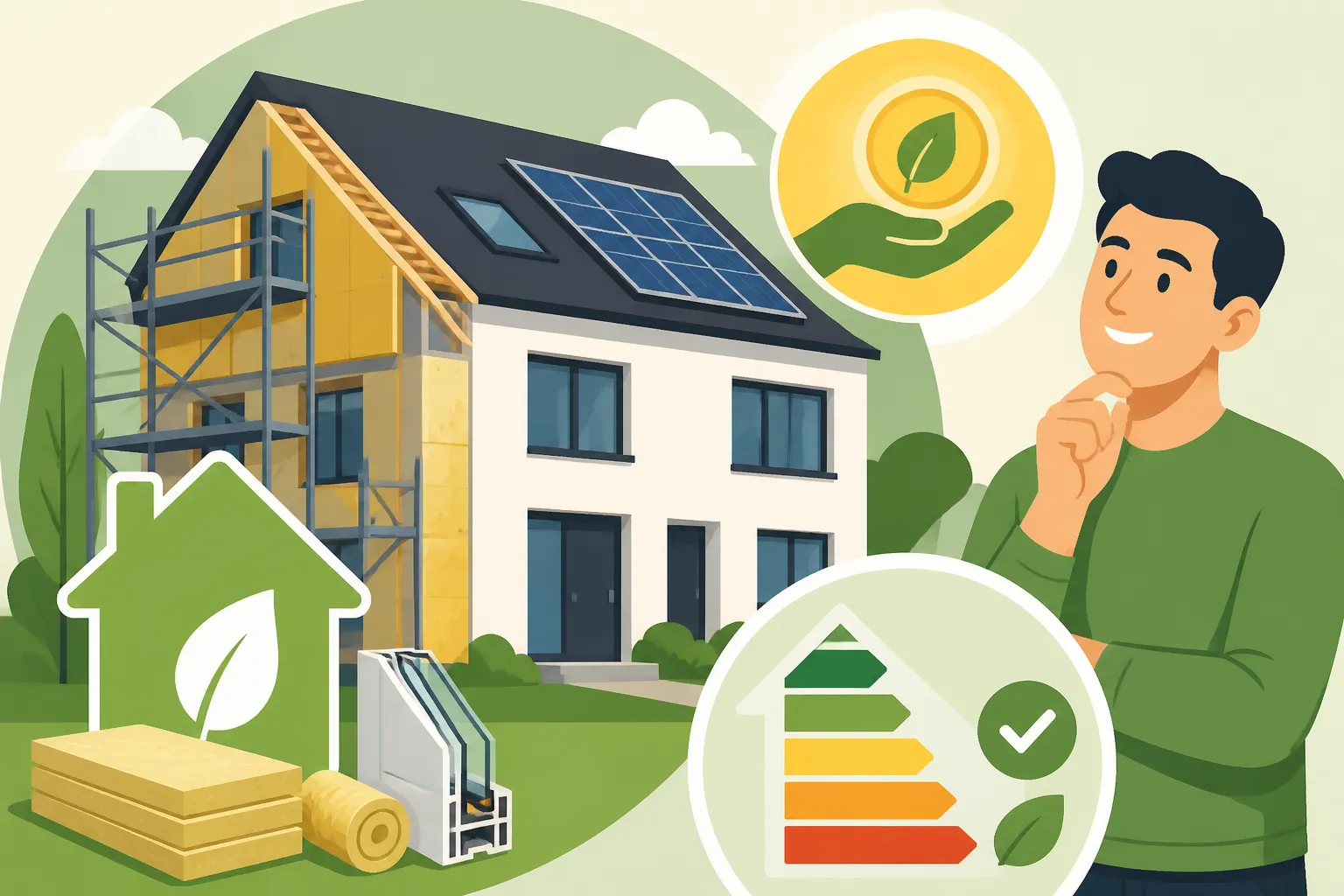
In Belgium, the Energy Performance Certificate—known as EPC in Flanders and PEB in Brussels and Wallonia—is the heartbeat of the real estate market. It ranks properties on a scale from A (super efficient) to G (essentially a tent). If you have recently purchased a home or are looking at Buying Property in Belgium as an Expat: Process and Taxes, you have likely noticed that the rating significantly impacts the price and your future renovation obligations.
The Belgian government is currently in a massive push to upgrade the national housing stock. This isn't just about the environment; it is about energy independence and reducing the Cost of Living in Belgium 2026: Singles, Couples, and Families. For many residents, the goal is to move a property from a dismal E or F rating up to at least a C or B. However, the path to achieving this is littered with administrative hurdles. Each region—Flanders, Brussels, and Wallonia—has its own set of rules, its own portal, and its own subsidy amounts.
When I first started looking into these upgrades, I realized that the terminology alone can be a barrier. You aren't just "fixing the roof"; you are "improving the thermal envelope." You aren't just "getting a new heater"; you are "installing a high-efficiency heat pump system." Before you even pick up a hammer or browse Amazon Belgium for smart thermostats, you need to understand which regional authority governs your bricks and mortar.
Navigating the Regional Subsidy Systems
The most frustrating aspect of Belgian bureaucracy is the regional divide. If you live in Antwerp, the rules are entirely different than if you live ten kilometers away in Brussels. This decentralization means you must be hyper-focused on your specific commune's requirements.
Flanders: Mijn VerbouwPremie
In the northern region, the system is centralized under the "Mijn VerbouwPremie" portal. This is a one-stop shop for most energy-related subsidies. The amount you receive is often tiered based on your income category. For expats on high-skilled worker visas, you might fall into the highest income category, which means lower subsidy percentages, but the "energy renovation" bonus for jumping several EPC ranks at once can still be substantial.
Flanders is particularly strict about the order of operations. You usually need to have the work completed and invoiced before applying, but the technical requirements for materials (like the R-value of insulation) are non-negotiable. If you are currently staying in temporary housing found via HousingAnywhere while scouting for a fixer-upper in Ghent or Leuven, start studying the "Mijn VerbouwPremie" simulator early to estimate your returns.
Brussels: RENOLUTION
The Brussels-Capital Region uses the RENOLUTION platform. Brussels has some of the oldest housing in the country, and Dealing with Humidity and Mold in Old Belgian Houses is a common catalyst for these renovations. The RENOLUTION system merged various old premiums into one. One unique thing about Brussels is the focus on "collective" renovations for apartment buildings. If you own a flat in a large block, you often have to coordinate with the syndic to get subsidies for the entire facade or roof.
Wallonia: Les Primes Habitation
Wallonia recently simplified its system, but it still often requires a mandatory "Housing Audit" before you can even apply for most premiums. An authorized auditor visits your home, creates a list of priorities, and you must follow that order to unlock the funds. It feels tedious, but it prevents people from installing a fancy heat pump before they have even insulated the roof—which is like putting a designer sweater on a skeleton.
| Region | Primary Subsidy Name | Mandatory Audit? | Application Timing |
|---|---|---|---|
| Flanders | Mijn VerbouwPremie | No (but recommended) | After works/invoices |
| Brussels | RENOLUTION | No (for most works) | After works/invoices |
| Wallonia | Primes Habitation | Yes (Mandatory) | Audit first, then works |
The Step-by-Step Application Process for Energy Subsidies
Applying for these funds is a marathon, not a sprint. I’ve seen many expats lose out on thousands of euros because they forgot to take a "before" photo or didn't check if their contractor was officially registered in Belgium. While you are waiting for approvals, you can use Airalo to stay connected via an e-SIM if you haven't moved your main internet line yet, as many of these portals require two-factor authentication through itsme or a Belgian eID.
Step 1: The EPC/PEB Baseline
You cannot prove an improvement if you don't know where you started. You must have a valid EPC certificate. If the one you received during the purchase is more than a few years old, consider getting a fresh one. This document will highlight exactly where your heat is escaping. It is the roadmap for your entire renovation. Refer to EPC Ratings (PEB): Why Energy Certificates Matter for Winter Heating to understand how to read the technical data in the report.
Step 2: Finding Certified Contractors
This is where many people fail. In Belgium, to qualify for a subsidy, the work almost always must be performed by a contractor with a specific VAT (TVA/BTW) registration and often specific "quality labels" (like Quest in Flanders). If you do the work yourself, you might save on labor, but you will almost certainly forfeit the subsidy. When Finding English-Speaking Plumbers and Electricians via RingTwice, always lead with the question: "Are your invoices valid for regional energy premiums?"
Step 3: The Audit and Quotations
In Wallonia, this is the law. In Flanders and Brussels, it is a smart choice. An auditor will tell you, for example, that replacing your windows is less effective than blowing insulation into your cavity walls. Once you have a plan, get at least three detailed quotes. Ensure the quotes specify the materials' technical specs (like lambda values or thickness), as the subsidy office will check these against their eligibility tables.
Step 4: Execution and Documentation
Keep every single scrap of paper. You need the "before" photos, photos of the work in progress (especially showing the thickness of the insulation), and the final "after" photos. The invoices must be incredibly detailed. A simple invoice saying "Insulation work – €5,000" will be rejected. It needs to say "Installation of 120mm mineral wool with a thermal resistance of X on 45 square meters of attic space."
Financial Planning and the Role of Energy Loans
Renovating is expensive. Even with a 30% or 50% subsidy, the upfront cost is daunting. This is why the Belgian regions offer "Energy Loans" or "Green Loans." These are often zero-interest or very low-interest loans specifically for energy-saving measures.
In Brussels, the "Ecoreno" loan is a lifesaver for many. In Flanders, the "Mijn VerbouwLening" allows you to borrow significant sums that are repaid over several years. The catch is that these loans are usually tied to your income and your status as an owner-occupier. If you are Renting in Belgium: Apartments, Contracts, and Tenant Rights (2027) and want to renovate, you’ll need to work closely with your landlord, as the subsidies usually go to the person paying the bill—which is rarely the tenant.
While you are waiting for the big works to happen, don't ignore the small stuff. You can find high-quality weather stripping, draft excluders, and LED bulbs on Amazon Belgium that can bridge the gap during the months it takes to get a contractor on-site. Every little bit helps when you are Setting Up Electricity and Gas: Engie, Luminus, and Peak Tariffs in a newly purchased home.
Common Pitfalls to Avoid
After years of helping fellow expats navigate this, I’ve seen a few recurring themes that lead to rejected applications. The Belgian administration loves a reason to say "no," so you have to be perfect.
- The Deadline Rule: Most regions require you to submit your application within 12 to 24 months of the final invoice date. If you wait until you've finished the entire house renovation to apply for the window subsidy you did two years ago, you are likely too late.
- The VAT Trap: For homes older than 10 years, you usually pay a reduced VAT rate of 6% on renovation works instead of the standard 21%. Ensure your contractor applies this correctly. If they don't, it’s not just the extra 15% you lose; it can complicate the subsidy calculation.
- The "Before" Photo: I cannot stress this enough. If you don't have proof of the original, inefficient state of the house, the government may claim the work wasn't a "necessary energy improvement."
- Incomplete Technical Files: Many subsidies require a "technical data sheet" for the products used. Your contractor should provide this, but often they "forget." Don't pay the final invoice until you have the technical documents in your hand.
Once the work is done and the subsidies are in, you'll still need to deal with the Understanding Belgian Weather: Surviving Grey Winters and Rain, but at least you won't be doing it while wrapped in three blankets. The final step of the journey is getting a new EPC/PEB post-renovation. This updated certificate will not only prove the value of your work but also lower your future taxes in some regions. While you are organizing your new home, don't forget to look into Buying Furniture and Appliances: IKEA, Krefel, and Second-Hand Shops to fill your newly efficient, cozy space.
Disclaimer
The information provided in this guide is for general informational purposes only and does not constitute legal, financial, or professional advice. Energy subsidy rules in Belgium are subject to frequent regional changes and income-based variations. Always consult with an official regional energy auditor or the relevant governmental portals (Mijn VerbouwPremie, RENOLUTION, or SPW Wallonie) before committing to any renovation expenses. While we strive to keep this information up-to-date for 2026, we cannot guarantee the eligibility of any specific project for government funding.