Travel Consent Letters for Minors Leaving Belgium with One Parent
Let's be honest, traveling with children can be stressful enough, even under the best circumstances. Add in international borders, different languages, and the complexities of Belgian bureaucracy, and suddenly a simple trip can feel like an insurmountable hurdle. One detail that often catches expat parents off guard, leading to delays or even denied travel, is the requirement for a travel consent letter for minors leaving Belgium with only one parent, or with someone other than both legal parents. This guide is here to untangle that knot, ensuring you understand exactly what's needed for your child's journey.
The Essential Role of Travel Consent Letters for Minors in Belgium
It might seem like a minor detail, but a travel consent letter is a big deal here in Belgium, and across much of Europe. It’s not just a formality; it’s a crucial safeguard against international child abduction and a way to ensure that everyone involved in a child’s travel has the necessary authorization.
Why This Document Matters More Than You Think
Imagine arriving at Brussels Airport, passport in hand, excited for your trip with your child, only to be stopped at border control. The officer asks for documentation proving you have the other parent's permission to travel. Without it, you could be facing serious delays, a missed flight, or even be prevented from leaving the country. This isn't just a hypothetical scenario; it happens to expat families regularly. The Belgian authorities, much like those in many other countries, take child protection very seriously. They need to be absolutely sure that a minor traveling without both legal parents has legitimate consent from any absent parent(s) or legal guardian(s). This robust approach reflects a commitment to preventing child trafficking and abductions, which, while rare, are devastating when they occur. So, while it feels like another layer of paperwork, it's ultimately for your child's safety and your peace of mind.
When a Consent Letter Becomes a Must-Have
The need for a travel consent letter isn't always obvious, but there are several clear scenarios where it's absolutely non-negotiable when leaving Belgium:
- One Parent Traveling with a Minor: This is the most common situation for expat families. If one parent is taking the child out of Belgium, the other parent must provide written consent. This holds true whether you are divorced, separated, or happily married and the other parent simply isn't joining the trip. Don't assume your shared surname or marriage certificate is enough; the consent letter is specifically about allowing travel.
- Minor Traveling with a Third Party: Are your children going on holiday with their grandparents, an aunt, a friend's family, or even a school group? In this case, consent from both legal parents (or guardians) is required. The letter should clearly state who the child is traveling with, their relationship, and the purpose of the trip.
- Minor Traveling Alone (Unaccompanied Minor): While less common for younger children, teenagers sometimes travel independently. If your child is flying solo, they will need a consent letter signed by both parents. Airlines usually have their own specific requirements for unaccompanied minors, so always check with your carrier well in advance.
- Minor Traveling with Different Surnames: If you and your child have different surnames, even if you are both present, border control might raise questions. A consent letter, along with a birth certificate, can quickly clarify the relationship and prevent misunderstandings.
- Minor Traveling with a Parent Who is Not a Legal Guardian: In some complex family situations, a biological parent might not have legal guardianship. In such cases, the legal guardian(s) must provide the consent.
It's also worth noting that while Belgium has specific guidelines, the destination country's requirements also matter. Always check the embassy or consulate website of your destination country to see if they have any additional rules for minors entering their borders, as these can vary wildly. Sometimes, having an Apostille or a specific type of legalization is required, especially for non-Schengen destinations. For complex situations or family reunification, understanding the nuances of Belgian visas and residence permits might also be helpful.
Crafting Your Child's Travel Consent Letter: What to Include
So, you've established that you need one. Now, what actually goes into this letter? This isn't just a quick note scribbled on a napkin; it's a formal document that needs to be comprehensive and clear.
Key Information for a Smooth Journey
A robust travel consent letter should leave absolutely no room for ambiguity. Here’s a breakdown of what to include:
- Child's Full Name and Date of Birth: Exactly as it appears on their passport.
- Child's Place of Birth and Nationality: Also matching passport details.
- Child's Passport Number, Date of Issue, and Expiry Date: Essential for identification.
- Full Name(s) of the Traveling Parent/Guardian(s): If applicable, with their passport number(s).
- Full Name(s) of the Non-Traveling Parent(s)/Guardian(s): With their contact information and passport numbers.
- Dates of Travel: Specific start and end dates.
- Destination(s): All countries the child will be visiting.
- Purpose of Travel: (e.g., "family holiday," "school trip," "visit relatives").
- Accommodation Details: Address and contact number of where the child will be staying at the destination.
- Emergency Contact Information: For both traveling and non-traveling parents, including phone numbers and email addresses.
- Medical Consent (Optional but Recommended): A brief statement authorizing emergency medical treatment for the child if needed, should be included. This can be a lifesaver if an unforeseen medical situation arises while abroad.
- Signature of the Non-Traveling Parent(s)/Guardian(s): This is paramount, and it needs to be an original signature.
- Date of Signature: When the consent was given.
Here’s a quick table outlining the essentials:
| Category | Required Information |
|---|---|
| Child's Details | Full Name, Date of Birth, Place of Birth, Nationality, Passport Number, Issue/Expiry Dates |
| Traveling Adult's Details | Full Name(s), Passport Number(s), Relationship to Child (if not parent) |
| Non-Traveling Parent Details | Full Name(s), Passport Number(s), Contact Information (phone, email), Signature, Date of Signature |
| Travel Details | Departure Date, Return Date, Destination Country(ies), Purpose of Trip, Accommodation Address/Contact |
| Emergency Info | Emergency Contact Number(s) for all parents/guardians, brief medical consent (recommended) |
Supporting Documents to Carry Along
The consent letter itself is just one piece of the puzzle. You’ll need a few other documents to back it up and solidify its legitimacy. Always carry originals, or certified copies, as digital versions on your phone might not be accepted.
- Child's Valid Passport: Obviously! Ensure it has at least six months validity beyond your intended return date.
- Birth Certificate (Original or Certified Copy): This proves the relationship between the child and the parent(s) listed on the consent form. This is particularly useful if parent and child have different surnames. When you're dealing with foreign documents, remember that translating birth and marriage certificates via sworn translators is often a necessity in Belgium.
- Copy of the Non-Traveling Parent's/Guardian's Passport or ID: A clear, legible copy of the photo page with their signature. This allows border officials to verify the signature on the consent letter.
- Proof of Custody/Guardianship (if applicable): If parents are divorced or separated and one has sole custody, or if a legal guardian is involved, carry the official court order or legal document that grants custody or guardianship.
- Marriage Certificate/Divorce Decree (if applicable): Sometimes requested to clarify family relationships, especially in cases of differing surnames or past marriages.
- Travel Itinerary: Flight tickets, hotel bookings, and any other relevant travel documents. This demonstrates the legitimacy of the trip and matches the dates and destinations mentioned in the letter.
My advice? Create a dedicated folder for all these critical documents, keep them together, and hand-carry them. Do not pack them in checked luggage!
Officializing Your Consent Letter: Notarization and Legalization
Simply typing up a letter and signing it yourself often isn't enough for Belgian border authorities or those in other countries. To hold legal weight, a travel consent letter needs to be officially authenticated. This is where things can get a bit bureaucratic, and for expats, it's often the most confusing part.
Navigating the Belgian Bureaucracy for Authentication
In Belgium, there are generally two levels of official authentication you might encounter:
-
Notarization (Légalisation de signature / Handtekeninglegalisatie):
- What it is: This involves having a public official (usually at your local commune/municipality) certify that the signature on the document is indeed that of the person who signed it. They don't certify the content of the document itself, but merely the authenticity of the signature.
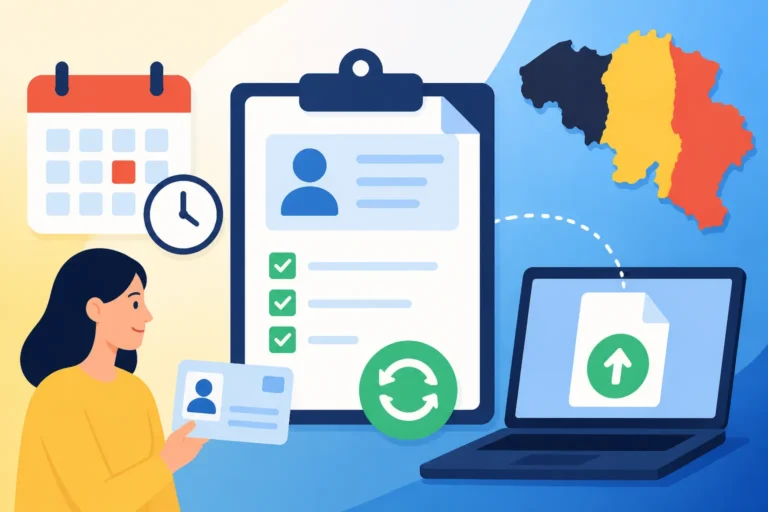
- How it works: The non-traveling parent(s) must go in person to their local commune (municipal office) in Belgium. You'll need to bring the unsigned consent letter, your valid Belgian eID or passport, and possibly the child's passport. You will sign the document in front of the municipal officer, who will then affix an official stamp and signature, confirming the authenticity of your signature.
- Cost and Time: There's usually a small administrative fee, often just a few euros. The process itself is quick if you have an appointment, but booking an appointment at the commune (Stadhuis/Maison Communale) can sometimes take time, especially in larger cities like Brussels or Antwerp. Always check your specific commune's requirements and opening hours.
- Why it's important: Many border control agencies, including Belgian ones, prefer or require a notarized consent letter. It adds an official layer of verification that a handwritten, unverified letter simply doesn't have.
-
Apostille or Legalization:
- What it is: For documents to be recognized internationally, especially for non-Hague Convention countries, they might need an Apostille or full legalization. This is a higher level of authentication that certifies the authenticity of the public official's signature (i.e., the signature of the municipal officer who notarized your document) and the seal/stamp on the document.
- When it's needed: If you're traveling to a country that is a signatory to the Hague Apostille Convention, you'll need an Apostille. If your destination country is not part of this convention, you'll likely need full legalization, which means the document goes through the Belgian Ministry of Foreign Affairs and the embassy or consulate of the destination country in Belgium.
- How it works: After getting your letter notarized at the commune, you would typically take it to the Federal Public Service (FPS) Foreign Affairs for the Apostille or initial legalization. Then, for full legalization, you'd proceed to the relevant embassy. This process is more complex and time-consuming. You can find more details on Apostille vs Legalization: Authenticating Documents for Belgium.
- My Recommendation: Always check with the embassy or consulate of your destination country well in advance of your trip to determine if an Apostille or further legalization is required. This step is often overlooked by expat parents, leading to last-minute panic.
Translation Services: When and Why You'll Need Them
If your consent letter is in Dutch or French (the official languages of Belgium), but your destination country's officials only speak English, Spanish, or Arabic, you've got a problem. This is where sworn translations come in.
- When it's needed: For most international travel, especially outside the EU/Schengen area, it's highly recommended to have your consent letter translated into English and/or the official language of your destination country. Some countries explicitly require this.
- Who can do it: This isn't a job for Google Translate. You need a sworn translator (traducteur juré / beëdigd vertaler) in Belgium. A sworn translator is officially recognized by Belgian courts, and their translations carry legal weight, typically bearing a stamp and signature. This is crucial for official documents.
- Where to find one: You can find sworn translators through the Belgian Ministry of Justice website or by searching for "traducteur juré Belgique" or "beëdigd vertaler België". Many expat service providers also have recommendations. Companies like RushTranslate offer certified translation services that are often accepted for official purposes, including those requiring notarization or apostille, though you should always confirm with the requesting authority that their specific certification type is acceptable. They can be incredibly helpful when you're in a pinch and need reliable, officially recognized translations of documents, including those needed for immigration or educational purposes like legalizing foreign degrees for visa processing.
- Cost and Time: Sworn translations aren't free, and the cost depends on the length and complexity of the document, as well as the language pair. Turnaround times can vary from a few days to a couple of weeks, so plan ahead.
Think of it this way: the more official and universally understood your document is, the less likely you are to face issues at the border. Investing a little time and money upfront can save you a world of headache.
Real-World Scenarios and Expat Concerns
Navigating parental consent for travel is a minefield for many expat families, especially given the diverse backgrounds and unique family structures we often find ourselves in here in Belgium. It's not always straightforward, and I've seen countless friends get caught out by these rules.
Co-Parenting and Cross-Border Travel Challenges
Belgium is a hub for international families, which means co-parenting across borders is a common reality. This often leads to complex situations regarding travel consent.
- Divorced or Separated Parents: Even with a clear divorce decree or separation agreement, you still need that explicit consent letter for international travel. A common issue arises when one parent is difficult to contact or uncooperative. In such cases, if you have sole custody, you should carry the legal document proving this. If joint custody exists and consent cannot be obtained, you might need to seek a court order in Belgium authorizing the travel. This is a last resort, as it can be lengthy and costly, but it's a path some expat parents unfortunately have to take. It's advisable to consult with a legal professional specializing in family law in Belgium if you anticipate such issues.
- Different Nationalities and Laws: When parents hold different nationalities, and especially if the child holds multiple citizenships, the legal requirements can become even more tangled. For example, some countries have exit requirements for their own citizens, even minors. Always check the laws of all relevant countries – Belgium, the child's nationality, and the destination country. This kind of cross-border complexity is where having a reliable translation service like RushTranslate on standby becomes incredibly valuable for ensuring all your legal documents are understood by every jurisdiction.
- Living in Different Countries: If one parent lives outside Belgium, obtaining their signature and having it notarized might mean they need to go to a local notary in their country of residence. This foreign notarization might then need to be legalized or apostilled in their country before being presented to Belgian or destination country authorities. This is a prime example where early planning is paramount.
It's critical for co-parents to communicate and agree on travel arrangements well in advance. Having a standing agreement or a template consent form can save a lot of last-minute stress.
What Happens If You Don't Have One?
The consequences of not having a proper travel consent letter can range from minor inconvenience to a severely disrupted trip.
- Denied Boarding: Airlines are often the first line of defense. They can and will deny boarding to a child if the accompanying adult (or the child themselves, if unaccompanied) does not have the required consent documentation. This is because airlines can face heavy fines if they transport individuals who are later deemed inadmissible or traveling illegally.
- Delayed at Border Control: Even if you make it past the airline, border officials in Belgium or your destination country can stop you. They might question the relationship, the legitimacy of the travel, or the missing parent's consent. This can lead to lengthy interviews, phone calls, and missed connections. I've heard stories of families spending hours in airport offices, desperately trying to get hold of the absent parent for verbal confirmation, which may or may not be accepted.
- Denied Entry/Exit: In the most severe cases, you could be outright denied exit from Belgium or entry into your destination country. This would mean returning to your point of origin, incurring significant costs and extreme distress.
- Legal Scrutiny: In very rare but serious instances, suspicions raised by the lack of proper documentation could even lead to child protective services or legal authorities becoming involved if there's any hint of child abduction concerns.
To avoid any of these nightmarish scenarios, take the time to prepare this document meticulously. If you have non-European documents that need to be translated for any official process, be it related to visas or travel, remember that hiring a sworn translator for non-European documents in Belgium is an absolute must. They are the only ones whose translations will typically be accepted by the authorities.
When it comes to travel, particularly with children and across international borders, the old adage "better safe than sorry" rings absolutely true. Prepare your documents, double-check all requirements, and ensure your consent letter is notarized and translated as needed. Your future self (and your travel companions) will thank you.
Disclaimer
The information provided in this guide is for general informational purposes only and does not constitute legal advice. While we strive to offer accurate and up-to-date information, immigration and travel laws in Belgium and other countries are subject to change. It is crucial to consult with the relevant authorities (e.g., Belgian Immigration Office, destination country's embassy or consulate, legal professionals) for advice specific to your situation before making any travel arrangements. We cannot be held responsible for any outcomes resulting from the use of this information.