What Happens to Your Single Permit if You Resign?
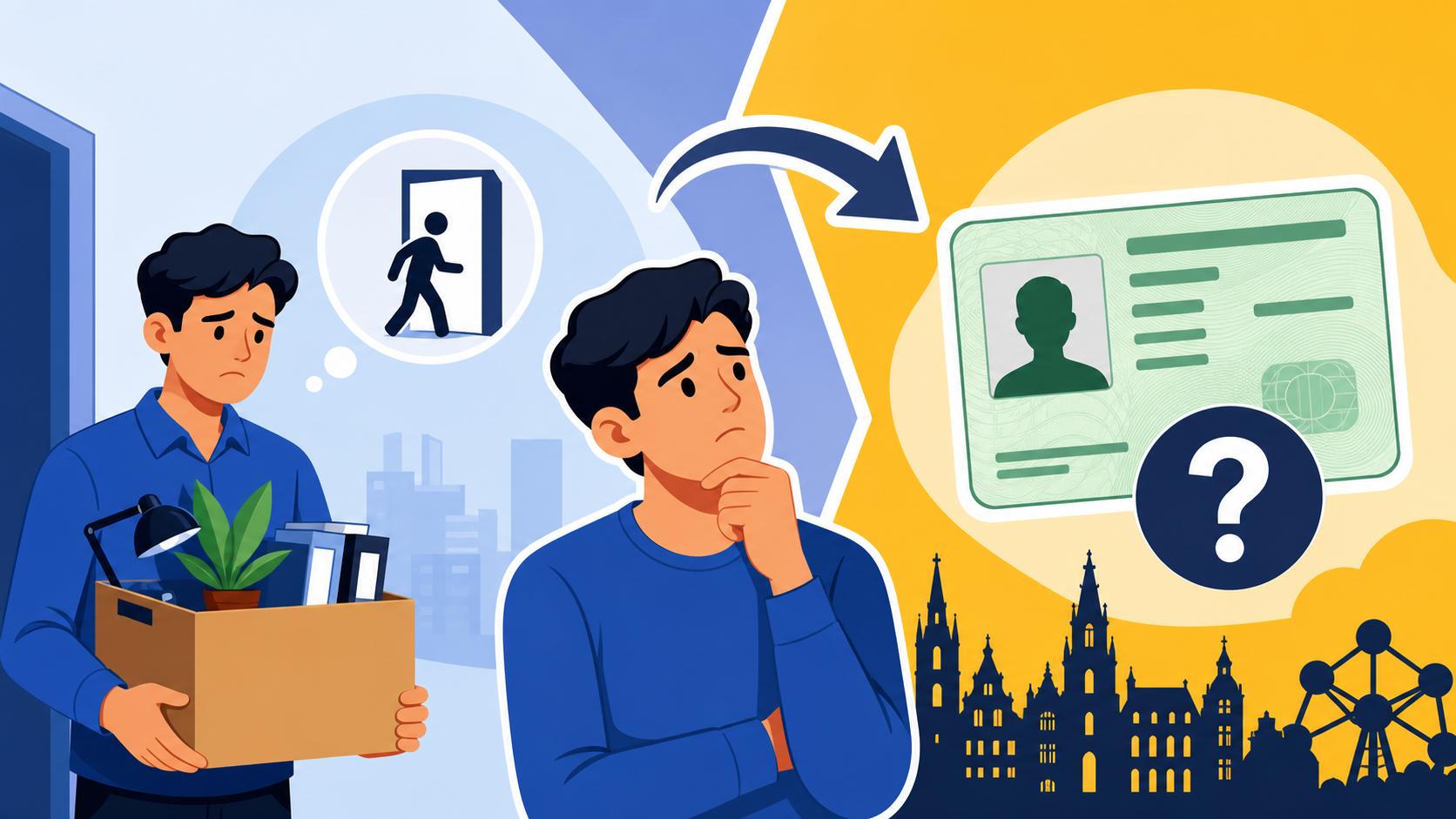
Leaving a job is stressful enough, but in Belgium, it feels like holding a live wire because your right to live here is fundamentally tied to that paper contract. I remember the cold sweat I broke into when I first considered resigning from my Brussels-based role, fearing the dreaded "brown envelope" from the commune ordering my departure. This guide clarifies exactly how resignation affects your Single Permit and legal status.
Understanding the Single Permit Mechanics
To understand what happens when you quit, you first have to grasp the "Single" in Single Permit. Introduced to simplify things, it combines your work authorization and your residence permit into one plastic A-card. However, this convenience is a double-edged sword. Your right to reside in Belgium is generally "conditional" on the employment for which the permit was granted. When that employment ends, the foundation of your legal stay is technically shaken, but it does not instantly collapse.
In the old days, the work permit and the residence permit were separate battles. Today, the process is handled through a unified digital workflow. If you are looking to stay updated on your specific file, you should learn How to Track Your Single Permit Status on the Digital Portal to avoid any surprises while you navigate your transition. The transition is governed by both regional employment laws (Flanders, Wallonia, or Brussels) and federal immigration laws, meaning there are two sets of eyes on your file the moment you submit your resignation letter.
The most important thing to remember is that Belgium has become significantly more flexible regarding job mobility in recent years. While your permit is tied to an employer for the first few years, you are no longer "owned" by them in the way expats were a decade ago. However, the administrative machinery moves quickly, and knowing the sequence of events is the only way to sleep soundly at night during your notice period.
The Role of the Regional Employment Office
When you resign, your employer is legally obligated to notify the regional employment ministry (such as Brussels Economy and Employment or the Flemish Department of Work and Social Economy). They do this through the "Working in Belgium" portal. This notification triggers a "cessation of activities" in their system. The regional authorities then inform the Immigration Office (Foreigners’ Office) that the condition for your stay—your job—has ended.
I’ve seen many expats panic, thinking the police will knock on their door the next day. That is not how it works. The regional office is primarily interested in whether you still meet the salary thresholds and professional criteria for a permit. If you are moving to a new job immediately, the regional office is actually your best friend, as they are the ones who will approve the "change of employer" application.
The Residence Foundation and the A-Card
Your physical ID card, the A-card, usually has a validity date. When you resign, that date doesn't automatically change on the physical card, but its "legal validity" becomes precarious. The Immigration Office receives the notification from the region and begins an administrative review. They check how long you have been in Belgium and if you have any other grounds to stay, such as family ties.
If you are just starting your journey and haven't even received your card yet, you are likely navigating the "Annex" system. If you find yourself in this limbo, make sure you are Registering at the Commune: The 8-Day Rule After Arrival properly, as any gap in your registration can complicate your status if you resign early in your Belgian career. The commune acts as the intermediary; they are the ones who will eventually reach out to you if the Immigration Office decides to terminate your right of residence.
The Immediate Impact of Your Resignation
The moment you hand over that signed resignation letter, a clock starts ticking. However, it isn't a countdown to deportation; it is a window for transition. Under current Belgian regulations, if your Single Permit is still valid, you are generally granted a "grace period" of 90 days (or until the expiry date of your permit, whichever is shorter) to find a new employer who is willing to take over your sponsorship.
This 90-day rule is a lifesaver. I once spent six weeks of my own transition period just breathing and rediscovering Brussels because I knew I had that buffer. During this time, your residence remains legal. You are allowed to stay in the country, but you are not allowed to start working for a new employer until the regional authorities have approved the new Single Permit application submitted by your next company. This is a critical distinction that often trips people up.
The 90-Day Grace Period Nuances
The grace period is designed to allow "highly skilled" workers to remain in the Belgian labor market rather than forcing them out the moment a contract ends. During these 90 days, you should focus on your job search intensely. It is also a great time to invest in your profile. I found that brushing up on my French using FrenchPod101 or Lingoda made me significantly more attractive to local firms. Many expats also use this time to take specialized courses on Coursera or Udemy to pivot their careers within the Belgian market.
If you do not find a new employer within this window, the Immigration Office will issue an "Order to Leave the Territory" (Annex 7). This sounds terrifying, but it usually gives you another 30 days to pack your bags or find a legal alternative. If you happen to find a job on day 89, as long as the new employer has submitted the application, you can often stay while it is being processed, though you might need a temporary document from the commune.
Employer Notification Obligations
Your employer has a legal duty to report the end of your contract within 15 days. If they fail to do so, they can face heavy social security fines. Don't expect them to "hide" your resignation from the authorities to help you out; the system is too integrated for that now. Most HR departments will also provide you with a "C4" document. This is a social security form that proves your employment ended and is vital if you are trying to claim any interim benefits or simply to prove your professional history.
While you are negotiating your exit, you should also be Resigning from a Job: Calculating Your Legal Notice Period carefully. If you leave without respecting the notice period, your employer can sue you for indemnity, and a legal battle is the last thing you want while the Immigration Office is reviewing your residence status. Always play by the book in Belgium; the paper trail is your greatest protection.
Managing Your Transition Period
Once you have resigned, your primary goal is "re-sponsorship." The new employer must apply for a new Single Permit on your behalf. The good news is that if you already have a Single Permit, the "labor market test" (where they check if a Belgian or EU citizen can do the job) is often waived or simplified, especially for "bottleneck professions" or highly skilled roles.
During this gap, you are technically in a period of "non-activity." You cannot work for your new employer, but you can certainly prepare. If you are moving to Flanders, you might find that Flemish Integration Courses (Inburgering): When They Are Mandatory becomes a topic of conversation with your new HR department. Taking the initiative to start these during your "time off" shows incredible commitment to your new home.
| Event | Timeline | Action Required |
|---|---|---|
| Resignation Submitted | Day 0 | Ensure your notice period is documented. |
| Employer Notifies Region | Within 15 Days | Confirm with HR that they updated the portal. |
| The Grace Period Starts | Day 1 of Unemployment | You have 90 days to find a new sponsor. |
| New Job Found | Before Day 90 | New employer must submit a Single Permit application. |
| A-Card Expiry | Variable | If your card expires during the 90 days, the grace period ends. |
Finding a New Employer
Belgium’s job market is robust but highly specific. When searching for a new sponsor, you need to be upfront about your Single Permit status. Many Belgian companies are now familiar with the "Working in Belgium" portal, but smaller firms might be hesitant. You should explain that you already have an A-card and a national register number, which makes the process much faster than a "first-time" application from abroad.
While you are interviewing, use the opportunity to negotiate a salary that keeps you above the legal thresholds for your age and region. If you are unsure about the math, check Gross vs Net Salary in Belgium: Why the Difference is So Big to ensure your new offer actually keeps you in the "Highly Skilled" category required for the permit.
Upskilling and Language Preparation
The "language barrier" is often the biggest hurdle during an expat’s job transition. I personally spent my transition months using DutchPod101 to get a handle on the basics, which opened up a whole new world of opportunities in Antwerp and Ghent. If your previous job was in an "English-speaking bubble," your resignation is a great excuse to finally learn the local tongue.
Whether you choose Lingoda for structured classes or self-paced learning via Coursera, showing a recruiter that you used your "unemployment" time to gain a Belgian-relevant skill is a massive green flag. You can also research French vs Dutch: Which Language is Better for Your Belgian Career? to decide where to invest your energy based on where your dream companies are located.
Legal Steps and Paperwork
The administrative part of resigning isn't over when you leave the office. You need to keep your commune in the loop. While the systems are integrated, they are not always fast. If your A-card is nearing its expiry date during your transition, you may need an "Annex 15." This is a temporary document that extends your right to stay while your new permit is being processed.
If you run into issues with your physical ID, or if you lose it during this stressful time, you might need to look into Setting Up Itsme While Waiting for Your Physical eID Card so you can still access government services and your medical records. Itsme is the digital key to almost everything in Belgium, and you don't want to be locked out of your "Tax-on-web" or "MyHealth" accounts while you are between jobs.
Can You Change Employers?
Yes, but it is a specific process. It is not an "update" to your current permit; it is technically a new application for a new permit, even if the physical card doesn't always change immediately. I’ve detailed the step-by-step logic in my guide on Can You Change Employers on a Single Permit in Belgium? which I highly recommend reading if you have a job offer in hand.
If your new employer is slow, you must stay on top of them. The 90-day window is strict. If the application is submitted on day 91, you are technically out of status, and the commune's software will flag you for a "Model 8" de-registration. This is the stage where people have to leave and re-apply from their home country, which is a logistical nightmare you want to avoid.
Dealing with the Commune
The commune is where the rubber meets the road. If the Immigration Office decides to terminate your stay because you haven't found a job, the commune will send you a letter. If you receive such a letter, do not ignore it. Take your new job contract (if you have one) or proof of your job search to the "Foreigners' Desk" immediately.
Sometimes, the commune might ask for a new "Police Check" of your address if they think you might have moved during your transition. It’s always a good idea to keep your Single Permit Renewal Checklist for Expats and HR handy so you know exactly which documents to bring if they call you in for an "interview" regarding your status.
Frequently Asked Questions
Resignation vs. Getting Fired
There is a slight difference in how the authorities view these two scenarios. If you are fired (except for "serious cause"), you are generally entitled to Belgian unemployment benefits (chômage) if you have worked enough days. This does not change the 90-day grace period for your visa, but it does provide a financial safety net. You can read more about the nuances in What Happens to Your Visa if You Are Fired in Belgium? to see how the "reason for termination" affects your paperwork.
Impact on Family Members
If your spouse and children are in Belgium on a "Family Reunification" visa (F-card or A-card), their right to stay is usually linked to yours. If you lose your right to stay, they lose theirs. However, if your spouse has their own work permit or if you have been here long enough to have permanent residency, the impact is minimized. It is a heavy burden to carry, knowing your resignation affects your whole family, so ensure your new job offer is solid before you pull the trigger.
Can I travel during this period?
This is a grey area. If your A-card is still valid and you haven't received an "Order to Leave," you can technically travel within the Schengen area. However, I advise against leaving the EU. If your status is updated in the system while you are abroad, you might face questioning at the border when trying to re-enter. It is much safer to stay within Belgium until your new permit application is officially "received" and you have the "Annex 46" or "Annex 49" proof of application.
Professional Advice for a Smooth Exit
My best advice as someone who has navigated the Belgian "paper trails" for years? Keep every document. Save a PDF of your current Single Permit approval, your C4, and your last three payslips. These are the documents your next employer will need to prove you were "legally employed" and are eligible for a simplified transition.
Don't let the fear of bureaucracy trap you in a job that makes you miserable. Belgium is a country of rules, but the rules are designed to be followed, not to be impossible. As long as you respect the 90-day window and keep your commune informed, you can move from a toxic workplace to your dream Belgian career without ever having to pack a suitcase.
Disclaimer
The information provided in this article is for educational and informational purposes only and does not constitute legal or immigration advice. Belgian immigration laws and regional employment regulations are subject to frequent changes. While we strive to keep our content up to date, you should always consult with the Belgian Immigration Office (Dienst Vreemdelingenzaken/Office des Étrangers), your local commune, or a qualified immigration lawyer before making decisions that affect your legal residency status in Belgium.