How to Track Your Single Permit Status on the Digital Portal
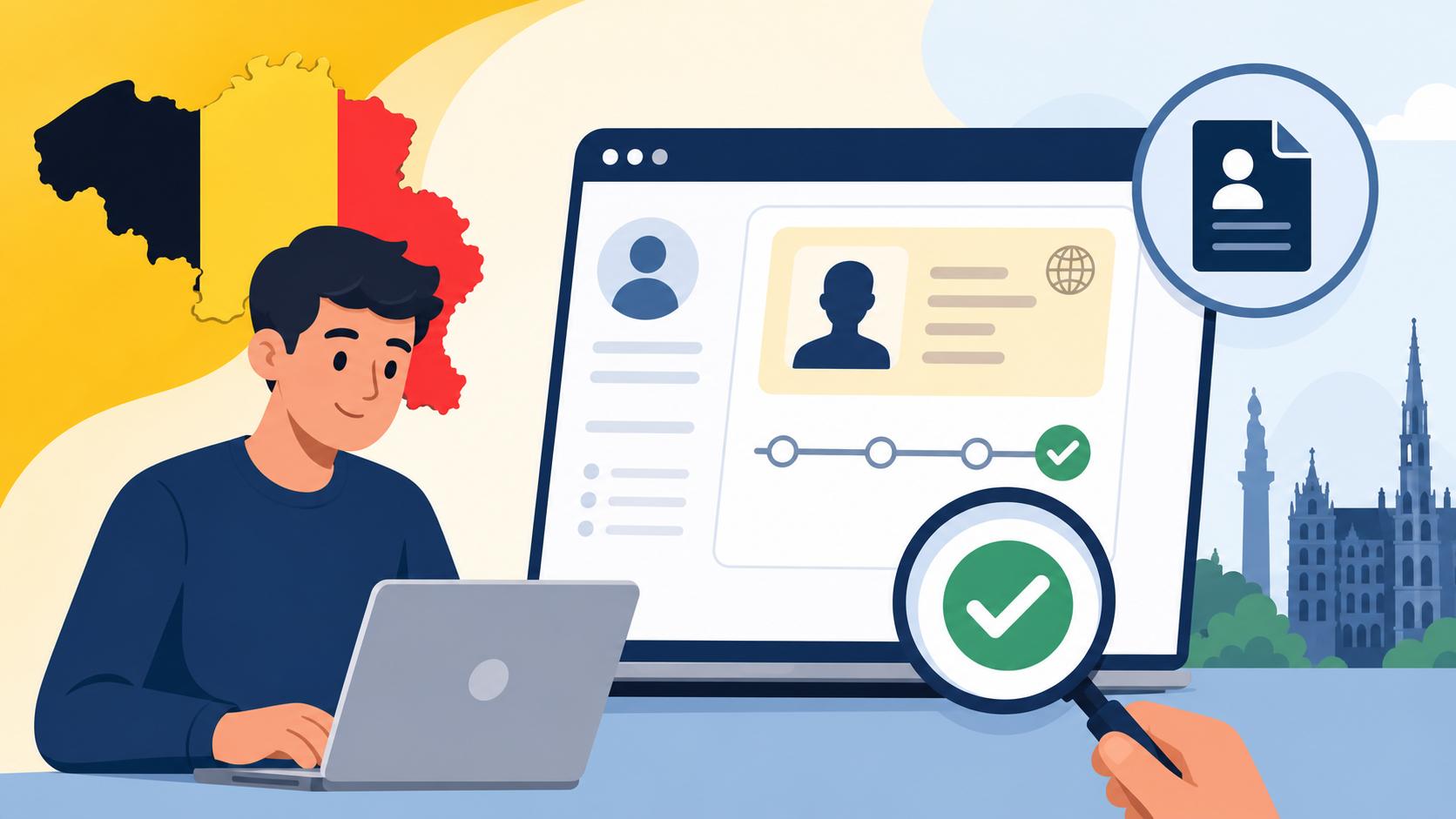
Waiting for your Belgian single permit can feel like shouting into a void while your entire life sits in packed boxes. I remember spending weeks refreshing my inbox every ten minutes, convinced that a silent portal meant my application had vanished into the Belgian bureaucracy. This guide explains exactly how to use the "Working in Belgium" digital portal to track your status, so you can stop guessing and start planning.
The Evolution of the Single Permit Portal in 2026
The Belgian administrative landscape has undergone a massive digital transformation over the last couple of years. Gone are the days when you had to rely solely on your employer’s HR department to give you vague updates via forwarded emails from the region. Today, the "Working in Belgium" portal serves as the centralized hub for the Single Permit (Gecombineerde Vergunning) Overview for 2027, offering a much higher degree of transparency for the applicant.
This digital shift was designed to bridge the gap between the regional employment ministries (Flanders, Wallonia, and Brussels-Capital) and the federal Immigration Office. In the past, these two entities operated like two different islands, and your application often got "lost" in the sea between them. With the updates, the portal now provides a unified timeline. You can see exactly which office has your file and whether the delay is due to a regional labor market check or a federal security screening.
However, just because it is digital doesn't mean it is lightning fast. You are still dealing with a system that values meticulousness over speed. Understanding the technical architecture of this portal is your first step toward sanity. The portal relies heavily on the "Mahis" system, which is the back-end database used by officials. If you are curious about how your boss actually puts the data in there, you might want to look into The Mahis Digital Mandate: How Employers Submit Work Permits to understand the "other side" of the screen.
Prerequisites for Accessing Your Status Digitally
Before you can see where your permit stands, you need a way to prove you are who you say you are. This is often the first hurdle for expats who haven't yet set foot in Belgium. If you are already in the country on a temporary stay, the easiest way to log in is via a digital identity. This is where Itsme Authentication: How to Set Up Belgium's Vital Digital ID becomes absolutely essential. It is the gold standard for Belgian digital security and links directly to your national register number.
If you are currently outside of Belgium, your access might be slightly more restricted. Usually, the primary "owner" of the digital file is the employer or their designated mandate-holder (like a relocation agency). However, as of 2026, many regions have introduced a "guest access" or "token-based" login for the employee. You will need your application reference number, which usually starts with a regional code (e.g., "BRU" for Brussels). Ask your HR for this specific "Mahis reference" immediately; without it, you are essentially locked out of the tracking features.
For those already on the ground, perhaps waiting for a renewal or a change of status, using a physical eID card reader is the most robust method. You will need your PIN code, which you received at the commune. If you haven't yet reached that stage, you are likely holding a paper document known as an Annex 15. It is worth checking What is an Annex 15 (Annexe 15/Bijlage 15) and Can You Work With It? to see how that document interacts with your digital record during the "in-between" phase of your application.
Navigating the Working in Belgium Dashboard
Once you successfully log into the portal, you will be greeted by a dashboard that can look a bit intimidating. The key section you are looking for is titled "Mijn dossier" or "Mon dossier" (My File). Here, you will see a list of current and past applications. In 2026, the interface has been simplified to show a progress bar with three main nodes: "Regional Reception," "Federal Review," and "Decision Issued."
When you click into a specific file, you will find a more granular breakdown. The "Regional" phase is where the local authorities check if your salary meets the required levels. This is a common sticking point. For instance, if you are moving to the capital, you should verify your contract against the 2026 Salary Thresholds for Highly Skilled Workers in Brussels to ensure your employer hasn't made a clerical error that could trigger an automatic "Incomplete" status on the portal.
The federal stage is managed by the Dienst Vreemdelingenzaken (Immigration Office). On the portal, this will often show as "Overgemaakt aan DVZ" (Sent to DOFI). This is usually the longest part of the wait. During this time, the portal might not show any changes for weeks. Don't panic. This is standard Belgian "processing time." While you wait for that progress bar to move, it’s a great time to be productive. I found that diving into language learning helped lower my stress. You could use FrenchPod101 or DutchPod101 to get a head start on the local lingo, which will be incredibly useful once you finally get your permit and have to navigate the local commune.
Decoding Status Messages and What They Actually Mean
The Belgian portal is famous for its "official-speak." Seeing a status like "Ontvankelijk" (Admissible) doesn't mean your visa is ready; it simply means they have all the papers they asked for. It’s like being told you’ve successfully entered the queue for a concert—it’s good news, but you’re not in the front row yet. If your status changes to "Onvolledig" (Incomplete), check the "Documenten" tab immediately. There is usually a PDF letter detailing exactly what is missing, such as a missing page of your passport or an outdated medical certificate.
Another status you might encounter is "Ter beslissing" (To be decided). This is the final stretch. At this point, the official has reviewed the file and is making the final call. If you see this status, you can usually expect an answer within 5 to 10 working days. If the decision is positive, the portal will update to "Toegekend" (Granted), and a digital version of your "Annex 46" will appear. This is the document you take to the Belgian embassy in your home country to get your Visa D sticker.
If the portal shows "Opschorting" (Suspension), it usually means the clock has stopped because the authorities are waiting for a response from you or your employer. This often happens if they have questions about your Social Security in Belgium: Employer and Employee Contributions or if there’s a discrepancy in your work history. Always ensure your employer is checking their side of the portal as well, as they might have received a notification that you cannot see on your personal dashboard.
| Status Message (NL/FR) | English Translation | Practical Meaning for the Expat |
|---|---|---|
| Ingediend / Soumis | Submitted | Your employer has hit send; the region has the file. |
| Ontvankelijk / Recevable | Admissible | All required documents are present; the check begins. |
| In behandeling / En cours | Under Review | An official is actively looking at your labor market eligibility. |
| Overgemaakt / Transmis | Transferred | The region approved the work; the federal office now checks security. |
| Bijkomende info / Info suppl. | More Info Needed | Stop! Check the portal for a request for new documents. |
| Toegekend / Octroyé | Granted | Success! Your Annex 46 should be available for download. |
Why is My Status Stuck? Understanding Regional Delays
One of the most frustrating things about the Belgian system is the regional variance. A permit processed in Flanders might take six weeks, while the same application in Brussels might take twelve. This is often due to the volume of applications in the "EU Bubble." If your status hasn't moved from "Regional Review" in over a month, it is likely just a backlog. I’ve seen people lose their minds over this, but remember: the portal is a reflection of a human queue.
The Wallonia region has improved its digital processing speeds, but they are still very strict about document formatting. If you are applying for a permit there, ensure every scan is high-resolution. A blurry scan can result in your status being stuck for weeks before someone finally marks it as "Incomplete." While you are stuck in this administrative limbo, I highly recommend using platforms like Coursera or Udemy to pick up a new certification. It keeps your mind off the wait and makes you even more valuable to your new Belgian employer.
If you are already in Belgium and changing jobs, you might be worried about your current status. The portal will show your new application alongside your old one. It is important to know your rights during this transition. Reading up on Can You Change Employers on a Single Permit in Belgium? will give you the legal context behind what you are seeing on the screen. The portal will eventually show both permits, and you must ensure the start date of the new one aligns with your resignation.
When the Portal Says "Decision Issued": Your Next Steps
The moment that "Granted" status appears is a massive relief, but the digital journey isn't quite over. You won't get a physical card in the mail immediately. First, you need to download the decision letter (Annex 46) from the portal. If you are abroad, this is your ticket to the embassy. If you are already in Belgium, this is your ticket to the commune. You must visit your local town hall to complete the Registering at the Commune: The 8-Day Rule After Arrival.
The commune will then initiate a "Police Check." This is a quirky Belgian tradition where a local officer literally walks to your front door to verify you actually live there. Only after this check is successful will your status in the national register be updated to "Resident," allowing you to finally order your physical eID card. The portal might still show "Granted" for a few weeks even after you have your card; the "Working in Belgium" portal tracks the permit, while the national register tracks your residency.
While you wait for the physical card to arrive (which can take another 2-3 weeks), you are often in a bit of a grey zone regarding travel and work. Most employers will let you start working the moment they see the "Granted" status on the portal, provided you have a valid ID. However, if you have questions about your specific situation, checking How Long Does a Single Permit Take to Process in 2026? can give you a better idea of the total timeline from "Submit" to "ID in Hand."
Maximizing Your Wait Time with Professional Growth
I always tell new arrivals that the "Single Permit Wait" is a rite of passage. It tests your patience, but it’s also a rare window of "free" time before you dive into the Belgian work culture. Instead of checking the portal ten times a day (which I know you'll do anyway), try to limit it to once every Tuesday and Thursday morning—that seems to be when most status updates happen in my experience.
Use the rest of your energy to prepare for life in Belgium. If you need to hit a specific language level for future career moves or even residency, Lingoda offers great structured classes that can fit around your moving schedule. Belgium is a country that rewards those who make an effort with the local languages, whether it’s a simple "Goeiedag" in Antwerp or "Bonjour" in Namur.
Furthermore, if your job involves a lot of technical skill, browsing Udemy for specific European business standards or GDPR compliance courses can be a smart move. When you finally walk into your new office with your permit in hand, being able to say you spent your "visa time" upskilling will definitely impress your Belgian manager. And if you find yourself feeling lonely during the wait, remember that almost every expat here has gone through the exact same portal-induced anxiety. You're part of the club now.
Important Disclaimer
The information provided in this guide is for informational purposes only and is based on the administrative procedures and digital portal features. Immigration laws, salary thresholds, and portal interfaces in Belgium are subject to frequent changes by regional and federal authorities. This guide does not constitute legal advice. Always consult with your employer’s legal department, a qualified immigration lawyer, or the official Belgian Immigration Office (DOFI) website for the most current requirements and specific advice regarding your individual case. Use of the "Working in Belgium" portal and any third-party services mentioned is at your own risk.