Consumption Taxes (VAT/BTW): 21%, 12%, and 6% Rates Explained
You walk into a boutique in Ixelles or a tech shop in Antwerp, see a price tag, and think you have your budget settled, only to realize the receipt looks significantly different than you expected. I remember staring at my first major electronics purchase in Brussels, trying to figure out why the numbers didn't add up until I saw that "21%" line at the bottom. This guide demystifies the Belgian VAT system so you can plan your expenses without the administrative heartbreak or sticker shock.
What Exactly is VAT and Why Does It Change Based on Language
When you first arrive in Belgium, you will notice two different acronyms used for the same thing: BTW and TVA. If you are living in Flanders, you will hear people talk about "Belasting over de Toegevoegde Waarde" (BTW). If you have settled in Wallonia or are navigating the French-speaking parts of Brussels, it is "Taxe sur la Valeur Ajoutée" (TVA). For the sake of simplicity, we call it Value Added Tax (VAT) in English, but on every receipt, invoice, and price tag, you will see one of the local variants.
The concept is straightforward in theory but complex in practice: it is a consumption tax placed on a product whenever value is added at a stage of production and at final sale. As a consumer, you are the one who ultimately pays this tax. Unlike in some parts of the United States where tax is added at the cash register, Belgian law generally requires that prices displayed to individual consumers (B2C) must include VAT. However, the moment you step into the world of business or freelancing, prices are almost always quoted "exclusive of VAT," which can lead to a 21% surprise if you are not careful.
The Psychological Shift of European Taxation
Coming from a country with lower consumption taxes, the Belgian system can feel like a heavy burden. I spent my first six months here constantly doing mental math, trying to justify why a pair of sneakers or a new sofa cost significantly more than back home. It is important to realize that these taxes are the engine behind the robust social services you likely moved here to enjoy. While it feels like a hit to your wallet today, that VAT is what funds the public infrastructure, the highly subsidized transport, and the healthcare system.
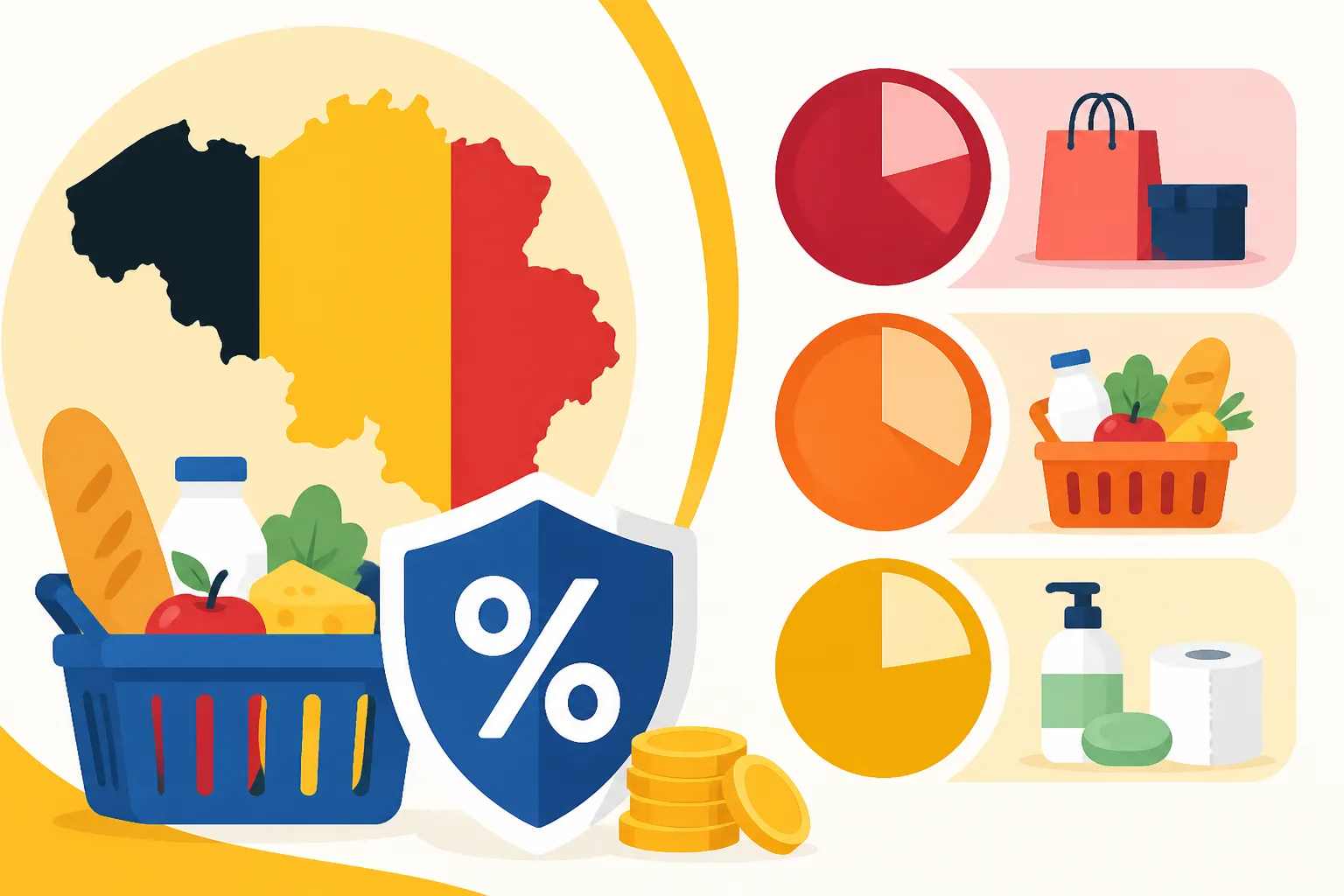
Understanding how these rates are divided—21%, 12%, and 6%—is the first step toward better budgeting. It helps you understand why your grocery bill feels manageable while your utility bill or a night out on the town feels like a luxury. If you are trying to keep a handle on these fluctuating costs, using a transparent financial tool like Wise can help you see exactly how your money is being spent across different currencies and jurisdictions without hidden exchange rate markups.
The Distinction Between B2C and B2B Pricing
If you are browsing through Cost of Living in Belgium 2026: Singles, Couples, and Families, you will see that most estimates include VAT. But if you are a freelancer or a small business owner looking at office space or professional equipment, you must be hyper-aware of the "excl. BTW/TVA" label. This is a common trap for new expats who sign a contract for a "€1,000" service only to receive a bill for €1,210.
In Belgium, the tax authorities are very strict about how VAT is displayed. If a business targets individuals, they are legally required to show the total price. If they primarily target other businesses, they often lead with the pre-tax price. This distinction is vital when you are Setting Up as an Independent (Indépendant) in Belgium, as you will be operating on both sides of this fence—paying VAT as a consumer and collecting it as a professional.
The Standard 21% Rate: The Default Reality
The 21% rate is the "standard" rate in Belgium, and it applies to the vast majority of goods and services. If a product doesn't explicitly fall into a category for a reduced rate, you can bet your last Euro that you are paying 21%. This includes everything from the clothes on your back and the car in your driveway to the laptop you are using to read this guide.
I personally found the 21% rate most noticeable when setting up my first apartment. Every piece of furniture, every lamp, and even the delivery fees carried that heavy 21% tag. It is the reason why many expats choose to shop for big-ticket items during the "Soldes" (sales seasons in January and July), as the deep discounts are often the only way to offset the high tax rate.
Electronics, Luxury Goods, and Everyday Services
When you buy a new iPhone or a MacBook in a Belgian store, a fifth of that price is going straight to the state. This high rate also applies to "luxury" items, which in the eyes of the Belgian tax code, includes things like tobacco, alcohol (including beer and wine), and high-end cosmetics. Interestingly, even basic services like your internet subscription, your mobile phone plan, and your gym membership are taxed at 21%.
If you are a frequent traveler or someone who manages finances across borders, you might find that investing your savings in a platform like Trade Republic can help you earn interest that helps mitigate these high consumption costs. While the VAT takes a bite out of your spending, having your capital work for you at competitive rates is a smart way to balance the "Belgium tax" reality.
Professional Services and Consultancy
Whether you are hiring a lawyer for a visa issue or an accountant to help with Taxes in Belgium for Expats: Personal Income Tax System 2026, you will be charged 21% VAT on their fees. This also applies to mechanics, hair salons, and plumbers. This is why many expats are shocked by the hourly rates of professionals in Belgium. A "€100 per hour" consultant actually costs you €121.
There is a significant administrative burden here as well. If you are hiring a professional, always ask for a "facture" (invoice). In the past, there was a culture of "paying under the table" to avoid VAT, but the Belgian government has cracked down on this aggressively. Not having a legal invoice means you have no legal recourse if the work is done poorly, and you cannot deduct the expense if you are a freelancer.
The 21% Rate on Vehicles
Buying a vehicle in Belgium is a major financial undertaking, partly because of the VAT. When you buy a brand-new car, you pay 21% on the full purchase price. This is in addition to the other taxes you'll find detailed in Buying a Car in Belgium: Circulation Tax and Registration Costs.
Even second-hand cars bought from a professional dealer carry a VAT component, though the calculation is slightly different (often only on the dealer's profit margin). However, if you buy a car from a private individual, no VAT is charged. This is a massive "life hack" for expats looking to save money—buying a used car from a neighbor or via a private listing can save you thousands compared to a dealership, simply because of the tax exemption on private sales.
The Intermediate 12% Rate: The Middle Ground
The 12% rate is a bit of an outlier in the Belgian system. It doesn't apply to nearly as many things as the 6% or 21% rates, but where it does apply, it makes a significant difference. It was designed as a compromise for sectors that are essential but not "basic" enough to warrant the lowest rate.
The most common place you will encounter the 12% rate is in the "Horeca" sector (Hotels, Restaurants, and Cafes). This is where things get famously confusing for newcomers. If you sit down at a beautiful brasserie in Grand Place and order a steak frites, the food itself is taxed at 12%. However, the moment you order a Belgian beer or a glass of wine to go with it, that portion of the bill jumps to 21%.
Dining Out and the "Black Box"
The Belgian government introduced a "Geregistreerd Kassasysteem" (GKS), often called the "black box," in restaurants to ensure that VAT is being recorded correctly. This means that when you get your receipt at the end of a meal, you will often see it split into two columns: one for food at 12% and one for drinks at 21%.
I remember a dinner with friends where we spent twenty minutes trying to figure out if our "mocktails" were 12% or 21%. As it turns out, even non-alcoholic drinks like sodas and coffee are taxed at 21% when served in a restaurant, while the food stays at 12%. It is a quirk of the system that encourages you to eat more and drink less—at least from a tax perspective.
Social Housing and Specific Energy Products
The 12% rate also applies to certain types of social housing and the delivery of coal or certain heating oils. While most expats won't deal with coal deliveries in 2026, those looking into social housing initiatives or specific subsidized building projects might come across this intermediate rate. It serves as a way for the government to provide some relief on housing costs without completely removing the tax revenue.
| Category | VAT Rate | Common Examples |
|---|---|---|
| Standard | 21% | Electronics, Clothes, Alcohol, Cars, New Homes |
| Intermediate | 12% | Restaurant Food, Social Housing, Coal |
| Reduced | 6% | Groceries, Water, Books, Renovating 10y+ Homes |
| Zero / Exempt | 0% | Healthcare, Education, Financial Services |
The Reduced 6% Rate: Essentials and Culture
This is the rate that helps keep the day-to-day cost of living somewhat in check. The 6% rate is reserved for "necessities." This includes basic food items, water, pharmaceutical products, and books. It is the reason why your weekly trip to a supermarket like Delhaize or Colruyt doesn't feel as punishing as a trip to the Apple Store.
When you look at your grocery receipt, you will see "6%" next to almost everything: bread, milk, vegetables, and meat. However, be careful—if you buy "prepared" luxury foods or certain types of confectionery, the system might kick those back up to the 21% rate. It is a nuanced system designed to tax "wants" more heavily than "needs."
Books, Newspapers, and the Arts
Belgium takes its culture seriously. Books (including the beloved "Bande Dessinée" or comic books), newspapers, and magazines all enjoy the 6% rate. This also extends to tickets for museums, cinemas, concerts, and theaters. If you are looking to integrate into Belgian life, the tax system actually makes it slightly more affordable to enjoy the local arts scene.
I have found that this low rate on publications makes it much easier to justify a subscription to a local newspaper to practice my French or Dutch. If you are following a path of Building Wealth: Investing, Savings Accounts, and Pensions in Belgium, small savings like these on your "entertainment" budget can add up over a year, allowing you to divert more funds into your investment portfolio.
The 10-Year Home Renovation Rule
One of the most important pieces of tax knowledge for anyone buying a house in Belgium is the "10-year rule." If your home is more than 10 years old, many renovation works—including painting, plumbing, and even new flooring—can be billed at a 6% VAT rate instead of the standard 21%. This applies to both materials and labor, provided they are supplied and installed by the same registered contractor.
This is a massive incentive for expats to buy older "character" homes and fix them up. When you are looking at Renovating Properties: EPC Subsidy Applications for Energy Upgrades, the combination of government subsidies and the 6% VAT rate can save you tens of thousands of Euros. I once saved nearly €4,000 on a roof repair simply because my house was built in the 1920s rather than the 2020s.
VAT for the Self-Employed and Freelancers
If you are moving to Belgium to work as a freelancer, VAT will become a central part of your life. Unlike a regular employee who just sees their net salary, a freelancer is essentially a tax collector for the state. You charge your clients VAT, you hold that money in a separate account, and then you pay it to the government every quarter.
It is absolutely crucial that you don't treat the VAT you collect as your own money. I have seen many expats fall into the trap of using their VAT "reserves" to pay for a vacation, only to be hit with a massive bill from the SPF Finances (the tax office) three months later. Keeping this money in a high-yield account or even a dedicated sub-account on a platform like Binance (if you are managing crypto-based income) can help you stay organized, though you must always ensure you have the cash ready for the quarterly deadline.
Charging and Recovering VAT
When you send an invoice, you will likely add 21% to your fee. You can find the exact details of how to format this in Invoicing Clients in Belgium: Legal Requirements for Freelancers. The "magic" of being a freelancer is that you can also recover the VAT you pay on professional expenses. If you buy a laptop for €1,000 + €210 VAT, you can essentially "deduct" that €210 from the VAT you owe the government.
This makes professional equipment 21% cheaper for you than for a regular consumer. However, the Belgian tax office is very pedantic. If you buy a laptop and use it 50% for work and 50% for watching Netflix, you can only recover 50% of the VAT. It is a balancing act that requires meticulous record-keeping and a good relationship with your accountant.
The Small Business Exemption (Franchise de la taxe)
If your annual turnover is less than €25,000, you can apply for the "VAT exemption scheme." This is a lifesaver for side-hustlers and small-scale consultants. Under this scheme, you don't charge VAT to your clients, which makes you 21% cheaper than your larger competitors. The downside? You also cannot recover any VAT on your own expenses.
Before you choose this path, read Exemptions for Small Businesses (Franchise de la taxe) under €25,000 carefully. If you have a lot of upfront costs (like buying expensive camera gear or a specialized computer), it might actually be cheaper to stay in the regular VAT system so you can get those tax refunds. I started on the exemption scheme but switched once my business grew, and the transition was an administrative mountain that I wish I had prepared for better.
Deadlines and the Pain of Late Payments
In Belgium, the VAT deadlines are non-negotiable. You typically file your returns by the 20th of the month following each quarter (April 20, July 20, October 20, and January 20). If you are late, the fines are automated and aggressive. You can find a full schedule of these in Freelance Taxes: Social Security, Withholding, and VAT Deadlines.
I once missed a deadline by three days due to a banking error, and the "reminder" came with a fine that wiped out my profit for the week. The Belgian system is designed for compliance, not for "oops" moments. Set up calendar alerts, use accounting software, and always, always pay a few days early to account for bank processing times.
Comparing VAT and Managing Your Finances
Navigating 21%, 12%, and 6% requires a new way of thinking about your money. When you are looking at your overall budget, you need to account for these "invisible" costs. For example, if you are planning a major move, you aren't just paying for the boxes and the truck; you are paying 21% on top of those services.
Many expats find that the best way to handle the high cost of living in Belgium is to be very strategic about where and how they spend. This might mean buying groceries (6%) and cooking at home rather than eating out (12% food + 21% drinks) every night. It might also mean waiting to buy your electronics in a country with lower VAT if you are traveling, though you must be careful about customs rules when returning to Belgium.
Tools for Tracking and Saving
To manage these costs, I highly recommend using digital tools that give you real-time feedback on your spending. Using a Wise card allows you to see your transactions instantly, which is helpful when you are trying to track how much "stealth tax" you are paying on a daily basis. For those looking to grow their wealth despite the high taxes, Trade Republic offers a straightforward way to invest in ETFs and stocks, often with lower fees than traditional Belgian banks, helping you build a cushion against the high cost of consumption.
If you are into the world of digital assets, Binance can be a useful tool for managing a portion of your portfolio, especially if you are a digital nomad or freelancer receiving payments in various forms. Just remember that the Belgian tax man eventually wants his share of everything, and consumption tax applies the same whether you pay with Euros or a crypto-linked debit card.
VAT Refunds for Non-EU Residents
If you are a resident of Belgium, you generally cannot get VAT refunds on your purchases. However, if you have family visiting from outside the European Union (like the US, UK, or China), they can often claim back the VAT on large purchases they make while visiting you. This is a great way for them to save 21% on that Belgian designer coat or high-end watch.
They need to ask the shop for a "Tax-Free Shopping" form at the time of purchase and then get it stamped by customs at the airport when they leave the EU. It is a bit of a hassle, but for a €1,000 purchase, getting €210 back (minus a small processing fee) is well worth the twenty minutes in line at Zaventem airport.
Important Disclaimer
The information provided in this guide is for informational purposes only and does not constitute professional tax, legal, or financial advice. Belgian tax laws, including VAT rates and regulations, are subject to frequent changes and can be interpreted differently depending on your specific residence status, income level, and commune. Always consult with a qualified Belgian accountant or tax advisor before making significant financial decisions or filing tax returns. The author and publisher are not responsible for any financial losses or legal issues arising from the use of this information.