Home Insurance (Assurance Habitation): Liability vs Content
The landlord hands you a thirty-page lease and insists on seeing proof of insurance before you get the keys. It feels like just another bureaucratic hurdle in a country famous for them. I remember standing in a cold hallway in Ixelles, wondering why my bank was quoting me hundreds of euros for a "fire policy" I didn't think I needed. This guide demystifies the Belgian insurance maze, specifically the split between liability and content coverage.
Understanding the Belgian Home Insurance Landscape
Navigating the world of Belgian insurance, or Assurance Habitation, requires a shift in mindset. Back home, you might have viewed home insurance as a luxury or something only homeowners worry about. In Belgium, the legal and cultural expectations are entirely different. The system is designed to protect not just your sofa and television, but the actual bricks and mortar of the building you are occupying. If a pipe bursts or a fire breaks out, the financial implications in Belgium can follow you for decades if you aren't properly covered.
One of the first things you will notice is that landlords are incredibly strict about this. Most leases will explicitly state that the tenant must have a policy in place. This is because, under Belgian law, the tenant is often presumed liable for damage to the property (like fire or water damage) unless they can prove the fault lies elsewhere, such as with the building's infrastructure or a third party. Understanding Renting in Belgium: Apartments, Contracts, and Tenant Rights (2027) is essential, but having the right insurance is what keeps those rights from becoming a financial liability.
Is it Mandatory? The Regional Nuances
While it might feel mandatory because every landlord asks for it, the legal requirement actually varies depending on where you live in Belgium. In the Walloon Region and the Brussels-Capital Region, tenants are legally required to take out fire and third-party liability insurance. This is codified in the regional housing codes to ensure that landlords and neighbors aren't left high and dry when accidents happen. If you are moving to a trendy loft in Saint-Gilles, expect this to be a non-negotiable part of your Registering at the Commune: The 8-Day Rule After Arrival process.
In the Flemish Region (Flanders), the law changed in 2019 to make fire insurance mandatory for both landlords and tenants for most new leases. Even if you find an older lease where it isn't legally "mandatory," your landlord will almost certainly write it into the contract as a requirement. Effectively, for an expat, you should treat home insurance as a mandatory expense regardless of which city you call home. The peace of mind alone is worth the premium, as the cost of living in Belgium 2026: Singles, Couples, and Families is already high enough without adding a 50,000-euro repair bill to the mix.
The Concept of Tenant Liability
The term you will see most often is "Risque Locatif" or "Huurdersaansprakelijkheid." This refers to your responsibility as a tenant to return the property in the same state you received it. Because you are in control of the space, the law assumes that if the place burns down while you are living there, it happened on your watch. This "presumption of liability" is the reason why insurance is so critical. Without it, you are personally responsible for the total value of the building’s reconstruction.
This is also why the Inventory of Fixtures (Etat des Lieux): Why It's Crucial Before Moving In is so vital. Your insurance company will use this document to determine what damage existed before you arrived and what is your responsibility. If you don't have a solid inventory and a fire occurs, the insurance company might struggle to defend you against a landlord claiming you ruined their pristine hardwood floors. I always tell newcomers: take photos of every scratch, then get your insurance policy signed the same day.
Liability Insurance (Assurance Responsabilité Civile)
In the context of home insurance, liability coverage is the "Hero" that protects you from the most catastrophic financial risks. While many people think insurance is about replacing their own stuff, the liability portion is actually about paying for other people's stuff and the landlord’s building. In Belgium, this is often called "Tenant Liability" or "Civil Liability." It covers the damage you might accidentally cause to the apartment or house you are renting.
Imagine you leave a frying pan on the stove and a small fire damages the kitchen cabinets. Or perhaps a DIY project goes wrong and you drill through a water pipe, flooding the floor. Without liability insurance, the landlord’s own insurance company would pay for the repairs and then immediately turn around and sue you to recover those costs. Your liability policy steps in to handle these negotiations and pay the settlements, ensuring a simple mistake doesn't bankrupt you.
Damage to the Property and the Landlord
The primary function of this coverage is to protect the landlord’s investment. When you sign a policy, the "insured value" is usually based on the reconstruction value of the apartment. You aren't just insuring the €800-a-month rent; you are insuring the €300,000 structure. This is a common point of confusion for expats who think they only need a small policy. The insurance company calculates the risk based on the size of the apartment, the materials used, and the location.
If you are living in an older building in Antwerp or Ghent, the risks are often higher due to aging plumbing or electrical systems. Your liability insurance ensures that if an accident happens, the building can be restored without you having to take out a massive personal loan. When you are Opening a Belgian Bank Account: Documents Needed and Roadblocks, many banks will try to bundle this insurance with your account. It is often a good deal, but always check if the coverage meets the requirements of The Brussels Housing Code (BHC): Rights and Duties of Tenants.
Damage to Neighbors (Recours des Voisins)
In densely populated Belgian cities, you are rarely alone. Most expats live in "maisons de maître" split into apartments or modern complexes where neighbors are just a wall or a ceiling away. If your washing machine leaks and ruins the neighbor's expensive wallpaper downstairs, you are liable for that damage. This is known as "Recours des voisins" or "Neighbor’s Recourse."
This part of the policy is a lifesaver. Neighbors in Belgium are generally quick to involve their own insurance companies, and these companies are very efficient at tracking down the source of the leak. Having a policy that includes third-party liability means your insurer talks to their insurer, and you stay out of the conflict. It preserves neighborly relations and your bank account. If you're managing your finances carefully, perhaps even using Trade Republic to invest your monthly savings, the last thing you want is a surprise €5,000 bill for a neighbor's water damage.
Common Scenarios: When Liability Saves You
Let’s look at a real-world scenario I’ve seen happen more than once. An expat in Brussels went away for a weekend in December and forgot to leave the heating on low. A pipe froze and burst, flooding not just their apartment but the two units below. The total damage was estimated at €12,000. Because they had a robust liability policy, the insurance company covered everything. Without it, they would have been legally responsible for the entire amount.
Another scenario involves fire. Even if a fire starts due to an electrical short that wasn't your fault, the "presumption of liability" means you have to prove it wasn't your fault. An insurance company provides the legal experts to help prove the landlord’s old wiring was the culprit. This legal defense is a hidden benefit of liability coverage that many people overlook until they are in the middle of a dispute. It is as essential as Family Liability Insurance (Assurance Familiale): Why Expats Need It, which covers you for accidents outside the home.
Content Insurance (Assurance Contenu)
While liability insurance covers the building and the neighbors, Content Insurance is all about you and your life. It covers your furniture, electronics, clothing, jewelry, and even the contents of your fridge. In Belgium, this is often an optional add-on to the basic fire/liability policy, but for most expats, it is highly recommended. If you’ve spent thousands of euros furnishing your place or have expensive work-from-home gear, you need to protect those assets.
The beauty of content insurance is that it typically covers more than just fire and water damage. Most policies include protection against theft, vandalism, and even "accidental damage" in some premium versions. If your apartment is broken into while you’re visiting family back home, content insurance is what pays for the stolen laptop and the smashed window. Given the occasional spikes in petty crime in major transit hubs, this is a very practical layer of security.
Protecting Your Personal Belongings
When you move to Belgium, you likely brought a mix of old favorites and new purchases from places like IKEA or local design shops. Content insurance ensures that if a pipe bursts and ruins your mattress and your designer rug, you can replace them. It’s important to realize that the landlord’s insurance (and even your tenant liability insurance) will never pay to replace your personal things. They only care about the floor and the walls.
Most policies offer "New for Old" coverage, meaning they pay the current market price for a new version of your stolen or damaged item, rather than the depreciated value of your five-year-old TV. This is crucial for maintaining your lifestyle after a disaster. If you have high-value items like professional camera gear or expensive bicycles (very common in Flanders), you might need to declare these specifically to ensure they are fully covered. You might even use a platform like Binance to manage crypto assets, but remember that digital assets are almost never covered by standard home content policies—keep those in a cold wallet!
Theft and Burglary Coverage
Theft coverage is usually an extension of content insurance. In Belgium, for theft coverage to be valid, there usually needs to be evidence of "forcible entry." This means if you leave your front door unlocked and someone walks in and takes your bag, the insurance company might reject the claim. Always check the specific security requirements of your policy—some insurers require specific types of locks or even an alarm system if your content value is very high.
I’ve had friends who lost their bikes from their apartment's common hallway. In many cases, content insurance will cover this if the bike was locked to a fixed point. It’s these little details that make the policy worth the premium. If you are frequently traveling and sending money home via International Money Transfers: SWIFT vs Wise in Belgium, knowing your home is protected against burglary while you are away provides immense peace of mind.
Calculating the Value of Your Stuff
One of the biggest mistakes expats make is "under-insuring" their content. If you tell the insurance company your stuff is worth €10,000 but it’s actually worth €30,000, they might apply a "proportionality rule" during a claim. This means if you have a partial loss, they only pay a fraction of the claim because you weren't paying the full premium.
The best way to avoid this is the Room-by-Room Method:
- Living Room: Couch, TV, sound system, rugs, books.
- Kitchen: Small appliances, high-end cookware, espresso machine.
- Bedroom: Mattress, bed frame, wardrobe, designer clothes.
- Office: Laptop, monitors, ergonomic chair, peripherals.
Don't forget the "hidden" stuff like your linens, kitchenware, and shoes—they add up quickly. I usually suggest adding a 20% "buffer" to your estimate to account for new purchases throughout the year. If you're a savvy saver and use Wise to avoid exchange fees on your international purchases, make sure those new items are reflected in your annual insurance review.
Comparing Liability vs. Content Insurance
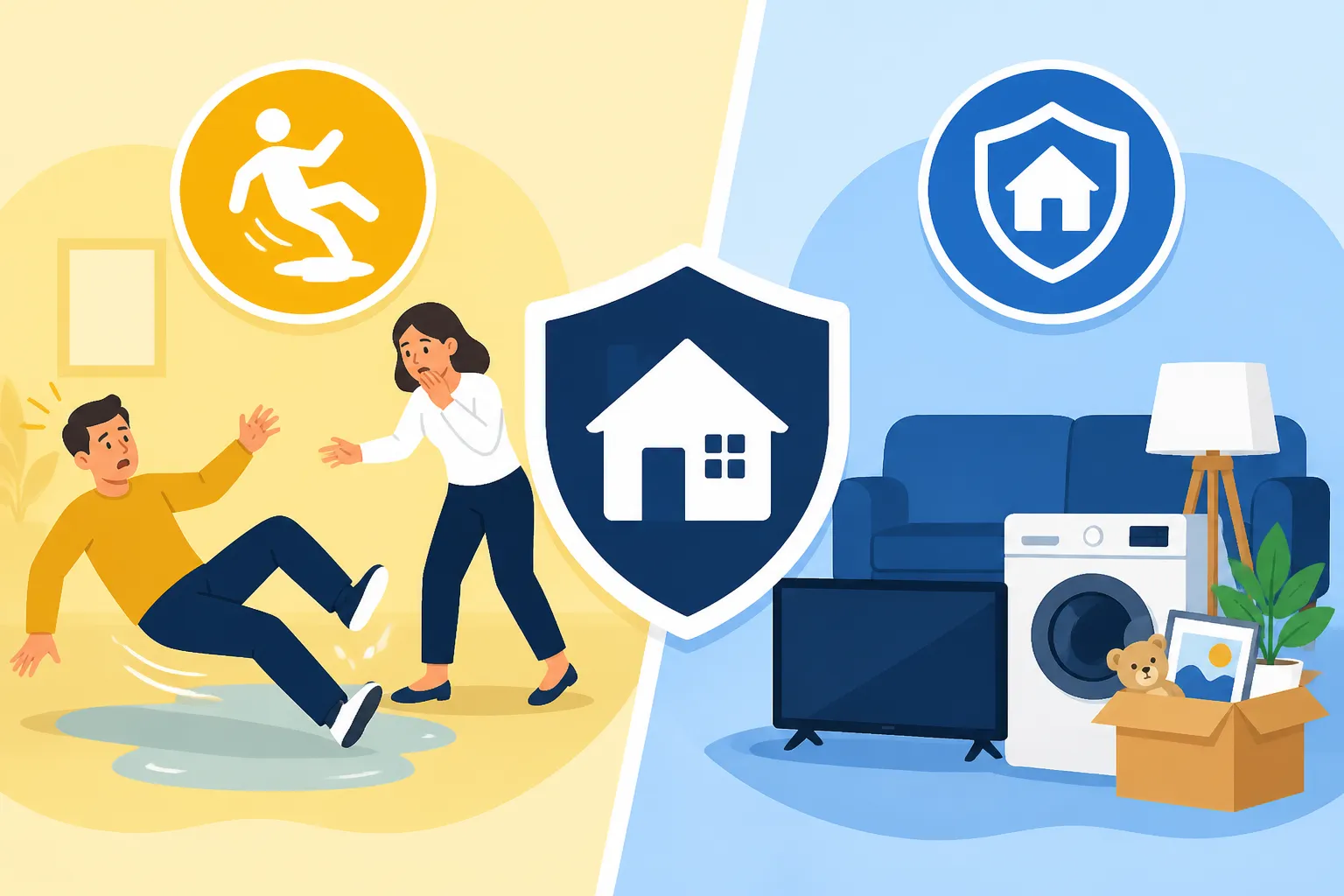
To make the best decision for your Belgian home, you need to understand how these two pillars of insurance interact. Liability is the "shield" that protects you from external lawsuits and the landlord’s claims. Content is the "safety net" that catches you if your own life is disrupted. While they are often sold together in one "Assurance Habitation" package, they serve very different masters.
| Feature | Liability (Risque Locatif) | Content (Contenu) |
|---|---|---|
| Primary Focus | The Building & Third Parties | Your Personal Belongings |
| Mandatory? | Usually (Legal/Contractual) | Generally Optional |
| Who it protects | The Landlord & Neighbors | You and your household |
| Common Claims | Fire, Leaks, Neighbor damage | Theft, Burglary, Water damage to rugs |
| Value Basis | Reconstruction cost of building | Replacement cost of items |
| Key Benefit | Prevents bankruptcy from big suits | Replaces your daily essentials |
Key Differences and Overlaps
The most important distinction is whose property is being repaired. If you drop a heavy weight and crack the bathroom tiles, that is a liability claim because the tiles belong to the landlord. If you drop that same weight on your own laptop and shatter the screen, that is a content claim. Understanding this distinction helps you when talking to an "Expert" (the claims adjuster) after an incident.
There is a slight overlap in "Water Damage." If a pipe leaks, liability insurance pays to fix the pipe and the floor. Content insurance pays to replace your soaked curtains and your ruined laptop. This is why having both in a single policy is the most efficient way to handle claims. It prevents two different insurance companies from arguing over who should pay for the "drying out" process.
Can You Buy One Without the Other?
Technically, yes. You can find "Liability Only" policies designed to satisfy a landlord’s minimum requirements. These are often chosen by students or those living very minimally. However, the price difference between "Liability Only" and "Liability + Basic Content" is often surprisingly small—sometimes as little as €5 to €10 per month.
For most professionals and families, skipping content insurance is a "penny wise, pound foolish" move. If you have enough money to be looking into Best Brokerage Accounts for Expats in Belgium (Bolero, Keytrade), you certainly have enough to protect the computer you use to manage those investments. Most Belgian insurers like KBC, Allianz, or AXA will offer a combined package that is much cheaper than buying them separately.
Pricing Factors and Premium Estimates
Insurance premiums in Belgium are influenced by several factors:
- The Size of the Property: More square meters usually mean a higher premium for liability.
- The Construction Year: Older buildings often have higher premiums due to higher risk of fire and leaks.
- Your Location: High-theft areas in major cities might see a slight bump in content premiums.
- Your Deductible (Franchise): This is the amount you pay out of pocket for each claim. A higher deductible equals a lower monthly premium.
On average, a small apartment in a city like Ghent or Brussels might cost between €15 and €25 per month for a comprehensive policy. A larger family house could range from €30 to €60 per month. It is one of the more affordable parts of the Healthcare Budgeting: Copays, DMG/GMD, and Reimbursements and general living expenses, especially compared to the potential costs of an uninsured accident.
How to Choose and Manage Your Policy
Choosing a policy shouldn't be a snap decision made in the landlord's office. You have options. You can go the traditional route with a big bank, or you can look into "Insurtech" companies that offer digital-first, English-speaking support—a huge plus for new arrivals. Many expats find that traditional banks like BNP Paribas Fortis or ING provide a smooth experience because they already have your financial data, but their interfaces can sometimes be a bit clunky for non-Dutch or French speakers.
I always recommend getting at least three quotes. When you are Opening a Belgian Bank Account: Documents Needed and Roadblocks, ask for an insurance quote at the same time, but don't feel obligated to sign it on the spot. Look for companies that allow you to manage everything through an app. Being able to upload a photo of a leak and start a claim instantly is much better than waiting on a phone line in a language you haven't mastered yet.
Reading the Fine Print: Exclusions and Deductibles
The "Franchise" (deductible) is the most important number in your policy after the premium. In Belgium, the legal minimum deductible is indexed every year (usually around €250-€300). If you have a claim for €500, the insurance company will only pay €200. Some "luxury" policies offer a "zero deductible" option for a higher premium, which can be worth it if you are prone to small accidents.
Exclusions are also vital. Most standard policies will not cover:
- Gross Negligence: If you leave your front door wide open and go to the shops, a theft claim will likely be denied.
- Lack of Maintenance: If your boiler explodes because you haven't had the mandatory annual "Entretien Chaudière" (boiler maintenance), your insurance might refuse to pay.
- War or Nuclear Incidents: Standard for most global policies.
- Specific High-Value Items: Anything like a €10,000 watch usually needs a special "rider" or add-on.
Handling Claims: The Expert Visit
If the worst happens, the process in Belgium is very structured. You file a claim, and for anything significant (usually over €500-€1,000), the insurance company will send an "Expert." This is an independent or company-employed adjuster who comes to your home to verify the damage.
Pro-tip from a veteran expat: Do not throw anything away before the Expert arrives. If your couch is ruined by water, keep it in the basement or a corner of the room. The Expert needs to see the physical damage to authorize the payout. Also, keep all your receipts. If you use Wise for your purchases, your digital activity feed is a great way to prove the value of items if you’ve lost the physical paper slips.
Financial Integration for Expats
Managing your home insurance is just one part of your Belgian financial life. As you settle in, you'll find that everything is interconnected. Your insurance premium is often paid annually or monthly via "Domiciliation" (direct debit). Setting this up correctly from the start ensures you never accidentally let your coverage lapse—a situation that could lead to your landlord terminating your lease.
Using modern financial tools can make this easier. If you are still waiting for your local bank account to be fully active, you can often pay your first premium via Wise to ensure you have that "Attestation d'assurance" (proof of insurance) ready for your key handover. Once you are settled and have your Itsme Authentication: How to Set Up Belgium's Vital Digital ID ready, managing these payments becomes second nature.
Investing and Long-Term Security
Once you have your "safety" (insurance) and "spending" (bank accounts) sorted, you can focus on building wealth. Many expats use the stability of Belgium as a base for investing. Platforms like Trade Republic are popular because they offer a simple way to invest in stocks and ETFs with low fees, which is a great way to put your "emergency fund" to work while keeping it accessible.
Remember that home insurance is part of a larger financial protective shield. Just as you protect your physical home with an Assurance Habitation, you should protect your future by understanding the Pension Pillars in Belgium: State, Occupational, and Private Savings. Being an expat in Belgium is a marathon, not a sprint, and having your financial ducks in a row—from your liability coverage to your investment portfolio—is what makes the experience successful and stress-free.
Disclaimer
The information provided in this guide is for informational purposes only and does not constitute legal, financial, or professional insurance advice. Insurance laws and regional regulations in Belgium are subject to change. Always consult with a licensed insurance broker or legal professional before signing any contracts or making significant financial decisions. The mentions of specific brands are for contextual purposes and do not imply a formal endorsement or guarantee of service.