Is Tipping Expected in Belgium? A Financial Etiquette Guide
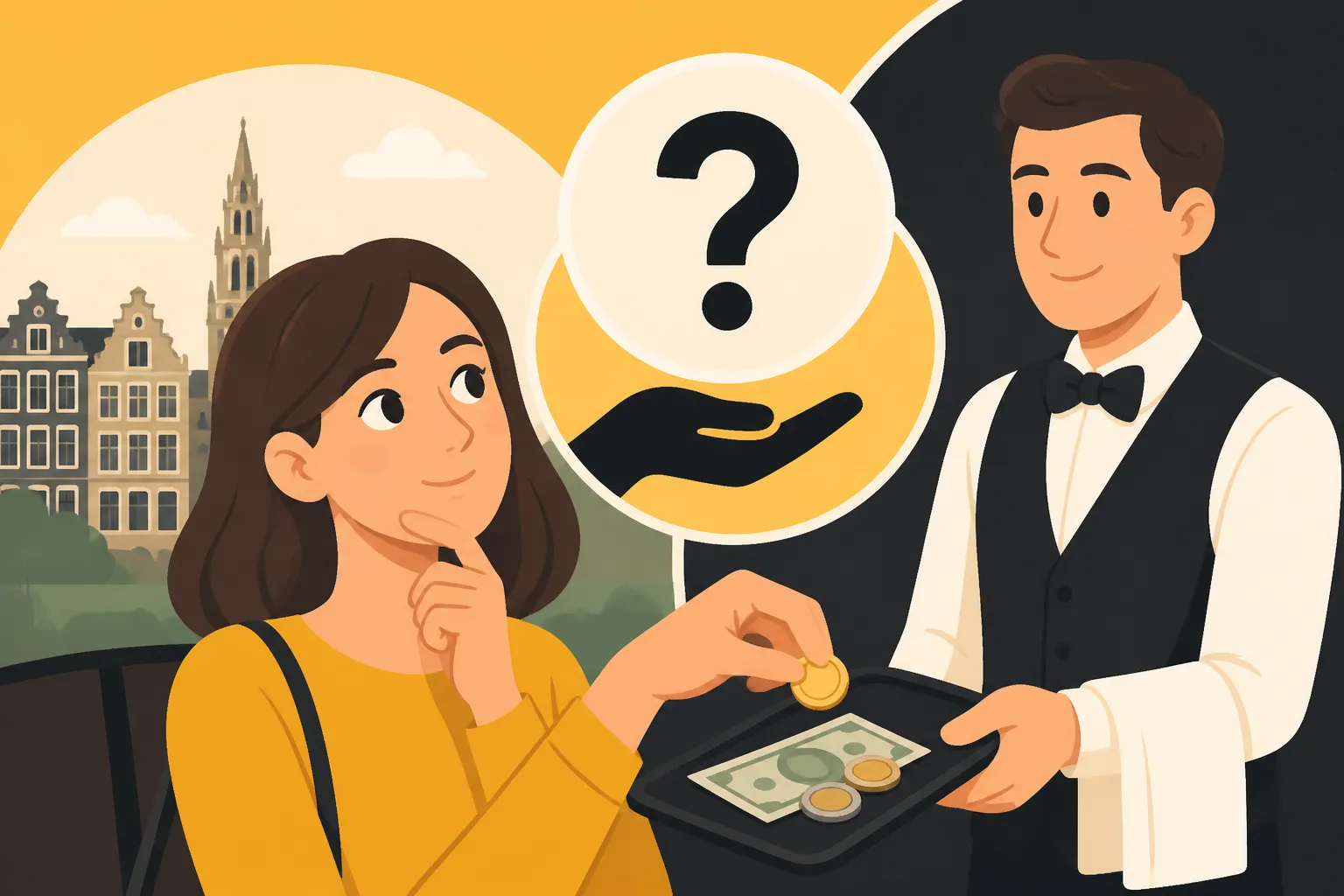
Walking into a Belgian restaurant for the first time usually triggers a specific type of panic: the frantic calculation of a 20% tip while the waiter looms nearby. I spent my first three months in Brussels overpaying by nearly fifty euros a week because I didn't understand the local norms. This guide solves that confusion by explaining exactly when to tip and how to handle your finances like a local.
Understanding the Service Compris System in Belgium
The most important thing to wrap your head around when you move here is that the price you see on a menu is the price you pay. Period. This is thanks to a concept called "service compris" or "dienst inbegrepen." In Belgium, hospitality workers are not reliant on tips to make a living wage. They are salaried professionals with benefits, social security, and a structured pay scale. This fundamental difference shifts tipping from a social obligation to a genuine gesture of appreciation.
When you look at your bill, you are paying for the food, the VAT (Value Added Tax), and the service. This means the pressure to add an extra 15% to 25% just doesn't exist here. For many expats coming from the United States or the UK, this feels "wrong" at first. I used to feel like a "cheapskate" for just paying the face value of the bill, but in the eyes of a Belgian waiter, you are simply following the rules of the house. Understanding this is a key part of navigating the Cost of Living in Belgium 2026: Singles, Couples, and Families without draining your savings unnecessarily.
The Legal and Social Framework of Gratuities
In Belgium, the law dictates that service must be included in the price. This isn't just a suggestion; it is a regulatory requirement for the Horeca (Hotel, Restaurant, Cafe) sector. Because of this, the "entitlement" to a tip is non-existent. However, that doesn't mean tips aren't appreciated. In local parlance, a tip is called a pourboire in French or drinkgeld in Dutch—literally "money for a drink."
If you decide to leave something extra, it is seen as a "bonus" for exceptional service rather than a subsidy for a low wage. This creates a much more relaxed dining environment. You won't find waiters hovering or rushing you out the door to flip the table for the next tipping customer. Conversely, you might find the service a bit slower than what you are used to back home, as there is no financial incentive for the staff to be hyper-attentive. It is all part of the Belgian pace of life.
The Difference Between Service and Tip
It is vital to distinguish between the service charge included in the bill and the voluntary gratuity. The service charge is distributed by the employer as part of the payroll system. A voluntary tip, however, often goes directly into a communal "pot" or tronc that the staff divides at the end of the shift. If you are trying to manage your budget and are looking into Banking and Finance in Belgium: Complete Expat Guide (2027), you will realize that these small amounts can add up if you aren't careful.
I’ve found that many newcomers struggle with the "rounding up" culture. In Belgium, if a coffee costs €3.80, it is very common to leave the €0.20 change or round up to €4.00. This is the most authentic way to "tip" in a casual setting. It isn't a percentage-based calculation; it is a convenience-based rounding. If you are using a tool like Wise to manage your multi-currency spending, you’ll notice these small round-ups are much easier to track than large, unexpected percentage additions at the end of a meal.
Tipping Etiquette Across Different Scenarios
While the "all-inclusive" rule covers the basics, the nuances of Belgian tipping change depending on where you are and what service you are receiving. A high-end restaurant in the Sablon neighborhood of Brussels requires a different approach than a frietkot (fry shack) in a small Flemish village. Over time, I’ve learned that the context is everything.
If you are just starting your journey here and are still Opening a Belgian Bank Account: Documents Needed and Roadblocks, you might be relying heavily on cash. In those cases, tipping is straightforward. However, as Belgium becomes increasingly digital, knowing how to tip on a card machine or through an app is becoming the new standard.
Restaurants Cafes and Bars
In a standard restaurant, if the service was good, a tip of 5% to 10% is considered very generous. Most locals will simply round up to the nearest five or ten Euro mark. For example, if your dinner for two comes to €84.00, leaving €90.00 is a significant "thank you." If the service was just "fine," leaving nothing is perfectly acceptable and will not result in dirty looks as you leave.
In cafes and bars, the rules are even more relaxed. If you are sitting at a terrace in Antwerp or Ghent, you generally pay when the drinks are delivered. If your beer is €4.50, giving the waiter €5.00 and saying "it's fine" (c'est bon or het is goed) is the standard move. In bars where you order at the counter, tipping is almost never expected. You might see a small jar for coins, but it is rarely used for more than getting rid of annoying 1-cent and 2-cent pieces.
Taxis Hairdressers and Delivery Drivers
Taxis in Belgium are notoriously expensive, and the drivers are generally well-paid compared to other countries. Tipping a taxi driver is not mandatory, but rounding up to the nearest Euro is common practice. If the fare is €19.20, giving €20.00 is plenty. If you are using a ride-sharing app, you can tip within the app, but again, it is not the cultural norm to go beyond a couple of Euros.
For hairdressers and beauty therapists, a small tip of €2 to €5 is appreciated if you are a regular customer. This is more about building a relationship than paying for the service itself. As for delivery drivers—like those from Deliveroo or Uber Eats—a tip of €1 or €2 is a nice gesture, especially if they’ve climbed four flights of stairs in a typical Brussels townhouse or braved a classic Belgian rainstorm.
Tours and Hotel Staff
If you join a "Free Walking Tour" in Bruges or Brussels, the tipping rules change entirely. Since the guides aren't paid by a company, they rely 100% on your tips. In this specific scenario, €10 to €15 per person is the standard. For private tours, a tip is not expected but appreciated if the guide went above and beyond.
In hotels, you don't need to tip the concierge for simple directions. However, if a porter carries several heavy bags to your room, €1 or €2 per bag is standard. Housekeeping is rarely tipped on a daily basis in Belgium, though leaving a few Euros at the end of a long stay is a kind gesture. If you are keeping an eye on your expenses while Sending Money In and Out of Belgium: Remittance and Currency, these small cash outlays are the only time you’ll really need to carry physical coins.
| Service Type | Typical Tipping Norm | Suggested Amount |
|---|---|---|
| Sit-down Restaurant | Optional / Rounding up | 5% – 10% for great service |
| Casual Cafe / Bar | Rounding up | Change or €0.50 – €1.00 |
| Taxi / Uber | Rounding up | Nearest €1 or €2 |
| Hairdresser | Small gesture | €2.00 – €5.00 |
| Delivery Driver | Optional | €1.00 – €2.00 |
| Free Walking Tour | Essential | €10.00 – €15.00 per person |
Practical Tips for Managing Your Spending in Belgium
Navigating the financial landscape of a new country goes beyond just knowing how much to tip. It involves understanding the local payment infrastructure and finding the right tools to keep your money working for you. Belgium is a leader in fintech, but it also has some "quirks" that can catch expats off guard.
One of the biggest hurdles I faced was the dominance of local payment systems over international credit cards. While you can use a Visa or Mastercard in most tourist areas, many local shops and smaller restaurants still prefer Bancontact. Knowing how to use Bancontact and Payconiq: The Backbone of Belgian Payments is essential for a smooth daily life. If you try to tip on a card and the machine doesn't have a "tip" option, don't panic—it’s quite common.
Digital Payments vs Cash
The "Great Belgian Tip" often happens digitally now. Most modern card terminals will ask if you want to add a gratuity before you tap your card or enter your PIN. If you are using KBC, BNP Paribas Fortis, Belfius, and ING, their apps often integrate seamlessly with these terminals. However, the most "Belgian" way to handle small debts or tips is through Payconiq.
I use Payconiq for everything—from paying back a friend for coffee to tipping a local musician. You simply scan a QR code and enter the amount. It's also great for bill splitting. If you are out with a group, check out our guide on How to Split a Bill in Belgium Using Payconiq by Bancontact to avoid the "who owes what" headache. Because these transfers are instant and free, they are much more efficient than carrying around heavy coins.
Using Wise for Currency Conversion
For those of us who still have financial ties to our home countries, managing exchange rates is a constant battle. When I first moved, I was losing a fortune on bank fees every time I moved money to pay my rent or dining expenses. I eventually switched to Wise (formerly TransferWise) to handle my international transfers.
Wise allows you to hold a balance in Euros and spend like a local without the predatory exchange rates of traditional banks. This is particularly useful when you are out at a restaurant and want to pay the exact amount without worrying about "hidden" conversion fees on your home-country card. It makes the "rounding up" tipping method much more transparent because you know exactly how many Euros are leaving your account in real-time.
Saving and Investing While Living Abroad
Once you’ve mastered the art of not over-tipping and navigating the local Social Security in Belgium: Employer and Employee Contributions, you might find you have a little extra "beer money" left at the end of the month. Instead of letting it sit in a low-interest savings account, many expats are looking into digital investment platforms.
I personally use Trade Republic for automated savings plans. It’s a great way to put those "saved" tips to work by investing small amounts into ETFs or stocks regularly. If you’re more tech-inclined, Binance is a popular choice among the expat community for managing crypto assets, though you should always be aware of the Belgian tax implications regarding speculative "good father of the family" rules. Managing your wealth in Belgium is a marathon, not a sprint, and every Euro saved by understanding tipping etiquette is a Euro that can be invested for your future.
Cultural Nuances and the "No-Tip" Reality
It is worth noting that there are situations where tipping is actually discouraged or seen as slightly awkward. For instance, in fast-food chains or large self-service cafeterias, there is zero expectation of a tip. Similarly, if you are visiting a government office or a bank, attempting to "tip" a clerk could be misinterpreted as a bribe—definitely something to avoid!
I’ve also noticed that Belgians value privacy and modesty. A tip should be left discreetly. There is no need for a "theatrical" display of handing cash to a waiter. If you are leaving cash, just leave it in the little folder the bill came in or on the table as you walk away. If you are paying by card, a simple "could you make it 50?" when the bill is 47 Euros is the height of Belgian sophistication.
When Service is Bad
What happens if the service is terrible? This is where the Belgian system truly shines for the consumer. Since the service is already included, you have already "paid" for it. You are not obligated to add anything extra. If a waiter is rude or the food is cold, you simply pay the bill as stated and leave. There is no social pressure to reward bad behavior.
In fact, the best way to "protest" bad service in Belgium is simply not to round up. In a culture where rounding up is the standard "thank you," paying the exact Euro and Cent amount sends a subtle but clear message that you weren't satisfied. It is much more effective than the aggressive "zero tip" drama you see in other countries.
The Future of Tipping in a Cashless Belgium
As we move further into 2026, the use of physical cash in Belgium continues to decline. This has led to some interesting shifts in tipping. Some restaurants have started including a "suggested tip" on the receipt—usually 5%, 10%, or 15%. This is a very recent development and is largely influenced by the influx of international tourists and digital payment software designed for the US market.
Don't feel pressured by these suggestions. They are not the local norm. Stick to the 5% to 10% rule for exceptional service, or simply round up. Belgians are pragmatic people; they understand that as life gets more expensive, people have to be smarter with their money. By using tools like Wise for your daily spending and Trade Republic for your long-term goals, you can enjoy the Belgian lifestyle without the financial "hangover" of misunderstood social obligations.
Disclaimer
The information provided in this guide is based on personal experience and current cultural norms in Belgium as of 2026. Financial regulations, tax laws, and social etiquette can change. This content is for informational purposes only and does not constitute professional financial, legal, or tax advice. Always consult with a qualified professional before making significant financial decisions in a foreign country.