Bancontact and Payconiq: The Backbone of Belgian Payments
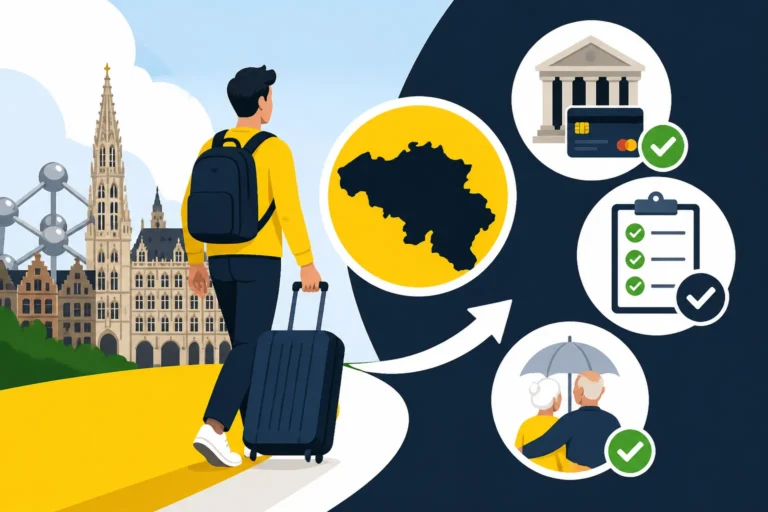
Arriving in Brussels or Antwerp only to have your high-limit international credit card rejected at a local bakery is a rite of passage every expat hates. I spent my first month carrying a wad of cash like a 1920s detective because I couldn't understand why my "World" cards were being declined at the grocery store. This guide explains the Bancontact and Payconiq ecosystem so you never face that awkward "no credit cards" shrug again.
Understanding the Foundations of Bancontact and Payconiq
If you are coming from a country where Visa, Mastercard, or American Express are the undisputed kings, the Belgian obsession with Bancontact might feel like a step backward. It isn't. Bancontact is a domestic debit system that has been the cornerstone of Belgian finance for decades. Unlike credit cards, which often process payments through a revolving credit line, Bancontact pulls funds directly from your current account in real-time. This is why many Belgian merchants prefer it; the transaction is guaranteed, and the merchant fees are significantly lower than those charged by US-based credit giants.
By the time you finish Opening a Belgian Bank Account: Documents Needed and Roadblocks, you will realize that your physical card likely has a Bancontact logo on the front. This logo is your golden ticket to society. It allows you to pay at every supermarket, every government office, and every tiny coffee shop in the Ardennes. Without it, you are effectively a financial ghost in many parts of the country.
The History and Dominance of Bancontact
Bancontact was founded in the late 1970s, long before the digital age, as a way to standardize electronic payments across different Belgian banks. Because the country is relatively small and its banking sector is highly centralized, the system saw almost 100% adoption within a decade. Today, it handles billions of transactions annually. For the average Belgian, "Bancontact" is both a brand and a verb. You don't "swipe your card"; you "Bancontact" the bill.
The reason for its dominance is simple: trust. Belgians are notoriously conservative with debt. The idea of spending money you don't actually have in your account—the very premise of a credit card—is culturally less appealing here than in the UK or the US. Bancontact aligns with the local mindset of "if the money is there, you can spend it." This cultural nuance is vital to understand when you see that your Social Security in Belgium: Employer and Employee Contributions are deducted with similar efficiency; the system is built on immediate, transparent settlement.
The Digital Revolution: Enter Payconiq
While Bancontact dominated the physical card space, the rise of smartphones created a gap for mobile-first payments. Payconiq emerged as a solution that allowed users to pay by scanning a QR code with their phone. Initially, it was a separate entity, but its utility was undeniable. It removed the need for a card reader or even a physical card. You could walk into a weekend market in Ixelles, scan a code on a vendor's printed sheet, and pay for your organic carrots in three seconds.
Payconiq was particularly revolutionary for peer-to-peer (P2P) transfers. Before its widespread adoption, splitting a dinner bill involved exchanging IBAN numbers and waiting a day for a SEPA transfer to clear. With Payconiq, you simply select your friend from your contact list and send the money instantly. It has become so ubiquitous that "Payconiq me" is now the standard response when someone picks up the tab at a bar.
How They Merged to Form a Powerhouse
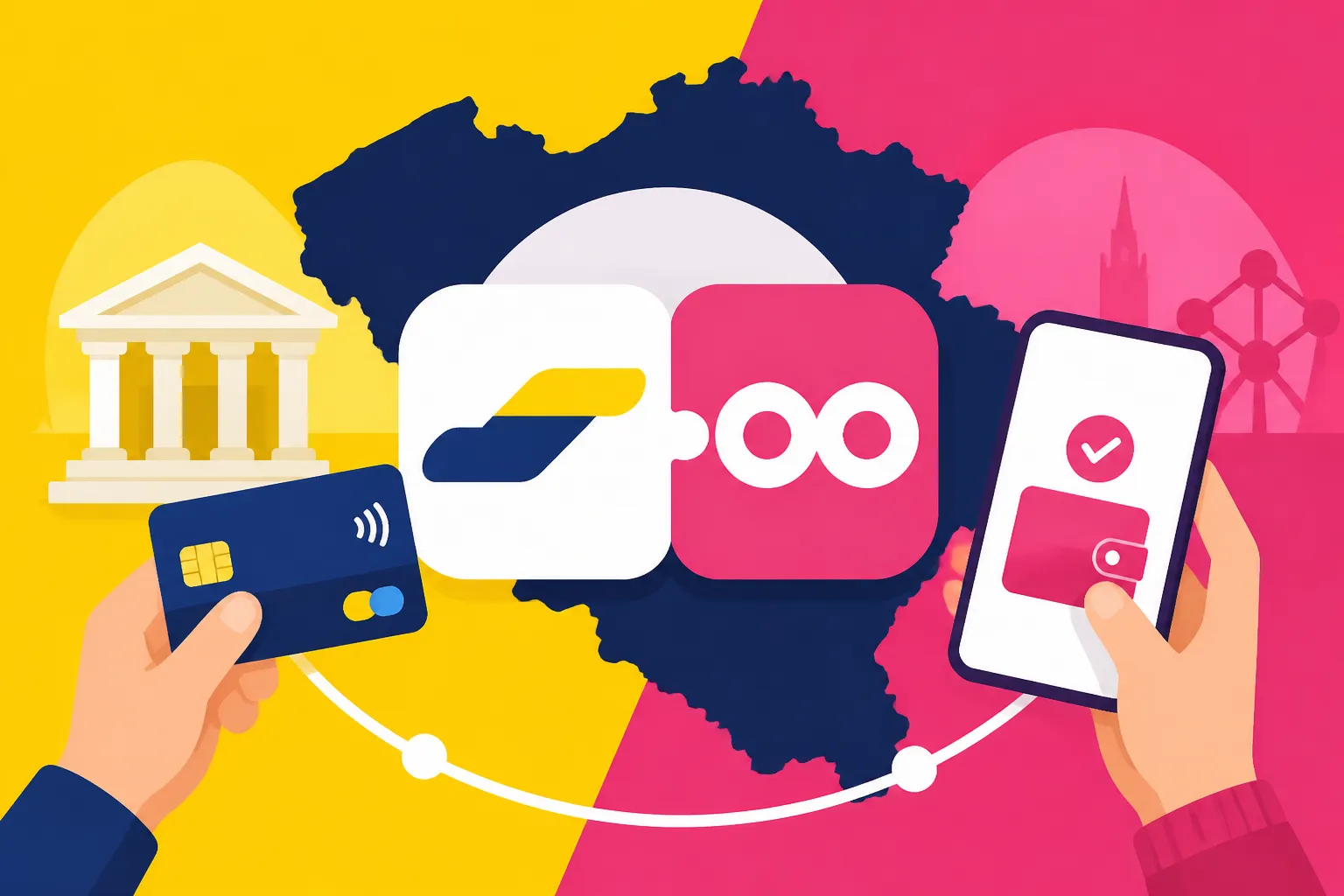
In 2018, Bancontact and Payconiq officially merged to create "Bancontact Payconiq Company." This was a strategic move to fend off global giants like Apple Pay and Google Pay. By combining the massive infrastructure of the Bancontact card network with the agile mobile technology of Payconiq, they created a seamless ecosystem. Today, the "Payconiq by Bancontact" app is the single most important financial tool on any resident's phone.
This merger also ensured that merchants didn't have to choose between two domestic systems. A single QR code at the checkout can now be scanned by almost any banking app in Belgium. For expats, this means that once you have your Belgian bank account set up, you have immediate access to both physical and digital payments that work everywhere from the local commune to the most remote friterie. If you are still waiting for your permanent residency, you might be wondering Can I Open a Belgian Bank Account Before Receiving My eID? to get started with this system as soon as possible.
Why You Can’t Survive in Belgium with Only a Visa or Mastercard
One of the most common frustrations for newcomers is the "Bancontact Only" sign found in smaller shops, pharmacies, and independent boutiques. You might have a premium travel card with no foreign transaction fees, but if the terminal doesn't support the Bancontact protocol, it simply won't work. This isn't because the shop is being difficult; it's a calculated business decision based on the cost of doing business in a high-tax environment.
When you use a Visa or Mastercard, the merchant often pays a percentage of the transaction (sometimes up to 3%) plus a flat fee to the card issuer. For a small business with thin margins, like a local bakery or a bookstore, these fees eat into their profits significantly. Bancontact, by comparison, often costs the merchant only a few cents per transaction, regardless of the amount. This is why you will see signs saying "Credit cards only for purchases over €25."
Small Shops and the Bancontact-Only Rule
In the historic centers of Ghent or Antwerp, you will find hundreds of charming independent shops. These are the places where you are most likely to encounter the Bancontact-only rule. I remember trying to buy a specific brand of Belgian chocolate for a friend back home and being unable to pay because I only had my international credit card. The shopkeeper was apologetic but firm.
This is also prevalent at local markets and pop-up events. While many vendors now use mobile QR codes, they are almost always linked to the Payconiq system rather than an international processor. If you are planning a day of shopping, it is essential to have either a Bancontact-enabled card or the Payconiq app ready to go. For those who haven't yet moved their full savings over, using a service like Wise to hold a small amount of Euros can be a lifesaver, but remember that even a Wise card is technically a Visa/Mastercard and may still be rejected where only Bancontact is accepted.
Government and Administrative Payments
This is where the lack of Bancontact becomes a serious hurdle. When you visit your local commune to register your address or pay for your residence card, you will almost certainly be required to pay via Bancontact. Many administrative offices in Belgium have strictly "no cash" policies for security and accounting reasons, and many do not accept international credit cards because they are government entities that do not want to incur high processing fees.
I have seen expats forced to leave the commune office, find an ATM, withdraw cash (if the office accepts it), or worse, go to a bank to make a manual transfer because they didn't have a local card. To avoid this, ensure that you have prioritized your banking setup.
The Merchant Fees Dilemma
From a merchant's perspective, the Belgian payment landscape is a balancing act. While they want to be accessible to tourists who only carry international cards, the high cost of those transactions makes it difficult. In high-traffic tourist areas like Grand Place in Brussels, most places will accept everything. However, the moment you step two blocks away into the "real" Belgium, the economic reality changes.
Merchants also face different hardware costs. A terminal that accepts only Bancontact is cheaper to rent and maintain than a "multi-scheme" terminal that handles international credit, Apple Pay, and contactless chips from around the world. As you calculate your Cost of Living in Belgium 2026: Budgeting for Cities and Families, remember that you might occasionally pay a small surcharge if you insist on using an international card at certain small retailers, though this practice is becoming rarer due to EU regulations.
Setting Up and Using the Payconiq by Bancontact App
The transition from a physical card to the Payconiq by Bancontact app is the moment you truly become a "local" in the Belgian financial sense. The app is available on both iOS and Android and serves as a digital wallet that links directly to your Belgian bank account. The setup process is relatively straightforward, but it does require you to have your physical card and card reader (the "digipass") from your bank for the initial authentication.
Once set up, the app allows you to pay by scanning a QR code at a cash register, on a website, or even on a paper invoice. It is incredibly secure because every transaction requires either a PIN or biometric authentication (FaceID/Fingerprint). It also keeps a detailed history of your spending, which is helpful for those trying to track their expenses in a new currency.
Linking Your Bank Account and Itsme
The first hurdle in setting up the app is the authentication. Most Belgian banks use a high-level security protocol. To make this easier, you should first set up your digital ID. We have a detailed walkthrough on Itsme Authentication: How to Set Up Belgium's Vital Digital ID, which is the standard way to prove who you are to Belgian apps. Once Itsme is active, linking your bank account to Payconiq takes about thirty seconds.
The app supports multiple bank accounts, so if you have an account with KBC for your salary and a joint account with ING for household expenses, you can toggle between them. This flexibility is perfect for expats who are managing complex financial lives across different institutions. Just ensure that the mobile number linked to your bank matches the one on your phone, as this is a common point of failure during setup.
Paying via QR Codes in Shops
When you are at the checkout of a supermarket like Delhaize or Carrefour, you will see a screen displaying a QR code next to the total amount. To pay, you simply open the Payconiq app, tap "Scan," and point your camera at the screen. The amount appears on your phone, you confirm with your fingerprint, and the register prints your receipt instantly. It is often faster than inserting a card and typing a PIN.
This system is also used in restaurants. Instead of the waiter bringing a portable card machine, they might simply point to a QR code on the bill or a sticker on the table. This is particularly common in student cities like Leuven or Ghent. If you are out for a meal, it’s worth checking out our guide on The 'Friterie/Frituur' Etiquette: Ordering Fries Like a Local to see how digital payments are even reaching the most traditional of Belgian food stalls.
Peer-to-Peer Transfers (Splitting the Bill)
The "P2P" feature is perhaps the most used part of the app for expats. When you are out with friends and need to split a bill, you don't need their bank details. You can simply tap "Pay" in the app, and it will show you a list of your phone contacts who also have Payconiq. Select the friend, enter the amount, and the money is sent.
If you are the one who paid the whole bill, you can generate a "Request" QR code on your phone. Your friends can scan your screen with their own phones to pay you back immediately. This eliminates the "I'll pay you back later" conversations that often lead to forgotten debts. It’s a clean, efficient way to manage social finances that I wish every country would adopt.
Payconiq and the Future of Mobile Payments in Belgium
As we move forward, the Payconiq by Bancontact ecosystem is evolving. It is no longer just a way to pay for coffee; it is becoming an integrated lifestyle app. Many businesses now use it to distribute loyalty points or digital coupons. For example, some bakeries will automatically "stamp" a digital card in your app when you pay, eventually giving you a free loaf of bread.
Furthermore, Payconiq is increasingly used for online shopping on Belgian websites. When you reach the checkout page of a local retailer, you choose "Bancontact" as your payment method. A QR code appears on your computer screen; you scan it with your phone, and the purchase is complete. You never have to type in your 16-digit card number, expiry date, or CVV code, which significantly reduces the risk of online fraud.
Integration with Online Shopping and Invoices
One of the most useful features for expats is the ability to pay utility bills or medical invoices using the app. In Belgium, you will often receive a paper invoice in the mail for things like lab tests or hospital visits. These invoices now almost always include a Payconiq QR code. Instead of logging into your bank’s web portal and manually typing in a long "Structured Communication" number, you just scan the code.
This is especially helpful when dealing with the Belgian healthcare system. If you’ve seen our guide on How to Submit Medical Receipts for Reimbursement in Belgium, you know that getting your money back depends on accurate record-keeping. Using Payconiq ensures that your payment is perfectly matched to the invoice, making the reimbursement process through your Mutuelle much smoother.
Loyalty Programs and Rewards
The app is also becoming a hub for "Eco-vouchers" and "Meal vouchers," which are common non-taxable benefits in Belgian employment contracts. Some providers are now integrating these balances directly into the payment flow. This means you could potentially pay for your organic groceries using your eco-voucher balance via a QR code, all within the same app interface.
As you get used to Grocery Shopping: Aldi and Lidl vs Delhaize for Expat Budgets, look for the Payconiq signage near the register. Often, there are specific promotions where using the app earns you extra points or a small cashback. While it’s not as lucrative as US credit card rewards, in a country with high costs, every few cents saved on a weekly shop adds up.
Cross-Border Compatibility and the Wero Transition
A common question is whether Payconiq works outside of Belgium. Historically, the answer was mostly "no," but that is changing. There is an ongoing effort to link Payconiq with similar systems in the Netherlands (iDEAL) and Luxembourg. However, the bigger news for 2026 is the rollout of Wero, a new European-wide instant payment system.
Wero is designed to eventually replace or integrate with domestic systems like Bancontact to allow for seamless QR payments across the entire Eurozone. For now, Bancontact and Payconiq remain the "Backbone," but keep an eye on your banking app for Wero updates. If you frequently travel or have investments elsewhere—perhaps using Trade Republic for your savings or Binance for a crypto portfolio—staying informed on these European-wide payment shifts is crucial for managing your cross-border wealth.
Practical Tips for Newcomers and Tourists
If you have just arrived and don't yet have your Belgian bank account, you are in a bit of a "financial limbo." You can use cash, but as mentioned, many places don't like it. You can use your international credit card, but you'll face rejections. My advice is to always carry at least €50 in cash for emergencies, but try to use your card first to see where it is accepted.
For those who are here for the long term but are still in the paperwork phase, consider opening a "neobank" account as a bridge. While they may not offer a full Bancontact-branded card immediately, many now have integrations that allow for better acceptance in Belgium than a standard US or UK bank card.
Using International Cards and Wise
Until your local account is active, a Wise card is your best friend. It allows you to spend in Euros without the massive exchange rate markups of traditional banks. While it is still a Visa/Mastercard, it is "Region-aware," and I’ve found it has a slightly higher success rate at Belgian terminals than cards issued outside of Europe.
If you are a freelancer or are setting up a small business, you might also be looking at platforms like Binance for payment in digital assets. While Belgium is progressive, you won't find many shops accepting Bitcoin directly via Payconiq yet. For that, you will still need to off-ramp your funds into a standard Euro account. Make sure you understand the implications by reading our guide on Crypto Taxes in Belgium: Speculative vs Normal Management.
Security and Fraud Prevention
The Bancontact/Payconiq system is incredibly secure, but you must still be vigilant. Phishing scams are common in Belgium, often arriving via SMS or WhatsApp, claiming there is an issue with your "Itsme" account or a pending Payconiq payment. Never click a link in a text message to log into your financial apps. Always go through the official app on your phone.
Because Payconiq is linked directly to your bank account, a compromised app is a serious issue. If you lose your phone, your first call should be to Card Stop (070 344 344). This is a centralized Belgian service that can block all your bank cards and digital payment apps in one go. It is a number every expat should have saved in their emergency contacts.
| Feature | Bancontact (Physical Card) | Payconiq (Mobile App) | International Credit Card |
|---|---|---|---|
| Acceptance | 99% of Belgian Merchants | Very High (especially P2P) | Moderate (rejected at small shops) |
| Speed | Fast (Contactless) | Fastest (QR Scan) | Moderate (Requires PIN/Signature) |
| Fees for User | Usually Free | Free | Potential Currency/Transaction Fees |
| Best For | Supermarkets & Communes | Splitting Bills & Small Shops | Large Hotels & High-end Retail |
| Online Use | High (via QR/Card Reader) | Very High (Seamless QR) | High (Standard 16-digit) |
Final Thoughts on the Belgian Payment Landscape
Navigating the world of Bancontact and Payconiq is one of the first steps toward true integration in Belgium. It might feel redundant to have yet another app and another card, but the convenience it offers within the Belgian borders is unmatched. From paying your municipal taxes to buying a cone of fries on a rainy Friday night, this system is the silent engine that keeps the country running.
Once you have your local account, your Itsme ID, and your Payconiq app synced, the "financial friction" of expat life virtually disappears. You will no longer be the person holding up the line at the bakery while trying three different cards. Instead, you'll scan, beep, and walk away with your baguette, just like a local.
Disclaimer
This guide is for informational purposes only and does not constitute professional financial or legal advice. Payment systems, bank fees, and regulations in Belgium are subject to change, especially with the ongoing integration of European-wide standards like Wero. Always consult with your specific banking provider for the most up-to-date terms and conditions regarding your accounts and cards. Transactions involving cryptocurrencies may carry significant tax implications in Belgium; please consult a qualified tax professional for personalized advice.