Networking Etiquette: Bises (Kissing) vs Handshakes at Work
You walk into a morning meeting at a Brussels NGO, and suddenly, your colleague leans in, pursing their lips near your ear, and you have no idea if you are about to be kissed or head-butted. I remember my first week in Ixelles when I practically recoiled in horror from a friendly "bise," accidentally insulting a very kind senior partner. This guide solves the agonizing confusion of Belgian physical greetings, helping you master the handshake and the kiss without the social trauma.
The Belgian Handshake: Your Professional First Impression
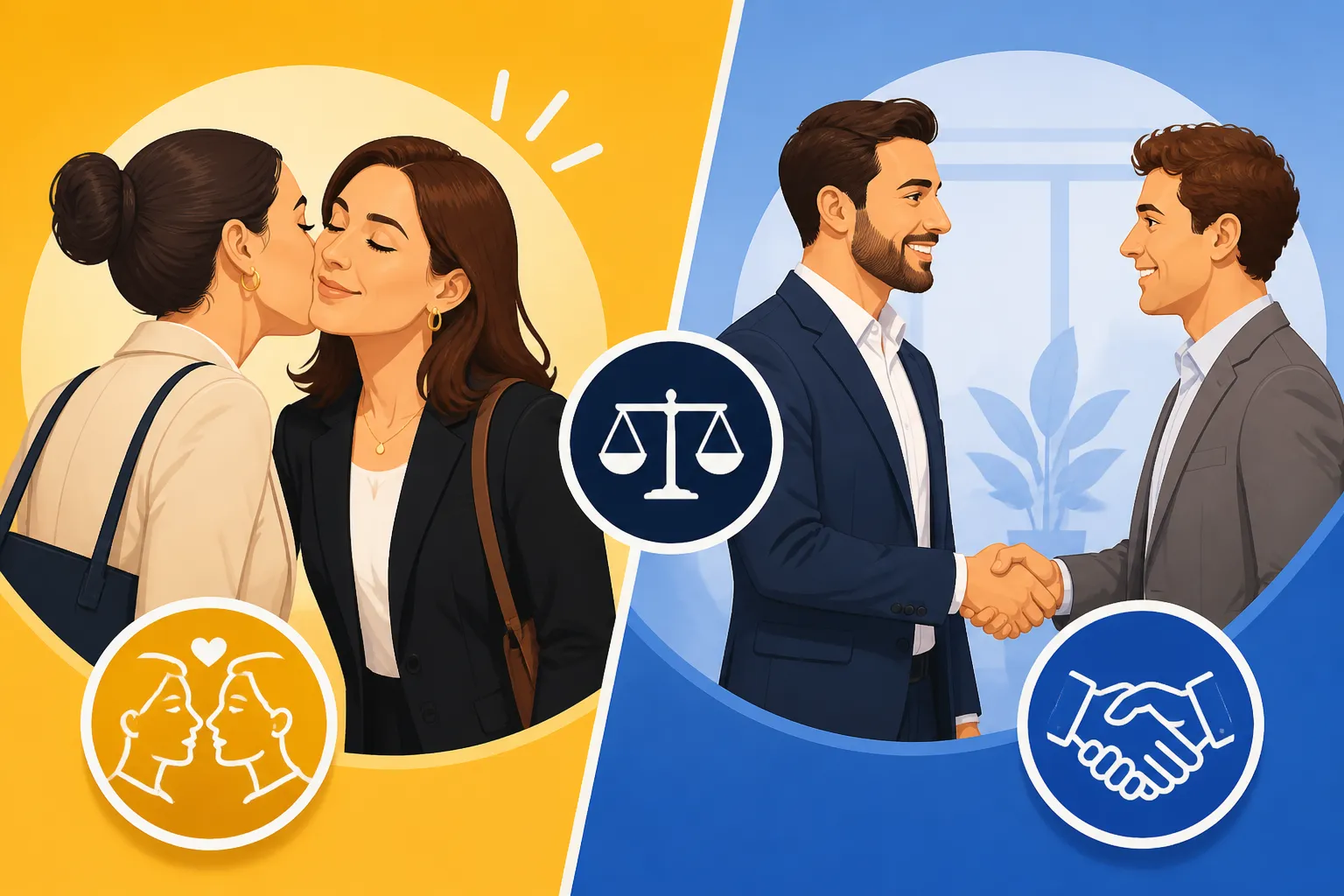
In the Belgian corporate world, the handshake is the undisputed king of first encounters. Whether you are attending an interview or meeting a new client at a law firm in Antwerp, your hand is your primary tool for establishing credibility. Unlike the lingering, intense handshakes you might find in some Mediterranean cultures or the "crush-your-bones" grip sometimes seen in the US, the Belgian handshake is brief, firm, and accompanied by direct eye contact.
When you are first starting out, perhaps while researching Common Interview Questions at Belgian Tech Companies, you should always default to the handshake. It is the safe zone. If you are meeting someone for the first time, regardless of gender or seniority, extend your hand. The moment you enter a meeting room, it is customary to shake hands with everyone present—not just the person in charge. Skipping someone can be perceived as a subtle slight or a sign of extreme "clueless expat" energy.
The handshake also signals the transition into a professional headspace. In many Belgian offices, particularly in Flanders, the handshake remains the standard even after years of working together. It maintains a layer of professional distance that many Belgians value. However, the nuances change as you move into the bilingual bubble of Brussels or the rolling hills of Wallonia. If you are still perfecting your professional persona, taking a course on Udemy regarding international business communication can help bridge these subtle cultural gaps.
Decoding the Bise: When the Kiss Becomes Appropriate
The "bise" (cheek kiss) is perhaps the most stressful administrative-adjacent hurdle an expat faces. It isn’t a romantic gesture, but it is deeply personal. In Belgium, the bise typically consists of a single kiss on one cheek. This is a major departure from France, where you might find yourself trapped in a two, three, or even four-kiss cycle depending on the department. In Belgium, we keep it efficient: one and done.
But when does it happen? You should almost never initiate the bise with a superior or a client. Wait for the Belgian to lead. Usually, the bise only enters the workplace once a "friendly" relationship has been established. This might happen after a successful project launch, a team-building dinner, or once you have reached the level of "regular" in the office coffee queue. It is also more common between women, or between men and women. In Brussels and Wallonia, man-to-man cheek kissing is rare in a strictly professional setting, though it does happen among very close friends or in more artistic and creative sectors.
If you are working in Flanders, be even more cautious. The Flemish tend to be more reserved with physical touch than their Francophone counterparts. If you are unsure, stick to the handshake. If you have been focusing on your language skills through DutchPod101, you might notice that the language itself has different levels of formality (the "u" vs "je" distinction), which often mirrors the physical distance. A person who insists on being called "u" is almost certainly not a candidate for a bise.
Navigating the Regional Divide: Flanders vs. Wallonia
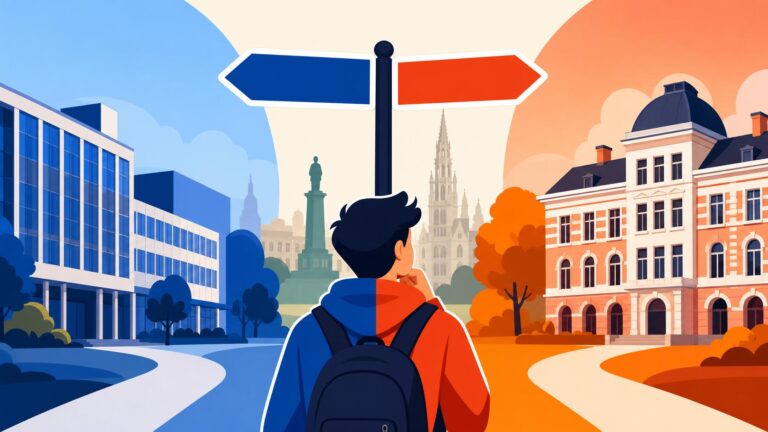
Belgium is not a monolith, and your greeting etiquette must shift as you cross the internal borders. The cultural friction between the North and the South extends to how people occupy physical space. In Wallonia and the more Francophone-heavy parts of Brussels, the atmosphere is often slightly more relaxed. You might find the bise appearing much earlier in a professional relationship.
In Flanders, the "Zwaaien" (waving) or a simple nod is often preferred for daily greetings once the initial handshake of the morning is over. The Flemish workplace often prioritizes "zakelijkheid" (business-likeness). If you are aiming for a career in the North, understanding Tech and Engineering Jobs in Flanders (Antwerp, Ghent, Leuven) will show you that these environments are often high-output and low-fluff, meaning less time spent on elaborate greeting rituals and more on the agenda at hand.
| Context | Flanders Greeting | Wallonia/Brussels Greeting |
|---|---|---|
| First Meeting | Firm Handshake | Firm Handshake |
| Daily Arrival | General Wave or Handshake | Individual Handshakes or Bise (if close) |
| Client Lunch | Handshake | Handshake (Bise only for long-term partners) |
| Leaving the Office | "Prettige avond" + Wave | "Bonne soirée" + Individual Handshakes |
| Birthday/Celebration | Handshake or 3 Kisses (rare) | One Bise + "Félicitations" |
It is worth noting that while the single bise is the standard in the South, some Belgian families or very close friends in the North occasionally do three kisses (left-right-left). However, in a professional networking context, if you start going for a third kiss in a Brussels office, you will likely find yourself kissing empty air as your colleague has already moved on to the next person. To avoid these "lost in translation" moments, many expats use Lingoda to not only learn the language but to ask their native teachers about these specific social "tells."
The Post-Pandemic Shift and the Rise of the "Nod"
We cannot talk about physical etiquette in 2026 without acknowledging the massive shift caused by the COVID-19 years. For a long time, the handshake was dead, replaced by the awkward elbow bump. While the handshake has made a full-throated comeback, the bise has remained somewhat more optional. Many Belgians who were never fans of the cheek kiss have used the "new normal" to permanently opt out.
Today, if you feel uncomfortable with physical touch, a warm smile and a slight nod of the head are perfectly acceptable. If someone leans in for a bise and you aren't ready for it, a slight step back and a friendly wave is a universally understood "I’m keeping my distance" signal that won't cause an international incident. This is especially relevant when you are Networking in Brussels: EU Events, LinkedIn, and Expat Groups, where the crowd is international and everyone is operating on a different set of cultural "software."
For those who are strictly remote or hybrid, digital etiquette is the new frontier. Physical touch is replaced by the "Itsme" verification and the polite email sign-off. If you are building your network online, focus on your written tone. Using FrenchPod101 to master the difference between "Cordialement" and "Bien à vous" is far more important for your Belgian career in 2026 than worrying about whether to kiss a colleague you only see on Zoom once a month.
Seniority and the "Vous" vs. "Tu" Rule
Physical touch in Belgium is almost always dictated by the "Vous/Tu" or "U/Je" dynamic. There is a hierarchy of intimacy. If you are still using the formal "Vous" with a colleague, you are almost certainly still in handshake territory. The moment the "Tu" is offered—usually by the person with more seniority—the door to the bise opens slightly.
If you find yourself in a situation where you are unsure of the hierarchy, perhaps while navigating Belgian Work Culture: Bilingual Workplaces, Meetings, and Hierarchy, always lean toward formality. It is much easier to move from a handshake to a kiss than it is to walk back an unwanted bise. I once tried to bise a department head at a ministry in Brussels because everyone else was doing it, only to realize they were all childhood friends and I was "the new guy" who had just overstepped a massive invisible line.
If you are looking to upskill and move into management yourself, taking leadership courses on Coursera can help you understand how to set these boundaries for your own team. A good leader in Belgium knows how to be approachable without losing the respect that the traditional handshake affords.
Actionable Steps for Your Next Networking Event
When you attend your next professional gathering, follow these steps to ensure you remain the most culturally savvy person in the room:
- The Entry Scan: When you enter a group, observe. Are the people already there shaking hands? Do they seem to be "bise-ing"? Mirror the highest level of formality you see.
- The Hand Lead: Keep your right hand free. Don't hold your drink and your phone in both hands. If you see someone approaching, proactively extend your hand for a shake. This "claims" the interaction and prevents an unwanted bise if you are feeling shy.
- The Name Game: In Belgium, saying the person's name while shaking their hand is a power move. "Enchanté, Marc" or "Aangenaam, Sophie" goes a long way.
- The Exit: When leaving, don't just "ghost." In Belgian culture, the "French Leave" (ironically) is frowned upon in small groups. You must do the round of handshakes or waves again. It takes time, but it builds the "social capital" necessary for Working in Belgium as an Expat: Jobs, Culture, and Hiring (2027).
If you are feeling overwhelmed by the social complexity, remember that most Belgians are aware that their "one kiss" rule is unique. They are generally forgiving of expats, provided you are trying. If you make a mistake, laugh it off. A quick "Sorry, I'm still getting used to the Belgian way!" is a great icebreaker.
Special Considerations for English-Speaking Environments
If you are working in the "EU Bubble" or at a large multinational where English is the primary language, the rules get even murkier. These offices are often a "cultural no-man's-land." You might find a Swedish manager who hates touching, an Italian colleague who wants to hug, and a Belgian who is sticking strictly to the one-kiss rule.
In these environments, the handshake remains the safest universal currency. However, you should be aware of the "Air Kiss." Often, in a professional-social setting (like a cocktail hour), the bise isn't actually a kiss on the skin. It’s a "cheek-to-cheek" graze with a kissing sound made in the air. This is the ultimate "safe" bise because it respects hygiene and personal space while still performing the cultural ritual.
If you are struggling with the transition to a new office, check out the Job Hunting in Belgium: Strategy for Non-EU and English Speakers guide to see which sectors are the most traditional versus the most modern. Creative agencies and startups in Ghent or Saint-Gilles are far more likely to embrace the "bise" and "tu" culture than a traditional bank in the center of Brussels.
Important Disclaimer
The information provided in this guide is based on cultural observations and general professional norms in Belgium. Social etiquette is subjective and can vary significantly based on specific company culture, individual preferences, and regional sub-cultures. This guide does not constitute legal or formal human resources advice. Always prioritize personal boundaries and follow the specific health and safety guidelines of your workplace.