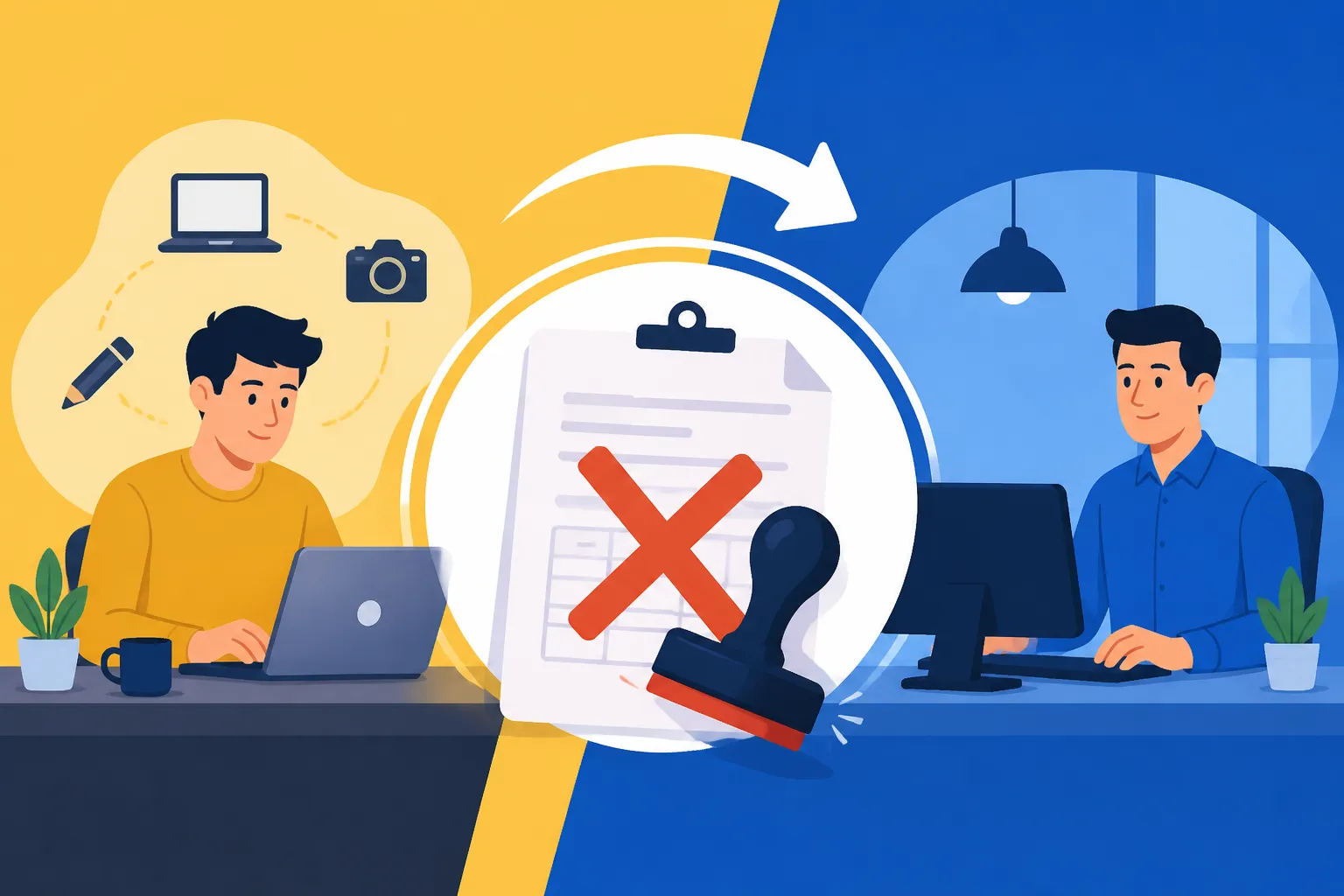
Switching from Freelancer to Employee: Closing Your VAT Registration
Deciding to trade in your freelance freedom for a steady Belgian paycheck is often a move born of exhaustion from chasing invoices and filing quarterly returns. I remember sitting in my kitchen in Ixelles, staring at a mountain of receipts and realizing that the administrative weight of being independent had finally eclipsed the joy of the work itself. This guide simplifies the bureaucratic maze of closing your VAT registration and transitioning back to employee status safely.
Navigating the Administrative Exit: Closing Your VAT and CBE Records
The very first hurdle you face when moving from independent status to a traditional job is the formal closure of your business entity. In Belgium, this isn't a single "off" switch; it's a series of coordinated steps. You must first notify the Crossroads Bank for Enterprises (CBE/BCE). This is the central registry that holds your business identity. If you are a sole trader (personne physique/eenmanszaak), this is relatively straightforward, but timing is everything. You have one month from the official end of your freelance activity to inform them.
Once the CBE is updated, you must tackle the VAT office. This involves filing a specific form, known as Form 604C. This form tells the authorities that you will no longer be collecting VAT on behalf of the state. It sounds simple, but you must be meticulous about your final VAT return. This return covers the period from the start of your last quarter up to the very last day of your activity. If you miss this deadline or fail to file the 604C, the Belgian tax authorities will assume you are still active and will continue to send you "nil" return requirements and potential fines for non-compliance.
While you are navigating this transition, you might find that your new employer expects a higher level of professional Dutch or French than your freelance life required. I personally used DutchPod101 to sharpen my office vocabulary before my first day in a corporate Brussels firm, as the casual slang I used with freelance clients didn't quite cut it in a formal boardroom setting. Ensuring your linguistic skills are up to par is just as important as the paperwork.
Settling Social Security and Professional Insurance Obligations
Closing your VAT number is only half the battle; your social security status must also be adjusted. As a freelancer, you were likely registered with a Social Insurance Fund like Social Insurance Funds for Freelancers (Xerius, Acerta, Partena). You must send them a formal "declaration of cessation" along with proof that your business has been de-registered from the CBE. This step is vital because your social security contributions as an independent are often calculated on a provisional basis.
Be warned: Belgium has a long memory. Even after you stop being a freelancer, you will likely receive a "regularization" bill two or three years later. This is because your final contributions are based on your actual income in your final year of activity, which the fund only discovers once your tax return is fully processed. Many expats are blindsided by a 2,000-euro bill years after they’ve settled into their cozy office job. Keep a "exit fund" in your savings account to handle this ghost of bureaucracy past.
As you move into your new role, you will see a significant change in how your social protection is handled. You will no longer be paying these quarterly bills yourself; instead, you will notice the Healthcare Deductions on Your Payslip: The ONSS/RSZ Contribution taking place automatically. It feels like a pay cut at first, but remember that this covers your pension, health insurance, and unemployment rights in a way that your freelance contributions never quite did. If you feel your skills need a quick refresh before starting your new contract, taking a specialized course on Udemy or Coursera can help bridge the gap between your independent projects and the structured requirements of a Belgian employer.
Managing the Tax Transition and Final Declarations
The year you switch from freelancer to employee is the most complicated year for your personal income tax. You will effectively have two types of income to report on a single tax return: your professional profits (as an independent) and your salary (as an employee). Understanding Taxes in Belgium for Expats: Personal Income Tax System 2026 is crucial during this period to avoid overpaying or, worse, underpaying and facing a massive bill the following year.
One of the biggest culture shocks when moving to the other side of the fence is the sheer complexity of a Belgian salary package. You will go from sending a simple invoice to trying to decipher How to Read Your First Belgian Payslip (Fiche de Paie). Your new employer might offer benefits you never had as a freelancer, such as 13th Month Pay (End-of-Year Bonus) Explained for New Employees or meal vouchers. While your gross salary might look lower than your freelance daily rate, these extra perks often bridge the gap significantly.
If your new job requires a specific certification or a language boost that your freelance career lacked, don't hesitate to use Lingoda for intensive language sessions or FrenchPod101 to ensure you can handle the lunchtime chat with your new colleagues. The social aspect of being an employee is a major shift from the isolation of freelancing, and being able to communicate effectively is key to your successful integration.
Comparing the Financial Reality: Independent vs. Employee
To help you visualize the shift, I've broken down the major changes you’ll experience in your daily financial and administrative life. Moving from Registering at the Crossroads Bank for Enterprises (CBE/BCE) to being a standard "salarié" changes your relationship with the state entirely.
| Feature | Freelancer (Independent) | Employee (Salaried) |
|---|---|---|
| VAT Obligations | Quarterly filings + Client listing | None (Handled by Employer) |
| Social Security | Quarterly payments (Self-managed) | Monthly deduction (Automatic) |
| Income Tax | Advanced payments recommended | Pay As You Earn (Withholding) |
| Admin Responsibility | High (Bookkeeping, receipts) | Low (Focus on work) |
| Holiday Pay | None (Self-funded) | Vacation Pay (Double Pécule): Why You Get Paid Extra in May/June |
| Job Security | High risk, high flexibility | Employment Rights: Belgian Contracts, Notice Periods, and Leave |
This transition is often a relief, but it requires one final push of high-level organization. If you are struggling with the French or Dutch terminology on the official forms, remember that the "Guichet d'Entreprise" (Enterprise Counter) where you first did your Applying for a VAT Number (TVA/BTW) as a Freelancer is often the best place to go for help with closing the same number. They charge a fee for the de-registration, but it is money well spent to ensure the "termination of activity" is logged correctly in the national database.
Final Steps for a Clean Break
The last thing you want is a letter from the FPS Finance three years from now asking why you haven't filed a client listing. After you receive the confirmation of your VAT closure, keep all your digital and physical records for at least seven years. This is the legal requirement in Belgium for business documentation. This includes every invoice you sent and every expense you claimed while you were your own boss.
As you settle into your new office, take a moment to appreciate the new stability. You no longer have to worry about the Gross vs Net Salary in Belgium: Why the Difference is So Big logic in your head every time you buy a coffee; the state and your employer are now doing the heavy lifting. Your only job now is to show up, do great work, and enjoy the fact that your weekends are finally your own again, free from the shadow of the quarterly VAT deadline.
Disclaimer
This guide is provided for informational purposes only and does not constitute legal, financial, or tax advice. Belgian administrative procedures and tax laws are subject to frequent changes. While we strive to keep this information accurate for 2026, you should always consult with a qualified accountant (comptable/boekhouder) or the official FPS Finance portal before making significant changes to your professional status. The author is a lifestyle blogger, not a licensed fiscal expert.