Unfurnished Apartments in Belgium: Prepare to Buy Your Own Lightbulbs
Stepping into your first Belgian apartment only to find bare wires dangling from the ceiling and a kitchen that is literally just a sink is a rite of passage for most expats. I remember sitting on my suitcase in a hollow-sounding living room in Ixelles, realizing I couldn't even turn on a light because I hadn't brought my own fixtures. This guide explains exactly what unfurnished means in Belgium so you can avoid a dark, cold first night.
The Belgian Definition of Unfurnished
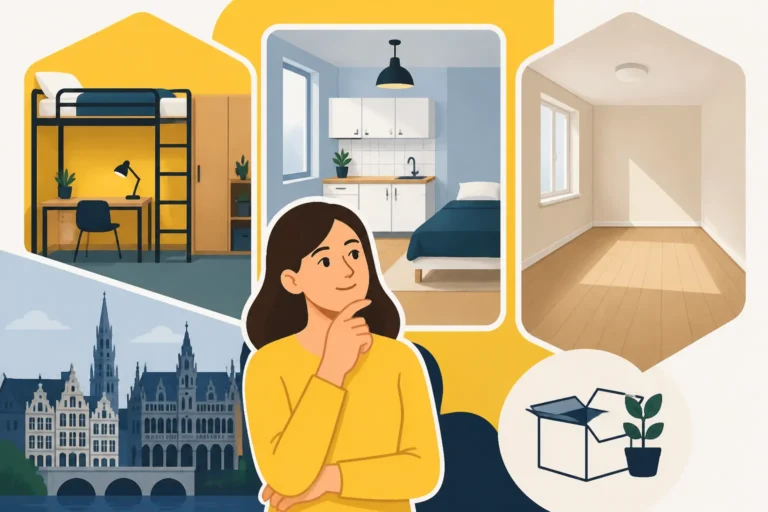
When you browse listings on platforms like HousingAnywhere, you will see the term non-meublé appearing frequently. In many countries, an unfurnished apartment still comes with basic light fixtures, perhaps some curtain rods, and usually a fully functioning kitchen. In Belgium, the term is interpreted quite literally. You are often renting a shell. This means the previous tenant took everything that wasn't bolted down—and sometimes things that were. It is common to find that even the "luster" or light fittings have been removed, leaving only the plastic terminal blocks (the little sugar cubes) hanging from the ceiling.
This cultural norm stems from the fact that Belgians tend to stay in their rental properties for a long time. Because of the Understanding the 3-6-9 Lease Contract: The Standard 9-Year Lease, moving is seen as a major life event rather than a frequent occurrence. Consequently, tenants invest heavily in their own fixtures, high-quality curtains, and even premium appliances, taking them along to their next home. As a newcomer, you must prepare for the reality that your "move-in ready" flat might require a trip to the hardware store before you can even see where you are sleeping.
Beyond the aesthetics, the lack of furniture has legal implications for your contract. A Renting in Belgium: Apartments, Contracts, and Tenant Rights (2027) for an unfurnished property offers significantly more protection under the federal and regional housing codes than a furnished one. Because you are providing the "soul" of the home, the law makes it harder for landlords to evict you without cause and provides strict guidelines on how they can increase your rent. Understanding this trade-off—a bit of DIY work for a lot of housing security—is key to surviving the Belgian rental market.
The Kitchen Conundrum Equipped vs Non-Equipped
In the world of Belgian real estate, the kitchen is where you will find the most variety and, potentially, the most frustration. You will encounter two main types: the "cuisine équipée" (fully equipped) and the "cuisine non-équipée" (not equipped). A fully equipped kitchen generally includes a stove, an oven, a fridge, and often a dishwasher. However, even in these cases, the appliances might be decades old. It is vital to check the energy rating of these appliances during your viewing, as old Belgian refrigerators can be notorious for driving up your electricity bills during the winter months.
If you find a listing that specifies a non-equipped kitchen, you are looking at a set of cabinets and a sink. You will be responsible for purchasing, installing, and eventually removing your own oven, stovetop, and refrigerator. For many expats, this is a dealbreaker, but it can also be an opportunity to customize your space. If you are planning to stay for several years, buying your own high-end appliances from places like Amazon Belgium can be a wise investment. Just be sure to measure the "niche" dimensions carefully, as European built-in appliances follow very specific metric standards that might differ from what you are used to back home.
The logistical challenge of a non-equipped kitchen cannot be overstated. You will likely need to hire a professional to connect gas lines if you prefer cooking with flame, as DIY gas installation is highly discouraged and can void your Mandatory Home Insurance for Tenants in Brussels and Wallonia. Furthermore, when you eventually leave, you are expected to return the kitchen to its original state. This means either selling your appliances to the next tenant or paying for a Moving Companies in Belgium: Dockx Rental Trucks vs Full Service to haul your stove to your next destination.
Lighting Flooring and the Bare Essentials
The "lightbulb problem" mentioned in the title of this guide is perhaps the most shocking aspect for new arrivals. In Belgium, it is standard practice for departing tenants to take their light fixtures with them. You will walk into your new home and see wires protruding from the walls and ceilings. Do not expect the landlord to provide even a basic bulb for your first night. I highly recommend packing a few "construction lamps"—simple sockets with a bulb and a plug—in your essentials box so you can at least see to unpack.
Flooring is another area where "unfurnished" can take on a surprising meaning. While most modern apartments come with laminate, tile, or parquet, some older or very budget-friendly listings might literally be bare concrete. In these rare cases, the tenant is expected to lay their own carpet or linoleum. While this is becoming less common in major cities like Brussels and Antwerp, it still exists in the "social housing" sector or very old townhouses. Always ask specifically during the viewing if the flooring shown in the photos is included in the lease, or if it belongs to the current tenant.
Finally, do not expect curtain rods or "rails." If the previous tenant installed them, they might offer to sell them to you for a small fee, known as a "reprise." This is a common Belgian custom where the outgoing tenant leaves behind items that fit the space perfectly—like custom-fitted blinds or a specific wardrobe—in exchange for a cash payment. This can save you a massive amount of time and effort. If you don't agree on a price, they will take the rods down, and you will be left patching holes in the plaster and installing your own.
Preparing for the First 72 Hours
The first three days in an unfurnished Belgian apartment are a test of endurance. Because you likely won't have internet right away, having a local SIM or an e-SIM from Airalo is essential for looking up the nearest Brico or Gamma (the local hardware giants). You will need to purchase basic tools: a screwdriver set, a voltage tester (to ensure you don't electrocute yourself while hanging lights), and a sturdy ladder. Most apartments have high ceilings, and those wire terminals are usually just out of reach.
Simultaneously, you need to ensure your Utilities and Home Setup: Electricity, Water, Gas, and Internet are active. In Belgium, the energy market is privatized, meaning you must choose a provider and sign a contract yourself. If you fail to do this within the first few days, the grid manager may cut the power to the unit, leaving you in a very literal dark spot. You can use comparison tools to find the best Setting Up Electricity and Gas: Engie, Luminus, and Peak Tariffs based on your expected consumption.
During this frantic setup period, keep your receipts for everything. Some of these initial costs, like light fixtures or basic window coverings, might be something you can sell to the next tenant three or nine years down the line. Managing the chaos of a bare apartment is much easier if you have a clear plan for which rooms need light first. Prioritize the bathroom and the kitchen; you can live with a flashlight in the bedroom for a night, but trying to shower in the dark in a strange building is a recipe for a bruised shin.
Comparison of Rental Types in Belgium
To help you decide if the "bare shell" life is for you, here is a breakdown of what you can typically expect to find in different categories of Belgian rentals.
| Feature | Furnished (Meublé) | Unfurnished (Equipped Kitchen) | Unfurnished (Non-equipped) |
|---|---|---|---|
| Light Fixtures | Included | Often Missing | Always Missing |
| Kitchen Appliances | Fridge, Stove, Oven | Stove/Oven Included | None |
| Curtain Rods | Included | Rare | Never |
| Lease Flexibility | Short-term possible | Usually 3-6-9 years | Usually 3-6-9 years |
| Tenant Protection | Lower | High | High |
| Furniture | Bed, Sofa, Table | None | None |
The Inventory of Fixtures and Your Deposit
Because you are responsible for installing so much of the apartment's infrastructure, the Inventory of Fixtures (État des Lieux): Why It's Crucial Before Moving In is the most important document you will sign. This is a detailed report, often 50+ pages with photos, documenting the exact state of every wall, floor, and pipe. If you drill holes to hang your new Ikea chandeliers or curtain rails, the inventory will note the "perfect" state of the walls beforehand. When you leave, you must either fill those holes professionally or risk losing part of your deposit.
The landlord will often hire an expert (expert immobilier) to conduct this survey, and the cost is usually split 50/50 between you and the landlord. Do not try to save money by skipping this. If there is no formal inventory, the law assumes the apartment was in the same condition at the end of the lease as it was at the beginning. However, if you have made significant changes—like installing a kitchen—you need proof of the original state to ensure you aren't charged for "damages" that were actually your improvements.
Finally, remember that the Belgian rental market is built on the concept of "good father of the family" (bon père de famille) maintenance. This means you are expected to look after the property as if it were your own. If you are installing heavy light fixtures into lath-and-plaster ceilings typical of old Brussels houses, ensure you are using the correct anchors. Damage caused by poor DIY is a frequent cause of legal disputes during the move-out process. You can find all the hardware you need for a safe installation on Amazon Belgium, which often delivers faster than you can find a parking spot at a physical hardware store.
Navigating Logistics and Integration
Moving into an empty shell is also a social exercise. You will likely be making a lot of noise during your first week as you assemble furniture and drill into walls. Being aware of Everyday Rules in Belgium: Garbage Sorting, Noise, and Etiquette is vital for staying on good terms with your new neighbors. In many Belgian apartment buildings, there are strict "quiet hours" (usually starting at 10:00 PM), and Sunday is considered a day of absolute rest where drilling is strictly forbidden.
As you settle in, you'll need to set up your digital life. Finding the right Internet and TV Providers: Proximus, Telenet, and VOO Compared can take a few weeks for a physical installation, so many expats rely on mobile hotspots in the interim. This is where your Airalo connection becomes a lifesaver, allowing you to coordinate deliveries from furniture stores or communicate with the commune for your residency registration without waiting for a technician to visit your flat.
While the "unfurnished" reality of Belgium seems daunting at first, it is actually a beautiful blank canvas. It allows you to transform a high-ceilinged, drafty apartment into a cozy, personal sanctuary that truly feels like yours. Once the lights are up, the curtains are hung, and your first batch of frites is frying on your own stove, the frustration of the bare wires will fade, replaced by the satisfaction of having built a home in the heart of Europe.
Disclaimer
The information provided in this guide is for educational and informational purposes only and does not constitute legal or professional advice. Rental laws in Belgium can vary significantly between the Brussels-Capital Region, Flanders, and Wallonia, and are subject to frequent updates. Always consult with a qualified legal professional or a registered relocation expert before signing a lease agreement or performing major DIY work on a rental property. Be sure to verify all current regional housing codes and safety regulations.