Changing Tires in Belgium: Are Winter Tires Mandatory?
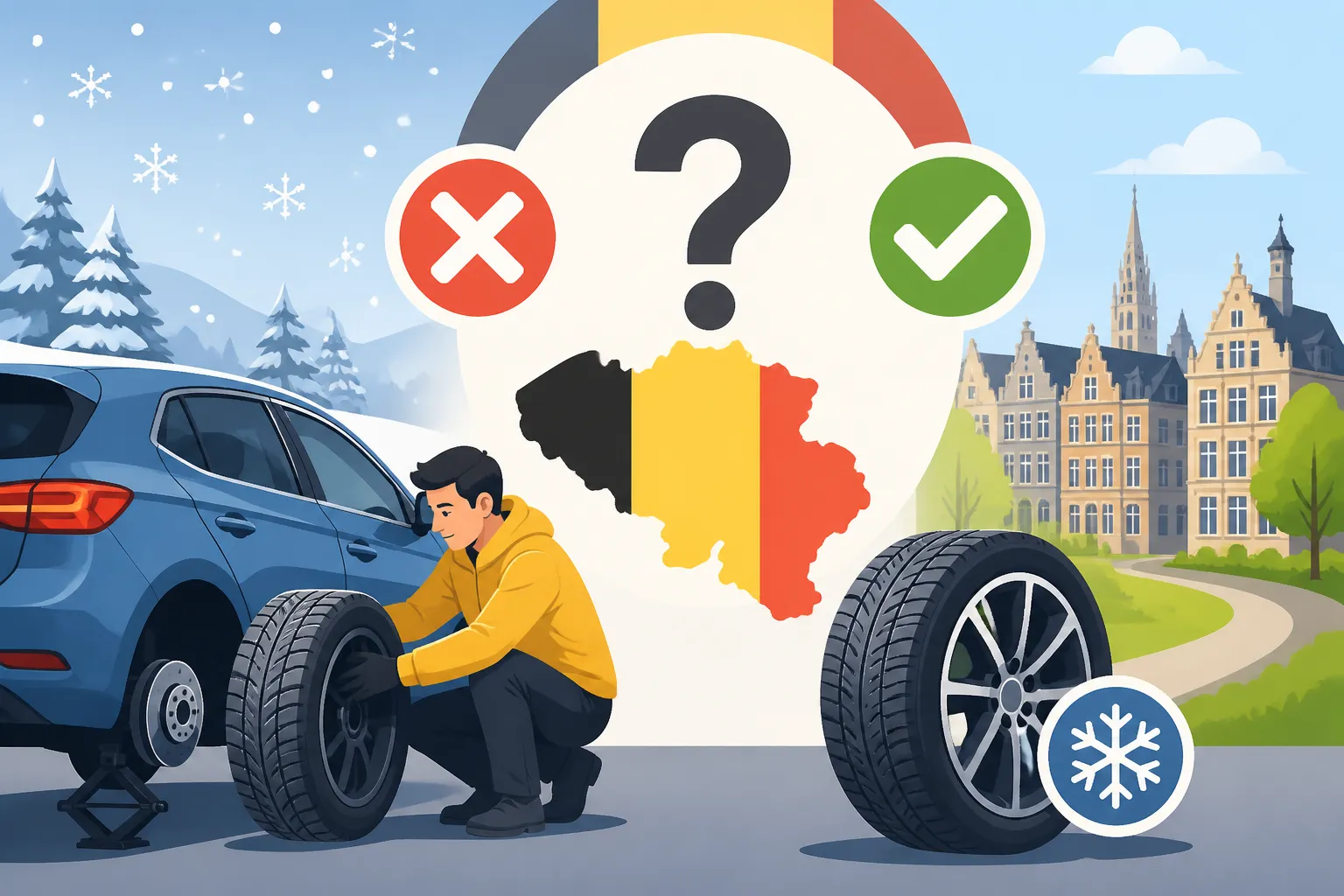
One of the biggest surprises I faced during my first winter in Brussels wasn’t the biting cold—it was the confusing, conflicting advice about my car. I remember sliding slightly on a patch of black ice near Ixelles and wondering if I was breaking the law by keeping my summer tires on. This guide settles the "mandatory vs. recommended" debate once and for all for Belgian residents.
The Legal Reality of Winter Tires in Belgium
In Belgium, the law is surprisingly relaxed compared to some of our European neighbors. There is no federal mandate that requires every driver to switch to winter tires during a specific timeframe. You won't be pulled over by the police in Ghent or Namur simply because you are still rocking summer rubber in the middle of January. However, this "legal freedom" comes with a significant amount of responsibility and a few very important caveats that every expat needs to understand before the first frost hits.
While Belgium doesn't have a blanket law, the Belgian road safety organizations and the government strongly recommend winter tires whenever the temperature drops below 7 degrees Celsius. In the Belgian climate, this usually means from October until early April. If you are planning on Weekend Travel: Best Domestic Trips to Bruges, Ardennes, and Coast, you’ll quickly realize that the weather in the coastal regions is vastly different from the snowy, hilly terrain of the Ardennes. In the south of the country, driving without winter tires isn't just a safety risk; it’s practically an invitation for a breakdown or an accident.
The real "legal" danger for expats isn't usually within Belgian borders, but when crossing them. If you live in Liege or Arlon and frequently commute to Germany or Luxembourg, you must comply with their laws. Germany, for instance, has a "situational" requirement. This means that if there is ice, slush, or snow on the road and you are caught with summer tires, you face immediate fines and a potential ban on continuing your journey. Even if you are just passing through for a weekend trip, the local police won't care that your car is registered in Belgium.
Furthermore, you need to consider your insurance policy. If you are involved in an accident during a winter storm and it is determined that your choice of tires contributed to the collision, your insurer might attempt to cite "gross negligence." Before you head out into a blizzard, it is wise to review your Car Insurance in Belgium: Third-Party vs Omnium Coverage to see if there are specific clauses regarding seasonal equipment. Often, the fine print is where the real "mandate" lives.
Why You Might Want Them Anyway: Practical Belgian Winters
Living in Belgium means becoming intimately acquainted with "grey" weather. It’s rarely the deep, picturesque snow of the Alps; instead, it’s a constant cycle of rain, sleet, and temperatures that hover just around freezing. This is exactly where summer tires fail. Summer tires are made of a harder rubber compound that loses its flexibility when the temperature drops below 7°C. When that happens, your braking distance increases significantly, and your grip on those charming but slippery Belgian cobblestones vanishes.
If you have recently finished Registering a Foreign Car in Belgium: Customs, Taxes, and Plates, you might be hesitant to spend more money on a second set of wheels. However, consider the cost of a minor fender bender in a high-traffic city like Antwerp or Brussels. Using winter tires significantly reduces the risk of hydroplaning on the flooded E40 motorway. The tread patterns on winter tires are specifically designed to pump water away from the contact patch, which is vital given how much it rains here.
I learned the hard way that Belgian winters are more about "greasy" roads than "snowy" roads. Fallen leaves combined with light rain and a 3-degree morning can turn a simple commute into a skating rink. If you are ordering car cleaning kits or emergency flares from Amazon Belgium, you should also look into high-quality tire pressure gauges. Cold weather causes tire pressure to drop, and keeping your winter tires at the correct PSI is essential for them to do their job properly.
Safety aside, there is a financial logic to swapping tires. By switching between two sets, you are effectively doubling the lifespan of both. Your summer tires aren't being chewed up by cold, brittle roads, and your winter tires are stored safely away during the heatwaves. It’s a bit more effort twice a year, but it saves you from buying new sets as frequently. Just make sure your car is still compliant with Car Inspection (Contrôle Technique / Autokeuring) in Belgium rules, as they will check your tread depth regardless of the season.
| Tire Type | Temperature Range | Best For | Legal in Belgium | Legal in Germany/Luxembourg |
|---|---|---|---|---|
| Summer Tires | Above 7°C | Dry/Wet summer roads | Yes | No (in winter conditions) |
| Winter Tires (3PMSF) | Below 7°C | Snow, ice, slush | Yes | Yes |
| All-Season Tires | All year | Mild climates | Yes | Yes (if marked with 3PMSF) |
The Logistics of Changing and Storing Tires
So, you’ve decided to be a responsible resident and get your tires changed. Where do you go? Belgium has a massive network of tire specialists, known locally as "pneus" shops. Big names like Auto5, Midas, and Point S are ubiquitous, but often the best service comes from small, local garages in your commune. If you are still in the process of Driving in Belgium: Licenses, Car Registration, and Traffic Rules, you’ll find that booking an appointment in October or November can be a nightmare. Everyone waits until the first frost is forecast, and suddenly the wait times jump from one day to three weeks.
When you go to a shop like Auto5, the process is straightforward. You buy your tires, they mount them, and they balance the wheels. But then comes the big question: where do you put the set you aren't using? If you are Renting in Belgium: Apartments, Contracts, and Tenant Rights (2027), you might not have a basement or a garage large enough to store four bulky wheels. This is where "Tire Hotels" (pneu-hôtels) come in. Most professional tire centers will store your off-season wheels for a small fee, usually between €40 and €80 per season. They keep them in a climate-controlled environment, which prevents the rubber from degrading.
For those who are just arriving and perhaps staying in temporary accommodation through HousingAnywhere, you might find yourself without a local "regular" mechanic. I recommend using the first change as a way to "interview" a local garage. Ask them about their storage fees and if they send reminders for the next swap. While you are waiting in the lobby for your car to be ready, you can catch up on your admin or browse the web—just make sure you have a reliable connection via Airalo so you don't have to rely on spotty garage Wi-Fi.
One specific Belgian quirk to watch out for is the "tread depth" rule. Even though winter tires aren't mandatory, if you choose to use them, they must be in good condition. The legal minimum tread depth in Belgium is 1.6mm, but for winter tires to be effective, most experts and the Belgian car inspection centers recommend at least 4mm. If your tires are below this, you’re essentially driving on expensive summer tires. If you are Buying a Used Car (Voiture d'Occasion) with Car-Pass Guarantee, always check if the seller is including a set of winter tires in the deal, as this can save you upwards of €600.
All-Season Tires: The Middle Ground for Expats
For many expats living in the city centers of Brussels, Ghent, or Antwerp, the idea of owning two sets of tires and paying for a tire hotel feels like overkill. This has led to a massive surge in the popularity of "All-Season" tires (4-saisons). These are designed to perform reasonably well in both summer heat and mild winter slush. For the average Belgian commute, which rarely involves climbing mountains, these are often the perfect solution.
However, there is a catch. If you want your all-season tires to be legally recognized as "winter-ready" in neighboring countries like Germany, they must have the 3PMSF (Three-Peak Mountain Snowflake) symbol on the sidewall. The old "M+S" (Mud and Snow) marking is no longer sufficient in many jurisdictions. When shopping on Amazon Belgium or at a local dealer, specifically ask for 3PMSF-certified all-season tires. This ensures you can drive to the Christmas markets in Cologne or the shopping malls in Luxembourg without fear of a fine.
All-season tires are a compromise. They won't have the same "sticky" grip as a dedicated summer tire in a 35°C heatwave, and they won't stop as quickly as a dedicated winter tire on pure ice. But given the temperate maritime climate of Belgium, they are a very logical choice. If you are budgeting for your move and looking at the Cost of Living in Belgium 2026: Singles, Couples, and Families, all-season tires can significantly reduce your annual car maintenance costs.
Before you make the switch, consider your driving habits. Do you stay mostly within the Low Emission Zones (LEZ) in Brussels, Antwerp, and Ghent? If so, all-seasons are fine. Do you plan on skiing in the Ardennes or heading to the French Alps every February? If that's the case, you really should invest in a dedicated set of winter tires. The peace of mind when driving down a snowy mountain road is worth every cent. Also, remember that Belgian etiquette and Everyday Rules in Belgium: Garbage Sorting, Noise, and Etiquette extend to the road; being the person who gets stuck and blocks a narrow street because you have the wrong tires is a quick way to lose favor with your neighbors.
Important Safety and Legal Disclaimer
The information provided in this guide is for educational and informational purposes only. While every effort has been made to ensure the accuracy of these details regarding Belgian tire regulations as of 2026, road laws and insurance requirements can change frequently. Always consult with a professional mechanic, your insurance provider, or the official Belgian mobility portal (Service Public Fédéral Mobilité et Transports) before making decisions that affect your vehicle's safety or legal compliance. Driving in winter conditions always carries inherent risks, regardless of the equipment used.