Brussels Garbage Bags Color Guide: White (General) vs Blue (PMC)
Moving to Brussels involves a steep learning curve, but nothing quite prepares you for the existential dread of staring at a plastic yogurt pot and wondering if it belongs in the blue bag or the white one. My first week in an Ixelles apartment was spent hiding my trash in the basement because I was genuinely terrified of receiving one of the infamous municipal fines for incorrect sorting. This guide solves the mystery of the Brussels bag system once and for all, ensuring you stay compliant and stress-free.
The Foundations of Brussels Waste Management
When you first arrive, the sheer variety of colored bags sitting on the sidewalk can look like a contemporary art installation. However, in Belgium, waste management is a matter of civic duty and strict regulation. The system is managed by Bruxelles-Propreté, and they take their job very seriously. If you have just finished Registering at the Commune: The 8-Day Rule After Arrival, your next immediate task is learning when to put your bags out, as the "garbage police" (official inspectors) do look for names and addresses on stray envelopes inside incorrectly sorted bags.
The Philosophy of Sorting in Belgium
The Belgian approach to waste is centered on the "polluter pays" principle. This is why you must purchase specific, official bags for different types of waste. The white bag, which is for everything that cannot be recycled, is intentionally the most expensive. By making the residual waste bags pricier, the government incentivizes you to use the cheaper blue, yellow, and orange bags. This is a core part of the Everyday Rules in Belgium: Garbage Sorting, Noise, and Etiquette that every resident must eventually master to avoid friction with neighbors and the city.
Where to Buy Your Bags
You cannot use generic black bin liners for your household trash in Brussels. You must buy the official bags marked with the Bruxelles-Propreté logo. These are available in almost every supermarket, including Delhaize, Carrefour, Colruyt, and Lidl. They are usually found near the checkout counters or in the cleaning supplies aisle. When you find a place via HousingAnywhere, it is always a good idea to ask the departing tenant or the landlord where the nearest stockist is. You can also find bin accessories and organizers on Amazon Belgium to help manage the different streams of waste in a small apartment.
The Role of Bruxelles Propreté
Bruxelles-Propreté is the regional agency responsible for collection. They operate on a strict schedule that varies significantly depending on your specific street—not just your commune. One side of a street might have a Tuesday morning collection, while the other side is Friday evening. Missing this window or putting bags out too early can lead to fines ranging from 60 to over 600 euros. As you settle into Living in Brussels: Top Expat Neighborhoods (Ixelles, Etterbeek), you will notice that the "trash schedule" is the heartbeat of the neighborhood.
Master the White Bag for Residual Waste
The white bag is the catch-all for anything that doesn't fit into the recycling categories. Because this waste is generally incinerated rather than recycled, the city wants you to put as little as possible in here. It is the backbone of the system, but also the most prone to being torn open by the local fox population if left out overnight.
What Actually Goes in the White Bag
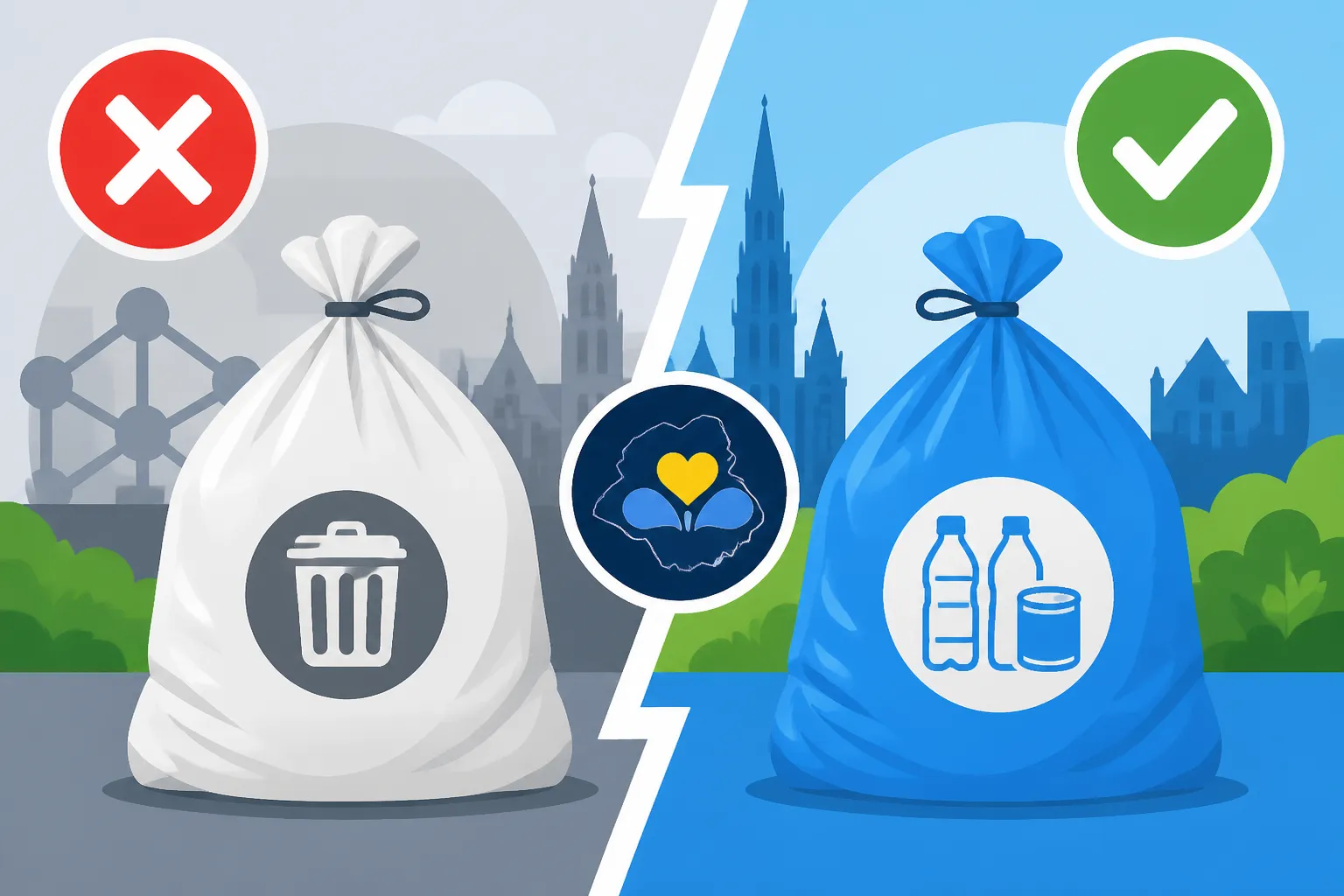
The white bag is for "residual waste." This includes items like diapers (nappies), sanitary products, broken ceramics (carefully wrapped), cigarette butts, pet litter, and heavily soiled food packaging that cannot be cleaned. If you are tracking your Cost of Living in Belgium 2026: Singles, Couples, and Families, you will quickly realize that the more you can divert to the blue or orange bags, the less you will spend on these expensive white bags.
Prohibited Items and Safety Hazards
Never put glass bottles, batteries, electronics, or chemical waste in a white bag. Glass is particularly dangerous for the collection staff. If you have glass, you need to find the local "bulles à verre" which are large communal containers. For more details on this, see Glass Recycling: Finding the Bulles à Verre in Your Neighborhood. Similarly, electronics should be taken to a Recypark. If you have bulky items like an old mattress, do not just leave it on the curb; you must follow the procedures for Oversized Waste (Encombrants): Booking a Pickup or Using Recyparks.
Weight Limits and Closing Techniques
Bruxelles-Propreté has strict rules about how full a bag can be. You must be able to close the bag using the integrated ties so that there is a "handle" for the collectors to grab. Do not use extra tape to seal it, as this can interfere with the processing machinery. Also, be mindful of the weight. If a bag is too heavy and rips when the collector lifts it, they are legally allowed to leave the mess on your doorstep. If you are ordering heavy household items from Amazon Belgium, remember to break down the packaging rather than stuffing it into a white bag.
Decoding the Blue PMC Bag
The blue bag is for PMC, which stands for Plastic packaging, Metallic packaging, and Beverage cartons (Cartons de boisson). In recent years, Brussels has expanded the rules for the blue bag, making it much easier for expats to recycle almost all plastic packaging.
The PMC Acronym Explained
PMC covers a surprisingly wide range of items. "P" includes plastic bottles, but also yogurt pots, butter tubs, plastic film, and grocery bags. "M" covers metal items like soda cans, tin cans, aluminum trays, and even metal screw caps from jars. "C" is for drink cartons, like those used for milk or fruit juice. When moving into a new place found through HousingAnywhere, check if your building has a dedicated bin room for these bags, which is common in larger apartment blocks.
Recent Changes to PMC Rules
A few years ago, you could only put plastic bottles in the blue bag. Today, the "New Blue Bag" rules mean almost all plastic packaging is accepted. This includes the plastic wrap around your mail, strawberry punnets, and even the plastic seals on food containers. This change has significantly reduced the amount of waste going into the white bags. If you are out exploring the city and need to check the rules on the go, ensure you have a local data plan from Airalo so you can access the "Recycle!" app, which provides real-time sorting instructions.
Common Mistakes with Plastic Recycling
The most frequent mistake is nesting items—putting a smaller plastic tub inside a larger one to save space. The sorting machines at the recycling plant cannot "see" nested items, so they end up in the incinerator. Always keep items separate. Also, ensure containers are empty, though they do not need to be sparkling clean. If you are confused about specific items, checking the Everyday Rules in Belgium: Garbage Sorting, Noise, and Etiquette guide can help clarify common expat pitfalls.
| Bag Color | Waste Type | Common Items | Frequency |
|---|---|---|---|
| White | Residual Waste | Diapers, pet litter, soiled napkins, ceramics | Usually 2x per week |
| Blue | PMC | Plastic bottles, cans, milk cartons, plastic foil | Usually 1x per week |
| Yellow | Paper & Cardboard | Magazines, envelopes, clean cardboard boxes | Usually 1x per week |
| Orange | Food Waste | Vegetable peels, coffee grounds, leftovers | Usually 1x per week |
| Green | Garden Waste | Leaves, grass clippings, small branches | On demand / Seasonal |
Beyond White and Blue Other Fractions
While white and blue are the most common, you cannot ignore the yellow and orange bags. In fact, as of 2023, the orange bag has become mandatory for all Brussels residents. Ignoring these colors is the fastest way to get a knock on the door from a communal official.
The Mandatory Orange Bag for Food Waste
The orange bag is for organic waste. This includes fruit and vegetable peels, meat and fish remains, eggshells, and even coffee grounds. Using the orange bag is vital because it allows the city to produce biomethane and compost. For a deep dive into how to manage the smell and storage of these bags in a small apartment, refer to Food Waste (Orange Bags): Rules for Composting in the City. Pro-tip: Keep your orange bag in a small ventilated bin, which you can easily find on Amazon Belgium, to prevent fermentation and odors.
Yellow Bags for Paper and Cardboard
The yellow bag is for clean paper and cardboard. This includes newspapers, junk mail, and all those delivery boxes from your online shopping. You must remove any plastic film or "windows" from envelopes before putting them in the yellow bag. If the cardboard is too large for the bag, you can bundle it neatly with natural twine and place it next to the yellow bag on collection day. If you are renting an apartment, make sure you understand Renting in Belgium: Apartments, Contracts, and Tenant Rights (2027) regarding where these bundles can be stored prior to collection.
Green Bags for Garden Waste
If you are lucky enough to have a garden in Uccle or Woluwe-Saint-Lambert, you will need the green bags. These are for "soft" garden waste like grass and leaves. For larger branches, you usually have to tie them in bundles or take them to the Recypark. Many expats find the green bag system a bit tricky because the collection is often seasonal or requires a specific request in some communes.
Practical Logistics and Rules
Knowing what goes in the bag is only half the battle; knowing when and where to put it is what keeps you out of trouble with the authorities. Brussels is notorious for its specific "time windows" for trash.
Checking Your Calendar
Every commune has a different schedule. Some areas have a "night" collection where you put bags out between 6:00 PM and 10:00 PM, while others have a "morning" collection where bags must be out before 6:00 AM. You can find your specific calendar on the Bruxelles-Propreté website by entering your postal code and street name. If you have just arrived and are using an Airalo eSIM for your data, download the "Recycle!" app immediately. It sends push notifications to your phone the night before a collection so you never forget which color goes out.
The Golden Rule of Placement
Bags must be placed on the sidewalk, right against your building's facade. They should not block the path of pedestrians or strollers. If you live in a high-traffic area, be aware that people might drop their own trash into your bags if they aren't tied tightly. This can be frustrating, but the responsibility for the bag's contents remains with you. If a bag is ripped open by animals, you are legally responsible for cleaning up the mess, regardless of who or what caused it.
Fines and Enforcement
The "Police de la Propreté" are real, and they are active. They have the authority to open bags that are put out at the wrong time or contain the wrong items. They look for any identifying information—bills, letters, or shipping labels. If they find your name, you will receive a fine in the mail a few weeks later. This is often a major shock for newcomers who are still navigating the Renting in Belgium: Apartments, Contracts, and Tenant Rights (2027) process. If you find yourself in a dispute with a neighbor over trash, it is best to remain calm and follow the official rules to the letter. In extreme cases of neighbor harassment regarding trash, you might need to look into Dealing with Noise Complaints: When to Call the Belgian Police to understand the broader context of communal living and dispute resolution.
Managing your waste might feel like a part-time job during your first month in Brussels, but once you have your bins set up and your app notifications on, it becomes second nature. It is a small price to pay for living in one of Europe’s most vibrant and international cities.
Disclaimer
The information provided in this guide is for informational purposes only and reflects the waste management regulations in Brussels as of 2026. Rules, bag colors, and collection schedules are subject to change by Bruxelles-Propreté and individual municipal authorities. Always consult the official Bruxelles-Propreté website or your local commune for the most current and specific advice.