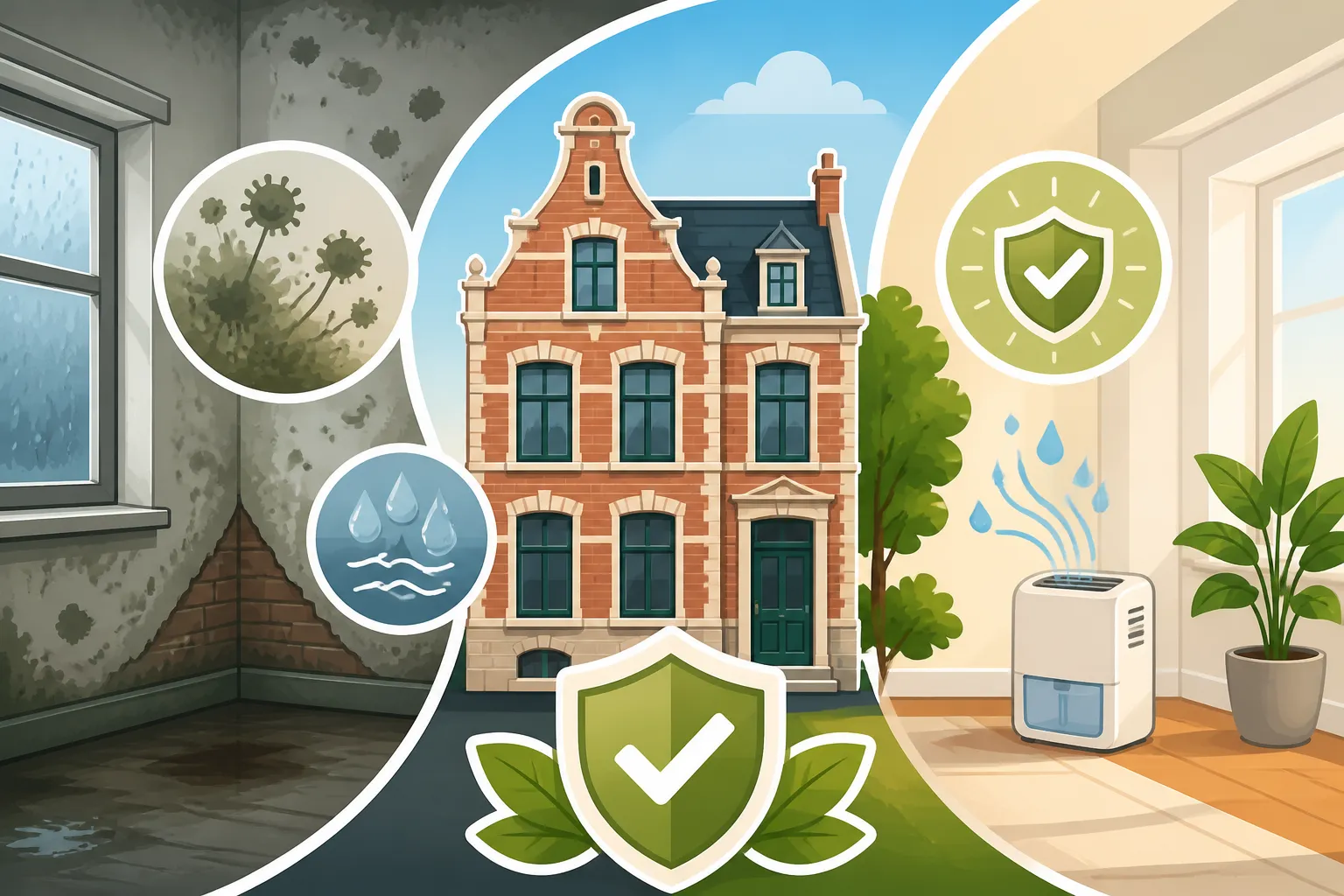
Dealing with Humidity and Mold in Old Belgian Houses
Waking up to condensation on single-pane windows and that tell-tale "basement smell" is a rite of passage for almost every expat living in Brussels, Antwerp, or Liège. I spent my first winter here scrubbing black spots off a bedroom wall while wearing three sweaters and wondering if I’d made a terrible mistake moving into a 19th-century townhouse. This guide solves the Belgian "wet house" mystery by providing actionable strategies to combat humidity and mold in older properties.
Why Belgian Houses Are So Prone to Humidity
To fight the fungus, you first have to understand why Belgium seems to be its favorite playground. Most of the rental stock in major cities consists of "maisons de maître" or traditional terraced houses built long before modern vapor barriers were a thing. These buildings were designed to breathe through drafty windows and open fireplaces. When we move in and install modern double glazing or block up old chimneys to save on heating, we inadvertently turn our charming homes into airtight plastic bags that trap moisture.
The anatomy of a Belgian townhouse is beautiful but technically challenging. These structures often feature solid brick walls without a cavity. Brick is essentially a hard sponge; it absorbs moisture from the outside during the relentless autumn rains and releases it inward. When you combine this with the high humidity levels characteristic of our local climate, you create the perfect storm. If you are currently searching for a new place and want to avoid these issues, platforms like HousingAnywhere can help you find more modern or recently renovated apartments that have better insulation and ventilation systems already in place.
Furthermore, our lifestyle contributes to the problem. In a small Belgian apartment, activities like showering, boiling pasta, and even breathing during the night add liters of water to the air. Without a way for this moisture to escape, it settles on the coldest surfaces—usually the corners of north-facing walls or behind large wardrobes. Before you even unpack your first box, it is worth checking the Inventory of Fixtures (État des Lieux): Why It's Crucial Before Moving In to ensure any pre-existing dampness is documented so you aren't blamed for it later.
Identifying the Enemy: Surface Mold vs Rising Damp
Not all moisture is created equal, and knowing the difference is vital for your health and your wallet. Surface mold usually appears as small black or green dots on the ceiling, in window joints, or behind furniture. This is almost always caused by "living moisture" or condensation. It’s a result of warm, moist air hitting a cold surface. While it looks scary, it is usually something you can manage yourself with the right tools and habits.
Rising damp is a different beast entirely. This happens when the "damp-proof course" of an old building fails, allowing groundwater to suck up through the bricks like a wick. You’ll recognize this by "tide marks" on the lower half of your ground-floor walls, peeling wallpaper near the floorboards, or a salty white crust on the masonry. If you see this, no amount of window-opening will fix it. This is a structural issue that requires professional intervention from your landlord. If you find yourself in a dispute over such repairs, referencing The Brussels Housing Code (BHC): Rights and Duties of Tenants can provide you with the legal backing needed to demand a permanent solution.
If you are just arriving and need to coordinate with local contractors or your landlord while on the move, having a reliable data connection is essential. Using an eSim from Airalo allows you to stay connected the moment you land, making it much easier to send photos of suspicious wall spots to your landlord or search for local "humide" specialists without hunting for Wi-Fi.
| Type of Moisture | Common Symptoms | Primary Cause | Typical Solution |
|---|---|---|---|
| Condensation | Black spots in corners, wet windows | Poor ventilation, drying clothes inside | "Choc" ventilation and dehumidifiers |
| Rising Damp | Salty crust, dampness below 1 meter | Failed damp-proof course in foundations | Structural injection or membrane |
| Penetrating Damp | Localized damp patches after rain | Leaking gutters, cracked exterior bricks | External masonry repair |
| Leaks | Saturated patches, dripping ceilings | Faulty plumbing or roof tiles | Immediate plumbing intervention |
Practical Strategies for a Dryer Home
The most effective weapon in your arsenal is the "choc" ventilation method. In many countries, we are taught to keep windows "cracked" all day. In Belgium, this just lets the heat out and makes the walls colder, encouraging more condensation. Instead, open your windows wide for 10 to 15 minutes twice a day—once in the morning and once before bed. This creates a cross-breeze that replaces moist indoor air with drier (even if cold) outdoor air without cooling down the thermal mass of your furniture and walls.
Investing in high-quality moisture-absorbing tools is another must. You can find a wide range of electric dehumidifiers on Amazon Belgium that are specifically rated for the square footage of Belgian apartments. I personally recommend a desiccant dehumidifier if your room is particularly cold, as they work better at lower temperatures than standard compressor models. While you're at it, grab a simple hygrometer. Your goal is to keep your indoor humidity between 40% and 60%. Anything over 70% for an extended period is an invitation for mold to move in.
Heating also plays a huge role. It is tempting to turn the radiators off completely when you leave for work to save on Utilities and Home Setup: Electricity, Water, Gas, and Internet. However, letting a room's temperature drop below 15 degrees Celsius makes the walls so cold that moisture will condense the moment you turn the heating back on and start cooking dinner. Keeping a steady, low heat throughout the day is often more effective at preventing mold than short bursts of high heat. Also, remember that Boiler Maintenance (Entretien Chaudière): Tenant Duty in Belgium is a legal requirement; a well-functioning heating system is your first line of defense against a damp winter.
Cleaning and Removing Mold Safely
If you already have spots appearing, you need to act fast. For small areas of surface mold on non-porous surfaces like bathroom tiles or window frames, a mixture of water and white vinegar often does the trick. For more stubborn black mold on painted walls, you may need a specialized spray containing bleach. You can easily order professional-grade mold removers through Amazon Belgium that are designed to kill spores deep within the plaster.
When cleaning mold, always wear a mask and gloves. You don't want to inhale those spores while you are scrubbing. After cleaning the area, do not immediately paint over it with regular emulsion. Use an anti-fungal primer first. If you just paint over mold, it will eat through the new layer within weeks. It is also a good idea to pull your furniture at least 5 to 10 centimeters away from external walls. This allows air to circulate behind your wardrobe or bed, preventing the "dead air" zones where mold thrives.
Managing a household in a new country can be overwhelming, especially when Everyday Rules in Belgium: Garbage Sorting, Noise, and Etiquette seem to vary from one commune to the next. Adding mold management to your list of chores might feel like a burden, but staying on top of it will save you a fortune when it comes time to move out. If you fail to manage condensation mold, it is often considered tenant neglect, and the cost of repainting will be deducted from your rental deposit.
Tenant Rights and Landlord Responsibilities
One of the most common questions expats ask is: "Who is responsible for the mold?" The answer depends entirely on the cause. In the world of Renting in Belgium: Apartments, Contracts, and Tenant Rights (2027), the general rule is that the tenant is responsible for damage caused by "misuse" (like not opening windows), while the landlord is responsible for structural defects (like a leaking roof or rising damp).
If you notice mold, you must inform your landlord in writing (via email or a registered letter) as soon as possible. If you wait six months until the wall is falling apart, the landlord can argue that your silence exacerbated the damage. Be prepared for the landlord to initially blame your "lifestyle." This is where your hygrometer readings and your logs of "choc" ventilation come in handy. If you can prove you are keeping the house at 20 degrees and 50% humidity and mold is still growing, the issue is structural.
Sometimes, the mold is linked to issues in the building's common areas, such as a leaking downpipe in the courtyard. In these cases, the cost of repair might be covered through the Common Charges (Charges Communes): What Exactly Are You Paying For? that you pay every month. Do not stop paying your rent if the landlord refuses to fix a structural damp problem; this is illegal in Belgium. Instead, seek advice from a local tenant union or the "Expat Welcome Desk" provided by many city administrations.
Surviving the Grey Belgian Winter
It is no secret that Understanding Belgian Weather: Surviving Grey Winters and Rain can take a toll on your mental health, and a damp, moldy home only makes it worse. There is a psychological aspect to living in a house that feels "wet." It makes the cold feel deeper and the darkness feel heavier. By taking control of your indoor environment, you aren't just protecting the building; you are protecting your own well-being.
Make your home a sanctuary. Light some candles, use a dehumidifier to keep the air crisp, and ensure your heating is consistent. If you are struggling with the transition to Belgian life, remember that most of us have been exactly where you are. We’ve all spent a Saturday morning with a bottle of bleach and a microfiber cloth. It’s a part of the "old house" charm that we eventually learn to navigate.
If your current home is simply too damp to be healthy and the landlord is unresponsive, it might be time to look for a new start. You can use HousingAnywhere to find verified listings where you can communicate directly with landlords about the insulation and history of the property before you sign anything. Coupled with a local data plan from Airalo, you can manage your search and your move without the stress of being disconnected from the resources you need to make an informed decision.
Disclaimer
This guide is intended for informational purposes only and reflects personal experiences and general knowledge of the Belgian housing market. Humidity and mold issues can sometimes indicate serious structural or health risks. Always consult with a professional building surveyor or a qualified medical professional if you have concerns about your living environment. Tenant laws in Belgium can vary by region (Brussels, Flanders, and Wallonia) and are subject to change; always verify your specific rights with a legal expert or a recognized tenant association.