Expat Pet Relocation: Bringing Cats and Dogs to Belgium
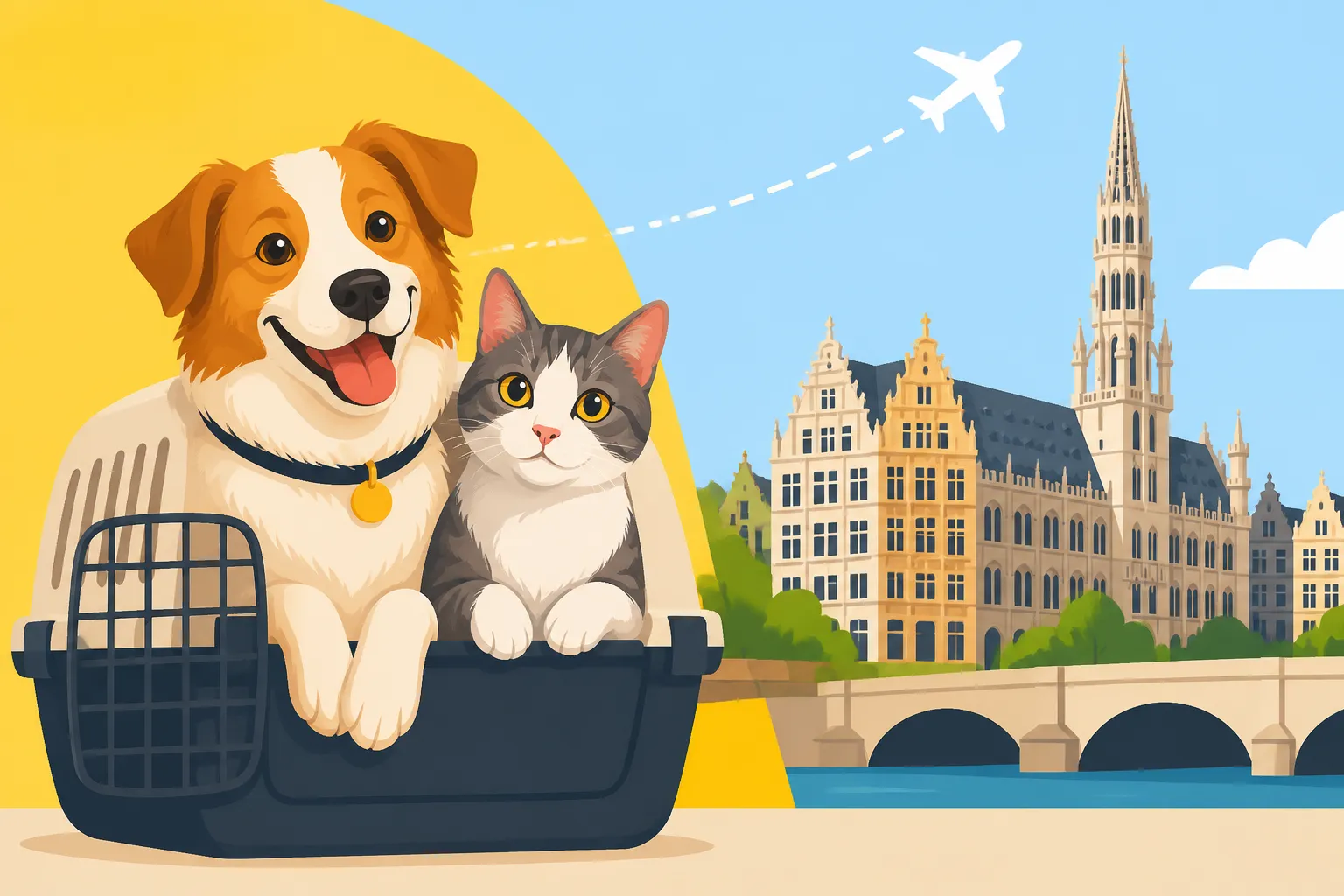
Figuring out how to get your beloved Golden Retriever across the Atlantic or your tabby cat through Brussels customs can feel more stressful than the actual move itself. I remember the sleepless nights I spent measuring my dog's crate to the millimeter, terrified that a single paperwork error would lead to a quarantine nightmare. This guide solves the complex puzzle of Belgian pet import laws, from veterinary requirements to finding a pet-friendly home, ensuring your furry family members arrive safely.
Preparing for Takeoff: Veterinary Requirements and Paperwork
The first thing you need to understand is that Belgium, like most of the European Union, is incredibly strict about the order of operations. If you get the timing wrong, your pet might be denied entry or forced into expensive isolation. The most common mistake I see expats make is getting the rabies vaccination before the microchip is implanted. In the eyes of the Belgian Federal Agency for the Safety of the Food Chain (FAVV), a vaccination only counts if it can be linked to a specific, scanned microchip number.
The Microchip and the Sequence of Events
Your pet must be microchipped with an ISO 11784/11785 compliant 15-digit transponder. If your pet has an older chip that is not ISO-compliant, you will need to carry your own scanner, which is a massive headache you want to avoid. Once the chip is in, the vet can proceed with the rabies shot. This sequence is non-negotiable. If you are Moving to Belgium with Family: Housing, Schools, and Childcare, you’re already juggling a dozen deadlines; make sure your pet’s "Identity First" rule is at the top of that list.
Documentation is the next hurdle. For those coming from outside the EU, you will need a formal EU Health Certificate. This isn't just a note from your local vet. It must be issued by an official veterinarian and then endorsed by your country’s national authority (like the USDA in the United States or the CFIA in Canada). This document is typically only valid for 10 days from the date of endorsement until your arrival at a Belgian "Point of Entry."
Rabies Vaccinations and Titer Tests
Belgium is a rabies-free country, and they intend to keep it that way. Every dog and cat must have a valid rabies vaccination administered after the microchip. If it’s your pet’s first shot, you must wait at least 21 days before they are allowed to travel. However, if you are moving from a "high-risk" country (many countries in Asia, Africa, and South America), the rules get significantly tougher.
In high-risk scenarios, your pet will need a Rabies Titer Test. This involves a blood draw taken at least 30 days after the vaccination to prove the antibodies are sufficient. The catch? After the blood draw, there is a mandatory three-month waiting period before the pet can enter Belgium. I’ve seen families have to board their pets for months because they didn’t realize this rule applied to them. Always check the current FAVV list of "low-risk" vs "high-risk" countries at least six months before your move.
The EU Health Certificate vs. The Pet Passport
If you are moving from within the EU, the process is infinitely simpler. You just need a standard Blue EU Pet Passport. This little book is the holy grail of pet ownership in Europe. It contains the microchip number, vaccination history, and clinical examination records. Once you arrive in Belgium from a non-EU country and complete your first vet visit here, your vet will likely issue you a Belgian version of this passport.
This passport makes future travel across European borders a breeze. It’s also helpful for your Registering at the Commune: The 8-Day Rule After Arrival, as some communes may ask for proof of pet ownership or health status if you are living in high-density housing. Having all these records in one blue booklet is much easier than carrying a folder of loose papers from your home country.
| Requirement | Non-EU (Low Risk) | Non-EU (High Risk) | EU Internal |
|---|---|---|---|
| Microchip | Mandatory (ISO) | Mandatory (ISO) | Mandatory (ISO) |
| Rabies Vaccination | 21 days before travel | Required | Required |
| Titer Test | Not required | 3-month wait period | Not required |
| Documentation | Health Certificate | Health Certificate + Titer | EU Pet Passport |
| Points of Entry | Designated Airports | Designated Airports | Any border |
Navigating the Logistics: Airlines, Crates, and Arrival
Once the paperwork is in order, the physical transportation becomes the next big hurdle. Unless you are driving from a neighboring country, you are at the mercy of airline regulations. Many expats assume their small dog can fly in the cabin, but Belgian-bound flights often have strict weight limits (usually 8kg including the bag). If your pet is larger, they will fly either as "excess baggage" in the hold or as "manifest cargo."
Choosing the Right Flight and Carrier
Not all airlines are created equal when it comes to pet safety. Some have excellent climate-controlled holds, while others have spotty reputations. I personally recommend looking for airlines that offer a specialized "Pet Safe" program. Keep in mind that during the summer months, many airlines have "heat bans" where they refuse to fly snub-nosed breeds (Pugs, Bulldogs, Persian cats) due to respiratory risks.
When booking, try to get a direct flight to Brussels Airport (BRU). Transfers in third countries can complicate things, especially if the transit airport has its own set of health regulations. While you are in transit, having a reliable data connection is vital to track flight updates or contact your pet shipper. I found that using an eSIM from Airalo was a lifesaver, allowing me to stay connected the second the plane landed without hunting for a local SIM card while juggling a dog crate.
IATA-Compliant Crates and Comfort
The International Air Transport Association (IATA) sets the standards for travel crates, and airlines are ruthless about enforcing them. Your pet must be able to stand, turn around, and lie down naturally. If the ears touch the top of the crate while standing, the airline will likely refuse to board them. I made the mistake of buying a "large" crate that was technically too short for my lanky dog, and I had to scramble for a replacement at 4:00 AM on moving day.
Inside the crate, keep it simple. An absorbent pad, a familiar-smelling t-shirt, and two fixed bowls for food and water are standard. Do not sedate your pet unless your vet insists on it for extreme medical reasons; most airlines actually forbid it because sedation affects a pet's ability to regulate their body temperature and balance during turbulence. You can find high-quality, IATA-approved crates on Amazon Belgium, which is also a great place to order bulky pet food or a new bed to be delivered to your new apartment the day you arrive.
Landing at Brussels Airport (Zaventem)
When you land at Brussels Airport, your pet will be taken to a specific cargo area or the oversized baggage reclaim, depending on how they were checked in. You must clear your own immigration first, then proceed to the customs area. Look for the "Goods to Declare" (Red) channel. You are required to present your pet and their paperwork to the customs officials.
There is usually a small fee for the veterinary inspection at the airport. This is a quick process where they scan the microchip to ensure it matches the health certificate. Once you get the green light, you are free to head to your new home. If you haven't received your Belgian phone number yet, that Airalo connection will help you call a pet-friendly taxi or find your way to your Brussels Transport (STIB/MIVB): Metros, Trams, and Bus Networks connection.
Life in Belgium with Your Four-Legged Friend
Crossing the border is only half the battle. Once you are settled, you need to integrate your pet into the Belgian system. This is where the bureaucracy gets "local." Belgium is divided into three regions—Flanders, Wallonia, and Brussels—and while the federal rules are similar, the registration databases are separate.
Finding Pet-Friendly Housing
This is the part where I have to be brutally honest: finding a rental in Brussels or Antwerp that explicitly allows pets can be a challenge. While Belgian law generally protects a tenant's right to have a pet (arguing it's a matter of "private life"), many landlords still include "no pets" clauses in their contracts. It is a grey area that causes a lot of friction.
My advice is to be upfront but professional. Create a "Pet CV" with a photo, vaccination records, and a reference from a previous landlord. Using platforms like HousingAnywhere can help you filter for pet-friendly options more easily than the local "Immoweb" wild west. When you do find a place, remember that Everyday Rules in Belgium: Garbage Sorting, Noise, and Etiquette apply to your pet too. Barking dogs in quiet apartment blocks will lead to a visit from the neighbors or even the police faster than you might think.
Registering with DogID or CatID
Within eight days of arrival, you must register your dog with the national database, DogID, or your cat with CatID. This is not optional. When you take your pet to a local Belgian vet for their first check-up, the vet will handle the registration for you. They will take your details, your pet’s microchip info, and link them in the database.
A few weeks later, you will receive a registration certificate in the mail. This is linked to your eID or national register number. If you are still in the process of Getting Your National Register Number (Numéro National) Fast, the vet can usually use your passport number as a temporary measure. This registration is vital if your pet ever gets lost; the police or a shelter will scan the chip and find your contact info instantly in the DogID system.
Veterinary Care and Belgian Pet Etiquette
Belgian vets (dierenarts in Dutch, vétérinaire in French) are generally excellent and many speak perfect English. Unlike in some countries, you don't always need an appointment for minor issues, as many clinics have "walk-in" hours. However, for your initial registration, definitely book a slot. You should also consider looking into Pet Insurance Options for Dogs and Cats in Belgium early on. Veterinary costs here are reasonable compared to the US or UK, but a major surgery can still set you back thousands of euros.
As for etiquette, Belgium is very dog-friendly in terms of access. You’ll see dogs in cafes, restaurants, and even some high-end shops. However, the expectation is that your dog is "Brussels-broken"—meaning they sit quietly under the table and don't interact with other patrons. Off-leash walking is generally prohibited in city centers and residential streets. You should specifically look for Finding Dog Parks and Leash Rules in Belgian Cities to know where your pup can actually run free.
Regional Specifics and Day-to-Day Realities
Life with a pet in Belgium varies depending on whether you are in a bustling city or the rolling hills of the Ardennes. The infrastructure is there, but the rules are enforced with Belgian precision. If you are living in a city, you’ll need to get used to the "police check" that every new resident undergoes.
Public Transport Rules for Pets
One of the best things about living here is how easy it is to travel with a pet. On the NMBS/SNCB national trains, small pets in a cage or basket travel for free. Larger dogs on a leash need a "Pet Ticket," which is a flat fee (currently around €3 per journey). They must wear a muzzle if the conductor deems it necessary, though this is rarely enforced unless the dog is acting aggressively.
On Brussels Transport (STIB/MIVB): Metros, Trams, and Bus Networks, the rules are similar. Small pets fly free in carriers, and larger dogs just need a valid ticket (standard fare). However, during peak rush hours, it’s considered polite to avoid taking large dogs on cramped metros. In Flanders (De Lijn) and Wallonia (TEC), dogs are generally allowed but must be on a short leash and not take up a seat.
Managing Grey Winters and City Living
If you are moving from a sunny climate, the Belgian winter can be a shock to your pet. The combination of darkness, constant drizzle, and salt on the sidewalks can irritate a dog’s paws. Many expat owners here invest in high-visibility gear for those 4:00 PM walks in total darkness. You can easily find reflective harnesses and paw wax on Amazon Belgium to keep them safe and comfortable.
The humidity in Belgium can also lead to more frequent ear infections or skin issues in certain breeds. Keep a close eye on your pet during the first few months. If you are living in an older Belgian townhouse, be aware of the "steep stairs" phenomenon. Many Belgian homes have incredibly narrow, spiral staircases that can be dangerous for older dogs or breeds prone to hip dysplasia.
Local Laws and Responsibility
Finally, be aware that you are legally responsible for any damage your pet causes. This is why almost every expat in Belgium should have "Civil Liability" insurance, often called "Family Insurance" (familiale). It’s very cheap—usually around €25-€50 a year—and it covers you if your dog accidentally trips a cyclist or ruins a neighbor’s expensive rug.
When you undergo The Police Check (Contrôle de Quartier) for Address Verification, the officer might note that you have a dog. They aren't checking for a "dog tax" (which has been abolished in most Belgian communes), but they are making sure the living conditions are suitable. Being a responsible owner—picking up waste, keeping noise down, and ensuring vaccinations are up to date—will make your integration into the Belgian community much smoother.
Disclaimer
This guide is for informational purposes only and does not constitute legal or professional veterinary advice. Immigration rules, airline policies, and local Belgian regulations regarding pet import and registration can change without notice. Always verify current requirements with the Belgian Federal Agency for the Safety of the Food Chain (FAVV) and your airline before traveling. The author and publisher are not responsible for any issues, delays, or costs incurred during your pet's relocation.