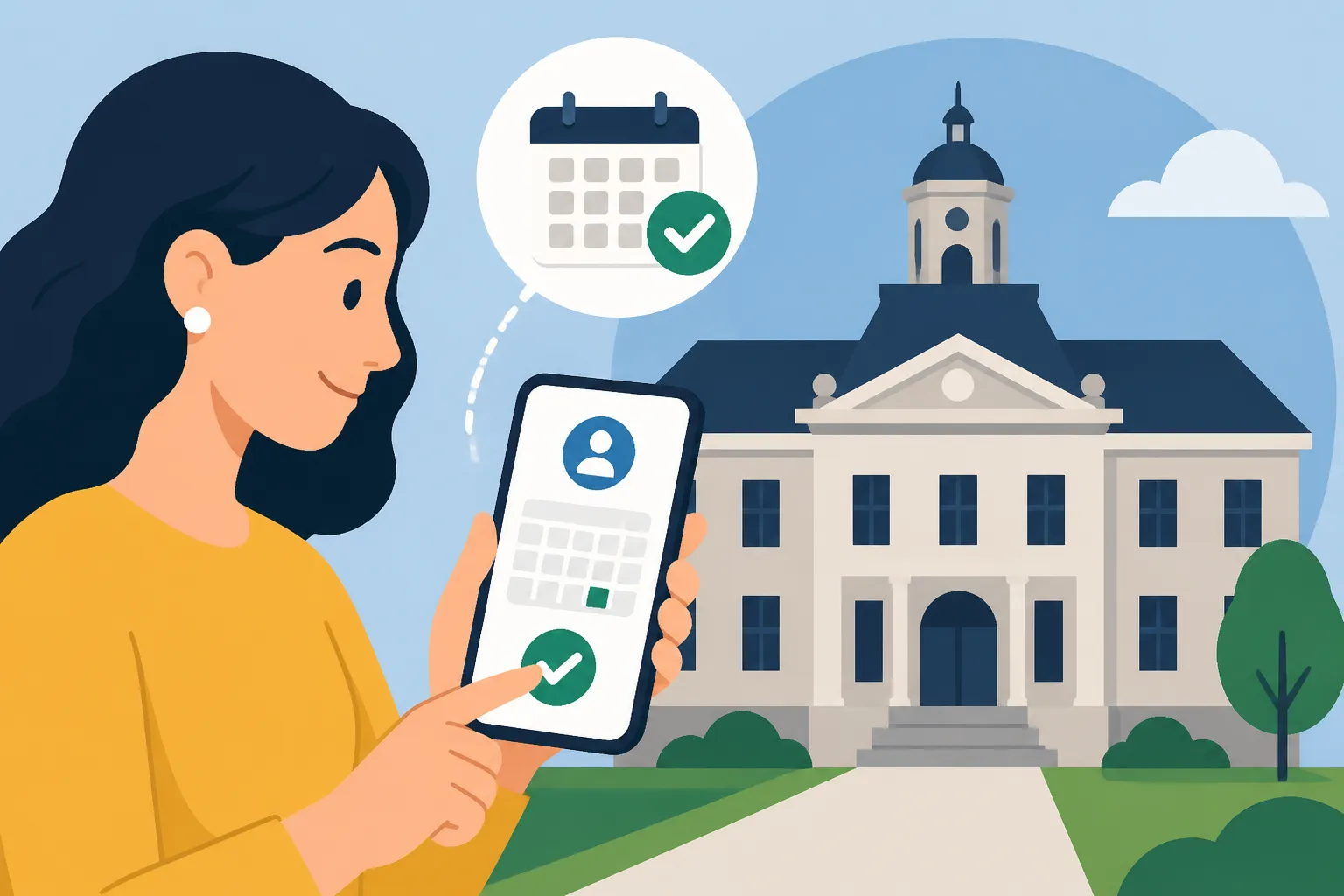
Booking an Appointment at the Commune (Stadhuis/Maison Communale)
Ah, the infamous Belgian commune! If you've been living here for any length of time, you'll know that dealing with local administration can feel like navigating a labyrinth blindfolded. Booking an appointment, which sounds simple enough, often becomes the first major hurdle. This guide is here to demystify that process, helping you understand why these appointments are so crucial and how to secure one without losing your sanity or valuable time.
Why You Absolutely Need a Commune Appointment
For expats in Belgium, the local commune (known as Stadhuis in Dutch or Maison Communale in French) isn't just a place for mundane paperwork; it's the gateway to almost everything that makes your life here legal and official. From the moment you arrive, you're on a ticking clock to get things sorted, and most of those crucial steps involve a face-to-face (or at least virtual) interaction with your local commune. It’s where your existence as a resident truly begins.
The Mandatory First Steps: Registration and the Police Check
When you first arrive, one of the very first things you absolutely must do, ideally within eight days of entering the country, is register your presence at your local commune. This isn't just a suggestion; it's a legal requirement. You arrive in Belgium, you find your temporary (or permanent) home, and then you head straight to the commune to declare your arrival. This initial registration is what triggers your entire residency process. Without it, you can't get your eID, you can't get your National Register number, and you're effectively invisible to the Belgian system. It’s a bit of a chicken-and-egg situation sometimes, trying to secure accommodation and then immediately register, but that's just how it goes here! This first appointment often leads to what many expats fondly (or not so fondly) remember as "the police check," where an officer verifies you actually live where you say you do. It can feel a bit intrusive, but it's standard procedure. If you want to know more about the specifics, check out our guide on Registering at the Commune: The 8-Day Rule After Arrival.
Getting Your Precious eID Card
After successfully registering and passing the police check, the next big milestone is getting your Belgian electronic identity card, or eID. This little card is your passport to life in Belgium – literally. You'll use it for everything from opening a bank account to accessing MyHealth.belgium.be, and even for voting in local elections if you're an EU citizen. And guess what? Getting this card means another trip (or often, several trips) to the commune. First, to apply and provide your fingerprints and photo, and then usually a second time to pick it up and activate it. The commune is responsible for issuing these cards, and without a scheduled appointment, you’ll likely find yourself waiting in vain. Understanding The Belgian eID Card Types: A Card, B Card, F Card, and Others can help you know what to expect.
Address Changes, Renewals, and Other Administrative Needs
Life isn't static, and neither are your administrative needs. You might move apartments, your residency card might be nearing its expiry date, or you might need to add family members to your registration. Each of these events typically necessitates another commune appointment. Changing your address, for instance, isn't just a matter of telling your friends; it's a legal obligation to inform the commune of your new domicile. This often triggers another police check to ensure you've genuinely moved. And as for renewals, you'll want to be on top of those deadlines. Don't wait until the last minute, as renewal appointments can take time to secure and process. If you're looking into Renewing Your eID: How Early Should You Apply Before Expiry?, booking an appointment well in advance is absolutely critical. These are the kinds of administrative tasks that keep the commune bustling, and expats returning for various stages of their Belgian journey.
Navigating the Booking System: Online, Phone, or In-Person?
The process of actually booking an appointment varies significantly across Belgium's 581 communes. While some larger, more expat-dense cities have embraced digital solutions, many smaller municipalities still rely on more traditional, shall we say, charming methods. It can feel like a lottery, depending on where you live.
The Rise of Online Portals (and their Quirks)
Many communes, especially in Brussels, Flanders, and larger Walloon cities, have moved towards online appointment booking systems. This is often the most convenient method, assuming their website is well-maintained and available in a language you understand. You'll typically find a dedicated section on the commune's official website (e.g., brussels.be, antwerpen.be, ghent.be, ixelles.be, etterbeek.be).
How it generally works:
- Find the "Afspraak maken" / "Prendre rendez-vous" section: Look for this on the commune's official website.
- Select the service: They usually categorize appointments by service type (e.g., "Registration – First Arrival," "eID application," "Address change," "Family reunification"). Make sure you pick the correct one, otherwise, you might get turned away or asked to rebook.
- Choose a date and time: Availability can be notoriously tight, especially in popular communes or during peak seasons (like the start of academic years). You might need to check daily for new slots to open up.
- Fill in your details: This typically includes your name, contact information, and sometimes your National Register number if you already have one.
- Confirmation: You'll usually receive an email confirmation with all the details, including what documents to bring. Always print this out or have it ready on your phone.
Common Quirks:
- Language barriers: While Brussels communes often offer French, Dutch, and sometimes English, smaller Flemish or Walloon communes might only have their local language options. This is where a translation tool or a helpful friend comes in handy.
- Limited slots: Seriously, some communes are booked out for weeks, or even months, in advance. Patience is key, and persistence in checking for cancellations.
- System outages: It's Belgium. Technology isn't always seamless. Don't be surprised if a portal is temporarily down.
Calling the Commune: Expectations vs. Reality
For those without online booking, or if you can't find a suitable slot, the phone is your next best bet. However, prepare yourself. This isn't always a quick call to a friendly operator eager to help.
How it generally works:
- Find the correct number: Look for the general reception number or the specific department for "Population" or "Foreigners."
- Prepare your query: Be clear and concise about what you need.
- Language: This is often the biggest hurdle. While some communes might have English-speaking staff, it's not guaranteed. You might need to try your basic French or Dutch, or ask a local friend to call for you. Pro tip: Have a script ready with key phrases.
- Waiting times: Be prepared for long waits on hold. Seriously, bring a book or put it on speakerphone.
Expectations vs. Reality:
- Expectation: A quick, efficient call.
- Reality: Long waits, potential language barriers, and possibly being told to "check online" even if you're calling because online failed. Don't be surprised if you have to call multiple times to get through or get a clear answer.
The "Just Show Up" Method (and why it's a gamble)
In some, usually smaller, communes, or for very specific, urgent matters, walking in without an appointment might still be an option. However, this is increasingly rare and highly discouraged in larger cities.
Why it's a gamble:
- You'll likely be turned away: Most communes now operate strictly by appointment to manage queues and ensure efficient service. Showing up without one is often a wasted trip.
- Long queues: If they do entertain walk-ins, you'll be at the bottom of the priority list, behind everyone who had the foresight (or luck) to book. You could be waiting for hours.
- Limited services: Even if they let you in, they might only handle very specific, quick inquiries or document pick-ups without an appointment. Complex matters will almost certainly require a booking.
My advice? Unless you have explicit confirmation from the commune that walk-ins are accepted for your specific need, always try to book an appointment first. Save yourself the frustration.
Documents and Preparation: Don't Get Turned Away!
The number one reason expats get turned away from commune appointments is missing documents. Belgian administration loves its paperwork, and they love it to be exact. Imagine going through the hassle of booking, traveling, and waiting, only to be told you're missing one obscure piece of paper. It's soul-crushing.
Your General Document Checklist
While specific requirements vary by appointment type, there's a core set of documents you should always have on hand, or at least know where to find:
- Passport/National ID: Your valid passport or national ID card is always required. Make sure it's not expired!
- Visa/Residence Permit: If you're a non-EU citizen, your long-stay Visa D or current residence permit card is essential.
- Proof of Address: This is crucial. It could be your rental contract (signed and registered!), a utility bill in your name, or a declaration of domicile from your landlord. For your initial registration, it's typically your rental agreement.
- Passport Photos: Recent, compliant passport-style photos. Always check the exact specifications, as they are very particular. You can usually find photo booths in train stations or larger supermarkets, but double-check they meet Belgian standards.
- Birth Certificate: For initial registration, and especially for family reunification, a legalized and translated birth certificate is often mandatory.
- Marriage Certificate (if applicable): Again, legalized and translated if you're registering as a couple or for family reunification.
Specific Examples for Common Appointments
Let's look at some specific scenarios to highlight document importance:
- Initial Registration (Annex 15, Annex 8): You'll definitely need your passport, your long-stay visa (if non-EU), and your rental contract. You might also need your birth certificate, especially if you're coming from certain countries, and often proof of solvency. This is where Getting Your National Register Number Fast starts.
- eID Application: Passport, current residence permit (if applicable), proof of address (sometimes), and those specific passport photos. They will also take your fingerprints.
- Address Change: Your current eID, proof of your new address (the signed rental contract for the new place), and sometimes your old rental contract as proof of departure from your previous address.
- Family Reunification: This is one of the most document-heavy processes. Besides all the general documents, you'll need legalized and translated birth certificates, marriage certificates, proof of sufficient accommodation (your rental contract must meet certain size requirements), and crucially, proof of sufficient and stable financial resources. This can be a huge hurdle for many. You can learn more about Family Reunification Visas: Bringing Spouses and Children to Belgium in our detailed guide.
The Role of Translations and Legalization (Mentioning RushTranslate)
This is a frequently overlooked but critically important step. Any official documents not originally in French, Dutch, or German (Belgium's official languages) must be officially translated. And not just any translation! They often need to be done by a sworn translator recognized in Belgium, and then sometimes even legalized with an apostille stamp from your home country, or by the Belgian embassy/consulate there.
Imagine spending weeks collecting your birth certificate from your home country, only to have the commune reject it because the translation wasn't "sworn" or it lacked an apostille. It's maddening! This is where services like RushTranslate can be incredibly helpful for getting your documents translated correctly and recognized. They understand the nuances of legal translation for immigration purposes. Always confirm the exact requirements with your specific commune or the Belgian embassy in your home country before you travel, as these can vary.
Tips for a Smooth(er) Commune Visit
While bureaucracy can be frustrating, a little preparation and the right mindset can make your commune visits significantly less stressful.
Timing, Patience, and Language Barriers
- Arrive early: Even with an appointment, arriving 10-15 minutes early gives you time to find the right department, sign in, or just mentally prepare.
- Patience is a virtue (and a necessity): Things often run behind schedule. Bring a book, put on some music, or mentally prepare for a wait. Getting agitated won't speed anything up.
- Language preparation: As mentioned, language can be a barrier. If you're not fluent in French or Dutch, try to learn a few key phrases related to your appointment. Even better, if you have a Belgian friend who can accompany you or act as a translator, that can be a lifesaver. Some communes, especially in Brussels, might have English-speaking staff, but don't count on it.
- Be polite: A smile and a polite demeanor can go a long way, even if the person on the other side of the counter seems overwhelmed.
What to Do if Things Go Wrong
It happens. You forget a document, the system crashes, or you're given conflicting information. Don't panic.
- Ask for clarification: If you don't understand something, politely ask them to repeat or explain it in simpler terms.
- Note down names/departments: If you're dealing with a particularly tricky issue or getting conflicting advice, discreetly note down the name of the person you spoke with and the date. This can be helpful if you need to follow up or escalate.
- Don't leave without clear next steps: If you're told you need another document, make sure you understand exactly what it is, where to get it, and if you need a new appointment.
- Seek external advice: If you're truly stuck or feel unfairly treated, consider reaching out to an expat support group, an immigration lawyer, or even organizations like the Expat Welcome Desk in Brussels. Sometimes, an external perspective or professional help is necessary, especially for complex cases like appeals against rejections, as detailed in Appeals and Rejections: What to Do if the Immigration Office Denies You.
Understanding the Different Commune Cultures
Belgium is a federal country with three official languages and distinct regional governments. This means that the "commune experience" can differ significantly based on whether you're in Brussels, Flanders, or Wallonia.
- Brussels: As a highly international city, Brussels communes often (but not always!) have more experience dealing with expats and sometimes offer services in English. However, they are also incredibly busy. Communes like Ixelles or Etterbeek, known for their large expat populations, can be particularly swamped.
- Flanders (e.g., Antwerp, Ghent, Leuven): Communes here primarily operate in Dutch. They can be very efficient but expect administrative rigor. If you're living in Flanders, consider taking some integration courses (inburgering) which can help with understanding local systems and language. Our guide on Flemish Integration Courses Inburgering: When They Are Mandatory can shed more light on this.
- Wallonia (e.g., Liège, Charleroi): These communes operate in French. Like Flanders, they may be less accustomed to English speakers, so knowing basic French is a strong asset. The pace might feel a little different too, though the administrative demands are just as stringent.
It's vital to research your specific commune's procedures. A quick search for "[Your Commune Name] stadhuis afspraak" or "[Your Commune Name] maison communale rendez-vous" should give you some initial leads.
Common Commune Appointment Scenarios
To give you a clearer picture, here's a table outlining some frequent reasons for a commune visit and the typical documents you might need. Remember, this is a general guide; always double-check with your specific commune!
| Appointment Type | Common Reasons | Key Documents (General) | Potential Challenges |
|---|---|---|---|
| Initial Registration | First arrival, becoming a resident | Passport/ID, Visa D, Rental Contract, Birth Certificate | Language, Police Check, Legalized Translations |
| eID Application/Renewal | First eID, renewal, lost/stolen card, address change | Current eID/Passport, Passport Photos, Proof of Address | Getting photos to specification, finding available slots |
| Address Change | Moving within Belgium | Current eID, New Rental Contract | Another Police Check, updating various other services |
| Family Reunification | Bringing spouse/children to Belgium | Passports, Marriage/Birth Certificates, Proof of Solvency/Housing | High document burden, strict criteria, long processing times |
| Declaring Marriage/Birth | Registering life events in Belgium | Relevant certificates (translated/legalized), IDs | Legalization and translation of foreign documents |
| De-registration | Leaving Belgium permanently | Current eID, Proof of new address abroad (if available) | Ensuring all final administrative steps are clear |
| Activating Itsme | Activating digital ID for online services | Current eID, PIN/PUK codes (usually sent by post) | Lost PIN/PUK codes, technical issues, needing a card reader |
This table highlights just how many aspects of your life in Belgium intersect with your local commune. Being proactive, especially when it comes to renewals or changing your address, is paramount to avoiding stressful situations. Remember, the commune also plays a role in helping you secure essential services like healthcare, so ensuring your registration is up-to-date will impact your ability to register for your mutuelle or ziekenfonds and get proper Healthcare in Belgium for Expats: Complete System Overview (2027). Staying on top of all these administrative tasks is a big part of successful expat life.
Disclaimer
The information provided in this guide is for general informational purposes only and does not constitute legal advice. While we strive to keep the information accurate and up-to-date, administrative procedures in Belgium can change frequently and vary by commune and individual circumstance. Always consult the official website of your specific commune or seek professional legal advice for your particular situation.