Renewing Your eID: How Early Should You Apply Before Expiry?
Oh, the infamous Belgian eID! If there's one thing that unites expats here, it's the shared experience of navigating Belgium's administrative maze, and the residence card renewal process is certainly one of its star attractions. You've probably heard the whispers, the horror stories of expired cards, frantic last-minute dashes, and the sheer terror of being caught without that precious piece of plastic. Trust me, I've been there, staring at that little expiry date, feeling a cold dread creep in. This guide is all about helping you conquer that anxiety by shedding light on exactly how early you should apply for your eID renewal to keep things as smooth as possible.
Understanding Your Belgian eID and Its Expiry
Let's start with the basics, because understanding what your eID is and why it's so critical is the first step to taking its renewal seriously. It's more than just an ID; it's your key to life in Belgium.
What is an eID and Why is it So Important?
Your Belgian electronic identity card, or eID, is a marvel of modern bureaucracy, bundling your identity, residence status, and even digital signature capabilities into one sleek card. For us expats, it's not just a fancy national ID; it's practically your entire existence here. It contains your National Register Number (Numéro National or Rijksregisternummer), which is crucial for everything from opening a bank account to registering with your mutuelle (health insurance fund) and accessing online government services like MyMinfin or MyHealth.be. Without a valid eID, you can't prove your legal residency, which impacts your right to work, access healthcare, and even travel. Imagine trying to pick up a parcel from Bpost, register for a gym membership, or even vote in local elections – all these actions hinge on your eID. It's truly the cornerstone of your administrative life in Belgium. You can learn more about its foundational role by reading our guide on the Residence Registration: Annexes, Communes, and the eID Card.
Decoding the Expiry Date on Your Card
This might sound obvious, but you'd be surprised how many people overlook it until it's almost too late. Your eID has a clear expiry date printed on the front, typically below your date of birth and card number. It’s usually in the format DD.MM.YYYY. For most non-EU citizens, residence permits (A-cards, B-cards, etc.) have a validity period of 1 to 5 years, depending on your situation, while EU citizens and those with permanent residency often have cards valid for 5 or 10 years. It’s easy to get complacent if you have a longer-validity card, but time flies, and before you know it, that date is looming. Mark it in your calendar, set reminders on your phone, and even tape a sticky note to your fridge – whatever it takes to ensure that date doesn't sneak up on you!
The Golden Window for eID Renewal in Belgium
Now, for the million-dollar question: when exactly should you start this whole process? This is where many of us expats, accustomed to different systems, can get tripped up. Belgium, bless its bureaucratic heart, loves to take its time.
When to Start the Renewal Process
The general, often unwritten, rule of thumb across most communes in Belgium is to initiate your eID renewal somewhere between two to three months before your current card's expiry date. This isn't just a suggestion; it's a strongly recommended minimum. For non-EU citizens, especially those whose residence permit is tied to their work permit or specific conditions (like a Single Permit), some even advise starting up to four to six months in advance to account for any unforeseen complexities or regional processing variations.
Why such a long lead time? Well, the renewal process isn't instant. It involves multiple steps:
- Your Commune Appointment: Getting an appointment can sometimes take weeks, especially in larger, busier cities like Brussels, Antwerp, or Ghent.
- Immigration Office Processing: Once your commune submits your application, it might need to go through the national Immigration Office (DOFI – Dienst Vreemdelingenzaken / Office des Étrangers) for approval, particularly if you're a non-EU citizen or if your status has changed. This is where significant delays can occur.
- Card Production: After approval, the card itself needs to be produced, which is handled by a central facility. This typically takes 2-3 weeks.
- PIN/PUK Codes: Your essential PIN and PUK codes are usually sent by post, separate from the card, which adds another layer of waiting.
So, while you might receive an official letter from your commune reminding you to renew a few weeks before expiry, do not wait for it. Take proactive steps. Think of this letter as a final nudge, not the signal to start.
The Rationale Behind Early Application
The administrative wheels in Belgium turn at their own pace, and it’s rarely a speedy one. There are several very good reasons why being early is not just courteous, but practically essential:
- Bureaucracy and Layers of Approval: For non-EU citizens, your eID renewal isn't just a simple reprint. It's often a renewal of your right to reside, which might involve your employer (if on a work permit) or proof of continued solvency. These checks take time.
- Commune Workload: Communes, especially those with high expat populations, are often swamped. Booking an appointment for your renewal might not be as straightforward as you'd hope. Some communes use online booking systems, while others require phone calls or even in-person visits to schedule. Our guide on Booking an Appointment at the Commune (Stadhuis/Maison Communale) has some tips on navigating this.
- Document Verification: If there are any discrepancies or missing documents – for instance, if your passport is also expiring soon, or if your marital status has changed and you haven't updated it – these can cause significant hold-ups. You might need to provide legalized translations of documents (services like RushTranslate can be very helpful here for non-EU documents), further extending the timeline.
- Unforeseen Circumstances: What if your initial application is rejected? What if there’s a national holiday period, a postal strike, or an IT system glitch? These aren't hypothetical in Belgium; they're genuine possibilities that can throw a wrench in your plans. An early start provides a crucial buffer against these kinds of delays.
Waiting until the last minute can leave you in a stressful limbo, potentially without a valid ID, which can have ripple effects on your employment, healthcare, and daily life.
The Step-by-Step eID Renewal Process
Okay, so you've understood the when. Now, let's talk about the how. The process itself is fairly standardized, but knowing what to expect can ease a lot of the anxiety.
Documents and Preparations
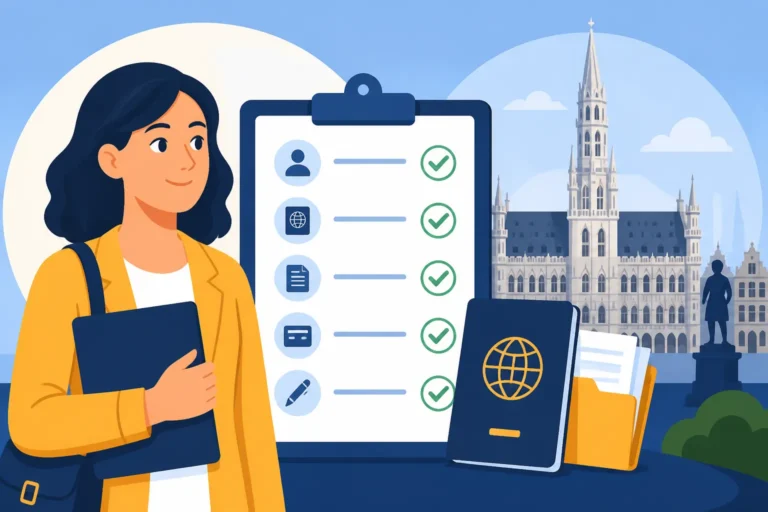
Before you even step foot in the commune, you need to gather your arsenal of documents. While the exact requirements can vary slightly by commune and your specific residence status (e.g., EU vs. non-EU, employed vs. self-employed), here's a general checklist:
- Your current eID card: This is essential for verification.
- Your valid passport: Make sure it has plenty of validity left, ideally more than six months beyond your intended eID expiry. If your passport is nearing expiry, renew it first.
- A recent passport-sized photo: This must meet Belgian photo standards: neutral expression, looking directly at the camera, plain light background, no glasses unless absolutely necessary. Don't try to reuse an old photo; get a fresh one. Photo booths are common in train stations and larger supermarkets.
- Proof of address: A recent utility bill or rental contract might be requested, though often your commune already has this information.
- Proof of sufficient means: For non-EU citizens, this is often required again. If you're employed, your recent payslips and employment contract usually suffice. If you're self-employed, proof of income from your business. If you're a student, proof of your blocked account or scholarship.
- Marriage certificate/birth certificates: If your civil status has changed or you're renewing for family members, ensure these are updated and, if necessary, legalized and translated. Services like RushTranslate can assist with sworn translations if your original documents are not in French, Dutch, or German.
- Payment: There's usually a fee for the new card, payable at the commune. This fee varies slightly but is typically in the range of €25-€30 for standard processing, with options for expedited service at a higher cost.
It’s always a good idea to check your specific commune's website for their exact requirements, as these can be updated.
Navigating the Commune Visit
Once you have your appointment and your documents, it's time for the commune visit. This is often the most daunting part for new arrivals.
- Arrive on time: Punctuality is appreciated, as is anywhere in Belgium.
- State your purpose: Clearly tell the civil servant you are there to renew your eID (renouveler ma carte d'identité in French or mijn identiteitskaart vernieuwen in Dutch).
- Submit documents: They will review your documents, take your photo (or scan the one you brought), and check your details in the national register. They might ask a few questions about your current situation to ensure everything is still valid for your residence status.
- Fingerprints: For non-EU citizens (and increasingly for others), your fingerprints will be taken digitally.
- Temporary Certificate: After your application is processed, you'll usually receive a temporary certificate (often an Annex 15 or Bijlage 15 for non-EU citizens, or similar temporary proof for EU citizens). This document is crucial as it proves your application is in progress and you're legally residing in Belgium while you await your new card. Keep this safe! Our guide on Understanding Immigration Annexes: Annex 8, Annex 15, and Annex 49 delves into the importance of these temporary documents.
Collecting Your New eID
A few weeks after your commune visit, you should receive a letter in the mail containing your PIN and PUK codes. Do not lose these! They are essential for activating your card and using its electronic functions. Keep them in a very safe place, separate from your card.
Once you have the codes, another letter will typically arrive, informing you that your new eID is ready for collection at the commune. You’ll need to:
- Book another appointment: Yes, usually another one, just for collection.
- Bring your old eID: You'll need to hand over your old card for destruction.
- Bring your PIN/PUK codes: At the commune, you'll activate your new card using these codes. This usually involves setting a new PIN.
And just like that, you'll have your shiny new eID, valid for the next few years!
Potential Pitfalls and How to Avoid Them
Even with careful planning, things can go awry. Knowing the common stumbling blocks can help you sidestep them.
Common Delays and What Causes Them
The biggest cause of delays is, frankly, Belgian bureaucracy itself.
- Peak seasons: Summer holidays and the end of the year can see communes and the Immigration Office operating with reduced staff, leading to longer processing times.
- Incomplete applications: Missing documents, incorrect photos, or an expired passport can send your application back to square one. Double-check everything before your appointment.
- Complexity of your case: If your residence status is complicated, if you've changed employers, or if there are any legal issues, your application will naturally take longer to be reviewed.
- System outages: Sometimes, the digital systems at the commune or the central card production facility can experience technical issues, causing unexpected delays.
What Happens if Your eID Expires Before Renewal?
This is the scenario everyone dreads. If your eID expires and you haven't received your new one yet, you could face several inconveniences:
- Limited travel: While your Annex 15 or temporary certificate might allow you to travel within the Schengen Area, it's not a guaranteed travel document and can cause issues, especially outside the Schengen zone or during border checks. Our post Can I Travel Within the Schengen Area with an Expired eID and Annex 8? explains this in more detail.
- Banking issues: Some banks might temporarily freeze or restrict services if your ID isn't valid.
- Accessing digital services: Many crucial online platforms require a valid eID to log in with Itsme, for example. If your card expires, you might be locked out. Our guide on Setting Up Itsme While Waiting for Your Physical eID Card can give you some proactive ideas.
- Employer complications: Your employer might have issues if your legal right to work, tied to your residence permit, appears expired.
- Fines: In some cases, there could be administrative fines for not renewing your residence permit on time, though this is less common if you have an active application in progress.
If you find yourself in this situation, immediately contact your commune for an update and ensure you have a valid temporary certificate.
Specifics for Non-EU Citizens and Different Card Types
For non-EU citizens, the stakes are often higher. Your eID is intrinsically linked to your work permit (if applicable) and your entire immigration status. Different card types (A, B, C, D, F, etc.) have different underlying legal statuses. For instance, an A-card is a temporary residence permit, while a B-card signifies indefinite residence.
- A-Cards (Temporary Stay): These are usually tied to a specific purpose (work, study, family reunification) and need to be renewed diligently. The Immigration Office often reviews the underlying conditions of your stay.
- B-Cards (Indefinite Stay): While offering more stability, these still require physical renewal. The checks are generally less stringent but still mandatory.
- F-Cards (EU Citizen Family Member): These are linked to the EU citizen's right to reside. Renewing an F-card will also involve verifying the EU citizen's continued presence and your family link. You can read more about these different types in our article on The Belgian eID Card Types: A Card, B Card, F Card, and Others.
Always clarify with your commune or a legal expert if you have a complex situation or any doubts about your specific card type.
Tips for a Smoother Renewal Experience
Having lived through this more than once, I've picked up a few tricks to make the process less painful.
Language Barriers and Assistance
Belgium is a multilingual country, and while many civil servants speak English, you can’t always count on it. If you're not comfortable conversing in French or Dutch, consider bringing a friend who can translate. Alternatively, some larger communes might offer a permanent or temporary translation service, but it's not guaranteed. If your case is complex and involves legal nuances (especially for non-EU citizens), consider hiring a professional. While costly, an immigration lawyer can sometimes cut through red tape or assist with appeals if issues arise. For document translation, especially official papers, always opt for a sworn translator. RushTranslate is a good option for certified translations of your foreign documents, ensuring they are accepted by Belgian authorities.
Keeping Track of Your Application Status
Once you've submitted your application, you might feel like you're in a black hole of waiting. However, you can often track its progress to some extent.
- Commune contact: Your commune is your primary point of contact. If you don't hear back after a few weeks, don't hesitate to call or email them politely to inquire about the status. Be patient but persistent.
- Online portals: For some permit types, especially Single Permits for workers, there are digital portals where employers or individuals can track the status of applications. Check if your specific permit type has such an online tracking system.
- Immigration Office (DOFI): If your case involves the national Immigration Office, you might be able to check the general status of your application through their website using your file number, though this is often quite vague (e.g., "in process").
| Step | Recommended Timing Before Expiry | Key Action | Potential Delays | Important Document/Outcome |
|---|---|---|---|---|
| Check Expiry & Set Reminders | 6-12 months | Note date, set digital reminders | Forgetting, complacency | Awareness! |
| Gather Documents | 4-6 months | Prepare passport, photo, proof of funds | Expired passport, incorrect photo, missing docs | Valid Passport, Photo, Payslips |
| Book Commune Appointment | 3-4 months | Schedule online/by phone | Long waiting lists, holidays | Appointment Confirmation |
| Attend Commune Appointment | 2-3 months | Submit application, provide fingerprints | Incomplete documents, language barrier | Temporary Certificate (Annex 15/Bijlage 15) |
| Immigration Office Processing | 2-8 weeks (varies) | Internal review | Case complexity, peak periods, system issues | Internal Approval |
| Receive PIN/PUK Codes | 1-3 weeks (after approval) | Via post, separate from card | Postal delays, lost mail | Letter with PIN/PUK codes |
| Collect New eID at Commune | 1-2 weeks (after PIN/PUK) | Book appointment, activate card | Appointment availability | New eID card |
Please note: Timelines are indicative and can vary based on your commune, nationality, and specific case.
Taking the initiative and preparing well in advance truly makes a world of difference. It transforms a potentially stressful ordeal into a manageable administrative task.
Conclusion
Renewing your Belgian eID might feel like another hurdle in your expat journey, but it's an unavoidable one. By understanding the critical importance of your eID, marking that expiry date well in advance, and beginning the renewal process at least 2-3 months, and ideally 4-6 months for non-EU citizens, before it expires, you can save yourself a lot of stress, potential fines, and administrative headaches. Gather your documents meticulously, leverage services like RushTranslate for sworn translations if needed, and don't hesitate to be politely persistent with your commune. Your eID is your gateway to life in Belgium, so treat its renewal with the respect it deserves, and you'll keep that gateway wide open.
Disclaimer
The information provided in this guide is intended for general informational purposes only and does not constitute legal or immigration advice. While we strive to keep the information accurate and up-to-date, Belgian immigration laws and administrative procedures can change frequently. It is always recommended to consult official government sources (such as the Immigration Office website, your local commune, or an immigration lawyer) for the most current and personalized advice regarding your specific situation. We cannot be held responsible for any outcomes resulting from the use of this information.