Can You Run a Business on an F Card (Spouse Visa)?
Moving to Belgium as a trailing spouse is often an emotional rollercoaster. You arrive for your partner’s career, but quickly realize that your own professional identity is hanging in the balance while you wait for the local commune to process your paperwork. This guide solves the burning question of whether your F Card—the residence card for family members of EU citizens—actually allows you to bypass the notorious professional card and start your own business immediately.
Decoding the F Card: More than Just a Residence Permit
When you first arrive in Belgium to join an EU, EEA, or Swiss partner, you aren’t just a guest; you are a resident with a specific set of rights derived from European freedom of movement laws. The F Card is the physical manifestation of these rights. However, the path to getting that card can be paved with "Annexes" and "Bijlages" that leave many expats feeling like they are in a legal limbo.
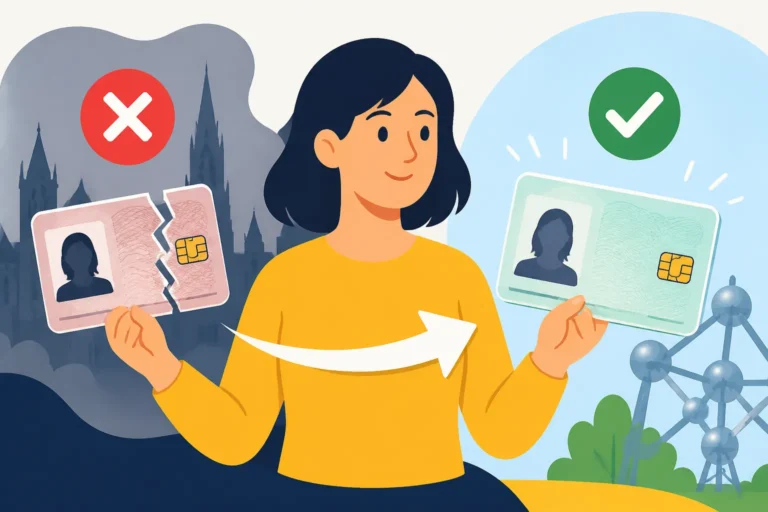
The first thing you likely encountered was the Residence Registration: Annexes, Communes, and the eID Card. This process usually begins with an Annex 19 (your application for registration) followed by an Annex 15 (a temporary document while the police check your address). During this period, the uncertainty is palpable. Many newcomers ask if they must wait for the actual plastic eID card to arrive before they can even think about a business plan. The reality is that your right to work is often active from the moment your application is deemed admissible, though administrative systems like the Crossroads Bank for Enterprises (CBE) might struggle to recognize you until you have a national number.
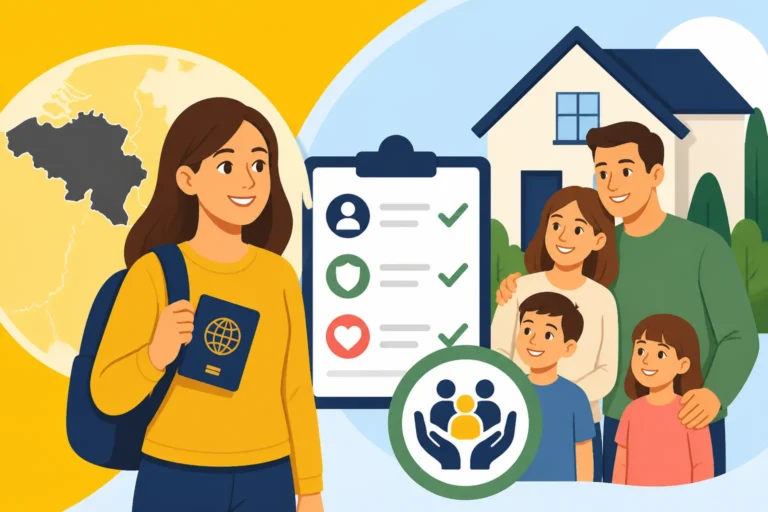
It is vital to understand that the F Card is specifically for Family Reunification with a Belgian or EU Citizen (F Card). If your spouse is a non-EU citizen on a work permit, you would likely have an A Card, which has entirely different rules. The F Card is significantly more powerful because it grants you "unlimited access" to the Belgian labor market. This means you are legally treated almost identically to an EU citizen when it comes to employment and entrepreneurship.
Can You Legally Be an Entrepreneur on an F Card?
The short, resounding answer is yes. If you hold an F Card (or even the permanent F+ Card), you have the legal right to engage in self-employed activities in Belgium. This is perhaps the greatest advantage of the F Card over other residency types. For most non-EU citizens, starting a business requires a grueling application for a "Professional Card" (Carte Professionnelle), which involves submitting a detailed business plan, proving economic utility to Belgium, and waiting months for an uncertain approval.
As an F Card holder, you are exempt from this requirement. You do not need to ask the government for permission to be an entrepreneur; you simply need to follow the same registration steps as a Belgian or French or German citizen living here. This applies whether you want to be a freelance graphic designer, open a specialty coffee shop in Ixelles, or launch a tech startup in Ghent. You are skipping the line of Applying for a Professional Card (Carte Professionnelle) as a Freelancer, which saves you hundreds of euros in fees and untold amounts of stress.
However, "legally allowed" and "administratively ready" are two different things. While the law is on your side, you will still face the "Belgian Paperwork Gauntlet." To set up your business, you need a bank account, a VAT number, and a social insurance fund. Most of these entities will ask for your eID card. If you are still waiting for your appointment at the commune, you might find yourself in a catch-22 situation where you have the right to work but no digital key (like itsme) to access the portals required to register.
From Idea to Reality: The Step-by-Step Registration Process
Once you have your F Card (or at least your national register number from your Annex 15), the process of Registering at the Crossroads Bank for Enterprises (CBE/BCE) begins. The CBE is the central database for all Belgian businesses. You cannot legally send an invoice or even buy business supplies without being registered here.
For most expats on an F Card, the "Sole Proprietorship" (Indépendant / Eenmanszaak) is the most common route. It is the cheapest to set up and requires the least amount of formal capital. Here is the typical flow you will experience:
- The Professional Bank Account: You must open a separate bank account for your business. Be warned: Belgian banks can be incredibly slow with expats. They may ask for proof of your residency status multiple times.
- Social Insurance Fund Registration: You must join a fund like Xerius, Acerta, or Partena. These funds collect your social security contributions. Even if you haven't made a single euro yet, you will likely have to pay a minimum quarterly contribution.
- VAT Activation: After your CBE registration, you must go through the process of Applying for a VAT Number (TVA/BTW) as a Freelancer. Even if you qualify for a small business exemption (if your turnover is under €25,000), you still need to be "known" to the VAT office.
During these steps, you might need to provide translated versions of your foreign diplomas if your profession is regulated (like architects or certain medical practitioners). Using a service like RushTranslate can ensure your documents are accepted by the Belgian authorities without a hitch. Remember, Belgium loves a stamped, official translation, and having your paperwork ready in French or Dutch is a veteran move that will save you weeks of back-and-forth emails.
Financial and Social Security Obligations for F Card Business Owners
The moment you become a self-employed person on an F Card, you enter the Belgian social security system. This is a double-edged sword. On one hand, you gain access to the excellent Belgian healthcare system. On the other hand, the contributions are high—usually around 20.5% of your taxable income.
A major point of confusion for F Card holders is health insurance. Since you are joined to an EU spouse, you might initially be a "dependent" on their Mutuelle. However, once you register as self-employed, you must become a "titular" member. This means you pay your own way. To navigate this, you should consult a Mutuelle and Ziekenfonds: Public Health Insurance Registration Guide to understand how your status changes from a spouse to a business owner.
Because the transition between being a "dependent" and a "business owner" can sometimes result in a coverage gap—especially if the commune is slow to update your status—many veteran expats choose to maintain a private policy like Cigna Global during their first year. This provides a safety net while you are fighting with the Belgian bureaucracy to get your "vignettes" (those little yellow stickers for your prescriptions).
| Responsibility | Sole Proprietor (F Card) | Company (BV/SRL) |
|---|---|---|
| Setup Cost | Low (~€100-€200) | High (~€1,500+ Notary fees) |
| Liability | Personal assets at risk | Limited to company assets |
| Accounting | Simple (Single-entry) | Complex (Double-entry) |
| Social Security | Based on net profit | Based on drawn salary |
| Professional Card | Not Required | Not Required |
Common Challenges and Pro-Tips for Expat Founders
Even with the right to work, the "hidden" bureaucracy can be exhausting. One of the most frustrating aspects is The Police Address Check: What Happens if You Are Not Home?. If the police officer doesn't find you at home during their residency check, your F Card application can be delayed or even rejected. This, in turn, freezes your ability to get a VAT number or open a business bank account. I always tell newcomers to put their names clearly on the doorbell and stay within a 15-minute radius of the house during those first few weeks.
Another hurdle is the language barrier. While you can run a business in English in Brussels or Antwerp, the official tax portals and legal documents will be in French or Dutch. If you are serious about staying long-term and perhaps eventually applying for citizenship, you should start looking into How to Prove A2 Level Dutch/French for the Citizenship Application. Not only does this help with the administrative side of your business, but it also counts toward the "social integration" requirement for your future five-year residency stay.
Finally, let's talk about Social Insurance Funds for Freelancers (Xerius, Acerta, Partena). Don't just pick one at random. Some are more expat-friendly than others, offering portals in English and dedicated advisors who understand the specificities of the F Card. They will be the ones who tell you exactly how much to set aside for taxes—and in Belgium, you should always assume the taxman wants at least half. Understanding the gap between Gross vs Net Salary in Belgium: Why the Difference is So Big is essential before you set your freelance rates. If you charge what you charged in the UK or the US, you will likely find yourself struggling once the Belgian social contributions and commune taxes are deducted.
Summary: Your Path to Independence
The F Card is a golden ticket for anyone wanting to build a life in Belgium. It removes the largest barrier to entry—the professional card—and places the power of your career back into your hands. While the paperwork is undeniably dense, the legal framework is designed to let you thrive alongside your partner.
By ensuring your diplomas are translated by RushTranslate, maintaining backup health coverage through Cigna Global, and choosing the right social insurance fund early, you can move from "trailing spouse" to "successful entrepreneur" before your first Belgian winter is over. It requires patience, a lot of coffee, and a willingness to embrace the local commune's quirks, but the freedom to run your own business is well worth the effort.
Disclaimer
The information provided in this guide is for informational purposes only and does not constitute legal, financial, or tax advice. Immigration laws and administrative procedures in Belgium are subject to change. Always consult with a qualified immigration lawyer, a professional accountant (comptable/boekhouder), or the official Belgian Immigration Office (DOFI) before making significant career or residency decisions. Your specific commune may have variations in how they process family reunification and business registrations.