The Police Address Check: What Happens if You Are Not Home?
Ah, the infamous Belgian police address check – a bureaucratic hurdle that can strike fear into the hearts of even the most seasoned expats! Many of us have wondered, with a knot in our stomach, "What if they come when I'm out?" This guide is here to demystify that process, walk you through what happens if you're not home, and give you the peace of mind (and practical steps) you need to navigate this essential part of settling into Belgium.
Understanding the "Contrôle de Quartier" or "Wijkagent Check"
When you arrive in Belgium and register your residence at the local commune, you embark on a journey through a unique administrative landscape. One of the very first, and often most anticipated, steps is the address check, known as the contrôle de quartier in French-speaking regions or the wijkagent check in Flanders. It's a fundamental part of establishing your legal residency here, and while it might feel intrusive, it's a standard procedure.
Why This Check Even Exists
From an expat's perspective, this check can feel like a Big Brother moment, an unwarranted intrusion into your new life. However, its existence is rooted in a desire for accuracy and security within Belgium's national register. The primary purpose is incredibly straightforward: to verify that you genuinely reside at the address you've declared. It's the government's way of ensuring that everyone listed in the national registry actually lives where they say they do.
This process helps combat identity fraud, prevents people from registering at fake addresses, and ensures that official communications, like tax documents or election notices, can reach the correct individuals. Think of it as the local authorities tying up a crucial loose end from your initial registration at the commune. Without this verification, your residence application, and therefore your right to stay long-term, cannot proceed. It directly links to the strict Registering at the Commune: The 8-Day Rule After Arrival that mandates newcomers to report their presence.
Who Conducts the Check and What They Look For
The person knocking on your door won't be a SWAT team or a detective squad; it will be your friendly local community police officer, known as the agent de quartier (or wijkagent in Dutch). These officers are part of the local police force but operate specifically within designated neighborhoods, focusing on community relations and administrative checks. They often know their patch intimately, which is why they're tasked with verifying residency.
When they conduct the check, they're not looking to interrogate you or inspect your entire home. Their primary goal is simple verification: Does the name on the doorbell match the name on the registration? Is there a clear sign that someone is indeed living there? They might check if your name is on the mailbox, observe whether the windows show signs of occupancy (curtains, lights), or simply try to engage you in a brief conversation to confirm your identity and residency. They’re essentially confirming you’re not trying to register at a vacant property or a friend’s spare room where you don’t actually live.
The Dreaded "Not Home" Scenario: What Happens Next?
This is often the biggest source of anxiety for expats: you've been told the police will visit, but you have no idea when. Life happens – you're at work, grabbing groceries, or exploring your new city – and suddenly, you realize you might have missed them. Don't panic; this is a very common occurrence, and the Belgian system has a way to handle it.
The Initial Visit and the Calling Card
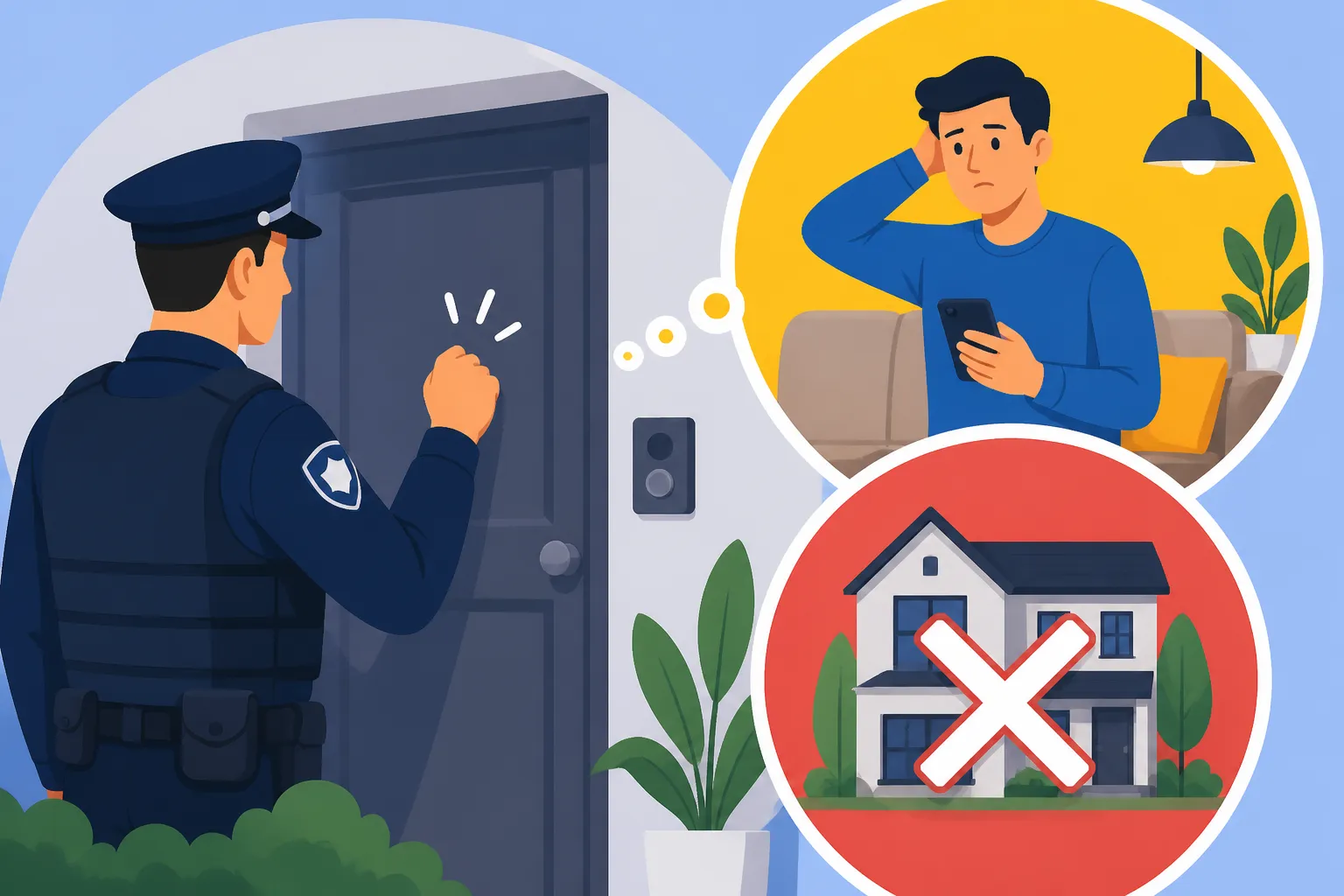
The usual scenario is that the agent de quartier will ring your doorbell. If there's no answer, they won't typically just give up and leave. Instead, they'll usually leave a physical notice or card for you. This often takes the form of a small passagekaartje (calling card) or a more formal letter slipped under your door or into your mailbox. This isn't a summons or a fine; it's simply a notification that they tried to reach you.
This card is crucial. It will generally contain the officer's name, contact details (phone number, email address, or even instructions to call the local police station's non-emergency line), and a request for you to get in touch to schedule a new appointment. Sometimes, it might even list a few dates and times when they plan to return, giving you a heads-up. It's a clear signal: they came, you weren't there, now it's your turn to reach out.
Responding to the Officer's Request
Upon finding one of these cards, your immediate priority should be to respond promptly. Delaying can complicate your application process significantly. First, carefully read all the information on the card. It will typically instruct you to call the officer or their department to arrange a new visit. When you call, be polite, explain that you found their card, and state your name and the address they visited.
You might be able to schedule a specific time, or they might simply tell you they'll try again on certain days. Be flexible. If you're concerned about a language barrier during the phone call, consider asking a Belgian friend to help you or use a translation app to formulate your sentences beforehand. Remember, this is a straightforward administrative step, and showing cooperation goes a long way.
Now, what if you're not fluent in French or Dutch? This is where many expats face their first real linguistic challenge. While a quick phone call might be manageable with basic phrases or a translation app, if the interaction needs more nuance, don't hesitate to seek help. If the officer leaves a more complex note or requires official documents, remember that services like RushTranslate can provide certified translations if needed, although for this initial contact, direct communication is usually sufficient.
Multiple Missed Attempts and Consequences
While the Belgian police are generally understanding that people have jobs and lives, there's a limit to how many times they'll attempt a visit without a response. They typically won't just keep showing up indefinitely. Usually, after two or three missed attempts where you haven't responded to their calling card, they will report back to the commune that they could not verify your residence.
This is where things can get problematic. If the police report that they couldn't confirm your residency, your residence registration process will effectively stall. The commune will likely send you a formal letter (which is why having your name on the mailbox is so critical!) stating that your application cannot proceed. In the worst-case scenario, if you fail to respond to these notices, your visa or residence permit application could be rejected entirely, forcing you to reapply or, in extreme cases, leave the country. It's a bureaucratic dead end that can lead to significant stress and delays in obtaining your official The Belgian eID Card Types: A Card, B Card, F Card, and Others or even your initial Understanding Immigration Annexes: Annex 8, Annex 15, and Annex 49.
Preparing for a Smooth Police Check Experience
While you can't control the exact timing of the police visit, you can certainly take steps to make the process as smooth as possible, minimizing the chances of missing them or encountering unnecessary complications. A little preparation goes a long way in Belgian bureaucracy.
Practical Tips Before the Visit
One of the simplest yet most effective preparations is to ensure your name is clearly visible on both your doorbell and your mailbox. This seems trivial, but it's the first thing the officer will look for. If your name isn't there, they might assume you don't actually live at that address, making their verification harder. Many expat apartments are in buildings with multiple buzzers; make sure yours is correctly labeled.
| Action Item | Why it Matters |
|---|---|
| Name on Doorbell/Mailbox | First point of verification for the officer; ensures mail delivery. |
| Keep Documents Handy | Quick access to ID, visa, rental contract for verification. |
| Lived-in Appearance | Subtly confirms occupancy (curtains, signs of daily life). |
| Inform Landlord/Concierge | They can confirm your residence or take the officer's card for you. |
| Proactive Commune Communication | If you expect extended absence, inform the commune with an alternative contact. |
It's also a good idea to keep copies of your essential documents readily accessible, such as your passport, visa, the Annex 15 you received from the commune, and your rental contract. While they usually won't ask for a deep dive into documents during the initial address check, having them nearby shows preparedness. If you know you'll be away for an extended period shortly after registering at the commune, it's prudent to inform the commune directly. While not always possible to reschedule the police visit based on your holiday plans, being proactive shows good faith and might allow them to note your absence. This avoids a failed attempt report while you're away.
What to Expect During the Visit (If You Are Home)
If you're lucky enough to be home when the agent de quartier arrives, the interaction is usually quite brief and straightforward. They will typically ask to see your identification – your passport or, if you've already received it, your What to Do If You Lose Your Belgian eID Before a Doctor Visit or provisional Annex 8. They might ask a few basic questions to confirm your identity and residency status, such as: "Are you living alone or with family?" "How long have you been residing at this address?" "Where did you move from?" These are generally simple questions, designed merely to confirm that you are who you say you are and that you actually live there.
They might politely ask to briefly step inside your apartment or house. Again, this isn't an invasion of privacy; they are typically looking for superficial signs that the property is genuinely occupied as a residence – a bed, some furniture, personal items. They aren't conducting a thorough inspection or looking for anything suspicious. The entire process, from knock to farewell, often takes no more than five to ten minutes, leaving you with a sense of relief and an official stamp of approval on your residency. Just be polite, cooperative, and answer their questions honestly.
What If There Are Issues or Misunderstandings?
Sometimes, despite your best efforts, misunderstandings can arise. Language barriers are a common culprit. If you struggle to communicate in French or Dutch, politely explain that you don't speak the local language well. Most officers will be patient. You can try using a translation app on your phone for simple phrases, or as mentioned, if it becomes more complex, having a friend present who can translate can be invaluable. For any official follow-up correspondence that might be required, remember that translating services are available. Should the police or commune send you official letters that require a formal response in French or Dutch, utilizing a service like RushTranslate for certified document translation can prevent further miscommunication and keep your residency process on track.
Another common "issue" is if your name isn't on the doorbell or mailbox yet, perhaps because you just moved in, and the building manager hasn't updated it. In this case, simply explain the situation to the officer. You can even have a temporary, clearly written sign with your name taped to the doorbell or mailbox. Showing your rental contract as proof of occupancy can also help clarify any initial discrepancies. The key is to remain calm, cooperative, and transparent. The officers are there to do a job, and if you help them do it efficiently, the process will be much smoother for everyone involved.
Beyond the Police Check: Next Steps in Your Belgian Journey
Successfully passing the police address check is a significant milestone, a quiet but firm confirmation that you've truly started to put down roots in Belgium. While it might feel like the end of one bureaucratic saga, it's actually a crucial step that unlocks several other essential processes for your life as an expat here.
What Happens After a Successful Check
Once the agent de quartier has verified your residency, they will submit a report back to your local commune. This report confirms that you indeed live at the declared address and allows the commune to update your file in the national register. This update is critical because it moves your application forward from a provisional status to a more permanent one. It's the green light the commune needs to finalize your registration.
Soon after, usually within a few weeks (though timing can vary significantly between communes), you will receive a letter from the commune. This letter is typically an invitation to return to their offices. This time, it's not for another check, but to collect your official Belgian residence card – your precious eID. Depending on your nationality and status, this could be an A card, B card, F card, or another type, each with its own implications for your long-term stay and rights. Getting this card is a moment of pure relief for many, as it officially marks you as a registered resident. This also means you can proceed with other important steps like Setting Up Itsme While Waiting for Your Physical eID Card or understanding Can I Travel Within the Schengen Area with an Expired eID and Annex 8?.
Why the Address Check is Only the Beginning
While getting your residence card feels like a huge accomplishment, it's really just the beginning of your administrative life in Belgium. The address check confirms your physical presence, but living here means navigating a continuous series of administrative responsibilities. For instance, if you decide to move within Belgium, you will need to notify your commune of the change of address, which will then trigger another contrôle de quartier at your new residence. Failing to do so can lead to administrative complications down the line. Check out our guide on Address Changes Changement d'Adresse: Updating the Commune When Moving for more details.
Furthermore, your residence card is your key to accessing many services, from opening bank accounts to registering for healthcare. Knowing that your address is officially recognized means you can confidently proceed with these next steps, cementing your integration into Belgian society. It's a foundational element that underpins nearly every other interaction you'll have with the Belgian state, from Accessing Belgian Healthcare Without an eID: Temporary Certificates to understanding How Long Does a Single Permit Take to Process in 2026? and beyond.
Dealing with the Commune: A Quick Guide
Let's face it, dealing with local administration in Belgium can be, shall we say, a unique experience. From differing opening hours to varying levels of English proficiency, each commune has its own quirks. Knowing how to engage effectively can save you a lot of headaches.
Navigating Commune Appointments and Documents
The first step in your residency journey, the initial registration, requires a visit to your local commune or stadhuis/maison communale. Often, you'll need to book an appointment well in advance, which can be done online through the commune's website or by phone. Our guide on Booking an Appointment at the Commune Stadhuis/Maison Communale has more tips on this. When you go, ensure you have all your necessary documents – typically your passport, visa (if applicable), proof of address (like your rental contract), and sometimes a recent passport-sized photo. It's always best to check the specific requirements on your commune's website beforehand, as they can differ slightly. Having everything in order for your initial registration will set you up nicely for the police check that follows. If you need any official foreign documents translated for your registration or visa application, services like RushTranslate can ensure they are properly certified for Belgian authorities.
Your Role in Maintaining Accurate Records
Once you're registered and have passed your address check, your responsibility doesn't end. You play an active role in keeping your records accurate. This includes promptly informing the commune of any changes to your personal situation, such as a new address, a change in marital status, or the arrival of a new family member. Think of your eID and the national register as living documents that need to reflect your current reality. Neglecting to update your details can lead to fines or issues with accessing public services. For instance, if you move and don't update your address, you might miss important correspondence, including invitations for eID renewal or tax documents. This continuous engagement is key to a hassle-free life in Belgium.
Disclaimer
The information provided in this guide is for general informational purposes only and does not constitute legal advice. While we strive to provide accurate and up-to-date information, Belgian immigration and administrative laws can be complex and subject to change. It is always recommended to consult with the official Belgian authorities (your local commune, the Immigration Office, or relevant federal public services) or a qualified legal professional for advice tailored to your specific situation.