Eye Exams in Belgium: Do You Need a Doctor or an Optician?
Trying to figure out if you should head to a local shop or a medical clinic when your vision gets blurry is a classic Belgian headache. I still remember wandering around the Rue Neuve with a squint, wondering why the optician wouldn't just give me a medical receipt. This guide clarifies exactly when to see a doctor versus an optician to save you time and money.
The Big Distinction Ophthalmologists vs Opticians
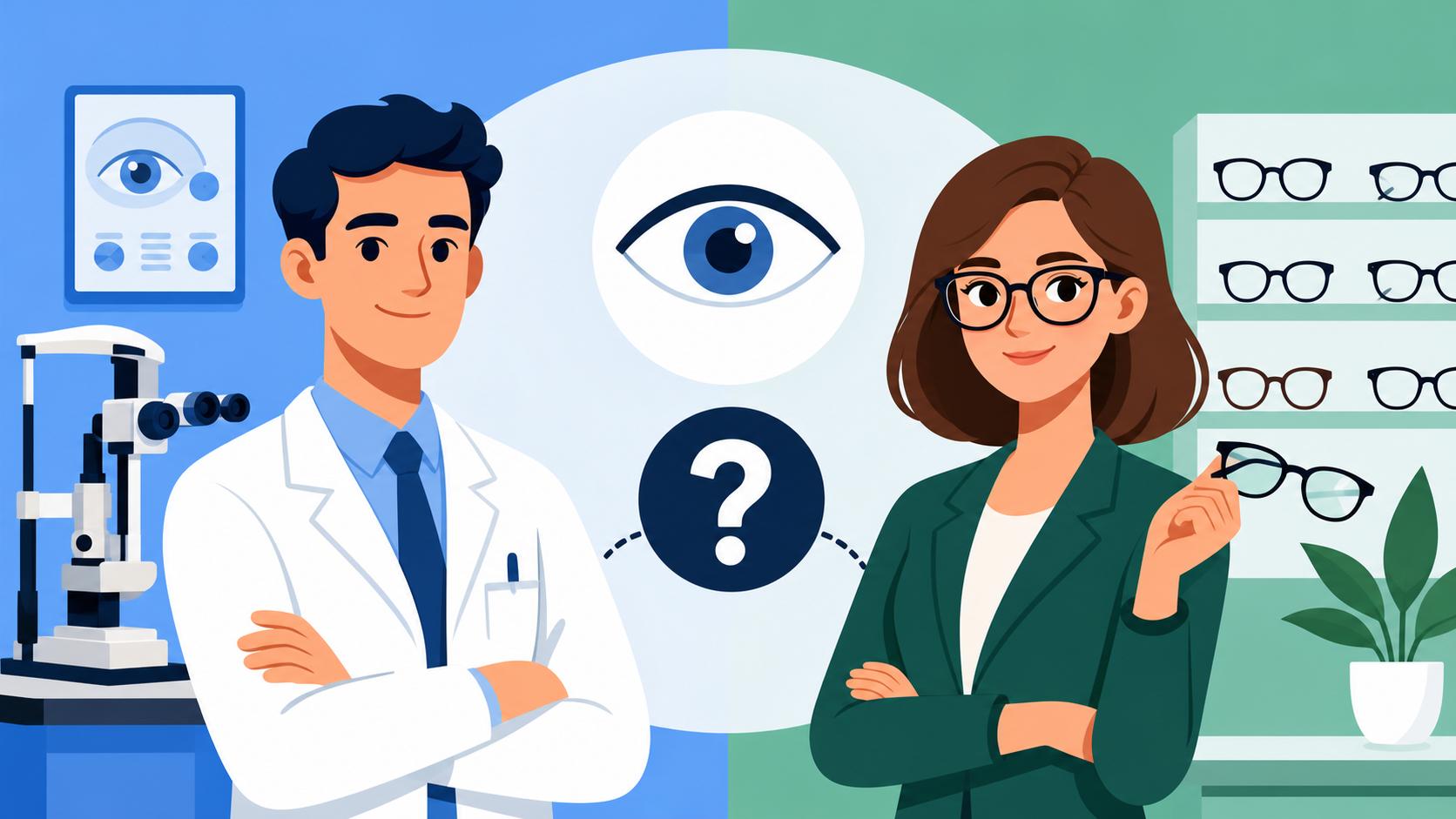
In Belgium, the lines between medical care and retail can feel a bit blurry, pun intended. However, the legal and financial distinctions are very sharp. If you come from a country where you can get a full medical eye exam and a pair of glasses in forty-five minutes at a mall, the Belgian "separation of powers" might frustrate you. Here, eye care is divided into two distinct worlds: the medical diagnosis and the retail solution.
An Ophthalmologist, or Oogarts in Dutch and Ophtalmologue in French, is a medical doctor. They have spent years in university and residency learning about the anatomy and pathology of the eye. They are the only ones legally allowed to perform a comprehensive medical check-up, dilate your pupils to check your retina, and diagnose conditions like glaucoma or cataracts. Most importantly for your wallet, they are the only ones who can write the specific prescription required for insurance reimbursement.
On the other hand, an Optician (Opticien) is a specialist in the technical side of vision. They are masters of lenses, frames, and fitting. While many opticians in Belgium are highly trained and possess advanced equipment to measure your refractive error (your "number"), they are not doctors. They can tell you that you need a -2.00 lens, but they cannot legally tell you why your eye pressure is high. Many expats make the mistake of going to an optician first, only to realize they have to start all over again with a doctor to get their money back from the state.
When You Absolutely Must See an Ophthalmologist
If you are experiencing any pain, sudden changes in vision, or flashes of light, you should skip the glasses shop entirely. These are medical emergencies or at least medical concerns that require a clinical eye. In these cases, you should look into Finding Medical Care in Belgium: GPs, Specialists, and Hospitals to understand how the specialist referral system works. Even if it is just a routine check-up, seeing a doctor is the only way to ensure there isn't an underlying issue like macular degeneration or complications from diabetes.
The Belgian healthcare system encourages preventive care. Even if you think your vision is perfect, a visit to the ophthalmologist every two years is recommended. During these visits, the doctor will provide you with a prescription for glasses if needed. This piece of paper is gold. Without it, your Mutuelle will likely refuse to pay a single cent toward your expensive new frames or lenses. If you are a high-earner or have complex needs, you might also consider how Private Health Insurance in Belgium: When Do Expats Really Need It? can bridge the gap for more frequent specialized testing.
Wait times for ophthalmologists in Belgium can be notoriously long. It is not uncommon to be told the next available appointment is six months away. To navigate this, many expats use platforms like Doctena or Rosa to find doctors with shorter waitlists, perhaps in a different commune or city. If you are living in the north, checking the Antwerp Healthcare Guide: Where to Go and How to Book Appointments might reveal more available slots than the crowded clinics in central Brussels.
The Role of the Optician and the Optometrist
Once you have that precious prescription from the doctor, it is time to visit the optician. This is the fun part where you get to choose your style. The optician’s job is to take the doctor's data and translate it into a physical product that sits comfortably on your face. They will measure the distance between your pupils and help you decide between thinned lenses, anti-reflective coatings, or blue-light filters.
In recent years, the role of the Optometrist has become more prominent in Belgium. They often work inside the larger retail chains like Pearle, Hans Anders, or GrandOptical. An optometrist has more clinical training than a traditional optician but still sits below an ophthalmologist in the medical hierarchy. They are great for "in-between" checks. For instance, if you feel your current glasses aren't quite right but you saw a doctor only six months ago, an optometrist can do a quick refraction test to see if a minor adjustment is needed.
However, remember that even if an optometrist in a shop does a fantastic job measuring your sight, that shop-generated printout is rarely accepted by public insurance for a refund. You still need the doctor’s signature. For those who prefer a more global approach to their health and want to avoid the long public wait times, Cigna Global offers plans that can provide quicker access to specialists, often bypassing the standard Belgian "wait-and-see" culture.
Navigating Costs and Reimbursements
The financial side of eye care in Belgium is a bit of a puzzle. The government doesn't just hand out free glasses. Instead, they operate on a reimbursement model. You pay the doctor and the optician upfront, and then you "reclaim" a portion of that cost from your insurance fund. Understanding Healthcare Budgeting: Copays, DMG/GMD, and Reimbursements is essential before you swipe your card at a high-end boutique in Ixelles.
Typically, the Mutuelle provides a fixed reimbursement for lenses every few years, provided there has been a change in your prescription of a certain magnitude (often 0.25 or 0.50 diopters). The frames themselves are rarely covered by public insurance unless you have a very specific medical condition or are under the age of 18. This is why many expats choose to supplement their public coverage. A policy from Cigna Global can be particularly helpful here, as it often covers a wider range of optical costs, including frames and higher-end lens treatments that the Belgian state considers "luxury."
| Service | Ophthalmologist (Doctor) | Optician (Shop) |
|---|---|---|
| Medical Diagnosis | Yes (Glaucoma, Infections, etc.) | No |
| Vision Refraction | Yes | Yes |
| Surgery/Prescriptions | Yes | No |
| Insurance Paperwork | Mandatory for Refunds | Provides Technical Invoice |
| Wait Time | 2 to 6 Months | Walk-in or 1-2 Days |
| Cost | Fixed "Conventioned" Rates | Retail Pricing |
To maximize your refund, make sure the doctor you see is "conventioned." This means they agree to the official state prices. If you see a non-conventioned doctor, they can charge whatever they like, and your Mutuelle will only refund you based on the state rate, leaving you with a large out-of-pocket "supplement." You can learn more about this in our guide on Eye Care: Visiting Ophthalmologists and Getting Glasses Reimbursed.
Contact Lenses and Maintenance
If you prefer contact lenses over glasses, the process is largely the same, but with added scrutiny. Your first fitting for contact lenses should always be with a professional. They need to ensure the lens isn't scratching your cornea and that your tear production is sufficient. Once you have your brand and fit settled, you don't always need to go back to the doctor just for a refill.
Many expats in Belgium choose to buy their contact lens solutions and eye-health supplements online to save money. For things like lubricating drops or specialized eye vitamins that support macular health, iHerb is a fantastic resource that ships reliably to Belgium. It is often much cheaper than buying the same brands at a local pharmacie. However, for the lenses themselves, you should still have a yearly check-up to ensure your eyes aren't becoming "hypoxic" (starved of oxygen) from over-wearing.
For more details on the specific amounts you can get back for your lenses, check out Getting Contact Lenses Reimbursed: What the Rules Say. The rules for contacts are sometimes stricter than for glasses, often requiring a higher "diopter" threshold before the insurance company agrees to pay out.
Step by Step Guide to Getting New Glasses in Belgium
If you are new in the country and your current pair of glasses is held together by tape, follow this specific order of operations to ensure you don't get stuck with a massive bill:
- Register with a Mutuelle: You cannot get any money back without this. See our Mutuelle and Ziekenfonds: Public Health Insurance Registration Guide to get started.
- Book an Ophthalmologist: Use an app or call a local clinic. Ask if the doctor is "conventioned" to keep costs low.
- The Exam: Attend the appointment and walk away with your prescription. If the doctor uses "eAttest," your refund for the consultation will happen automatically. If not, you'll get a green piece of paper.
- Submit the Consultation Receipt: If you got the green paper, send it to your Mutuelle. Learn the process in How to Submit Medical Receipts for Reimbursement in Belgium.
- Visit the Optician: Take your prescription to the shop. Choose your frames and lenses.
- The Annex 15/Receipt: When you pay for your glasses, the optician will give you a specific document (usually called an Attest van aflevering or Attestation de fourniture). This is NOT a regular receipt; it is a special form for the insurance.
- Final Submission: Drop that special form into your Mutuelle's mailbox (the little white or yellow boxes on the street).
- Maintenance: Keep your eyes healthy by staying hydrated and using quality products. I often order my backup supplies like lens cases and cleaning kits from iHerb because the local selection can be limited and pricey.
Final Advice for Expats
Belgium’s eye care system is high-quality, but it rewards the patient. If you are proactive and follow the "Doctor first, Shop second" rule, you will navigate the administrative hurdles with ease. Don't be afraid to travel to a different city for a faster appointment. A train ride to Leuven or Ghent is a small price to pay to see a doctor four months earlier.
If you find yourself overwhelmed by the language barrier during these medical visits, you might want to look for Finding English-Speaking Doctors in Brussels, Antwerp, and Ghent. Most specialists in Belgium speak excellent English, but the receptionists at the front desk might only speak the local language, so having a few Dutch or French phrases ready is always a good idea.
Lastly, if you have a family, remember that children's eye care is even more heavily subsidized. Make sure to keep their records up to date. You can find more about managing your family's health in our guide on Family Health in Belgium: Pregnancy, Birth, and Pediatric Care.
Disclaimer
This guide is for informational purposes only and does not constitute medical or legal advice. Healthcare regulations and reimbursement rates in Belgium are subject to change by the NIHDI (RIZIV/INAMI). Always consult with a qualified medical professional for eye health concerns and verify current coverage with your specific insurance provider or Mutuelle.