Antwerp Healthcare Guide: Where to Go and How to Book Appointments
Navigating the healthcare system in a new city is never easy, but in Antwerp, the combination of Dutch medical terminology and local administrative quirks can make a simple doctor's visit feel like a monumental task. I remember my first winter in the Zurenborg district, shivering with a high fever and staring at a blank Google search because I didn't know the difference between a Huisarts and a Wachtpost. This guide solves the Antwerp healthcare puzzle by providing you with the exact steps to find providers, book appointments, and understand how the local system operates.
Getting Started with the Antwerp Health System
Antwerp offers some of the highest quality medical care in Europe, but access is gated by a few administrative requirements that you need to handle as soon as you settle into your neighborhood. Whether you are living in the trendy Eilandje district or the family-friendly Berchem, the very first thing you must do is register with a local mutuelle or ziekenfonds. This is the public health insurance system that ensures you aren't paying the full retail price for every consultation.
In my early days here, I made the mistake of thinking my travel insurance was enough. It wasn't. For day-to-day life, you need to be part of the national social security framework. You should look into the Mutuelle and Ziekenfonds: Public Health Insurance Registration Guide to see which provider fits your needs, as some have more English-speaking staff than others. Once you are registered, you will receive those famous yellow stickers, or vignettes. If you are confused about why you're being handed a sheet of stickers, check out What Are Mutuelle Stickers Used For and Where to Put Them to understand their role in the reimbursement process.
While the public system is fantastic, many expats in Antwerp choose to supplement it. Public insurance generally covers about 75% of costs, but for things like private hospital rooms or specialized dental work, the out-of-pocket expenses can climb. I’ve found that having a policy with Cigna Global provides that extra layer of peace of mind, especially if you travel frequently or want access to a broader range of private specialists without the standard wait times. It acts as a safety net that covers the gaps the Belgian state system leaves behind.
The Role of the eID and Itsme in Medical Care
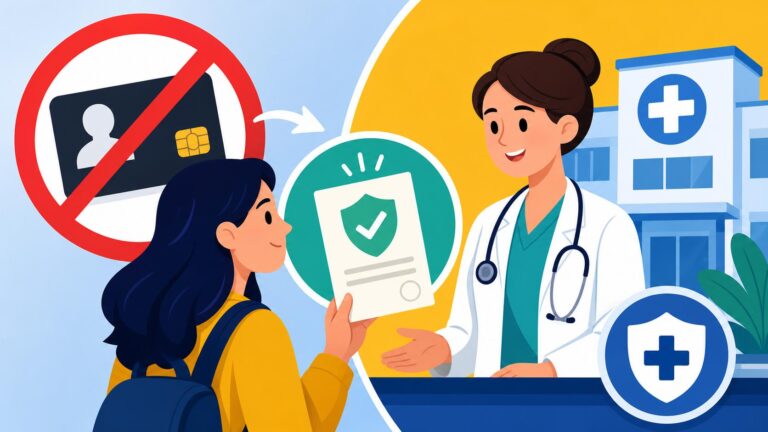
Your Belgian electronic ID (eID) is the most important document in your wallet when visiting a doctor in Antwerp. Gone are the days of carrying massive paper files. When you arrive at a clinic in Merksem or a hospital in Wilrijk, the first thing the receptionist will ask for is your card. They insert it into a reader, and instantly, your insurance status and medical history are pulled up. This is part of the digital transformation that makes the Belgian system so efficient.
If you haven't received your physical eID yet because the Antwerp city hall (the Stadhuis) is running behind, you can often use a temporary paper document, but it makes the digital reimbursement process (eAttest) much slower. You should also set up the Itsme app as soon as possible. This digital ID allows you to log into federal health portals to see your lab results and vaccination records. It’s a lifesaver when you’re trying to remember when you last had a tetanus shot while standing in a pharmacy in Deurne.
Registration at the local level is the trigger for all of this. If you are a new arrival, make sure you follow the steps for Registering for Public Health Insurance: Step-by-Step at Your Commune to ensure your national register number is active. Without that number, the digital systems used by Antwerp doctors won't be able to process your claims, and you'll find yourself stuck in a loop of manual paperwork and delayed refunds.
Understanding Medical Tiers in the City
Antwerp's medical care is structured in tiers: primary care (your GP), secondary care (specialists and local hospitals), and tertiary care (university research hospitals). For 90% of your needs, you will stay in the first two tiers. It is culturally expected here that you don't just show up at a hospital for a minor ailment. You start with your GP, who acts as the gatekeeper to the rest of the system.
This "gatekeeper" role is solidified by the GMD or Global Medical Record. By asking your Antwerp GP to manage your GMD, you centralize your data and, more importantly, you get a higher reimbursement rate for your visits. I learned this the hard way after paying full price for months because I hadn't formally "linked" myself to a specific doctor. You can read more about why this matters in The Global Medical Record (DMG/GMD): Why You Need It for Better Refunds.
Finding and Booking a General Practitioner in Antwerp
Finding a Huisarts (GP) in Antwerp can be surprisingly competitive. Many practices in the city center are "full" and not taking new patients. I recommend starting your search the moment you have a fixed address, rather than waiting until you are actually sick. A good GP will take the time to understand your history, and in a multilingual city like Antwerp, almost all of them speak excellent English, though their receptionists might prefer Dutch.
When searching, look for a "Huisartsenpraktijk"—these are group practices where several doctors share a building and a patient list. The advantage here is that if your specific doctor is on vacation, another doctor in the same practice has immediate access to your files. If you are struggling to find someone with an open list, Choosing Your First GP (General Practitioner) in Belgium offers great tips on how to approach these clinics to get accepted as a regular patient.
Using Digital Booking Tools like Doctena and Rosa
In Antwerp, the days of calling a doctor’s office at 8:00 AM and hoping someone picks up are fading. Most modern practices use digital booking platforms. Doctena and Rosa are the two heavy hitters here. You can filter by language, location, and specialty. I personally prefer Rosa because it’s a Belgian-made platform that is very clean and often shows real-time availability for clinics in neighborhoods like Borgerhout or the South (Het Zuid).
When you book, you’ll often see different types of "consultations." A standard one is usually 15 to 20 minutes. If you have a complex issue or need a surgical procedure (like removing a mole), you should book a double slot. One thing that surprised me when I first moved here was how punctual Antwerp doctors are. If your appointment is at 10:15, you should be in the waiting room by 10:10. If you’re late, you might find your slot has been given to a walk-in or the doctor has moved on to the next patient.
For those specifically looking for practitioners who are accustomed to the expat community, there are resources to help you narrow it down. Check out Finding English-Speaking Doctors in Brussels, Antwerp, and Ghent for a curated look at clinics that cater specifically to the international population. These clinics are often located near the international schools or the port area, where English is the primary language of business.
Conventioned vs Non-Conventioned Doctors
This is a technicality that can significantly impact your wallet. In Antwerp, doctors can choose to follow the official state-negotiated fee (conventioned) or set their own rates (non-conventioned). A conventioned doctor will charge the "standard" price—usually around €30 for a GP visit—of which you get the majority back from your Ziekenfonds. A non-conventioned doctor might charge €50 or €70, but your insurance will still only reimburse you based on the €30 standard rate.
I always advise expats to ask "Bent u geconventioneerd?" when booking. It’s a fair question, and most doctors will be honest about it. In wealthier areas like the neighborhoods around Den Brandt park, you are more likely to encounter non-conventioned specialists. For a deeper dive into how this affects your out-of-pocket costs, see Conventioned vs Non-conventioned Doctors: How Out-of-Pocket Costs Differ.
| Service Type | Estimated Cost (Conventioned) | Estimated Out-of-Pocket (Public) |
|---|---|---|
| GP Consultation | €30.00 | €4.00 – €6.00 |
| Specialist Visit | €45.00 – €60.00 | €12.00 – €20.00 |
| Emergency Room (ER) | €50.00 + treatments | Varies widely |
| Dental Cleaning | €60.00 – €80.00 | €10.00 – €15.00 |
Navigating Specialists and Hospitals in Antwerp
If your GP decides you need more specialized care, they will give you a referral note (verwijsbrief). While you can technically book a specialist in Antwerp without one, it’s not recommended. First, the specialist will want to see the GP’s notes, and second, your reimbursement might be lower if you skip the primary care step. Antwerp is home to some world-class hospitals, divided into three main networks: ZNA, GZA, and UZA.
The ZNA (Ziekenhuisnetwerk Antwerpen) is the largest, with sites like ZNA Middelheim and the brand-new ZNA Cadix in the Eilandje. Cadix is particularly impressive—it’s one of the most modern hospitals in Europe and is very accessible for those living in the northern part of the city. For a full breakdown of which hospital specializes in what, you should consult Finding Medical Care in Belgium: GPs, Specialists, and Hospitals.
The Three Major Hospital Networks
ZNA hospitals are public-private partnerships and generally offer excellent care with a focus on accessibility. GZA (GasthuisZusters Antwerpen), which includes Sint-Augustinus and Sint-Vincentius, often feels a bit more "private" and is known for its high-quality maternity and oncology wards. Many expats I know prefer Sint-Augustinus for its modern facilities and high density of English-speaking specialists.
The UZA (Universitair Ziekenhuis Antwerpen), located in Edegem, is the university hospital linked to the University of Antwerp. This is where you go for complex, rare, or highly specialized treatments. If you need a cutting-edge neurosurgeon or a specialized pediatric cardiologist, your GP will likely refer you to UZA. Because it's a teaching hospital, you might have students present during your consultation, but the level of expertise is unparalleled.
When choosing a hospital, consider the "room supplements." If you have basic public insurance, you will likely be placed in a shared room. If you want a private room, the hospital can charge significant supplements—sometimes 200% or 300% of the standard medical fee. This is another area where having Cigna Global is a game-changer, as it often covers these luxury supplements that the public Mutuelle ignores.
Booking Specialist Appointments
Booking a specialist in Antwerp can require patience. For popular specialties like dermatology or ophthalmology, wait times can be three to six months. One tip I’ve learned is to check the hospital’s own booking portal rather than just calling. Hospitals like UZA and the ZNA network have their own online systems where you can see all available specialists and their next open slot.
If you have an urgent issue that isn't quite an emergency, tell the receptionist you are looking for a "dringende afspraak." They may be able to squeeze you into a cancellation slot. Also, keep in mind that many specialists also have "private" practices outside of the hospital walls. These private practices often have shorter wait times but higher fees. Again, checking the "conventioned" status is key here to avoid a surprise bill.
Emergency Medical Care in Antwerp
Knowing what to do in a crisis is essential. In Antwerp, the emergency system is divided into life-threatening emergencies and "urgent but not life-threatening" care. For the former, the number is always 112. When you call, the operator will likely speak English, but it helps to know your address in Dutch to avoid confusion. If you want to know exactly what to expect when you dial those three digits, read Emergency Numbers: Calling 112 in Belgium and What to Expect.
If you are mobile and the situation isn't life-threatening—say, a deep cut that needs stitches or a child with a dangerously high fever at 2:00 AM—you should head to the "Spoed" (Emergency Room) of the nearest hospital. ZNA Middelheim and GZA Sint-Augustinus have 24/7 emergency departments that are well-equipped. Be prepared to wait, though. Triage is strict, and if you arrive with a sprained ankle while ambulances are bringing in trauma victims, you will be waiting for several hours.
Using the Wachtpost for After-Hours Care
One of the best-kept secrets for Antwerp expats is the "Huisartsenwachtpost." This is an after-hours GP service. If you get sick on a Saturday or at 10:00 PM on a Tuesday, do not go to the hospital ER unless it’s a true emergency. Instead, go to the Wachtpost. There is one in the center (near the National Bank) and others in districts like Merksem and Deurne.
The Wachtpost is staffed by local GPs on a rotation. You get the same level of care as your regular doctor but at times when your regular clinic is closed. It is significantly cheaper than a hospital ER visit and usually much faster. To find the one closest to you, you can check After-hours Medical Care: On-call Doctors (Garde/Wacht). You usually need to call ahead (the number 1733 is the national line for non-emergency medical help) to get an appointment time.
Ambulances and Costs
In many countries, calling an ambulance is a free service. In Belgium, it is not. There is a fixed federal rate for ambulance transport (currently around €70-€80), regardless of the distance. While your mutuelle will cover a small portion of this, you will still receive a bill in the mail a few weeks later. Don't panic when it arrives; it's a standard part of the system. If you have comprehensive private insurance like Cigna Global, these transport costs are usually fully covered, saving you the administrative headache.
Pharmacies and Medication in Antwerp
Pharmacies in Antwerp, known as an "Apotheek," are easily spotted by the flashing green neon crosses. They are not like American or British drugstores; you won't find milk or magazines here. They are strictly medical establishments. In the city center, you’ll find one on almost every corner, but their hours are generally 9:00 AM to 6:00 PM, with a long break for lunch.
For a detailed look at how to handle your prescriptions, see Pharmacies (Apotheek/Pharmacie) in Belgium: Operating Hours and Services. One thing to note is that many medications that are over-the-counter (OTC) in other countries, like certain high-dose painkillers or strong cough syrups, require a prescription here. The pharmacists are highly trained, however, and can often recommend a Belgian equivalent for a brand you used back home.
Finding a Night Pharmacy
If you need medicine in the middle of the night, you have to find the "Apotheek van wacht." You can’t just go to any pharmacy; only one or two in each district will be open after hours. You can find the list posted on the door of any pharmacy, or you can check the website apotheek.be. Note that there is a small "night fee" (around €5) added to your bill if you visit after 10:00 PM without an urgent prescription.
I've found that for general wellness—vitamins, supplements, and specialized skincare—the prices in Antwerp pharmacies can be quite steep. For these non-prescription items, I often use iHerb. They ship to Belgium very efficiently, and the range of products is much broader than what you’ll find in a local Antwerp shop. It’s a great way to stock up on the things that keep your immune system strong during the grey, damp Antwerp winters without paying boutique prices.
Medication Management for Expats
If you are moving to Antwerp with a chronic condition, bring a supply of your medication and a letter from your home doctor. You will then need to visit an Antwerp GP to get a Belgian prescription. Belgian pharmacists cannot legally fulfill a foreign prescription from outside the EU. They will help you find the local brand name for your medication. Using iHerb for your regular supplement routine can also help bridge the gap while you’re navigating these first few doctor appointments.
Mental Health and Family Support in Antwerp
Living as an expat can be isolating, and the "Antwerp reservedness" is a real cultural hurdle. If you find yourself struggling with the transition, please know that there is significant support available. The mental health landscape in Belgium has improved drastically, with the state now subsidizing a certain number of therapy sessions.
Finding a therapist who speaks English and understands the expat experience is crucial. You don't want to spend half your session explaining what "culture shock" feels like. I recommend looking at resources like Finding English-Speaking Therapy and Counseling in Belgium to find practitioners in Antwerp who specialize in the international community. Many are located in the southern districts of the city and offer both in-person and remote sessions.
Pediatric Care and Kind en Gezin
If you have children, your healthcare journey will involve "Kind en Gezin" (Child and Family). This is a Flemish government agency that provides free preventative care for children from birth until they start school. They handle vaccinations, hearing tests, and growth monitoring. While you will still have a pediatrician (Kinderarts) for when your child is actually sick, Kind en Gezin is the backbone of family health in Antwerp.
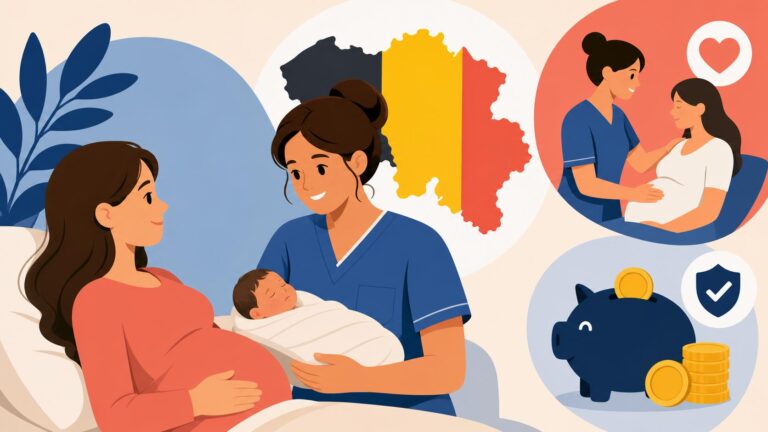
Most neighborhoods have a local Kind en Gezin office. When you register at the Antwerp Stadhuis, they usually notify the agency, but it’s proactive to contact them yourself. The nurses and doctors there are wonderful and almost always speak English. For more on how to manage your child's health records and the mandatory vaccination schedule in Belgium, check out Family Health in Belgium: Pregnancy, Birth, and Pediatric Care.
Staying Healthy in the City
Beyond the clinics and hospitals, Antwerp offers great ways to maintain your health. The city is becoming increasingly bike-friendly, and the "Stadspark" or the "Nachtegalenpark" are perfect for morning runs. Taking care of your physical health is the best way to minimize your time in the medical system.
I’ve also found that keeping my vitamin D levels up is essential here, given the lack of sun for six months of the year. Between my regular orders from iHerb and my occasional check-ups with my GP in Borgerhout, I’ve managed to stay healthy despite the hectic expat lifestyle. Antwerp's healthcare system might have a learning curve, but once you understand the rhythm of the GP-specialist-pharmacy triangle, it is one of the most reliable and high-quality systems you will ever experience.
Disclaimer
This guide is intended for informational purposes only and does not constitute professional medical or legal advice. Healthcare regulations and contact details in Antwerp are subject to change. Always consult with a qualified medical professional or your local mutuelle representative regarding specific health concerns or insurance coverage. If you are experiencing a medical emergency, dial 112 immediately.