Postpartum Care: Kind en Gezin, ONE, and Home Nursing Visits
Landing in your apartment after three days in a Belgian hospital with a tiny, crying human is the exact moment the "expat dream" often hits a wall of bureaucratic confusion. I remember sitting on my sofa in Brussels, clutching a stack of Dutch and French brochures, wondering why no one had told me which government agency was actually responsible for weighing my baby. This guide breaks down the essential support systems of Kind en Gezin, ONE, and home nursing visits to ensure you aren't navigating the fourth trimester alone.
Understanding the Belgian Postpartum Support Landscape
The Belgian healthcare system is world-class, but it is also deeply regional, which can be the first major hurdle for foreigners. Depending on where you live—Flanders, Wallonia, or the Brussels-Capital Region—you will interact with different state-funded organizations. These agencies are designed to provide preventive care, meaning they focus on the growth, development, and well-being of your child from birth until they enter the school system.
Regional Divisions and Choosing Your Agency
In Flanders, the governing body is Kind en Gezin. In Wallonia, it is the Office de la Naissance et de l'Enfance, commonly referred to as ONE. If you live in Brussels, you actually have the luxury (or the confusion) of choosing between the two. Generally, your choice in Brussels depends on your preferred language or the proximity of the local clinic to your home.
Both organizations offer essentially the same core services: home visits by a social worker or nurse shortly after birth, regular medical consultations at a local "consultation bureau," and a standardized vaccination schedule. It is important to note that these services are entirely free of charge for all residents, regardless of their nationality or the type of insurance they hold. Even if you have a private plan through Cigna Global, you are still encouraged to use these public services for the developmental tracking they provide.
The Philosophy of Preventive Care in Belgium
The Belgian approach to postpartum care is proactive rather than reactive. Instead of waiting for you to call a doctor because you are worried about your baby's weight gain, the system is designed to "find" you. When a birth is registered at the commune, the local agency is notified.
This system acts as a safety net, ensuring that every child in the country receives basic medical screenings and that parents have a direct line to nutritional and behavioral advice. For an expat without a local family "village," this can be a literal lifesaver. You are assigned a dedicated person who gets to know your family, tracks your baby’s milestones in the "Green Book" (Flanders) or the "Carnet de Santé" (French-speaking regions), and provides a consistent point of contact during those blurry first months.
Integration with the Broader Healthcare System
While Kind en Gezin and ONE handle preventive care, they do not replace your pediatrician or your GP. If your baby is sick or has a specific medical condition, the nurses at these agencies will refer you back to your clinical doctor. Understanding this distinction is key to navigating Finding Medical Care in Belgium: GPs, Specialists, and Hospitals.
The agencies work in tandem with your mutuelle (public health insurance). While the agency visits are free, any prescriptions they might suggest or external referrals will be processed through your standard insurance. This integrated approach ensures that your child’s medical history is centralized, often accessible via the MyHealth.belgium.be Guide: Accessing Your Medical Records Online.
Kind en Gezin: The Flemish Agency for Child Care
If you are living in Antwerp, Ghent, Leuven, or the Flemish periphery of Brussels, Kind en Gezin will be your primary partner in parenting. They are known for being highly organized and increasingly digital, offering a wealth of resources in English for the international community.
Registration and the First Home Visit
In theory, Kind en Gezin is notified of your child's birth automatically. However, as an expat, I highly recommend being proactive. You can register your pregnancy on their website months before your due date. Shortly after you return home from the hospital, a "regioverpleegkundige" (regional nurse) will contact you to schedule a home visit.
During this first visit, the nurse isn't there to judge your messy living room. They are there to weigh the baby, check for jaundice, and discuss how you are coping with breastfeeding or formula. They will also provide you with the "Kind&Gezin-dossier," a heavy-duty folder that will hold every medical record for your child for the next six years. This is also a great time to ask about the Kind en Gezin Registration Process for New Expat Parents if you find the online portal confusing.
Medical Consultations and Vaccinations
After the initial home visits, you will transition to visiting a local "consultatiebureau." These are clinics specifically for babies and toddlers. You will see both a nurse (for weighing and measurements) and a volunteer or doctor (for physical exams and vaccinations).
One of the biggest advantages of using Kind en Gezin is their adherence to the Belgian vaccination calendar. They provide all mandatory vaccines for free. If you are concerned about the legalities of the only mandatory vaccine in Belgium, you should review the guide on Vaccinating Babies in Belgium: The Compulsory Polio Vaccine Law. These clinics are also excellent places to discuss nutritional transitions, such as starting "fruitpap" and "groentepap" (fruit and vegetable mashes), which are a staple of Belgian weaning culture.
Language Support and Expat Resources in Flanders
Flanders is very welcoming to international families, and many Kind en Gezin staffers speak excellent English. In cities like Leuven or Ghent, it is very common for consultations to be held in English. They also provide translated brochures on topics like safe sleeping, breastfeeding, and toddler behavior.
If you ever feel that language is a barrier during a medical discussion, you can look into Medical Translation Services: Interpreters for Hospital Visits. However, for routine check-ups, the staff are generally very adept at explaining "percentiles" and "milestones" in a way that transcends the language gap. They understand that expat parents may not have the same support network as locals and often go the extra mile to provide emotional support.
ONE (Office de la Naissance et de l'Enfance) in Brussels and Wallonia
For those living in Wallonia or opting for the French-speaking system in Brussels, ONE is your point of contact. While the goals are the same as its Flemish counterpart, the "vibe" and administrative processes can feel slightly different.
How ONE Operates in French-Speaking Areas
ONE operates through a network of "partenariats" and local consultations. Similar to the Flemish system, a "TMS" (Partenaire Médico-Social) will be assigned to you. This person is usually a social worker or a nurse with specialized training in pediatric health. They are the backbone of the postpartum experience in the French-speaking community.
The first contact usually happens in the hospital or shortly after you arrive home. They prioritize "proximité" (proximity), meaning they want to ensure you have a contact person within walking distance of your home if possible. This is particularly helpful in the dense neighborhoods of Brussels where driving with a newborn can be a nightmare. If you are still setting up your local life, ensure you have completed Registering for Public Health Insurance: Step-by-Step at Your Commune to make sure your file is easily accessible by ONE.
Services Provided: From Consultations to Playgroups
ONE offers a comprehensive range of services that go beyond just medical check-ups. They organize "Lieux de rencontre enfants et parents" (LREPS), which are essentially playgroups where you can meet other parents while your children play in a supervised, safe environment. For an expat, these are goldmines for making friends and finding a sense of community.
In terms of medical care, the "consultations pour enfants" at ONE are staffed by pediatricians who work on a volunteer or contract basis. They follow the child’s development closely and record everything in the "Carnet de Santé." This book is vital; you will need it for School Medical Exams in Belgium: Requirements and Records later on. They also offer prenatal consultations and support for breastfeeding, which can be a huge relief if you are struggling in the early weeks.
Comparing ONE and Kind en Gezin for Brussels Residents
If you live in Brussels, you can choose either agency. Kind en Gezin tends to have a more streamlined digital portal where you can book and change appointments online. ONE’s digital presence is improving, but it still relies heavily on phone calls and physical paperwork.
Many expats choose based on the language they want their child to eventually attend school in, as these agencies are the gateway to the respective childcare (crèche) systems. Regardless of which you choose, the quality of care is high. If you find yourself needing to supplement these visits with more frequent pediatric check-ups, you might consider Private Health Insurance in Belgium: When Do Expats Really Need It? to cover the extra costs of private specialists.
Home Nursing Visits and Midwife Support
While Kind en Gezin and ONE focus on the baby’s development, independent midwives and home nurses focus on both the baby and the mother’s physical recovery. In Belgium, this is a distinct and highly valued part of the postpartum period.
The Essential Role of the Vroedvrouw or Sage-femme
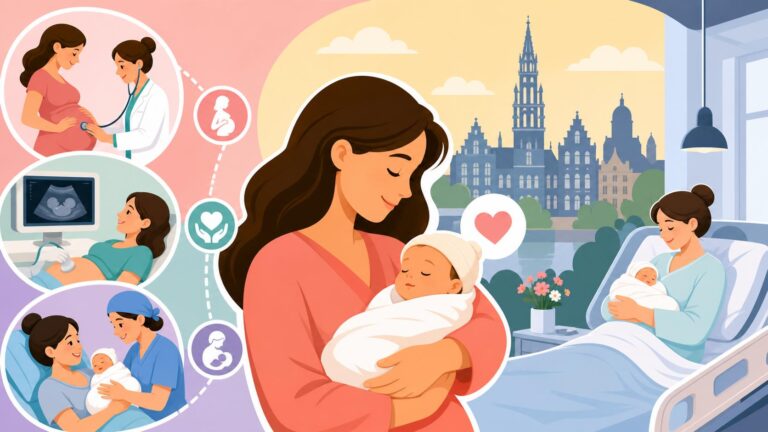
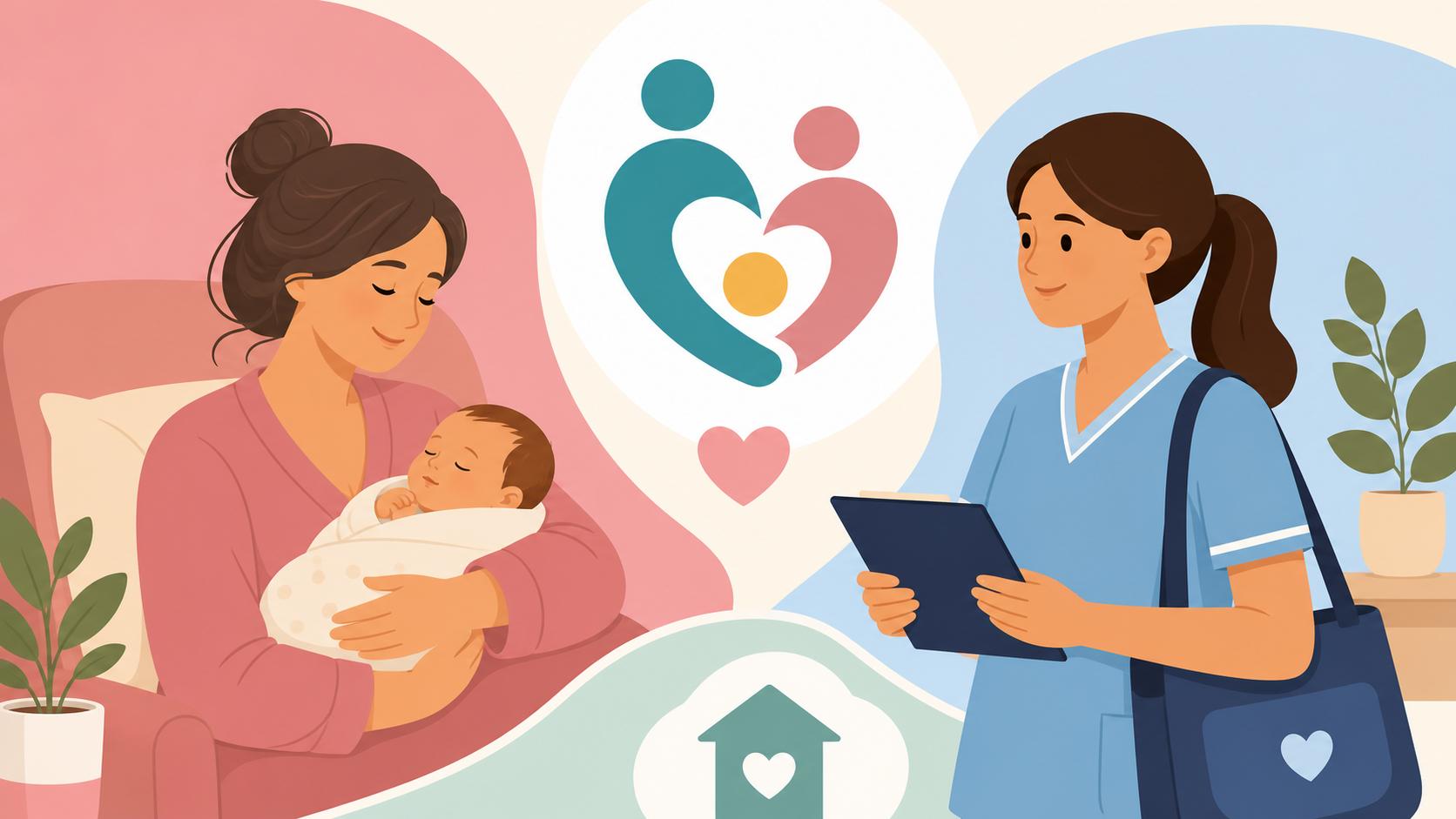
In Belgium, a midwife (Vroedvrouw in Dutch, Sage-femme in French) is not just for the delivery room. They are the primary caregivers for the first few weeks at home. You should ideally find a midwife during your second trimester. They will visit you at home the day after you are discharged from the hospital and can continue visiting for several weeks.
The midwife checks your physical recovery (such as stitches or C-section incision), monitors your blood pressure, and helps with the emotional transition of the "baby blues." They are also experts in breastfeeding troubleshooting. For a detailed look at how to find and pay for these professionals, refer to Midwives (Vroedvrouw/Sage-femme) in Belgium: Roles and Costs. Having a midwife come to your home means you don't have to drag yourself and a newborn to a clinic when you are still in pain.
Postpartum Hospitalization and the Trend of Early Discharge
Belgium has moved toward a "kort verblijf" (short stay) model for birth. While it used to be common to stay in the hospital for five days, many women now leave after two or three days if there are no complications. This shift has made home nursing visits even more critical.
The hospital will usually not discharge you unless you can prove you have a midwife or home nurse scheduled to visit you within 24 hours. This is part of the coordinated care effort between the hospital and the "outside world." If you are curious about the hospital experience itself, you can read more in Giving Birth in Belgium: Prenatal Care, Delivery, and Hospital Stays. This coordination ensures that the "gap" in care that exists in many other countries is virtually non-existent in Belgium.
Reimbursement for Home Nursing and Midwifery
One of the most pleasant surprises for expats is that home visits by a midwife are largely covered by the mutuelle. If the midwife is "conventioned" (meaning they follow official state rates), you may pay very little or even nothing out of pocket, as the billing can often be handled directly between the midwife and the insurance company.
For additional nursing care, such as help with bathing the baby or specialized medical care for the mother, your mutuelle may offer "kraamzorg" or "aide à la maternité" (maternity assistance). This is a subsidized service where a trained assistant comes to your house to help with light chores and baby care. This is a separate benefit from the medical visits and is a great example of Healthcare Budgeting: Copays, DMG/GMD, and Reimbursements in practice.
| Service Type | Provider | Target Audience | Cost | Focus |
|---|---|---|---|---|
| Preventive Care | Kind en Gezin / ONE | Baby (0-6 years) | Free | Growth, Vaccines, Development |
| Medical Recovery | Independent Midwife | Mother & Newborn | Reimbursed | Physical Healing, Breastfeeding |
| Maternity Help | Kraamzorg Agencies | The Household | Subsidized | Chores, Basic Baby Care, Meals |
| Clinical Care | Pediatrician / GP | Sick Child | Standard Copay | Illness, Chronic Conditions |
Practical Logistics for New Expat Parents
Beyond the health checks, there is a mountain of paperwork that comes with a Belgian baby. Navigating this while sleep-deprived is the ultimate expat test.
Registering the Birth at the Commune
You have 15 days to register your child’s birth at the commune (town hall) of the place where the baby was born (not necessarily where you live). This is a non-negotiable step. The commune will issue birth certificates and, crucially, the baby’s own identity documents or "bis number."
This registration is what triggers your eligibility for child benefits (Groeipakket in Flanders, Allocations Familiales in Brussels/Wallonia). It is also the moment you should ensure the baby is added to your health insurance. You can find more details on this process in Adding Family Members: Enrolling Spouses and Children in Your Mutuelle. Without this registration, you will face significant delays in getting medical reimbursements for the baby.
Navigating the Mutuelle for Baby’s Coverage
Once you have the birth certificate, you must contact your mutuelle. They will issue "vignettes" (yellow stickers) for the baby. These stickers are used on every piece of medical paperwork to ensure you get your money back. Even today, with increasing digitalization, these physical stickers remain a quirk of the Belgian system.
Your mutuelle will also likely offer a "birth grant" (premie) or a gift, such as a high-quality stroller, car seat, or a deposit into a savings account. To understand the different options between providers like CM, Partena, or Solidaris, take a look at Solidaris vs Helan: Comparing Ziekenfonds Options for Expats. These small perks can add up and help offset the initial costs of baby gear.
Mental Health and Support Groups for Expats
Postpartum is a vulnerable time, and doing it in a foreign country can amplify feelings of isolation. If you find yourself struggling with more than just the "baby blues," do not hesitate to seek professional help. Belgium has a robust network of psychologists who specialize in the perinatal period.
There are also many English-speaking parent groups in major cities. In Brussels, "The Village" or various "Bumps and Babies" groups provide a space to vent about the weather and the bureaucracy with people who get it. If you need clinical support, start by reading Mental Health in Belgium: Therapy, Psychiatry, and Expat Support to understand how to access therapy that is partially reimbursed by your insurance.
Essentials and Budgeting for Postpartum Life
Budgeting for a baby in Belgium involves more than just buying a crib. It’s about understanding the hidden costs and the available subsidies.
Supplementing Public Care with Private Insurance
While the public system is excellent, some expats choose to maintain private international coverage like Cigna Global. This can be useful if you prefer to see private-practice pediatricians who may not be "conventioned" or if you want absolute freedom to choose any hospital without worrying about room surcharges.
Private insurance often covers "alternative" postpartum therapies that the mutuelle might only partially fund, such as osteopathy for babies with colic or specialized lactation consultants. It provides an extra layer of comfort, especially if you are used to the private healthcare models of the US or UK. You can compare these options in Private Health Insurance in Belgium: When Do Expats Really Need It?.
Sourcing Baby Supplies and Vitamins
Belgium has specific rules about where you can buy certain health products. For example, most high-dose vitamins and specific baby supplements are only sold in pharmacies. However, for everyday essentials like gentle probiotics, vitamin D drops, or postpartum skin care, many expats turn to online retailers like iHerb for a wider selection of international brands.
Be mindful that while the local "Apotheek" or "Pharmacie" is the only place to get prescription medication, they also offer expert advice. If your Kind en Gezin nurse recommends a specific ointment, the pharmacist will explain exactly how to use it. For a refresher on these rules, see Pharmacies and Medication in Belgium: Prescriptions and OTC Rules. Balancing local expertise with the convenience of international shipping is the hallmark of a seasoned Belgian expat.
Managing Ongoing Healthcare Costs
As your baby grows, the frequency of visits to Kind en Gezin or ONE will decrease, and your reliance on your family doctor (GP) will increase. To keep your out-of-pocket costs low, make sure you have an active "DMG" (Dossier Médical Global). This is a digital file that centralizes your medical history and gives you higher reimbursement rates for consultations.
The financial side of Belgian parenting can be complex, involving social security deductions and annual tax returns. If you are confused by the "ONSS" deductions on your payslip that fund these services, you can find clarity in Social Security Contributions: How Employers Deduct Health Costs. Understanding where your money goes helps you appreciate the "free" services you receive at the baby clinic every month.
Disclaimer
The information provided in this article is for educational and informational purposes only and does not constitute professional medical or legal advice. Healthcare regulations and administrative procedures in Belgium, specifically regarding Kind en Gezin and ONE, are subject to change. Always consult with a qualified healthcare provider, your local commune, or your insurance representative for advice tailored to your specific circumstances. We do not guarantee the accuracy or completeness of the information provided.