Healthcare Deductions on Your Payslip: The ONSS/RSZ Contribution
Opening your first Belgian payslip can be a genuine heart-stopping moment when you see the gap between your gross and net salary. I still remember sitting in a rainy cafe in Brussels, staring at my "fiche de paie" and wondering where nearly a third of my hard-earned money had vanished before it even touched my bank account. This guide breaks down the mysterious ONSS/RSZ deductions, ensuring you understand exactly what you are paying for and how it secures your life in Belgium.
Understanding the ONSS and RSZ Acronyms
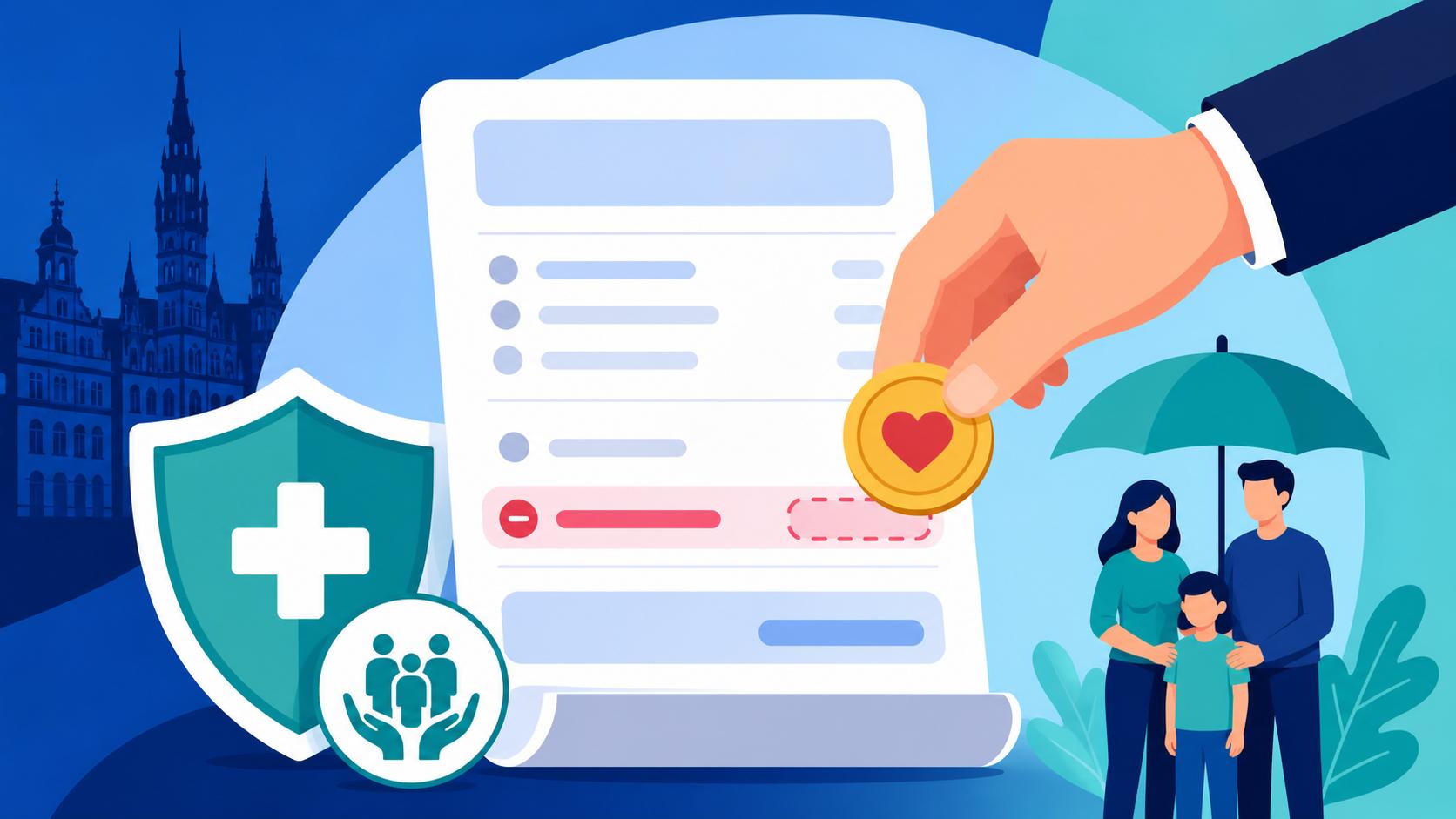
The very first thing you will notice on a Belgian payslip is a significant deduction labeled either ONSS in French (Office National de Sécurité Sociale) or RSZ in Dutch (Rijksdienst voor Sociale Zekerheid). In plain English, this is your National Social Security Office contribution. It is the mandatory cornerstone of the Belgian social welfare state, and as an expat, you are legally required to contribute to it from day one of your employment.
When I first arrived, I viewed these deductions as a "tax," but my Belgian colleagues were quick to correct me. They view it as a collective insurance premium. Unlike income tax, which goes into a general federal pot for roads, schools, and defense, the ONSS/RSZ funds are ring-fenced for social protections. This money is what allows you to access one of the best healthcare systems in the world, and it is the mechanism that ensures you are paid if you fall ill or lose your job.
The standard employee contribution is currently set at 13.07% of your gross salary. This is calculated on your total "Brutto" pay before any other taxes are applied. It is a flat rate for almost all salaried employees, meaning whether you are a junior clerk or a senior executive, that 13.07% is the price of entry into the Belgian social safety net. Understanding this is vital when you are negotiating contracts, as discussed in Gross vs Net Salary in Belgium: Why the Difference is So Big.
What Your 13.07% Actually Covers
The Belgian social security system is expansive, and those deductions on your payslip are working harder than you might realize. The money is distributed across several pillars of protection. The most immediate benefit for most expats is the healthcare pillar. This contribution is what allows you to join a "Mutuelle" or "Ziekenfonds," which provides the primary reimbursements for your doctor visits and prescriptions. You can find a deeper breakdown of this in Healthcare in Belgium for Expats: Complete System Overview (2027).
Beyond healthcare, your ONSS/RSZ contributions fund:
- Pensions: You are actively building up a Belgian state pension for your future.
- Unemployment Insurance: If your contract ends, this fund provides the "Chômage" (unemployment benefits) that keep you afloat while job hunting.
- Disability and Sickness: If you are unable to work due to a long-term illness or a workplace accident, the social security system covers a portion of your lost wages.
- Family Allowances: This fund provides the "Groeipakket" or "Allocations Familiales" to residents with children.
It is a system built on solidarity. Younger workers support the elderly, and the healthy support the sick. While it can feel frustrating to see such a large chunk leave your paycheck, the peace of mind it provides—especially during global health crises or economic downturns—is something many expats eventually come to appreciate. If you are supporting a family, you should definitely read about Child Benefit (Groeipakket / Allocations Familiales) Payouts to see how some of this money comes back to you.
The Role of the Employer in Your Deductions
It is a common misconception among new arrivals that they are the only ones paying into the system. In reality, your employer is paying a much larger share on your behalf. While your 13.07% is visible on your payslip, the employer typically contributes an additional 25% to 30% on top of your gross salary directly to the ONSS. This is why hiring people in Belgium is considered so expensive for companies.
If you ever decide to transition into a different role, you’ll see these mechanisms at play again. For example, Social Security Contributions: How Employers Deduct Health Costs explains the hidden side of the payroll that most employees never see. This massive employer contribution is also why Belgian companies are often generous with "extra-legal benefits" like meal vouchers or company cars—it is often cheaper for them to give you a car than it is to give you a cash raise that would attract another 30% social security charge.
This interplay between your deduction and the employer's contribution is what keeps the Belgian healthcare system solvent. When you go to a pharmacy and pay a fraction of the cost for medicine, you are seeing your ONSS money in action. For items that aren't fully covered, many expats turn to iHerb for affordable supplements and wellness products that bridge the gap between medical necessity and holistic health.
Deciphering Your Payslip Terminology
To help you navigate your first few months of paperwork, I’ve put together a table of the most common terms you will encounter. Belgian bureaucracy is famous for its complexity, and the payroll system is no exception.
| Term (FR/NL) | English Meaning | Impact on Your Pay |
|---|---|---|
| Bruts / Bruto | Gross Salary | Your starting salary before any deductions. |
| ONSS / RSZ | Social Security | The mandatory 13.07% deducted for social welfare. |
| Précompte Professionnel / Bedrijfsvoorheffing | Professional Withholding Tax | The advance payment of your income tax. |
| Net à Payer / Netto | Net Salary | The actual amount that hits your bank account. |
| Cotisation Spéciale / Bijzondere Bijdrage | Special Social Security Contribution | An extra small deduction based on household income. |
| Pécule de Vacances / Vakantiegeld | Holiday Pay | A special payment (and deduction) for your summer break. |
Understanding these lines is the first step toward financial literacy in Belgium. For a complete guide on the layout of these documents, I highly recommend checking out How to Read Your First Belgian Payslip (Fiche de Paie). It will save you a lot of late-night Googling and stress when your first "fiches" arrive in the mail.
Why Public Deductions Might Not Be Enough
While the ONSS/RSZ system is robust, it is a "social minimum" and "social average" system. This means it is designed to cover the basics for everyone, but it doesn't cover everything for everyone. For instance, most medical consultations are only reimbursed at about 75%. If you end up in a hospital and want a private room, or if you need specialized dental work, the public system often falls short.
This is where private international insurance becomes a lifesaver. Many expats choose to supplement their Belgian social security with a policy from Cigna Global. Having Cigna Global allows you to access private clinics, get faster specialist appointments, and ensures you have coverage if you travel outside of Belgium or the EU. While the mandatory deductions on your payslip provide the foundation, a private policy ensures you aren't hit with massive out-of-pocket bills for a private hospital stay.
Furthermore, the public system has strict rules on what medications are reimbursed. For high-quality vitamins, minerals, or specialty health foods that the Belgian Mutuelle won't touch, iHerb is a fantastic resource. I personally use iHerb to source specific brands that aren't available in local Belgian pharmacies, often at a much lower price point, which helps me manage my health budget effectively. You can read more about balancing these costs in Private Health Insurance in Belgium: When Do Expats Really Need It?.
Special Scenarios: Students and Freelancers
The 13.07% rule isn't universal for everyone. If you are in Belgium on a student visa, you might be eligible for significantly lower social security contributions. There is a specific "student quota" of 600 hours per year where you only pay a very small "solidarity contribution" rather than the full ONSS. This makes student jobs much more lucrative than they first appear. For the specifics on this, check out How the 600-Hour Student Job Limit Works per Calendar Year.
Freelancers, on the other hand, face a completely different reality. As an "Indépendant," you are responsible for paying your own social security quarters. You don't have an employer to pay that extra 25% for you. This means you have to be incredibly disciplined about setting money aside. Many freelancers find that while their "gross" income looks higher, their "net" is often lower once they account for the social security they must pay themselves.
Whether you are an employee or a freelancer, the goal of the system remains the same: ensuring that everyone who lives and works in Belgium is registered for health insurance. This registration is a multi-step process that starts with your commune and ends with your Mutuelle provider. For a step-by-step walkthrough, refer to Mutuelle and Ziekenfonds: Public Health Insurance Registration Guide.
Verifying Your Contributions via MySocialSecurity
One of the best pieces of advice I received as a newcomer was to stop guessing and start checking. Belgium has moved a lot of its administrative weight online. You can log in to "MySocialSecurity.be" using your Itsme app or an eID card reader to see every single cent that has been deducted from your payslips and paid into the state coffers.
Checking this once a year is a great way to ensure your employer is actually holding up their end of the bargain. It also shows you how many "career days" you have accumulated toward your pension. If you find a discrepancy, it is much easier to fix it with HR now than it is to fix it ten years down the line when you are trying to claim benefits.
As you navigate these administrative hurdles, remember that the high deductions are part of what makes Belgium a safe place to live. Between the coverage provided by your ONSS payments, the extra protection of a Cigna Global policy, and the convenience of getting health products from iHerb, you can build a very secure life here. It takes a minute to get used to the "lower" net salary, but the first time you walk out of a Belgian hospital with a bill for only 20 Euros, you’ll realize that the ONSS deduction is actually a pretty good deal.
Disclaimer
This article is intended for informational purposes only and does into constitute professional financial, legal, or tax advice. Belgian social security laws and tax rates are subject to frequent changes. You should always consult with a qualified payroll specialist, accountant, or the official portal of the National Social Security Office (ONSS/RSZ) regarding your specific employment situation. External brands mentioned are for contextual reference and do not imply an endorsement of all their specific services.