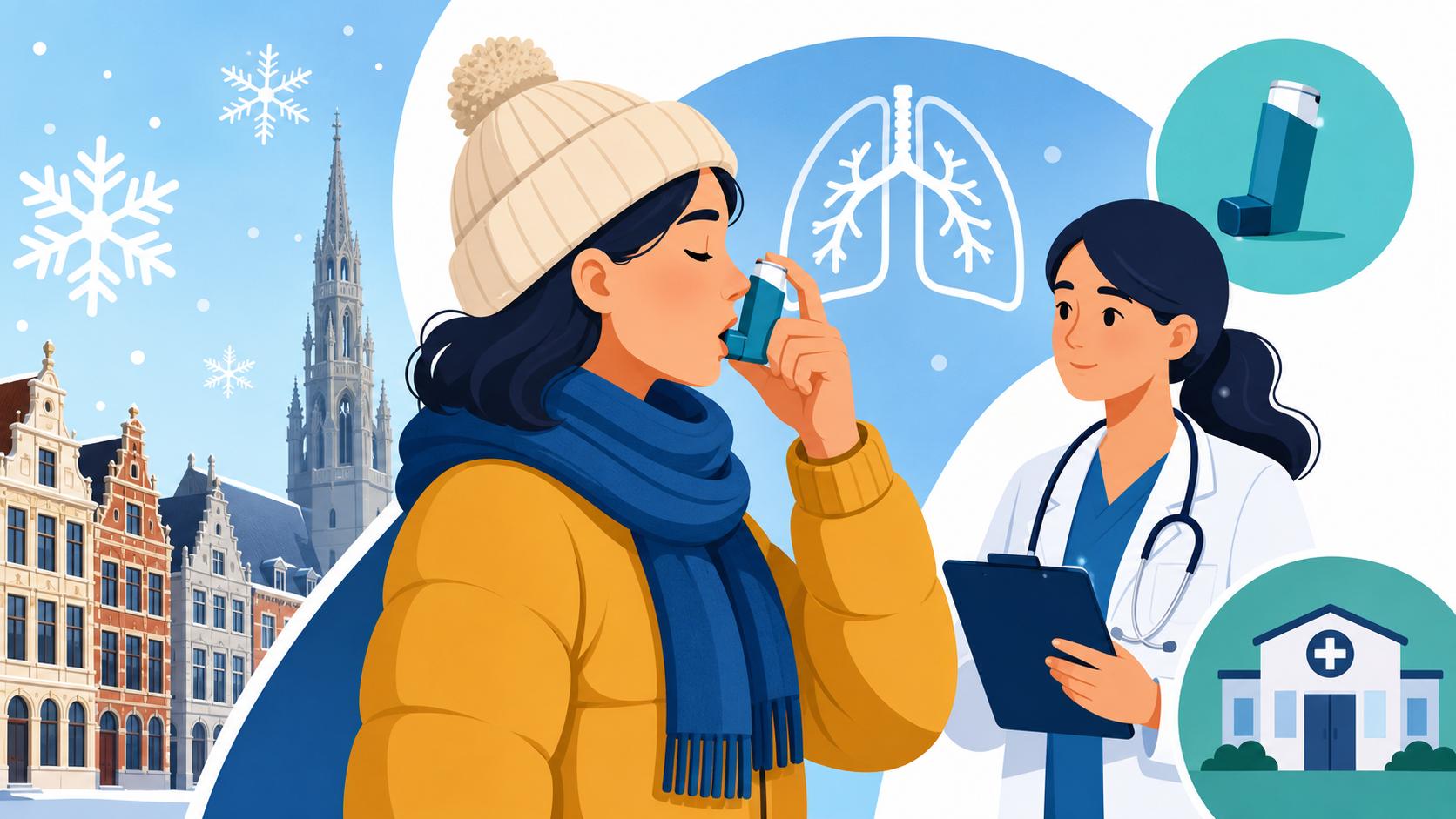
Managing Asthma: Accessing Inhalers and Specialists in Winter
The grey Belgian winter is often more than just a picturesque backdrop for Christmas markets; for those of us with sensitive lungs, the damp, heavy air can be a significant health hurdle. I remember my first December in Brussels, gasping for air after a simple walk to the boulangerie because I didn't realize how the combination of humidity and wood smoke would trigger my symptoms. This guide solves the mystery of navigating the Belgian medical system to ensure you have the inhalers, specialist care, and home environment needed to breathe easy until spring.
The Reality of the Belgian Winter Environment
The Belgian "winter" is less about snow and more about a persistent, penetrating dampness. From November through March, humidity levels frequently hover above 80 percent. While the North Sea influence keeps temperatures from dropping into the deep negatives most of the time, the air remains heavy. For an asthmatic, this "heavy air" is a literal weight on the chest.
The Dampness and Mold Factor
One of the most immediate challenges you will face when moving into a local apartment is the moisture. Many beautiful, high-ceilinged buildings in Ixelles or Antwerp's Zuid district were built long before modern insulation standards. If you are Dealing with Humidity and Mold in Old Belgian Houses, you are dealing with primary asthma triggers. Cold walls meeting warm indoor air create condensation, leading to black mold in corners or behind wardrobes.
When you are house hunting, always check the window frames and the corners of the ceiling. If you see signs of dampness, your asthma will likely flare up within weeks of moving in. If you are already in a place that feels "wet," consider investing in a high-quality dehumidifier. I’ve found that keeping the indoor humidity between 40 and 50 percent is the "sweet spot" for preventing both mold growth and the heavy-lung feeling that comes with Belgian winters.
Urban Pollution and Wood Burners
While Belgium has made strides with Low Emission Zones (LEZ) in major cities, the winter brings a specific type of pollution: wood smoke. In many residential areas, the cozy smell of a fireplace is actually a localized cloud of fine particles (PM2.5). On a "still" night when there is no wind, these particles hang in the streets.
If you live in a valley area or a dense neighborhood like Saint-Gilles, you might notice your peak flow meter readings dropping on cold, clear nights. It is vital to check the daily air quality index. I frequently refer to the Air Quality in Brussels: Managing Allergies and Respiratory Issues resources to decide if I should skip my evening jog and stick to an indoor workout instead.
Securing Your Inhalers: The Belgian Prescription System
In many countries, you might be used to buying a rescue inhaler over the counter or having a "standing" prescription that lasts a year. Belgium is much stricter. Almost all asthma medications, including Salbutamol (Ventolin) and corticosteroid preventers (like Seretide or Symbicort), require a prescription from a doctor registered in Belgium.
Starting with Your GP
Your first port of call should always be a local doctor. If you haven't done so yet, Choosing Your First GP (General Practitioner) in Belgium is your priority before the winter peak hits. A GP can issue your initial prescriptions and, more importantly, can help you manage your dosage as the weather shifts.
During your first appointment, bring your current inhalers from your home country. Belgian doctors are generally very familiar with international brand names, but they will likely switch you to the local equivalent covered by the Belgian healthcare system. A GP visit typically costs around 30 to 40 euros out-of-pocket, of which you will get a significant portion back from your mutuelle.
Understanding the "Conventioned" Status
When booking your appointment, ask if the doctor is "conventioned" (conventionné/geconventioneerd). These doctors adhere to the official state-set fees. If you see a "non-conventioned" doctor, they can charge whatever they like, and your insurance will still only reimburse you based on the official rate, leaving you with a much higher bill. This is a crucial part of Healthcare Budgeting: Copays, DMG/GMD, and Reimbursements that many new arrivals overlook until they get a surprise 80-euro bill for a 15-minute consultation.
Accessing Respiratory Specialists in Belgium
If your asthma is chronic or particularly brittle during the cold months, a GP might refer you to a pneumologist (pneumologue/longarts). In Belgium, specialists are highly accessible, but the wait times in winter can be daunting.
Wait Times and Referrals
While you can technically book a specialist without a referral, it is better for your wallet and your medical record if you go through your GP. When you have a referral, you are often processed more efficiently within the hospital system. When I first sought a specialist in Ghent, the wait for a non-urgent appointment was six weeks. However, because my GP flagged my winter flares as a priority, I was seen within ten days.
When wondering, "Seeing Specialists in Belgium: Do You Need a GP Referral First?", the answer is technically "no" for the appointment itself, but "yes" for better reimbursement rates. The specialist will perform lung function tests, such as spirometry, and may suggest a long-term "preventer" plan that is more robust than what a GP typically prescribes.
Private vs. Public Specialist Care
The Belgian public system is excellent, but if you prefer faster access to specific English-speaking specialists or want more comprehensive coverage for "comfort" items like private hospital rooms, you might consider supplementary insurance. Brands like Cigna Global are popular among expats who want to ensure they can access the highest tier of private care without worrying about the percentage the mutuelle doesn't cover. This is especially relevant if you are also considering Private Health Insurance in Belgium: When Do Expats Really Need It? for your wider family.
Navigating Belgian Pharmacies in Winter
The green neon cross is a beacon of hope in the dark Belgian winter. Belgian pharmacies (apotheek/pharmacie) are highly regulated and incredibly helpful.
Prescription Management
Once you have your paper or digital prescription (which is often linked directly to your eID card), you can go to any pharmacy. For chronic conditions like asthma, your doctor will often prescribe "3 units" or a "6-month supply" on a single prescription. The pharmacist will give you one box and keep the prescription on file, or give you a "proof of prescription" to bring back later.
| Medication Type | Common Belgian Brand | Prescription Required? | Mutuelle Covered? |
|---|---|---|---|
| Rescue Inhaler | Ventolin (Salbutamol) | Yes | Yes (Partial) |
| Preventer Inhaler | Seretide, Symbicort | Yes | Yes (High % ) |
| Spacers/Aerobox | AeroChamber | No (but better with one) | Usually No |
| Nebulizer Solution | Atrovent, Ventolin | Yes | Yes |
If you find yourself running low on a Sunday or at 3:00 AM during a flare-up, you need to find a "pharmacie de garde" (on-duty pharmacy). You can find the nearest one posted on the door of any pharmacy or by using the official website. Note that there is often a small "service fee" for using a pharmacy outside of normal hours, though your mutuelle may cover this if it’s an urgent prescription. Detailed info can be found in our guide on Pharmacies (Apotheek/Pharmacie) in Belgium: Operating Hours and Services.
Over-the-Counter Support
While your inhalers require a script, you can buy supportive items like saline sprays for your nose (essential for keeping airways clear) or cough suppressants freely. I personally use iHerb to source specific air purification filters and high-quality vitamin D supplements that aren't always easy to find in the local "Apotheek." During the Belgian winter, the lack of sun can weaken your immune system, making every cold a potential asthma trigger, so keeping your vitamin levels up is a smart move.
Maximizing Your Health Coverage for Chronic Care
The Belgian system rewards those who are organized. If you are managing a long-term condition like asthma, there are administrative steps that will save you hundreds of euros over the course of a few winters.
The Global Medical Record (DMG/GMD)
The very first thing you should say to your GP is, "I would like to open a GMD" (Dossier Médical Global). This is a digital file that centralizes all your medical history. It costs a small annual fee (around 30 euros), which is fully reimbursed by your insurance. Once you have a GMD, your co-payments for doctor visits are reduced, and your reimbursement for specialist visits increases. You can learn more about The Global Medical Record (DMG/GMD): Why You Need It for Better Refunds to see how it specifically helps those with chronic respiratory issues.
The Maximum Billing System (MAF)
If your asthma is severe and requires frequent hospital visits or expensive daily medication, the Belgian state has a "safety net" called the Maximum Billing (MAF) system. Once your out-of-pocket medical expenses reach a certain ceiling (based on your household income), you are automatically reimbursed for all further covered expenses for the rest of the year. This is a lifesaver for families with multiple asthmatic children who are constantly visiting the pediatrician or the pharmacy.
Practical Strategies for a Breathable Winter
Beyond the doctors and the pills, your lifestyle in Belgium needs to adapt to the climate. I’ve learned the hard way that "powering through" a Belgian winter without changing your routine leads to a March spent on a nebulizer.
Managing Your Home Environment
As we discussed, moisture is the enemy. In addition to dehumidifiers, you need to be careful with how you heat your home. Many apartments have old radiators that can be very "dry," which irritates the throat, or "damp" if not used correctly. If you have "charges communes" in your building, check our guide on Common Charges (Charges Communes): What Exactly Are You Paying For? to see if boiler maintenance is included. A poorly maintained boiler can lead to uneven heating and increased dust circulation.
Using a high-efficiency particulate air (HEPA) filter is a game-changer. I order my replacement filters through iHerb to ensure I have a fresh one ready for the first day the heating turns on. This helps strip out the dust mites that thrive in the Belgian damp and the fine wood smoke particles that sneak in from the street.
Outdoor Protection: The Scarf Rule
It sounds like "grandma advice," but in Belgium, it’s medical necessity. Breathing in cold, damp air directly into your lungs causes immediate bronchospasms. Always wrap a scarf loosely over your nose and mouth when walking between the metro and your office. This warms the air before it hits your bronchial tubes.
If you find yourself in a situation where the cold has triggered a severe attack and your inhaler isn't working, do not hesitate. Call 112. The Belgian emergency services are incredibly efficient. For more on how to handle these moments, read our guide on Emergency Medical Care in Belgium: 112, Hospitals, and Pharmacies.
Managing Asthma When Traveling Within Belgium
Winter is also the time when many of us head to the Ardennes for a cozy cabin weekend. While beautiful, the Ardennes are significantly colder and the houses are often heated exclusively by wood-burning stoves.
If you are renting a cabin, ask the host beforehand about the heating source. If it’s an old wood stove and no electric backup, you might want to bring an extra "preventer" dose or a portable peak flow meter. The altitude is low, but the concentration of cold, damp air in the forest valleys can be intense.
Finally, if you find that the local system isn't enough or you want the peace of mind of having a global policy that follows you if you visit home, looking into Cigna Global can provide that extra layer of security. They offer specialized modules that can cover chronic condition management, which can be a huge relief if you find yourself needing more than just the basic Belgian mutuelle coverage during a rough winter season.
Important Disclaimer
The information provided in this guide is for educational and informational purposes only and is based on personal expat experiences and general knowledge of the Belgian healthcare system. It is not a substitute for professional medical advice, diagnosis, or treatment. Always seek the advice of your physician or another qualified health provider with any questions you may have regarding a medical condition. Never disregard professional medical advice or delay in seeking it because of something you have read in this article. Belgian medical regulations and reimbursement rates can change; always verify current procedures with your mutuelle or the official Belgian health portal.