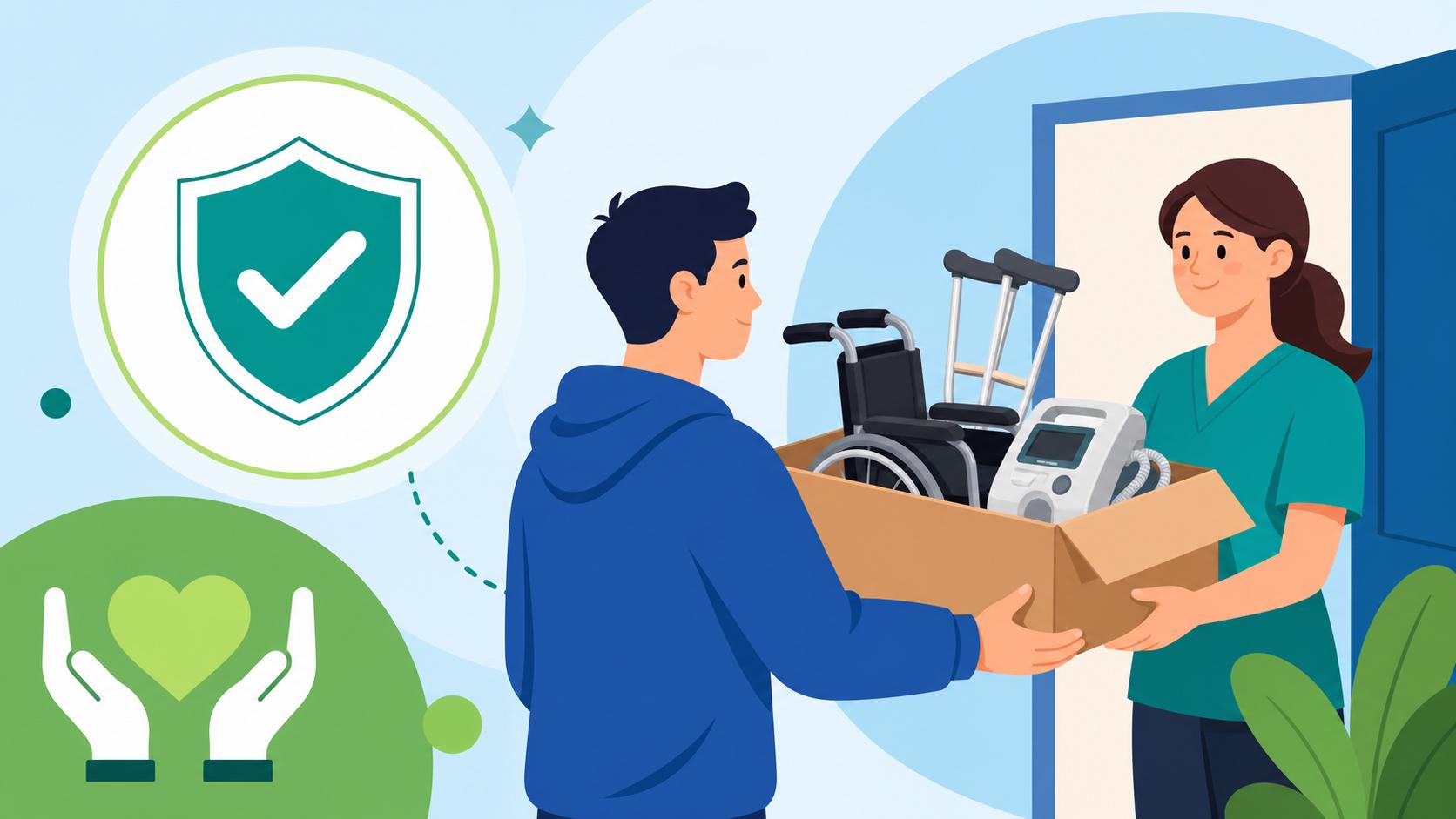
Returning Medical Equipment to Your Mutuelle Safely
Facing the labyrinth of Belgian bureaucracy while you are still limping from surgery or caring for a recovering family member is a unique kind of stress. I once spent a frantic Tuesday morning trying to wedge a rented hospital bed frame into a hatchback that was clearly too small, only to realize I had forgotten the most important document. This guide simplifies the process of returning medical equipment to your Mutuelle safely and without incurring those annoying extra fees.
Understanding the Belgian Medical Rental Ecosystem
In Belgium, the public health insurance system is managed through entities called Mutuelles in French or Ziekenfonds in Dutch. Most residents are familiar with the mandatory nature of these organizations, but few realize how deeply they are involved in the logistics of home care. If you have recently used a wheelchair, a specialized mattress, or even a simple set of crutches, you likely sourced them through your insurer’s dedicated medical equipment branch—often branded as Qualias, Helan Zorgwinkel, or the Mediotheek.
The rental system is designed to be highly socialized, meaning you pay a fraction of the market rate because of your social security contributions. However, this convenience comes with a strict set of administrative expectations. When you no longer need the items, you cannot simply leave them at your GP's office or outside the Mutuelle's local branch. There is a specific protocol for returning medical equipment that ensures the items are sanitized, serviced, and ready for the next person in need.
If you are an expat who chose a more comprehensive private route, such as Private Health Insurance in Belgium: When Do Expats Really Need It?, you might find that your provider has slightly different partners for equipment, but the local Mutuelle usually remains the primary logistics hub for physical goods. Even if you have a top-tier plan with Cigna Global, understanding how the local Belgian infrastructure handles physical returns is essential to avoid being billed for the full replacement value of the equipment.
The Role of the Deposit System
When you first picked up your equipment, you likely paid a "caution" or deposit. In the Belgian system, this deposit is your best friend and your worst enemy. It is usually held by the Mutuelle to ensure that items are returned in good working order. For smaller items like crutches or an IV pole, the deposit might be as low as 20 or 50 euros. For complex machinery like oxygen concentrators or electric lift chairs, it can be several hundred.
One thing I learned the hard way is that the Mutuelle will not automatically chase you to return the items. As long as you have the equipment, the daily or weekly rental fee continues to tick away, often deducted from your reimbursement balance. If you are also managing Healthcare Budgeting: Copays, DMG/GMD, and Reimbursements, you’ll want to close these rental accounts as quickly as possible to prevent "leakage" from your health budget.
Why Renting vs Buying Matters
Many expats wonder if it is better to just buy smaller items. While you can find recovery aids on platforms like iHerb for daily wellness needs, heavy-duty medical equipment in Belgium is strictly regulated. Renting via the Mutuelle ensures that the item is "conventioned," meaning it meets Belgian safety standards and qualifies for the 75% reimbursement system for medical consultations and related services if applicable. Returning it safely is the final step in this subsidized cycle.
Preparing Your Equipment for a Hassle Free Return
Before you even think about putting that wheelchair in your car, you need to conduct a mini-inspection. The staff at the medical supply shops are generally very friendly, but they are also meticulous. They have to be—the next person using that equipment might be an elderly patient with a compromised immune system.
First, look for your original rental contract. This document lists every single component that was handed to you. Did the wheelchair come with a removable footrest? Was there a specific power cable for the electric bed? If any piece is missing, you will likely lose a portion of your deposit. I once spent an hour digging through my garage for a tiny plastic wrench that came with a pair of crutches; it felt trivial, but in the world of Belgian Mutuelle and Ziekenfonds: Public Health Insurance Registration Guide, every component must be accounted for.
Sanitation and Hygiene Protocols
You are expected to return items in a "clean" state. This doesn’t mean they need to be hospital-grade sterilized—the Mutuelle will do that themselves—but they should be free of visible dust, food particles, or stains. For items like commodes or shower chairs, the hygiene standards are understandably higher. Use basic disinfectant wipes to clean all contact surfaces.
If you have been using wound care supplies or specialized supports that you purchased separately from iHerb to supplement your recovery, remember that these are usually yours to keep. Only the "hardware" rented from the Mutuelle needs to go back. If you are unsure what was a "consumable" and what was a "rental," check your initial invoice.
Gathering Your Documentation
You will need your Belgian eID card and, ideally, your "vignettes"—those small What Are Mutuelle Stickers Used For and Where to Put Them that you seem to need for everything in this country. Even though many systems are moving digital, having a physical sticker can speed up the process at the counter, especially in smaller communes.
If you are returning equipment on behalf of someone else, perhaps an elderly neighbor or a family member, ensure you have their national registry number. The staff will need to link the return to the specific person who opened the rental file. This is particularly important if you are helping someone who is navigating Family Health in Belgium: Pregnancy, Birth, and Pediatric Care and has finished using a rented baby scale or breast pump.
Logistics: Drop off vs Collection Services
The size of the equipment usually dictates how it returns to the Mutuelle. Smaller items like "walking frames" (cadres de marche), crutches, and some manual wheelchairs are expected to be dropped off by the user at a local service point.
However, for "grand matériel"—large equipment like hospital beds, patient hoists, or heavy electric wheelchairs—the Mutuelle offers a collection service. You cannot simply dismantle a hospital bed and bring it back yourself; doing so might actually void your insurance coverage for the item if you damage the motor during disassembly.
Scheduling a Professional Pickup
To schedule a pickup, you typically need to call the "Service Matériel" of your Mutuelle at least 48 to 72 hours in advance. In busy cities like Brussels or Antwerp, wait times can be longer. When you call, have your rental number ready. They will give you a "window" for collection, usually a half-day.
Be aware that collection is not always free. While the rental might be subsidized, the transport fee is often a flat rate. You can check how these costs fit into your broader spending by reviewing Healthcare Budgeting: Copays, DMG/GMD, and Reimbursements. If you have a premium international plan like Cigna Global, check if they offer "repatriation of equipment" coverage, which can sometimes reimburse these local transport fees.
Dropping Off at a Mediotheek or Zorgwinkel
If you are dropping off smaller items, check the opening hours carefully. Many of these specialized shops close for a long lunch break (typically 12:30 PM to 1:30 PM) and may be closed on Saturday afternoons. When you arrive, don't just leave the items by the door. You must wait for a technician or clerk to inspect the item and give you a "Preuve de retour" (Proof of Return).
This piece of paper is your golden ticket. It proves that you no longer have the item and that it was returned in good condition. Keep this receipt until you see your deposit hit your bank account. In the Belgian administrative system, if you don't have the paper, the event never happened.
| Equipment Type | Return Method | Cleaning Requirement | Documentation Needed |
|---|---|---|---|
| Crutches / Canes | Drop-off | High (handles) | Vignette / eID |
| Manual Wheelchair | Drop-off | Medium | Rental Contract |
| Hospital Bed | Professional Pickup | Low (mattress removed) | eID of the patient |
| Oxygen Concentrator | Professional Pickup | High (filters) | Technical Logbook |
| Baby Scales | Drop-off | Very High | eID of the parent |
Financial Reconciliation and Deposits
The most common question I hear from fellow expats is: "When do I get my money back?" In Belgium, "fast" is a relative term. Once the equipment is scanned back into the warehouse, the administrative branch of the Mutuelle must process the closure of your file.
If you paid your deposit by bank transfer, the refund will usually be sent back to that same IBAN within 10 to 15 business days. If you paid in cash (which is increasingly rare), you might be asked to provide a bank account number on the spot. If you find that the refund hasn't arrived after three weeks, it is time to send a polite email with a scan of your "Preuve de retour."
Dealing with Damaged Items
If you return a wheelchair with a flat tire or a broken brake, don't panic, but do be honest. The Mutuelle understands that "normal wear and tear" happens. If the damage is considered accidental and you have Private Health Insurance in Belgium: When Do Expats Really Need It?, your private policy might cover the repair costs if the Mutuelle deducts them from your deposit.
However, if the damage is due to negligence—for example, leaving an electric scooter out in the rain—you will be liable for the repair bill. This is where having a good relationship with your local office helps. They often have a sliding scale for repairs.
The Final Invoice (La Facture)
Sometimes, you might receive a small bill a month after returning the equipment. This is usually the final pro-rated rental fee for the days between your last payment and the actual return date. It can be confusing because we often assume the deposit covers everything. Always double-check these invoices against your proof of return dates. If there is a discrepancy, the Belgian system allows for "contestation," but you must do it in writing.
For those navigating Emergency Medical Care in Belgium: 112, Hospitals, and Pharmacies, these small administrative tasks can feel overwhelming. If you are struggling with the paperwork, don't hesitate to ask a friend or use a translation app to parse the French or Dutch on the invoice.
Special Considerations for the Expat Community
Language is often the biggest hurdle. While many staff members in Brussels or Flanders speak excellent English, the official documents will be in the regional language. If you are based in Wallonia, expect everything in French. If you are in Flanders, it will be Dutch.
If you are using Pharmacies (Apotheek/Pharmacie) in Belgium: Operating Hours and Services for your medication, you might find that some larger pharmacies also act as "depots" for the Mutuelle. This can be a lifesaver if you don't have a car to drive to a main service center. Always call the pharmacy first to see if they accept returns for your specific Mutuelle.
Moving House or Leaving Belgium
If you are planning to leave Belgium permanently, returning your medical equipment should be high on your "to-do" list, right alongside de-registering from the commune. You cannot take Mutuelle-owned equipment out of the country. If you do, it will be flagged as stolen, and you will be billed for the full replacement cost, which can be thousands of euros for high-tech items.
For those moving within Belgium, you must inform the Material Service of your new address. They need to know where the equipment is located in case of a safety recall or for the eventual professional pickup. If you are changing from one Mutuelle to another—for example, moving from CAAMI/HZIV vs Standard Mutuelle: Which Public Fund to Choose? to a private-sector fund like Partena or Helan—you may even need to return the equipment to the old fund and re-rent it from the new one, though some funds have "transfer" agreements to prevent patient hardship.
Supplementing Your Recovery
While the Mutuelle provides the big stuff, I’ve found that the small comforts make the most difference in recovery. Things like high-quality vitamin D, specialized bandages, or ergonomic pillows are often cheaper and more varied on iHerb. I usually keep a stock of these at home so I don't have to rely solely on the basic options provided by the Pharmacies and Medication in Belgium: Prescriptions and OTC Rules.
If your recovery is long-term and involves chronic pain or disability, you might also be looking into Medical Costs for Undocumented Migrants or Asylum Seekers or specialized social support. The Material Service technicians are often a great source of information for local "handyman" services that can help install grab bars or ramps in your home, which are separate from the rental equipment itself.
Final Tips for a Safe Return
- Take Photos: Before you hand over the equipment or before the pickup crew arrives, take a few photos of the item on your phone. This is your insurance against any claims of damage that might occur during transport.
- Check the Tires: If it's a wheeled item, make sure it’s not caked in mud. A quick wipe-down shows respect for the service and avoids "cleaning fees."
- Keep the Box: If the item came in a specific box (like a nebulizer or a blood pressure cuff), returning it in that box makes the staff's life much easier and ensures no parts get lost in transit.
- Be Proactive with Cigna Global: If you have international coverage, keep copies of all rental receipts. You might be able to claim the "non-reimbursed" portion of the rental back from your private provider.
Returning medical equipment doesn't have to be a bureaucratic nightmare. By staying organized, keeping your receipts, and understanding the "Belgian way" of handling deposits, you can close this chapter of your health journey and focus entirely on getting back to your normal expat life.
Disclaimer
This guide is intended for informational purposes only and does not constitute legal or professional medical advice. Procedures for returning medical equipment may vary between different Mutuelles (Ziekenfonds) and are subject to change based on regional regulations in Flanders, Wallonia, and Brussels. Always consult directly with your health insurance provider’s "Service Matériel" or "Mediotheek" for the most current rules and fee schedules applicable to your specific rental contract.