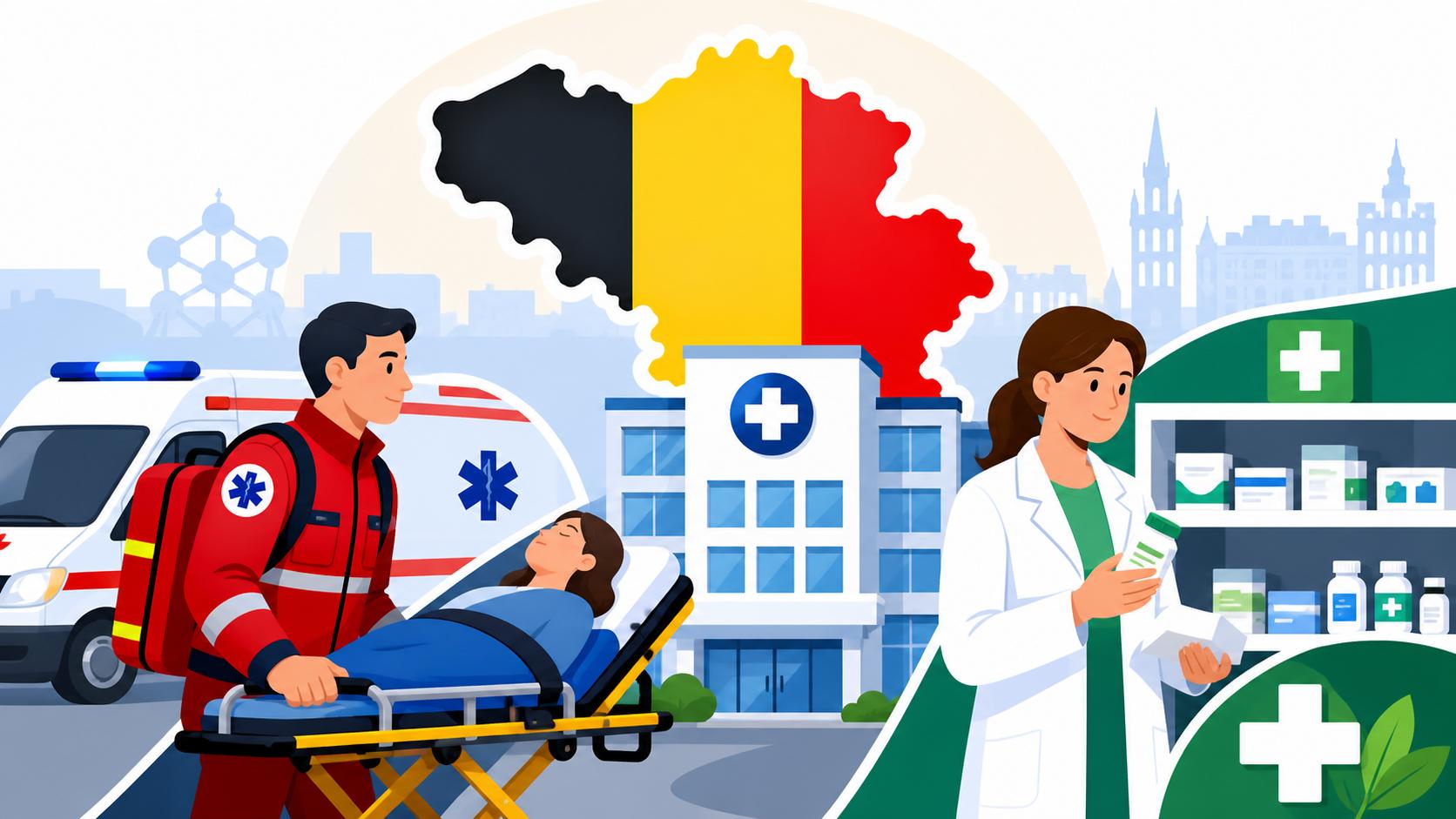
Emergency Medical Care in Belgium: 112, Hospitals, and Pharmacies
Finding yourself in a medical crisis in a foreign country is a unique brand of panic that usually involves frantic googling while clutching a painful limb or a sick child. I remember my first midnight emergency in Brussels; I was standing in the rain, staring at a closed pharmacy door, realizing I had no idea how to find the one that was actually open. This guide solves that confusion by walking you through the Belgian emergency system, from dialing 112 to navigating the ER and finding late-night medication.
Understanding the Belgian Emergency Number System
When the adrenaline hits, your brain might default to the emergency number of your home country. In Belgium, the universal number you need to memorize is 112. This is the European emergency number that connects you to the fire brigade and medical assistance. It is free to call from any phone, even if you don't have a Belgian SIM card or a positive balance on your prepaid plan. The operators are generally multilingual, and while French and Dutch are the official languages, you will find that most dispatchers in major hubs like Brussels or Antwerp speak excellent English.
Calling 112: What to Say and How to Be Understood
When you dial 112, the most important thing is to stay calm and wait for the operator to ask the questions. In my experience, they are incredibly efficient, but they follow a strict protocol. They will first ask where you are. Be as specific as possible; look for street signs, landmarks, or use the GPS on your phone. If you are in a large apartment building, provide the floor number and the name on the doorbell. The dispatcher will then ask what is happening. Use clear, simple English. Avoid jargon and focus on the symptoms: "chest pain," "unconscious," or "severe bleeding."
Do not hang up until the operator tells you to. They might provide life-saving instructions over the phone while the ambulance is en route. It is also helpful to have someone stand at the street entrance to wave down the emergency vehicle. In the Belgian system, the ambulance usually takes you to the nearest hospital with an available emergency bed, not necessarily the one of your choice. If you have a specific medical history or a preferred private provider like Cigna Global, it is worth mentioning, though the immediate priority will always be the closest stabilization point.
One thing that surprised me as an expat was the dispatch of the SMUR/MUG (Service Mobile d'Urgence et de Réanimation). This is a specialized medical team, often including a doctor and a nurse, that travels in a separate fast-response car to meet the ambulance for critical cases. If you see two vehicles arriving, don't panic—it just means they are bringing the intensive care unit to your doorstep. You can find more details on what happens after the call in our guide on Emergency Numbers: Calling 112 in Belgium and What to Expect.
Specialized Emergency Numbers for Specific Situations
While 112 is for life-threatening situations, Belgium has a suite of other numbers for more specific crises. If your child has swallowed a cleaning product or you suspect a drug interaction, you should call the Belgian Poison Centre: When to Call 070 245 245. They are available 24/7 and can often tell you if a trip to the ER is necessary or if you can manage the situation at home. They have an extensive database of every household product sold in the country, which is a massive relief when you're staring at a half-empty bottle of detergent.
For non-life-threatening but urgent medical needs during the night or weekend, Belgium uses the 1733 system. This number connects you to the "on-call" doctor service. Instead of clogging up the ER with a bad flu or a minor ear infection, you call 1733, provide your postal code, and they will direct you to a local "poste de garde" or "wachtpost." These are clinics specifically designed for after-hours care. Using this service is often much faster and significantly cheaper than going to a hospital emergency department.
Finally, there are specific numbers for social and mental health crises. If you are dealing with a severe psychological breakdown or a domestic issue, there are dedicated helplines that offer support in multiple languages. Belgium takes mental health seriously, and you don't have to navigate these dark moments alone. Check our resource on Mental Health in Belgium: Therapy, Psychiatry, and Expat Support for a list of crisis centers and English-speaking help.
Navigating the Emergency Room (Spoedgevallen/Urgences)
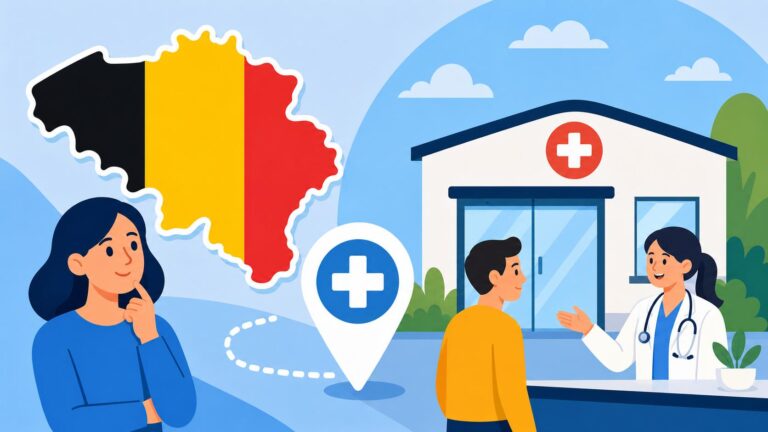
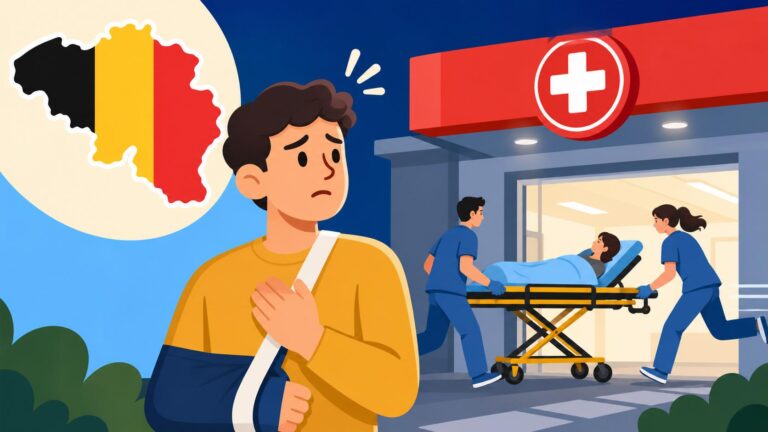
Walking into a Belgian ER, or "Urgences" (French) / "Spoedgevallen" (Dutch), can be an intimidating experience. Most hospitals are large, campus-like structures, and the emergency entrance is usually separate from the main lobby. Look for the red signs with a white "H" or the specific words for emergency. Once inside, you will encounter the triage desk. This is where your journey begins, and understanding the process can save you a lot of frustration.
Triage and Waiting Times: Managing Expectations
The Belgian triage system is based on medical urgency, not arrival time. When you check in, a specialized nurse will assess your condition and assign you a color code. Red is for immediate life-threats, orange is very urgent, and green is for minor issues. If you are a "green" patient, be prepared to wait. I once sat in a Brussels ER for five hours with a suspected broken toe because several ambulances arrived with high-priority cases. It isn't personal; it's just the reality of a busy public health system.
To make the wait more bearable, I always recommend having a portable charger and some water. While most ERs have vending machines, they might not accept international credit cards, and you might not have change. If your condition worsens while you are waiting—for example, if you start feeling dizzy or the pain becomes unbearable—tell the triage nurse immediately. They can and will re-evaluate your priority level. For a deeper dive into this process, see our article on Going to the Emergency Room (Urgences/Spoedgevallen) in Belgium.
One tip from a veteran: try to avoid the ER on Monday mornings or Friday evenings if the situation isn't a true emergency. These are peak times when clinics are closed or people are trying to get sorted before the weekend. If you can wait until the morning to see your GP, your wallet and your sanity will thank you. You can often book a last-minute appointment with a regular doctor using apps mentioned in our other guides, which is a much smoother experience than the fluorescent-lit waiting room of a city hospital.
Documents and ID: What You Must Bring
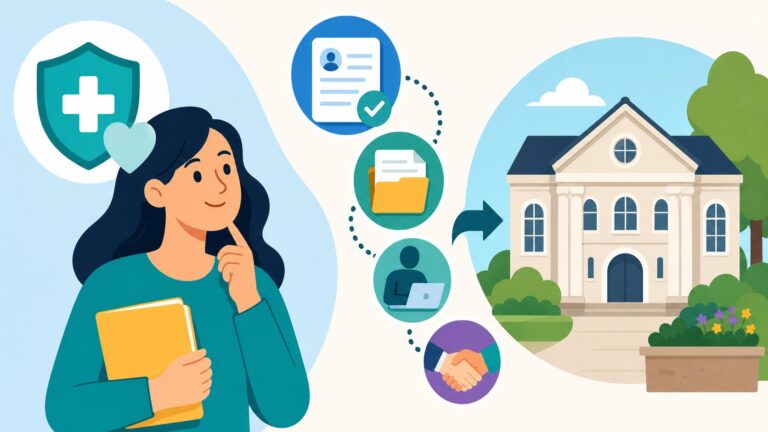
When you arrive at the ER, the administrative staff will ask for your identification. For expats, the most important document is your Belgian eID card. This card is linked to your Mutuelle and Ziekenfonds: Public Health Insurance Registration Guide and allows the hospital to bill your insurance directly for a large portion of the cost. If you haven't received your eID yet, you should bring your passport and your "Annex" document provided by the commune.
If you are a tourist or a new expat without local coverage, bring your European Health Insurance Card (EHIC) or proof of private travel insurance. Without these, the hospital may ask for a significant deposit—sometimes up to €500 or more—before treating you, unless it is a life-saving intervention. Always keep a digital copy of your insurance policy on your phone. Mentioning a provider like Cigna Global early in the process can help the administrative staff coordinate the guarantee of payment, which prevents you from having to pay the full bill out of pocket.
Don't forget your "vignettes" (stickers) if you have them. These small yellow or white stickers from your mutuelle contain your personal identification codes and help the hospital process your paperwork. Even in our digital age, the Belgian medical system still loves these stickers. If you’re not sure where to get them, read our post on What Are Mutuelle Stickers Used For and Where to Put Them. Having these ready will make the registration process significantly less stressful.
Hospital Room Types and Financial Implications
If your emergency results in an overnight stay, you will be asked what type of room you prefer. This is a trap that many expats fall into! In Belgium, you typically choose between a shared room (two or more beds) and a single room. Choosing a single room isn't just about privacy; it allows the hospital and the doctors to charge "supplements," which can be 200% to 300% of the standard rate.
Public health insurance (the mutuelle) usually does not cover these supplements. Unless you have specific "hospitalization insurance" through your employer or a private plan, a single room could turn a €100 bill into a €2,000 bill. I always tell my friends to opt for a shared room unless they are 100% sure their insurance covers a "chambre particulière." You can learn more about these nuances in our guide on Hospital Room Types in Belgium: Single vs Shared Room Costs.
The quality of care is identical regardless of the room type. You will see the same surgeons and receive the same medication. The only difference is the walls around you and the final invoice. If you are staying long-term, you might want to look into supplements for recovery, like specialized vitamins or probiotics from iHerb, which can support your gut health after a round of hospital antibiotics.
After-Hours Care and On-Call Services
Not every medical issue requires a trip to the hospital, but things often go wrong at 8 PM on a Sunday. This is where Belgium’s excellent system of "on-call" services comes into play. Knowing how to access these will save you hours of waiting in a crowded ER and keep the emergency services free for those who truly need them.
The Role of the On-Call Doctor (Garde/Wacht)
In most Belgian cities, GPs take turns being "on-call" during the night (usually from 7 PM to 8 AM) and all through the weekend and public holidays. As mentioned, the national number for this is 1733. When you call, you’ll be asked for your language preference and your location. Depending on the severity of your symptoms, they will either give you advice, tell you to come to a "Poste de Garde" (Medical House), or, in rare cases, send a doctor to your home.
The "Poste de Garde" is a brilliant invention. It’s essentially a mini-emergency room staffed by local GPs. They can handle stitches, high fevers, infections, and minor injuries. The cost is regulated, and because it’s a public service, the reimbursement rates are high. I’ve used the one in Brussels (near the Botanique) and the one in Antwerp, and both were efficient and professional. For more on how this works, check out After-Hours Medical Care: On-Call Doctors (Garde/Wacht).
One cultural tip: Belgian doctors are quite conservative with prescriptions, especially for antibiotics or strong painkillers. If you go to an on-call doctor, don't be surprised if they recommend paracetamol and rest. They are very focused on the "Global Medical Record" (DMG/GMD), so make sure to ask for a summary of the visit to give to your regular GP later. This ensures your medical history stays updated and you get the best Healthcare Budgeting: Copays, DMG/GMD, and Reimbursements in the future.
Finding an On-Duty Pharmacy (Pharmacie de Garde)
Pharmacies in Belgium usually close by 6:30 PM or 7:00 PM and are closed on Sundays. If you get a prescription from an on-call doctor, you’ll need to find a "Pharmacie de Garde" (on-duty pharmacy). You can't just go to your neighborhood chemist; only one or two in a specific area will be open after hours.
To find the open one, you can visit the website pharmacie.be or apotheek.be and enter your postal code. Alternatively, every pharmacy is legally required to display the address of the nearest on-duty pharmacy in its window. Be aware that for safety reasons, many on-duty pharmacies operate through a small window or a night hatch. You might need to ring a bell and wait for the pharmacist to answer.
There is a small "guard fee" (honoraire de garde) added to your bill if you visit a pharmacy after hours without an urgent prescription. However, if you have a prescription dated that day from an on-call doctor, the fee is usually waived or covered by your mutuelle. It is always a good idea to have some basics at home, like electrolytes or first aid supplies from iHerb, to avoid late-night runs for minor issues. If you need more help, read our detailed guide on How to Find an On-Duty Pharmacy (Pharmacie de Garde) at Night.
| Service Type | Phone Number | Best For | Expected Cost |
|---|---|---|---|
| Emergency | 112 | Life-threatening (heart attack, accidents) | High (Ambulance + ER) |
| On-Call Doctor | 1733 | Urgent illness (fever, earache, minor cuts) | Moderate (Standard GP rate) |
| Poison Center | 070 245 245 | Chemical ingestion, stings, overdose | Free |
| ER (Hospital) | Walk-in | Severe pain, breaks, emergencies | Moderate to High |
| On-Call Pharmacy | Check website | Filling urgent prescriptions at night | Product + Guard Fee |
Medical Costs and Reimbursements for Emergencies
Belgium has one of the best healthcare systems in the world, but it is not entirely free. Understanding how the money flows—and how to get your money back—is a vital part of expat life. The system works on a "reimbursement" basis, meaning you often pay upfront and claim a portion back later.
How the Mutuelle System Handles Emergency Invoices
When you go to the ER, you might not be asked to pay immediately. Hospitals often send an invoice to your home address several weeks later. This invoice is broken down into various codes. If you have your mutuelle set up, the hospital will bill the "obligatory" part directly to them, and you will only be responsible for the "patient share" (ticket modérateur).
If you are not yet registered or if you used an out-of-network provider, you might receive the full bill. In this case, you pay the hospital first, then send the receipt (the "Attestation de Soins Donnés") to your mutuelle for a refund. Usually, you get about 75% of the official rate back. For a step-by-step on this, see Understanding the 75% Reimbursement System for Medical Consultations.
I always tell new arrivals: keep every piece of paper you get from a doctor or hospital. Belgian bureaucracy thrives on paper receipts. If you have private top-up insurance like Cigna Global, you would then send the remaining 25% bill to them to cover your out-of-pocket expenses. This "double-layer" approach is how most expats avoid large medical debts.
Ambulance Fees and Public vs Private Transport
Ambulance costs in Belgium are regulated but can still be a shock. For a 112 emergency ambulance, there is a fixed flat rate that is indexed annually (currently around €70–€80), regardless of the distance traveled. This covers the vehicle and the emergency technicians. However, if the SMUR/MUG doctor team is also involved, there will be a separate, higher fee.
If you need a non-emergency ambulance—for example, to move from one hospital to another—the rates are not fixed and are usually charged per kilometer. These can be very expensive. Most mutuelles provide a small partial reimbursement for 112 ambulances, but private hospitalization insurance is usually needed to cover the full cost. Read more at Ambulance Fees in Belgium: What the Mutuelle Covers.
In many cases, if the person is stable, it is perfectly acceptable (and much cheaper) to take a taxi or have a friend drive you to the ER. Only call an ambulance if the person cannot be moved safely or if they need medical monitoring during the journey. This is a common "expat mistake"—calling an ambulance for a broken arm when a taxi would have sufficed.
Maximum Billing System (MAF) and Out-of-Pocket Caps
One of the best safety nets in the Belgian system is the "Maximum à Facturer" (MAF) or Maximum Billing system. This is an automatic protection that caps the total amount of "patient shares" (copays) a household has to pay in a calendar year. Once your total out-of-pocket spending hits a certain threshold (which depends on your income), the mutuelle will automatically reimburse 100% of all further medical costs for that year.
You don't need to apply for this; the mutuelle tracks your spending through your eID and vignettes. It is a lifesaver for families with chronic illnesses or those who face a major medical emergency early in the year. It covers ER visits, specialist consultations, and even some life-saving medications. If you want to understand the limits for 2026, check out our post on Healthcare Budgeting: Copays, DMG/GMD, and Reimbursements.
Note that MAF only covers the "official" rates. It does not cover room supplements or extra fees from non-conventioned doctors. This is why it’s so important to know if your doctor is "conventioned" (meaning they stick to the official price list). Most ER doctors are, but some senior specialists in private wings might not be.
Specialized Emergency Situations (Poison, Mental Health, Children)
Emergencies aren't always physical injuries. Sometimes they are internal, pediatric, or psychological. Belgium has specialized pathways for these situations to ensure you get the right expert care immediately.
The Belgian Poison Centre and Accidental Ingestion
The Belgian Poison Centre: When to Call 070 245 245 is an essential contact for anyone with children or pets. They handle everything from a toddler eating a suspicious berry in the Ardennes to an adult accidentally mixing cleaning chemicals. The service is free and available in English, French, and Dutch.
When you call, have the product container ready. They will ask for the name of the product, the estimated amount ingested, and the weight of the person involved. Often, they can give you a "green light" to stay home, saving you a stressful ER trip. They might suggest giving the person water or, in some cases, specifically tell you not to induce vomiting. It’s a specialized knowledge base that even ER doctors often consult.
If the Poison Centre tells you to go to the hospital, they will often tell you which one has the specific anti-venom or treatment needed. This is much more efficient than showing up at a random clinic that might have to transfer you anyway. It is one of the most well-run services in the country, and I always suggest keeping their number on a sticker on the fridge.
Mental Health Crisis Support for Expats
Mental health emergencies are just as urgent as physical ones. If you or a loved one is experiencing a crisis—suicidal thoughts, severe psychosis, or a total inability to cope—you can go to any ER. Most major hospitals, like the Erasme in Brussels or the UZ in Ghent, have a psychiatrist on call 24/7.
However, the ER can be a very overstimulating environment for someone in a mental health crisis. There are also specialized "Crisis Centers" (Centres de Crise) that offer a calmer atmosphere. In Brussels, for example, there are bilingual services that specifically cater to the international community. For more information on navigating these delicate situations, see our guide on Mental Health in Belgium: Therapy, Psychiatry, and Expat Support.
Don't let the fear of "making a scene" stop you from seeking help. The Belgian medical community is trained to handle these situations with discretion and empathy. If you are struggling with long-term isolation—a common expat issue—reaching out early to a psychologist can prevent a crisis from occurring.
Pediatric Emergencies and Child-Specific Hospitals
If your child has an emergency, it is often better to go to a specialized pediatric hospital if one is nearby. In Brussels, the Queen Fabiola Children's University Hospital (HUDERF) is the gold standard. They only treat children, and everything from the medical equipment to the waiting room decor is designed for little ones.
The advantage of a pediatric ER is the expertise. The nurses are experts at finding small veins for IVs, and the doctors are specialists in childhood illnesses. If you go to a regular "adult" ER, they will still treat your child, but they might eventually transfer you to a pediatric unit for specialized care.
When you go, bring your child's "Health Booklet" (the little book you get from Kind en Gezin or ONE). It contains their vaccination history and growth charts, which are vital for emergency doctors to see. If you’re a new parent, read up on Family Health in Belgium: Pregnancy, Birth, and Pediatric Care to make sure you have all the right documents ready.
Essential Items and Preparation for Emergencies
The best way to handle an emergency is to prepare for it before it happens. A little bit of organization can turn a chaotic situation into a manageable one.
Stocking Your Home First Aid Kit
Every expat home should have a well-stocked first aid kit tailored to Belgian realities. While you can find basic supplies at a local pharmacy, I often find it cheaper and more convenient to order bulk supplies from iHerb. Your kit should include:
- Antiseptic spray and various bandage sizes.
- A digital thermometer (rectal is still the standard for babies in Belgium).
- Paracetamol and Ibuprofen (know the Belgian brand names like Dafalgan or Perdolan).
- Rehydration salts (great for the stomach bugs that sweep through Belgian schools).
- Tweezers for ticks (very common if you hike in the Sonian Forest or the Ardennes).
Having these items on hand can prevent a late-night trip to the on-duty pharmacy for something minor. It’s also a good idea to have a list of any allergies or current medications for everyone in the house, written in French or Dutch, to hand to an emergency doctor.
Digital Tools and Medical Records Online
Belgium is rapidly digitizing its health records. You should familiarize yourself with the "MyHealth" portal (myhealth.belgium.be). By logging in with your eID or the "Itsme" app, you can see your prescriptions, vaccination records, and summaries of hospital visits.
In an emergency, if you are unable to speak, doctors can access certain parts of this record if you have given "informed consent." I highly recommend doing this now. It allows the ER team to see your blood type, allergies, and chronic conditions instantly. It is a powerful tool that saves lives.
You can also use apps like "Doctena" or "Rosa" to find urgent appointments with GPs or specialists during regular hours, which can often bypass the need for an ER visit if you catch an illness early. Being proactive with your Preventive Screenings and Long-Term Care Options in Belgium is the best way to stay out of the emergency ward altogether.
Disclaimer
The information provided in this guide is for educational and informational purposes only and does not constitute professional medical or legal advice. While every effort has been made to ensure the accuracy of the details regarding the Belgian healthcare system as of 2026, procedures and phone numbers may change. Always contact local emergency services immediately in a life-threatening situation. The author and publisher are not responsible for any actions taken based on the contents of this article. For specific insurance coverage questions, please consult your provider, such as Cigna Global or your local mutuelle.