How to Block Account (Compte Bloqué) for a Belgian Student Visa
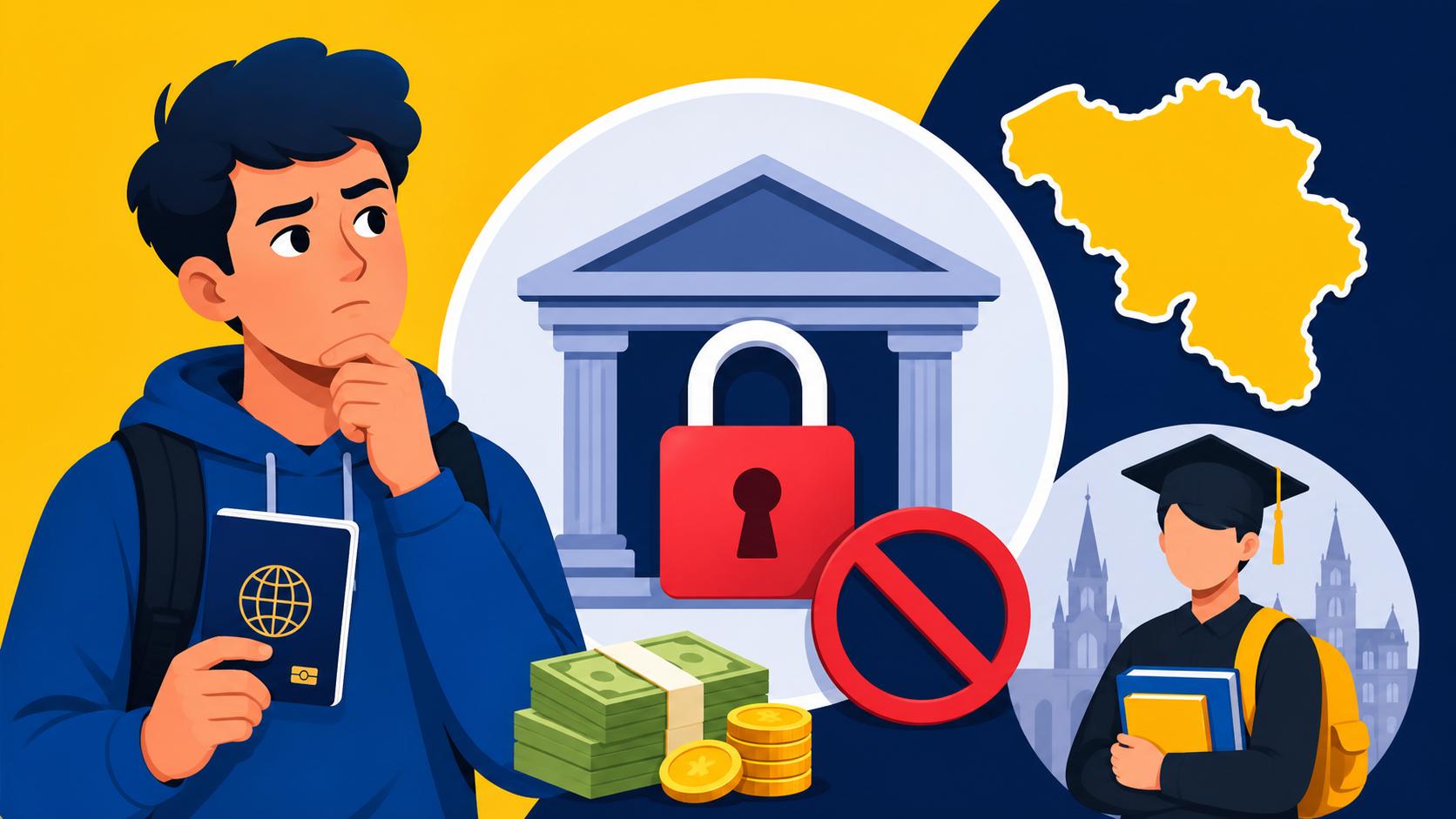
You’ve finally secured your university spot in Belgium, but now you’re staring at a visa requirement that demands proof of monthly funds you haven’t even earned yet. I remember the sheer panic of seeing the "Proof of Solvency" requirement for the first time and wondering how on earth I was supposed to satisfy a Belgian consulate. This guide solves the mystery of the blocked account, providing a clear, stress-free roadmap to securing your student visa.
Why Proof of Solvency is the Biggest Hurdle for Students
When you apply for a Type D student visa, the Belgian government wants to ensure you won't become a burden on their social welfare system. They require you to prove you have a specific amount of money available to cover your living expenses for each month of the academic year. For the 2025-2026 and 2026-2027 academic years, this amount usually hovers between 850 and 950 EUR per month, though it is indexed annually.
The struggle is real because many international students don’t have a wealthy sponsor living in the EU who can sign a formal "Annex 32" (guarantee of support). If you don't have a scholarship or a sponsor with a stable income inside the EU, the Compte Bloqué, or Blocked Account, is your only reliable path forward. I spent weeks trying to find a workaround before realizing that the blocked account is actually the most straightforward method, even if it feels terrifying to wire a large sum of money to a foreign entity.
Navigating this is often the first step in a long administrative journey. Once you arrive, you’ll quickly realize that the paperwork doesn't stop. You will eventually need to look into Registering at the Commune: The 8-Day Rule After Arrival to ensure your residency is legal. But before you can even think about the commune, you need that visa sticker in your passport, and that starts with the money.
How the Blocked Account Mechanism Actually Works
A blocked account is essentially a trust service. You transfer the total amount needed for one academic year (usually 12 months' worth of living expenses) plus a small administrative fee into a bank account held by your university or a recognized financial institution. Once they receive the funds, they issue a "Solvency Certificate," which is the golden ticket for your visa application.
Once you arrive in Belgium and open a local bank account, the university or institution will release the money back to you in monthly installments. For example, if you deposited 10,800 EUR for the year, they will send roughly 900 EUR to your Belgian account every month. This ensures you always have rent and grocery money, and it gives the Belgian authorities peace of mind.
While you are waiting for these funds to be released, many students spend their time preparing for the cultural shift. I personally used Lingoda to brush up on my speaking skills before landing in Brussels. It’s a great way to build confidence so that when you finally walk into a Belgian bank to set up your transfer, you aren't completely lost.
The University Managed Method
Most major Belgian universities, such as KU Leuven, Ghent University, and the VUB (Vrije Universiteit Brussel), offer their own blocked account services. This is generally the easiest route because the university is a trusted public institution.
When you use the university's service, the administrative fee is usually lower—ranging from 100 to 250 EUR. The downside is that they are very strict about deadlines. If you don’t transfer the money by their cutoff date, you might lose your chance to use the service and have to find a private bank, which is significantly more difficult for non-residents.
The Private Bank Method
If your school doesn't offer a blocked account, you may have to look at private options. This has become increasingly difficult due to strict "Know Your Customer" (KYC) regulations. Very few Belgian banks will allow a non-resident to open an account before they have an eID card.
In some cases, specialized international student banks or "neobanks" might offer blocked account services for Belgium, but always verify with the Belgian consulate in your home country first. They maintain a list of approved financial proofs, and you don't want to wire thousands of euros to an unapproved startup. While you're figuring out the finances, it's also worth researching Student Accommodation (Kot) in Belgium: Contracts and Culture because you'll need a place to send those monthly installments once they start flowing.
Step-by-Step Tutorial for Setting Up Your Blocked Account
The process can feel like a mountain, but when you break it down, it's just a series of administrative steps. I’ve seen students get rejected simply because they missed a single signature or sent the wrong currency, so pay close attention to the details.
Step 1: Request the Blocked Account Procedure
Once you have your "Letter of Admission" (not just a conditional offer, but the actual admission letter), contact your university's International Office or Finance Department. They will send you a document outlining the exact amount required for the current year. This document will include the bank account details (IBAN and BIC) and a "Structured Communication" code. This code is vital; without it, the university won't know the money belongs to you.
Step 2: Executing the International Transfer
This is the part that makes everyone nervous. You need to transfer the full amount in one go. Make sure you account for exchange rates and intermediary bank fees. If the university requires 10,800 EUR and only 10,795 EUR arrives because a middleman bank took a 5 EUR fee, they will not issue your certificate. Always send an extra 50 EUR to be safe.
During this waiting period, if you find yourself stressed, I highly recommend checking out some courses on Udemy or Coursera to stay productive. Whether it's learning basic data science or a specialized skill for your degree, it keeps your mind off the "is my money safe?" anxiety.
Step 3: Receiving and Submitting the Certificate
Once the university confirms receipt, they will email you a digital certificate of solvency. You must print this and include it in your visa application. The Belgian consulate recognizes these university-issued documents immediately. It is much more powerful than a personal bank statement from your home country, which the consulate might view with skepticism.
| Step | Action | Typical Timeline |
|---|---|---|
| 1 | Receive Admission Letter | April – June |
| 2 | Request Blocked Account Info | June |
| 3 | Transfer Funds from Home Country | June – July |
| 4 | Receive Solvency Certificate | 5-10 Business Days after transfer |
| 5 | Submit Visa Application | July – August |
What Happens if Your Visa is Rejected
It’s the nightmare scenario, but it happens. If your visa is denied, don't worry—your money isn't gone forever. The university is legally obligated to return the funds to the account they originated from. However, they will deduct the administrative fee (the 100-250 EUR mentioned earlier).
To get your refund, you'll need to provide the university with the official visa rejection letter from the Belgian embassy. This process can take 4 to 8 weeks, so it can be a significant financial strain if you were relying on that money for a backup plan. This is why ensuring your paperwork is perfect is so important. Many students also find that while waiting, they can dive into DutchPod101 or FrenchPod101 to prepare for a second attempt or a different European destination.
Arriving in Belgium and Accessing Your Money
Once you land in Belgium, the first thing you need to do is open a local bank account. You cannot keep receiving your blocked account money into your home country's bank account. The university requires a Belgian IBAN to release the funds.
Opening a bank account in Belgium as an expat can be a bit of a "Chicken and Egg" problem. Most banks want to see your Residence Registration: Annexes, Communes, and the eID Card documents before they let you open an account. However, you can often open a "student account" with just your passport and your university registration.
Once your account is open, you’ll send the IBAN to the university's finance office. They will then set up a standing order. Be prepared for the first month to be tight. Sometimes the first installment takes a few weeks to process, so I always tell students to bring enough cash or have a credit card to cover the first month’s Student Accommodation (Kot) in Belgium: Contracts and Culture deposit and initial groceries.
Managing Your Budget Once the Money Starts Flowing
The blocked account amount is designed to be a "minimum" for survival. In cities like Brussels or Leuven, 900 EUR a month is manageable, but it requires discipline. Rent for a "kot" (student room) will likely take up 500 to 650 EUR of that amount, leaving you with about 250 to 300 EUR for food, transport, and books.
To supplement this, many students look for work. You should read up on How the 600-Hour Student Job Limit Works per Calendar Year to make sure you stay within the legal limits. Working a few hours a week at a cafe or as a delivery rider can turn a "survival" budget into a "thriving" budget.
If you find that your academic load is too heavy for a job, you can use platforms like Coursera to gain certifications that might lead to higher-paying internships later on. Every bit of extra skill helps when you are competing in the Belgian job market.
Final Administrative Tips for a Smooth Process
The Belgian system is famous for its bureaucracy. To survive it, you need to be organized. Keep a digital and physical folder of every receipt, every email from the university, and every bank confirmation.
- Check the Currency: Always transfer in EUR. If your bank at home converts it to USD or your local currency during the process, it will be rejected.
- The "Solvency" Renewal: Remember, the blocked account only covers one year. If your degree is a three-year Bachelor's, you will have to repeat this entire process every year to renew your residence permit. I know, it's exhausting, but by the second year, you'll be a pro.
- Commune Timelines: As soon as you have your local account and your first installment, make sure you complete your registration. If you're staying in the capital, you'll want to know Brussels Healthcare Guide for Expats: Clinics, Hospitals, and Care just in case the stress of moving gets to you.
Navigating the blocked account is your "initiation" into Belgian life. It’s a test of patience and precision. But once that first monthly installment hits your Belgian bank account, and you’re sitting in a beautiful park in Ghent or Leuven with a waffle in hand, you’ll realize the headache was worth it. You are officially a part of the Belgian student community.
Disclaimer
The information provided in this guide is for informational purposes only and does not constitute legal or financial advice. Immigration rules and financial requirements in Belgium are subject to change, and users should always verify the latest requirements with the official Belgian Immigration Office (Foreigners Department) or their local Belgian consulate before making significant financial transfers.