Appealing a Family Reunification Refusal: Article 9bis vs 9ter
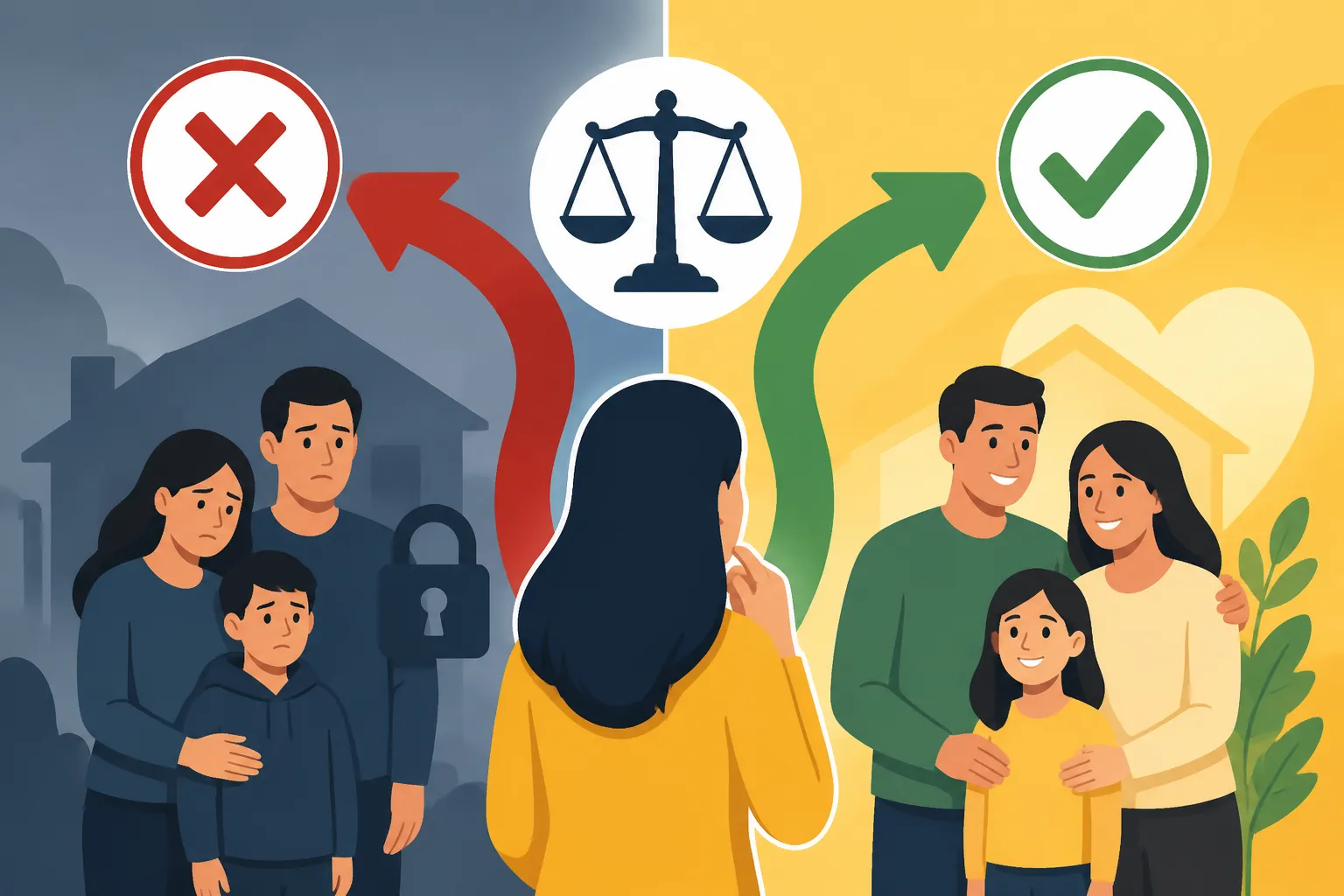
Receiving a rejection letter for a family reunification visa is a heart-wrenching moment that many expats in Belgium face. After months of gathering documents and waiting in anticipation, the "negative decision" can feel like a door slamming shut on your future together. This guide explains the complex legal pathways of Article 9bis and Article 9ter, helping you navigate the appeal process and find a viable way to keep your family united on Belgian soil.
Understanding the Rejection: Why Family Reunification Fails in Belgium
The Belgian Immigration Office (Dienst Vreemdelingenzaken/Office des Étrangers) is notoriously strict when it comes to family reunification. Often, the refusal isn't because the relationship isn't real, but because of a failure to meet rigid administrative benchmarks. The most common pitfall is the financial requirement. In 2026, the threshold for "sufficient resources" remains a major hurdle. If your net monthly income falls even a few Euros short of the mandated 120% of the living wage, the authorities may issue an automatic refusal without considering the human element of your case.
Another frequent cause for rejection is the Adequate Housing Requirement for Bringing Family to Belgium. The commune or the police might decide your apartment is too small for the number of inhabitants, or the rental contract might not be properly registered. These technicalities can lead to a devastating "No," leaving you to wonder if you should start the entire process over or fight the decision. Understanding the grounds for your refusal is the first step; you cannot build a successful appeal without knowing exactly which box the Immigration Office believes you failed to tick.
The emotional toll of this process cannot be overstated. I have sat with many friends in Brussels cafes as they stared at a thick envelope from the Ministry of the Interior, feeling like their lives were on hold. It is a period of intense isolation and frustration. However, a refusal is not necessarily the end of the road. Belgium's legal framework provides specific "regularization" routes for those who find themselves in precarious situations due to such refusals. This is where Article 9bis and Article 9ter come into play.
Article 9bis: The Humanitarian Route to Residency
Article 9bis of the Law of 15 December 1980 is often referred to as "humanitarian regularization." It is a procedure that allows a foreigner to apply for a residence permit from within Belgium, rather than from a Belgian embassy abroad. Normally, you are required to apply for a long-stay visa in your home country. However, if you can prove "exceptional circumstances" that make it impossible or extremely difficult for you to return home to apply, Article 9bis offers a potential lifeline.
What constitutes "exceptional circumstances" is not strictly defined in the law, which gives the Immigration Office significant discretionary power. In the context of a family reunification refusal, this might include a situation where a child’s best interests are at stake, or where the family has already established deep roots in Belgium during a long administrative procedure. You must demonstrate that your situation is unique and that forcing a return to your home country would cause disproportionate hardship. It is not enough to simply state that you prefer living in Ghent or Antwerp; the evidence must be compelling and humanitarian in nature.
The procedural hurdles of a 9bis application are significant. Since this is an exceptional procedure, the burden of proof lies entirely on you. You will need to submit a mountain of evidence, ranging from proof of social integration—like certificates from Flemish integration courses—to letters from Belgian friends, employers, or schools. Because every document must be perfectly understood by the authorities, you should rely on professional services like RushTranslate to handle your birth certificates, marriage licenses, and personal statements. A single mistranslated sentence could lead the case officer to misunderstand the "exceptional" nature of your hardship.
When preparing a 9bis file, think of it as telling the story of your life in Belgium. Are you volunteering? Are your children speaking the local language? These details matter. While you wait for a decision, which can take months or even years, your legal status remains precarious. You typically receive an Annex 15, which is a temporary document. During this period of limbo, you may not have access to the standard public healthcare system immediately. This is a critical time to secure private coverage through a provider like Cigna Global to ensure your family is protected against medical emergencies while your residency is being debated.
Article 9ter: The Medical Route for Vulnerable Family Members
Article 9ter is specifically designed for individuals suffering from a serious illness. If a family reunification visa was refused, but the applicant suffers from a medical condition that cannot be adequately treated in their home country, 9ter provides a path to residency based on medical necessity. The legal threshold is high: the illness must be so severe that it poses a "real risk" to the person's life or physical integrity, or there must be a real risk of inhuman or degrading treatment if they are returned to their country of origin due to a lack of treatment.
The gatekeeper for this procedure is the Medical Advisor of the Immigration Office. When you submit a 9ter application, it undergoes a two-stage filter. First, the medical advisor checks if the condition is "serious" enough according to the law. Second, they evaluate the availability and accessibility of treatment in the applicant’s home country. This is where many cases fail. The authorities may argue that while the treatment exists in your home country, the fact that you cannot afford it is not their responsibility. You must prove that the treatment is genuinely inaccessible to you specifically.
Documentation for 9ter must be incredibly precise. You need a standard medical certificate (the "9ter certificate") filled out by a doctor, along with all relevant lab results, hospital records, and specialist reports. If these documents are from your home country, they must be translated with absolute medical accuracy. Using an experienced service like RushTranslate is non-negotiable here; a general translator might miss the nuances of a complex diagnosis that proves the severity of the condition. The goal is to make it impossible for the Medical Advisor to dismiss the urgency of the case.
If the 9ter application is "declared admissible," the applicant is often granted a temporary right to stay and, eventually, an A Card (temporary residence). This status allows the person to finally access the Belgian social security system. However, until that admissibility is granted, you are in a "medical limbo." To avoid a situation where a chronic condition worsens due to lack of funds, maintaining an international policy with Cigna Global can be a literal lifesaver. It bridges the gap between the visa refusal and the eventual medical regularization, ensuring that treatment in Belgian hospitals continues uninterrupted.
Comparing 9bis and 9ter: Which Path Should You Choose?
Choosing between Article 9bis and Article 9ter depends entirely on the "why" of your stay. If your primary reason for staying is your deep connection to Belgian society or a sudden change in your home country's safety, 9bis is the route. If your stay is necessitated by a life-threatening or debilitating health condition, 9ter is the appropriate legal channel. It is even possible, in some very complex cases, to file both applications if both humanitarian and medical grounds exist, though this requires expert legal guidance to avoid contradictory statements.
The rights associated with each also differ. A 9bis application is a request for a "favor" from the state; the Immigration Office has no obligation to grant it. In contrast, 9ter is more closely linked to international human rights obligations (specifically Article 3 of the European Convention on Human Rights regarding the prevention of torture and degrading treatment). This means that if you meet the medical criteria, the state has a stronger legal obligation to protect you.
| Feature | Article 9bis (Humanitarian) | Article 9ter (Medical) |
|---|---|---|
| Primary Requirement | Exceptional circumstances/Hardship | Serious illness with risk to life/integrity |
| Application Location | Inside Belgium | Inside Belgium |
| Right to Work | Only after approval (usually) | After admissibility is confirmed |
| Health Insurance | Required (Private often needed) | Critical (Private essential during wait) |
| Success Rate | Discretionary (Low to Moderate) | Evidence-based (Moderate if criteria met) |
| Key Evidence | Social ties, integration, risk | Medical reports, lack of care in home country |
The Appeal Process: Navigating the Council for Alien Law Litigation (CALL)
If your family reunification application is refused, you have the right to appeal to the Council for Alien Law Litigation (Conseil du Contentieux des Étrangers / Raad voor Vreemdelingenbetwistingen), commonly known as CALL. This is an administrative court independent of the Immigration Office. You generally have 30 days from the date the refusal was notified to you to lodge a "petition for annulment." This is a strict deadline; miss it by a day, and the decision becomes final.
Navigating CALL is not a DIY project. The court primarily looks at whether the Immigration Office followed the law and considered all the facts. It rarely "grants" the visa itself; instead, it "annuls" the refusal and sends the case back to the Immigration Office for a new decision. This is why Hiring an Immigration Lawyer: When Do You Need Professional Help? is so important. A lawyer will know how to argue that the authorities made a "manifest error of appreciation" or failed to consider the "best interests of the child."
During the appeal, you are often in a state of Annex 15. You may be allowed to stay in the country, but your right to work or travel is severely restricted. This is the time to ensure your paperwork is beyond reproach. Every new piece of evidence—a new bank statement, a letter of support, or an updated medical scan—must be translated. The court will only look at documents in the official languages of the proceedings (French or Dutch). Using RushTranslate ensures that your evidence meets the court's standards for sworn translations, which is vital for the judges to take your case seriously.
Remember that Appeals and Rejections: What to Do if the Immigration Office Denies You is a marathon, not a sprint. The CALL can take anywhere from six months to over a year to reach a verdict. During this time, the "police check" or The Police Address Check: What Happens if You Are Not Home? remains a reality. You must stay at your registered address and maintain a "good father of the family" profile (a Belgian legal concept meaning acting responsibly and lawfully) to avoid complicating your pending appeal.
Moving Forward: Life During the Appeal
Living through a visa appeal is an exercise in resilience. It can feel like you are a "ghost" in the system—present in the country but without the full rights of a resident. It is crucial to stay connected with the expat community. Many others have navigated the Family Reunification Visas: Bringing Spouses and Children to Belgium process and survived a rejection. Seek out support groups or local ASBLs (non-profits) that specialize in migrant rights; they can offer both legal pointers and emotional solidarity.
While the legal battle continues, focus on what you can control. Improve your language skills through a Flemish Integration Courses (Inburgering): When They Are Mandatory program or a French equivalent. This not only helps your 9bis case by proving integration but also makes daily life in Belgium much easier. If you have children, ensure they are enrolled in school; the Belgian state prioritizes the education of minors regardless of the parents' residence status.
Finally, keep your health and finances in order. The stress of an appeal can lead to Dealing with Belgian Bureaucracy Burnout: Mental Health for Expats. Don't hesitate to seek therapy or counseling. Ensure your family remains covered by international health insurance like Cigna Global. If a medical emergency happens during the appeal and you aren't yet fully registered with a Belgian mutuelle, the costs can be ruinous. Being prepared for the long haul is the best way to ensure that when the "positive decision" finally arrives, your family is healthy, integrated, and ready to start their new life in Belgium together.
Disclaimer
This guide is for informational purposes only and does not constitute formal legal advice. Immigration laws in Belgium, particularly concerning Article 9bis and 9ter, are subject to frequent changes and complex judicial interpretations. Always consult with a qualified Belgian immigration lawyer or a specialized legal service before filing an appeal or a regularization application to ensure your specific circumstances are handled correctly.