Eco-Vouchers (Eco-chèques): What Can You Actually Buy With Them?
You’ve just received your first full payslip in Belgium, and alongside the expected numbers, you notice a strange addition to your digital wallet: eco-vouchers. I remember standing in a Vanden Borre for twenty minutes during my first month in Brussels, holding a basic kettle and feeling genuinely embarrassed when the cashier told me it wasn't "green enough" for my card. This guide solves that confusion by detailing exactly what qualifies for eco-vouchers so you never face that awkward checkout moment again.
The Belgian Pay Package Mystery: Why Eco-Vouchers Exist
If you are coming from a country where salary is simply a single number deposited into your bank account, the Belgian system can feel like a complex puzzle of "extra-legal benefits." To understand eco-vouchers, you first need to look at how employers structure compensation to avoid the world-class tax rates here. When you are How to Read Your First Belgian Payslip (Fiche de Paie), you will notice that your take-home pay is significantly lower than your gross. To compensate for this, companies use tax-free tools like meal vouchers and eco-vouchers.
Eco-vouchers (known as eco-chèques in French or ecocheques in Dutch) are a mandatory or negotiated benefit intended to promote sustainable consumption. They are completely tax-free for you, the employee, and the employer pays reduced social charges on them. Usually, you receive up to €250 per year, typically distributed in June. They are almost always delivered via the same electronic card used for your Meal Vouchers (Cheques Repas): How This Employee Benefit Works. The big players in this space are Edenred, Monizze, and Pluxee (formerly Sodexo).
The frustration for most expats is the strictness of the spending rules. You cannot just walk into a supermarket and buy a bottle of wine or a bag of chips with these. They are governed by the National Labour Council (CNT/NAR), which periodically updates a list of what "green" means in the eyes of the Belgian state. This can feel like a bureaucratic hurdle, but once you understand the categories, it essentially becomes a €250 "hobby and home" fund that covers everything from your train tickets to your weekend gardening projects.
The Master Category List: What Can You Actually Buy
The scope of eco-vouchers is surprisingly broad if you know where to look, but it is highly specific about technical certifications. You cannot just buy any product that claims to be "natural." It usually needs a specific European or international ecological label. Understanding these labels is key to navigating the aisles of major retailers like Fnac, Krëfel, or Brico.
Household Appliances and the Energy Label Trap
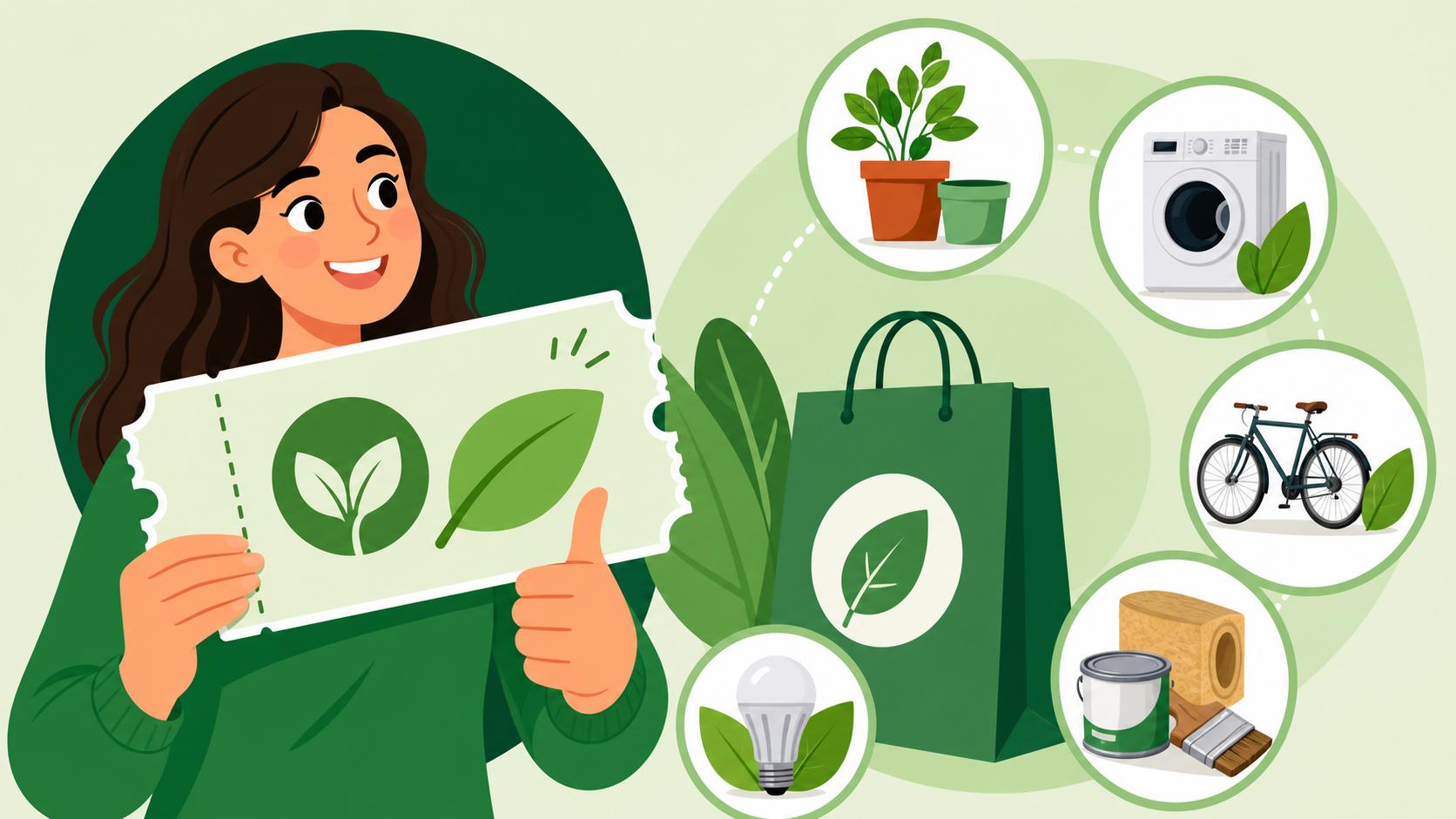
This is where most expats try to spend their vouchers first. If you are moving into a new apartment and need to buy a washing machine, fridge, or dishwasher, eco-vouchers are a godsend. However, you cannot just pick the cheapest model. Following the 2021 European energy label update, the rules became stricter. Generally, large appliances must have a high energy rating (often A, B, or C, depending on the category) to be eligible.
Smaller appliances like LED lightbulbs are almost always covered. If you are shopping at Buying Furniture and Appliances: IKEA, Krefel, and Second-Hand Shops, look for the specific "Eco" logo on the price tag. If the tag doesn't have it, the card reader will likely reject the transaction. This applies to vacuum cleaners, ovens, and even some high-end coffee machines if they meet specific energy-saving standby requirements.
Mobility and Green Transportation
One of the best uses for eco-vouchers is daily commuting. Belgium is a country built for cycling, and your vouchers can be used to purchase a brand-new bicycle, an electric scooter, or even bicycle accessories like helmets and locks. If you are already Biking in Belgium: Villo!, Swapfiets, and Dedicated Bike Lanes, you can use your vouchers to pay for repairs and maintenance at local bike shops.
Perhaps the most useful "hack" for expats who don't want a bike is using eco-vouchers for Public Transport: SNCB/NMBS (National Trains) Fares and Passes. You can go to any SNCB train station ticket office or use the app (if linked correctly) to buy your tickets or monthly passes using your eco-voucher balance. This effectively turns your green benefit into a travel budget for exploring Bruges, Ghent, or the Ardennes on the weekend.
Organic Food and Sustainable Living
While you can't buy a steak or a soda, you can spend your vouchers at organic supermarkets like Bio-Planet, Färm, Sequoia, or the "Bio" sections of Carrefour and Delhaize. The rule is simple: the product must carry the European Organic Label (the green leaf made of stars).
This extends beyond food. You can buy FSC or PEFC certified wood products, which means everything from garden furniture to certain types of paper and notebooks. If you are trying to learn the local languages to read these labels more effectively, using services like Lingoda can help you navigate the nuanced terminology of Belgian sustainability. While you can't pay for the classes themselves with eco-vouchers, the knowledge gained will save you from making the wrong purchase at the hardware store.
| Category | Eligible Items (Examples) | Non-Eligible Items (Examples) |
|---|---|---|
| Home | LED Bulbs, A-rated Fridges, Smart Thermostats | Standard Toasters, Non-certified Furniture |
| Transport | Bicycles, SNCB Train Tickets, Helmets | Car Accessories, Petrol/Diesel, Bus Passes (sometimes) |
| Food | Organic Fruit, Bio-certified Flour, Seeds | Regular Milk, Wine, Frozen Pizza |
| Gardening | FSC Wood, Soil, Plants, Hand Tools | Petrol Lawnmowers, Synthetic Fertilizers |
| Second-hand | Everything in a "Kringwinkel" or "Troc" | Brand new "Fast Fashion" clothes |
The Hidden Gem: Second-Hand Shopping
If you really want to maximize the value of your €250, the "Second-Hand Loophole" is your best friend. To encourage a circular economy, the Belgian government allows eco-vouchers to be used for anything purchased in a recognized second-hand store. This includes clothes, furniture, books, and electronics that would never normally qualify for the "green" label if they were brand new.
In Flanders, look for the "Kringwinkel" chain; in Brussels and Wallonia, look for "Les Petits Riens" or "Troc." You can walk into a Kringwinkel and buy a vintage leather jacket, a stack of 1970s vinyl records, or a solid oak dining table, and pay for the whole lot with your Monizze or Edenred card. This is incredibly helpful for new arrivals who are still Gross vs Net Salary in Belgium: Why the Difference is So Big and trying to furnish a flat on a budget.
Beyond furniture, this category includes "refurbished" electronics. Companies like Back Market or specific sections in Fnac allow you to buy refurbished iPhones or laptops using eco-vouchers. Since these are "re-used" items, they are considered ecological by default. This is a great way to save your "real" money for other essentials while using your vouchers for tech upgrades.
Advanced Tactics: Where to Spend and How to Track
Managing your vouchers requires a bit of digital savvy. Unlike the old paper vouchers that used to clutter up Belgian drawers, everything is now digital. You should download the app associated with your provider (Pluxee, Edenred, or Monizze) immediately. These apps have built-in maps that show you every merchant in your current neighborhood that accepts eco-vouchers.
Dealing with the Expiry Date
The biggest pitfall for expats is the expiry date. Eco-vouchers are valid for exactly 24 months from the moment they are deposited into your account. If you don't spend them, they vanish—and there is no way to get them back. The apps usually send notifications when a balance is about to expire, but I've seen many friends lose €50 because they forgot about a small balance from two years prior.
If you find yourself with €30 expiring in three days and you don't need a new LED bulb, go to a store like Decathlon or A.S. Adventure. These stores have massive "eco" sections. You can buy sustainable camping gear, organic cotton clothing, or even just some high-quality water bottles to use up the remaining balance. If you are still in the process of Registering for Public Health Insurance: Step-by-Step at Your Commune, you might be overwhelmed with paperwork, but don't let this small administrative task of checking your voucher balance slip through the cracks.
Combining Vouchers with Other Benefits
In some stores, you can "split" the payment. For example, if you are buying an organic lunch and some non-organic household cleaners at a supermarket, the system is usually smart enough to deduct the "bio" items from your eco-vouchers and ask for another payment method (like your bank card or meal vouchers) for the rest. However, this depends on the store’s software. Smaller shops might require two separate transactions.
For those looking to grow their long-term wealth, remember that every Euro you spend on eco-vouchers for necessities is a Euro you can divert into your Best Brokerage Accounts for Expats in Belgium (Bolero, Keytrade). It might seem like a small amount, but over five or ten years of living in Belgium, these "small" benefits add up to thousands of Euros in tax-free purchasing power.
Common Frustrations and Expat Hacks
The system isn't perfect. You will inevitably find a product with a "bio" label that the register refuses to accept. This usually happens because the retailer hasn't updated their internal database with that specific product's SKU as an "eco" item. In these cases, there isn't much the cashier can do. It's always a good idea to have a backup payment method ready.
Another common frustration is online shopping. While major Belgian sites like Coolblue and Bol.com accept eco-vouchers, the process can be clunky. You often have to select "Ecocheques" as a specific payment filter before you even start browsing. If you are browsing on Amazon Belgium, eco-vouchers are generally not accepted, as it is an international platform that doesn't always integrate with the local Belgian voucher systems.
To make your life easier while navigating these Belgian quirks, you might use your free time to listen to DutchPod101 or FrenchPod101. Being able to ask the shop assistant "Est-ce que cet article est éligible aux éco-chèques?" or "Is dit artikel betaalbaar met ecocheques?" will save you a lot of time. If you want to dive deeper into the professional world, taking a course on Coursera or Udemy about Belgian labor law or sustainable business practices can provide more context on why these systems are so entrenched in the local work culture.
Ultimately, eco-vouchers are a quirk of Belgian life that you will grow to love. They force you to invest in high-quality, energy-efficient goods that lower your utility bills in the long run. Whether you use them to buy a new specialized bike for the commute or simply to stock up on organic pasta, they are a valuable part of your compensation that deserves to be spent wisely.
Disclaimer
This guide is intended for informational purposes only. The rules governing eco-vouchers in Belgium are subject to change by the National Labour Council and regional authorities. Always check the current list of eligible products on your voucher provider’s official website (Edenred, Monizze, or Pluxee) before making a major purchase. Tax regulations and Social Security Contributions: How Employers Deduct Health Costs may also vary based on your specific employment contract and residence status.