How to Track Crypto Trades to Avoid 33% Speculation Tax
You finally see your crypto portfolio turn green, only to realize the Belgian taxman might want a third of your hard-earned gains. When I first moved to Brussels and started dabbling in Bitcoin, the ambiguity of what constitutes "speculation" kept me up at night. This guide breaks down exactly how to track your trades to prove you are a cautious investor rather than a professional gambler.
Understanding the Belgian Crypto Tax Landscape
Belgium has a reputation for being a tax-heavy country, but when it comes to crypto, the rules are surprisingly nuanced—and potentially very favorable if you play your cards right. The core of the issue lies in how the FPS Finance (the federal tax authority) categorizes your activity. There isn't one single "crypto tax" rate; instead, your gains fall into one of three buckets: tax-free, 33% plus communal taxes, or progressive rates up to 50%.
The Good Father of the Family Rule
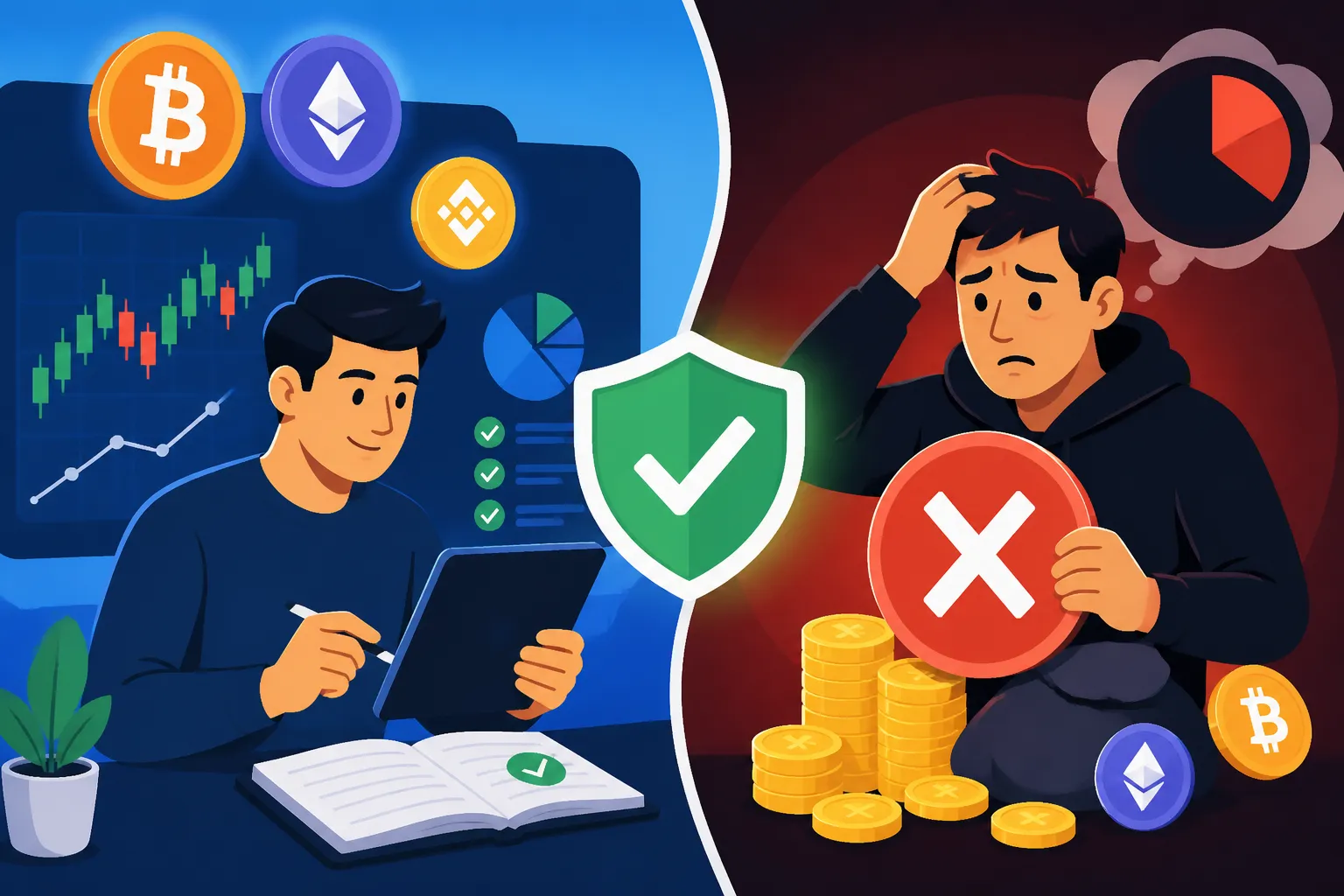
The holy grail for any expat investor in Belgium is to have their activity classified as "normal management of private estate," often referred to in French as bon père de famille or in Dutch as goede huisvader. This concept isn't strictly defined by a specific number of trades, which is exactly why it’s so stressful for us foreigners. It essentially means you are acting as a "Good Father" would—investing for the long term, not taking disproportionate risks, and using your own savings rather than borrowed money.
If your activity meets this criteria, your capital gains are 0% taxed. However, the moment you step outside these lines, you enter the territory of "miscellaneous income." This is where the dreaded 33% speculation tax kicks in. To stay in the "Good Father" zone, you need to show that crypto is a small part of your diversified portfolio, alongside things like Building Wealth: Investing, Savings Accounts, and Pensions in Belgium and perhaps some traditional stocks.
Speculation vs Professional Income
The 33% tax is reserved for "speculative" transactions. These are trades that don't quite reach the level of a full-time job but are clearly aimed at quick profits through frequent buying and selling. The tax authorities look at the "frequency" of your trades, the "holding period," and the "technical knowledge" you use. If you’re using complex bots or leveraged trading on platforms like Binance, you are waving a red flag that screams "Speculator."
At the far end of the spectrum is professional income. If crypto is your main source of revenue, or if you’ve set up a massive mining rig in your basement in Mechelen, the taxman will treat your gains as professional income. This means they are added to your other earnings and taxed at the Belgian Tax Brackets 2026 (Assessment Year 2027): 25% to 50% rates. This is why understanding Is Crypto Tax-Free in Belgium? The 'Good Father of the Family' Rule is the most important step before you even make your first trade of the year.
Why Tracking is Your Best Defense Against the 33% Tax
In Belgium, the burden of proof often feels like it rests squarely on the taxpayer’s shoulders. If you are audited, the tax inspector won't just take your word that you’re a "Good Father." They will want to see the receipts. I’ve seen expats get into hot water not because they were trying to cheat, but because they simply couldn't reconstruct their trading history from three years ago.
Burden of Proof and the Belgian Tax Authority
The FPS Finance has become increasingly sophisticated at tracking on-chain movements. If they see a large transfer of Euros hitting your account from a platform like Binance, they may trigger an inquiry. Without a clear log of where those funds originated—proving they weren't the result of 500 scalp trades in a single week—you will have a very hard time arguing against the 33% assessment.
Detailed tracking allows you to present a "narrative." You can show that you bought a certain amount of Ether, held it through the volatility for eighteen months, and only sold it because you needed a down payment for a house. This narrative is what separates a long-term investor from a speculator. It is also vital for when you eventually use How to File Your Income Tax via Tax-on-web (MyMinfin) to report your miscellaneous income, should you fall into that category.
The Role of Detailed Records in Tax Audits
A tax audit in Belgium is a slow, paper-heavy process. If you can provide a clean, timestamped PDF of every transaction, the inspector is much more likely to accept your "Good Father" status. Your records should include not just the trades themselves, but also the "fiat-to-crypto" on-ramps. If you used a service like Wise to send money to an exchange, keep those transfer receipts.
The inspector will look for "anomalies." For example, if you claim to be a long-term holder but your records show you are constantly moving small amounts of crypto between twenty different "hot wallets," it looks suspicious. Detailed records help you explain that these were simply moves to secure your assets or to participate in staking, rather than hidden trading activity. This level of transparency is essential for maintaining a clean Banking and Finance in Belgium: Complete Expat Guide (2027) profile.
Step-by-Step Guide to Tracking Your Crypto Activity
Tracking crypto isn't just about recording the price; it’s about capturing the context. You need to be meticulous from day one. Here is the workflow I’ve developed after years of trial and error in the Belgian system.
Centralizing Exchange Data
Most of us use multiple platforms. You might buy your core Bitcoin on Trade Republic because of their solid regulatory standing in Europe, but use Binance for a wider variety of altcoins. The problem is that each exchange has its own reporting format. At the end of every month, you should download the CSV files of your trade history. Don't wait until "tax season" in May or June, as some exchanges only allow you to pull data for the last 90 days.
| Tracking Metric | Why It Matters in Belgium |
|---|---|
| Date and Time | Proves the holding period for "Good Father" status. |
| Asset Pair | Shows if you are trading crypto-to-crypto (often seen as speculative). |
| Transaction Fees | Deductible if you are taxed at 33% or professional rates. |
| Wallet Addresses | Proves ownership and helps track "off-exchange" movements. |
| Purpose of Trade | Crucial for the "narrative" during a tax audit. |
Capturing Off-Chain Expenses and Transfers
One area where many expats fail is tracking the "hidden" movements. If you move your Bitcoin from Trade Republic to a cold storage Ledger wallet, that isn't a taxable event, but you must be able to prove that the wallet belongs to you. If the taxman sees 1 BTC leave an exchange and 0.99 BTC (after fees) reappear a year later from a different address, they might assume you sold and rebought it.
I always keep a dedicated folder on my computer (and a cloud backup) for screenshots of my "Withdrawal Successful" screens. If I used Wise to move the initial Euro investment, I attach that transfer receipt to the trade log. This creates an unbroken chain of custody for my funds, which is vital if I ever need to prove my initial investment capital wasn't "black money."
Documenting the Why Behind Every Trade
This is the "secret sauce" for Belgian tax compliance. In a simple spreadsheet, add a column titled "Reason for Transaction."
- "Bought 1 BTC: Long-term savings for retirement."
- "Sold 0.5 ETH: To pay for unexpected car repairs."
- "Transferred to Cold Wallet: Long-term security, no intent to sell."
By documenting your intent at the time of the trade, you are creating a contemporary record of your mindset. This is much more convincing to an auditor than trying to remember your motivation three years later. It reinforces the idea that your crypto is part of your Social Security in Belgium: Employer and Employee Contributions and long-term financial planning, rather than a gambling habit.
Tools and Strategies for Long-term Compliance
As your portfolio grows, manual spreadsheets become a nightmare. Fortunately, there are ways to automate this, but you must ensure the tools you use are "Belgian-aware."
Automated Crypto Tax Software vs Manual Spreadsheets
There are several global platforms that can API-link to your Binance or Trade Republic accounts to pull data automatically. These tools can calculate your gains using various methods like FIFO (First-In, First-Out). However, be careful: Belgium doesn't strictly mandate FIFO, and for "Good Father" status, the calculation method is less important than the overall behavior.
If you choose to use software, ensure it allows you to tag transactions. You need to be able to mark "Staking Rewards" or "Airdrops" specifically, as the tax treatment for these can be different. Staking, for instance, is often viewed as "income from movable capital," which is subject to a Tax on Investment Income: 30% Flat Rate on Dividends and Interest rather than the 33% speculation tax.
Reporting Foreign Accounts to the National Bank (NBB)
This is the part many expats miss, and it can lead to heavy fines regardless of your trading activity. If you have an account on a foreign exchange (which almost all of them are, except for a few Belgian-based ones), you are legally required to declare that account to the National Bank of Belgium (NBB).
Even if your balance is zero, the existence of the "account" or "contract" must be reported. You also need to check a specific box on your annual tax return stating that you hold foreign accounts. Failing to do this is one of the easiest ways to trigger a full audit of your finances. You can find the specific steps for this in our guide on Declaring Foreign Bank Accounts to the Belgian National Bank (NBB). Remember, use your Itsme Authentication: How to Set Up Belgium's Vital Digital ID to log into the NBB portal for a much smoother experience.
Staying Informed on Evolving Regulations
The crypto world moves fast, and Belgian law is slowly catching up. While the "Good Father" rule is the current standard, there is frequent talk in the Parliament about introducing a fixed capital gains tax on all digital assets. By maintaining a meticulous tracking system now, you are "future-proofing" your portfolio. If the laws change in 2027, you will have the historical data needed to calculate your new "cost basis" and ensure you aren't overtaxed on gains made during the "Good Father" era.
Summary of Tax Categories for Crypto in Belgium
| Category | Tax Rate | Typical Profile |
|---|---|---|
| Normal Management | 0% | Long-term HODLer, low frequency, personal savings. |
| Miscellaneous Income | 33% + Communal | Speculator, frequent trading, higher risk. |
| Professional Income | 25% – 50% | Day trader, main income source, use of professional tools. |
| Movable Income | 30% | Staking rewards, lending interest, liquidity providing. |
Disclaimer
This guide is for informational purposes only and does not constitute professional tax or legal advice. Belgian tax laws regarding cryptocurrency are complex and subject to individual interpretation by the authorities. We strongly recommend consulting with a certified Belgian tax accountant (comptable/boekhouder) who specializes in digital assets before filing your tax return. Every expat's financial situation is unique, and the "Good Father" status is granted on a case-by-case basis by the FPS Finance.