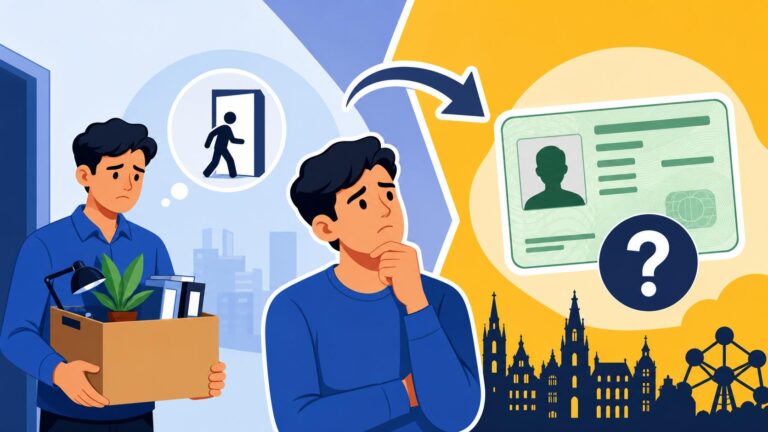
Taxation of Student Jobs and Internships in Belgium
Finding a part-time job in a cozy Ghent cafe or landing an internship in the heart of the Brussels EU bubble is an exciting milestone, but the Belgian tax man is never far behind. I remember the sheer confusion of staring at my first Belgian payslip, trying to figure out why my "gross" pay looked so different from the "net" amount deposited into my bank. This guide solves the mystery of student taxation and internship stipends so you can budget with confidence.
Understanding the 600-Hour Rule for Students
If you are a student in Belgium, the most important number in your life isn't your GPA—it’s 600. This is the annual quota of hours you can work while benefiting from significantly reduced social security contributions. While a regular employee might see a huge chunk of their salary disappear into the state coffers, students who stay within this limit enjoy a much higher "take-home" pay. I’ve seen many friends accidentally cross this line in November and find their December paycheck a lot smaller than expected.
The beauty of the 600-hour rule is the massive discount on social security. Normally, employees pay about 13.07% in social security contributions (ONSS/RSZ). However, as long as you are within your 600-hour quota, you only pay a solid 2.71%. Your employer also pays a reduced rate of 5.42%. This is a massive incentive for Belgian businesses to hire students, but it requires diligent tracking on your part. You can easily monitor your remaining hours via the Student@work application, which is the official portal managed by the Belgian government.
If you happen to exceed the 600 hours, don't panic, but do prepare for a haircut. From hour 601 onwards, you are treated like a regular worker. This means the standard social security rates apply to every hour worked over the limit. Furthermore, it might affect your tax-free allowance status for the year. It’s a classic trap for those working high-intensity summer jobs who then try to keep working ten hours a week during the semester. I always tell newcomers to treat that 600-hour limit as a hard ceiling to maximize their earnings.
For those looking to secure these student positions, language is often the biggest hurdle. While many tech-focused roles are in English, the service industry in Brussels or Wallonia often requires French, whereas Flanders demands Dutch. Many expats I know use FrenchPod101 or DutchPod101 to get their conversational skills up to the "cafe level" quickly. Even a little bit of the local language can be the difference between a minimum-wage gig and a high-tipping role in a popular tourist spot.
Income Tax Thresholds and the Tax-Free Allowance
Aside from social security, we have to talk about personal income tax. In Belgium, everyone is entitled to a "tax-free allowance" (quotité exemptée). For the 2026 tax year (income earned in 2025), this amount is generally around €10,000 to €11,000. If your total annual income—including your student jobs and any paid internships—stays below this threshold, you essentially pay zero federal income tax. This is a life-saver for students trying to balance a budget in expensive cities like Leuven or Antwerp.
However, the calculation gets tricky if you have multiple income streams. Let’s say you work 400 hours as a student but also complete a well-paid internship over the summer. Both of these contribute to your total annual taxable income. If the sum exceeds the tax-free allowance, you will be taxed on the portion above that limit according to the standard Belgian tax brackets, which start at 25% and quickly climb to 40% and 50%. This is why How the 600-Hour Student Job Limit Works per Calendar Year is such a vital piece of knowledge; it’s the foundation of your tax strategy.
Filing your tax return (Tax-on-web) is mandatory even if you think you owe nothing. The Belgian tax office usually sends out a "Simplified Tax Proposal" (Déclaration simplifiée) if your situation is straightforward. If you receive this, check it carefully. I once found that a previous employer hadn't properly coded my hours as "student hours," which could have cost me hundreds in unnecessary taxes. To log in and verify these documents, you will almost certainly need to use Itsme Authentication: How to Set Up Belgium's Vital Digital ID.
If you find yourself with extra time during the semester and want to boost your CV without hitting your tax limits, consider upskilling through online platforms. Many students use Coursera or Udemy to gain technical certifications that lead to higher-paying "student" roles in IT or marketing, where the hourly rate is high enough that you don't need to work as many hours to hit your financial goals.
Taxation of Internships and Traineeships
Internships in Belgium are a bit of a legal and fiscal maze. First, you must distinguish between a "curricular" internship (part of your studies) and an "extra-curricular" or "professional" internship. If your internship is a mandatory part of your university degree and is unpaid, there are no tax implications for you. You are essentially just a student in a different classroom. However, if you receive an "indemnité" or a small stipend, things change.
Many professional internships in Belgium use what is called a "Convention d'Immersion Professionnelle" (CIP). These are paid internships designed to give you work experience. The income you receive from a CIP is generally taxable, but it is often subject to lower social security contributions than a standard work contract. It is crucial to read the fine print of your contract. If your internship pay is considered "professional income," it will be added to your student job earnings when calculating if you’ve stayed under that tax-free allowance we discussed earlier.
I’ve had many conversations with expats who were surprised by the "withholding tax" (précompte professionnel) taken out of their internship pay. Even if you are likely to get this money back because your total income is low, the employer is often legally required to withhold a small percentage and send it to the state. You then "claim" this back the following year when you file your tax return. This delay can be a massive headache for your monthly cash flow, so always ask HR about the net amount you will actually receive.
If you are an international student, the rules can vary slightly based on your visa status. For instance, Working as an International Student: 600 Hours Rule Explained details specific restrictions for those on a Type D visa. Generally, your right to work is tied to your student status, and the moment you graduate, the tax and work permit rules shift significantly. If you're struggling to understand the technical terms in your contract, taking a specialized business language course with Lingoda can help you navigate the HR jargon with more confidence.
Remaining a Dependent on Your Parents' Taxes
This is the section where many students—and their parents—get into heated arguments. In Belgium, if you are a "dependent" child, your parents receive a significant tax break. However, if you earn too much money from your student jobs or internships, you are no longer considered "at the charge" of your parents. This can result in your parents suddenly owing thousands of Euros in extra taxes, which usually means they won't be very happy with your "hard work."
The income limits to remain a dependent are quite strict and change annually. For 2026, the limit is usually around €3,500 to €5,000 of "net" income, though this can be higher if your parents are taxed as a single person or if you have a disability. The catch is that Belgium calculates "net" income for dependency status differently than they do for your own personal income tax. They take your gross income and subtract a specific percentage for professional expenses.
I remember a colleague whose daughter worked almost every weekend in a bakery. She earned enough to buy a second-hand car, but because she crossed the dependency threshold, my colleague lost his tax advantage. The family ended up losing more money in taxes than the daughter had actually earned! This is why it’s essential to check Social Security Contributions: How Employers Deduct Health Costs to see how much is being taken out of your gross pay and how that impacts the final number the tax office sees.
To stay on the safe side, sit down with your parents or a tax advisor once a quarter. Map out your projected earnings for the year. If you are getting close to the dependency limit, it might be smarter to stop working for the year or shift your focus to volunteer work or unpaid skill-building on Udemy. It feels counter-intuitive to stop working to "save" money, but in the Belgian tax system, it’s often the most logical move.
Comparing Student Jobs vs. Regular Part-Time Work
Sometimes, students wonder if it's better to just work a "regular" part-time job instead of using the student quota. Perhaps you've found an employer who wants you for 20 hours a week, all year round. This would quickly exhaust your 600 hours. In this scenario, you would be working under a standard employment contract. While this sounds professional, the financial reality is often less "shiny" once the taxes are deducted.
Under a regular contract, you will pay the full 13.07% in social security. You will also have a higher withholding tax taken from your monthly pay. While you might build up more rights for things like "holiday pay" or future unemployment benefits, the immediate cash in your pocket is usually lower. For most students, the "student status" is a precious financial shield that should be guarded at all costs. You should only move to a regular contract if the hourly wage is significantly higher to compensate for the increased tax burden.
| Work Type | Social Security (ONSS) | Tax-Free Threshold | Best For |
|---|---|---|---|
| Student (Under 600h) | 2.71% | ~€10,160 | High net-to-gross ratio, maximum take-home pay. |
| Student (Over 600h) | 13.07% | ~€10,160 | Extra income when the quota is already gone. |
| Intern (CIP Contract) | Variable (Low) | ~€10,160 | CV building and professional immersion. |
| Regular Part-Time | 13.07% | ~€10,160 | Long-term roles, building social security rights. |
When you start any of these roles, the first thing you should do is learn How to Read Your First Belgian Payslip (Fiche de Paie). Understanding the difference between your Brut (Gross), Net, and the various deductions like the Cotisation Spéciale de Sécurité Sociale will save you a lot of stress. If you are working in Flanders, these documents will be in Dutch; in Wallonia or most of Brussels, they will be in French.
Practical Steps for Your First Month on the Job
Once you've signed that contract, the bureaucracy begins. In your first month, make sure your employer has registered you correctly in the "Dimona" system. This is the electronic database the Belgian state uses to track every worker. If they haven't registered you as a student, your 600-hour quota won't be touched, but you'll be paying the higher tax rates from day one. I've had to chase HR departments more than once to fix this "clerical error."
Secondly, keep a folder (physical or digital) of every single document you receive. This includes your contract, your monthly payslips, and the "Fiche 281.10" you receive at the end of the year. This annual summary is what you will use to file your taxes. If you move kots or change apartments, make sure you update your address with the commune immediately. Belgian tax documents are often sent by post, and you don't want your tax return going to your old roommate in Etterbeek.
If you are struggling to find a job because your CV doesn't look "Belgian" enough, don't worry. There are specific standards here regarding photos, language skills, and even the order of your experience. You might want to check out How to Translate Your Resume into a Belgian Europass Format to ensure you are meeting local expectations. A well-formatted CV can help you land those competitive student roles at big firms that pay much better than the local dishwashing gig.
Finally, remember that working in Belgium is also about the social experience. Whether you're working at a music festival in Werchter or a chocolate shop in Bruges, you'll be interacting with locals daily. If your language skills feel rusty, FrenchPod101 or Lingoda can give you the confidence to handle customer complaints or chat with your colleagues during the break. Those "extra" social skills often lead to better shifts and more tips, which—thankfully—are often the only part of the job the tax man doesn't track too closely!
Dealing with Overpayment and Refunds
It is a very common scenario: you work a summer job, the employer withholds 20% in tax "just in case," and at the end of the year, you've only earned €8,000 total. In this case, the Belgian state owes you money. However, they aren't in a hurry to give it back. You will have to wait until you file your tax return the following year. If you worked in 2025, you file in 2026, and you might not see the refund until late 2026 or even early 2027.
This "forced savings plan" is a reality of the Belgian system. I always advise students not to rely on their tax refund for immediate needs like rent or tuition. Treat it as a bonus when it eventually arrives. To ensure the refund goes to the right place, make sure your bank account details are correctly registered on the MyMinfin (FPS Finance) portal. If you haven't set up a local account yet, you might find Opening a Belgian Bank Account: Documents Needed and Roadblocks very helpful.
If you ever feel like you've been unfairly taxed or your employer is ignoring your student status, there are resources available. Most universities have a "Student Jobs" office that can review your contract and payslips. There are also organizations like Actiris in Brussels or the VDAB in Flanders that provide guidance for young workers. Don't be afraid to ask for help; the Belgian tax code is notoriously complex, and even the locals get confused by it.
For those planning to stay in Belgium long-term, your student jobs are your first entry into the Social Security in Belgium: Employer and Employee Contributions system. While you are paying less now, you are starting to understand how the "Belgian machine" works. It's a system built on solidarity, and while the paperwork can be exhausting, the healthcare and social benefits it provides are among the best in the world.
Disclaimer
The information provided in this article is for educational and informational purposes only and does not constitute professional tax, legal, or financial advice. Tax laws in Belgium are subject to frequent changes and may vary based on individual circumstances, residency status, and specific treaty agreements. Always consult with a qualified tax professional or the official FPS Finance (SPF Finances) portal before making financial decisions.