Understanding the Belgian ‘Provincial Tax’ Bills in Your Mailbox
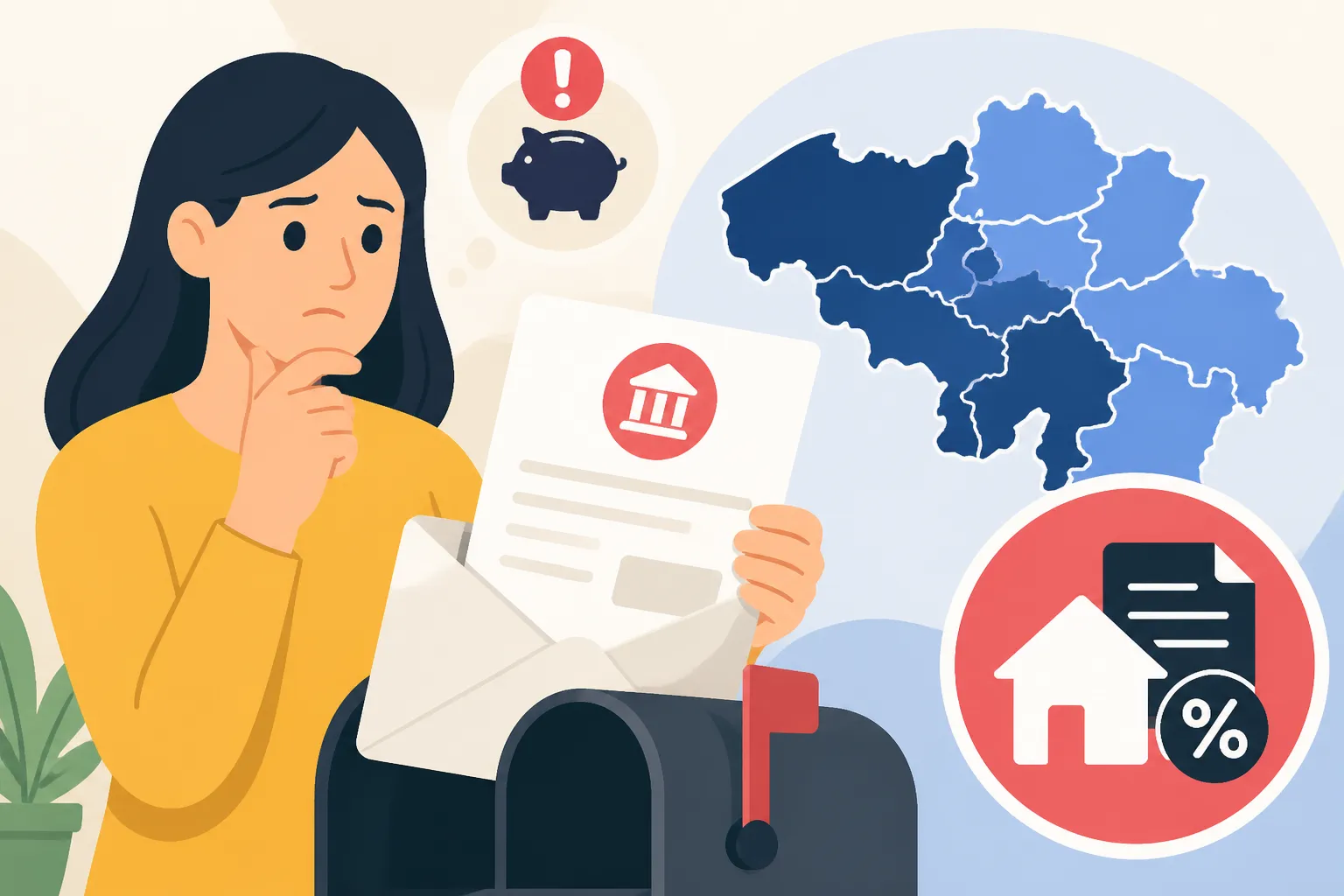
Opening a mailbox in Belgium often feels like an exercise in high-stakes translation, especially when a mysterious bill arrives from a "Provincie" or "Province." I remember staring at my first provincial tax demand for thirty minutes, convinced it was a sophisticated phishing scam because I already paid my communal taxes. This guide clears the fog around these regional bills so you can pay correctly and avoid unnecessary penalties.
The Mystery of the Belgian Provincial Tax Explained
To understand why this bill is sitting on your kitchen counter, you first have to grasp the peculiar layers of Belgian governance. Most expats are well-aware of the federal government that takes a massive chunk of their salary and the local "Commune" or "Gemeente" where they registered their address. However, tucked between those two is the Provincial level. Belgium is divided into ten provinces—five in Flanders and five in Wallonia—and each has the legal right to levy its own taxes to fund specific regional services.
If you live in the Brussels-Capital Region, you are actually in a bit of a "tax vacuum" regarding this specific bill. Brussels does not belong to a province, so you won't receive a provincial tax bill, though you certainly won't escape the Municipal Taxes (Communal Taxes) on Your Income. For those living just outside the city limits in places like Overijse, Waterloo, or Tervuren, the provincial tax is a yearly reality. These funds are typically used to maintain provincial domains (like the beautiful park at Tervuren), specialized secondary schools, and regional environmental initiatives. It is essentially a contribution to the "middle management" of the country.
One of the most frustrating aspects of this tax is that it feels redundant. You might already be paying Common Charges (Charges Communes): What Exactly Are You Paying For? if you live in an apartment building, and you see social security deductions on every payslip. However, the provincial tax is a separate legal obligation. It is not based on your income level in the same way the federal tax is, but rather a flat fee or a rate based on your status as a head of household or a business owner.
How the Tax is Calculated and Who Receives the Bill
The amount you owe for provincial tax varies significantly depending on where your "domicile" is registered. Unlike the Belgian Tax Brackets 2026 (Assessment Year 2027): 25% to 50%, which are standardized at the federal level, provincial rates are set annually by the provincial council. For a standard household in Flanders, you might see a bill ranging from 30 to 60 EUR. In Wallonia, the system can sometimes be slightly more complex, involving a "poids des déchets" or other localized metrics, but the base household tax remains the most common form.
There are two primary types of provincial tax bills you might encounter:
- The General Provincial Tax (Gezinsbelasting / Taxe Provinciale): This is sent to the head of the household as recorded in the National Register. If you live alone, you are the head. If you live with a partner, the bill usually arrives in one person's name.
- The Business Provincial Tax: If you are a freelancer or have a registered "Siège Social" at your home address, you may receive a second, separate bill for your professional activity. This is one of the hidden costs of Social Security in Belgium: Employer and Employee Contributions and self-employment that many expats overlook in their first year.
It is important to note that the province takes a "snapshot" of the population on January 1st of each year. If you lived in the Province of Antwerp on January 1st but moved to Brussels in February, you are still liable to pay the Antwerp provincial tax for the entire year. The provinces are notoriously efficient at tracking address changes through the Crossroads Bank for Enterprises and the National Register, so the bill will eventually find you, even at your new home.
Timing Payment Methods and Avoiding Legal Escalation
The provincial tax bill usually arrives in your physical mailbox (and often your digital eBox) between May and October. You generally have two months from the date the assessment was sent to settle the debt. In my early days as an expat, I made the mistake of "filing" the bill in a drawer and forgetting about it. Do not do this. The provinces are much faster than the federal tax office at sending reminders, and the first reminder often comes with a significant administrative "amende" or fine.
Most people pay via a standard SEPA bank transfer. The bill will contain a "Structured Communication" (a string of 12 digits surrounded by pluses or slashes). It is vital that you enter this exactly as written; otherwise, the province’s automated system won't recognize your payment, and you’ll keep receiving late notices despite the money having left your account. If you are managing your finances from abroad or haven't fully moved your funds into a Belgian account yet, using a service like Wise can be a lifesaver for ensuring the exact Euro amount arrives without hidden intermediary bank fees.
For those who prefer automation, some provinces allow you to set up a "domiciliation" or direct debit, similar to how you handle How to Set Up Direct Debits (Domiciliation) for Utility Bills. This ensures you never miss a deadline. If you truly cannot pay the bill due to financial hardship, you can contact the provincial tax collector’s office to request a "plan de paiement" (payment plan). They are generally more accommodating if you reach out before the deadline has passed. If you ignore the bill entirely, they will eventually involve a "Huissier de Justice" (Bailiff), which can triple the original cost of the tax. For more on this stressful process, see our guide on Handling Debt Collection Agencies (Huissier de Justice) in Belgium.
| Province | Typical Household Tax (Approx.) | Primary Focus of Spending |
|---|---|---|
| Antwerp | €45 – €55 | Provincial parks, cycle paths, and emergency services coordination. |
| Walloon Brabant | €30 – €100 | High-quality infrastructure and regional urban planning. |
| East Flanders | €35 – €50 | Education, heritage sites, and water management. |
| Liège | Variable | Large-scale sports infrastructure and cultural institutions. |
| Limburg | €30 – €45 | Tourism development and green energy initiatives. |
Exemptions and How to Contest an Incorrect Bill
Not everyone who receives a provincial tax bill is actually required to pay it. There are several categories of exemptions, though they are rarely applied automatically. You usually have to "réclamer" or protest the bill within a specific timeframe (often three months) to get it waived. If you believe your bill is an error, perhaps because you moved before the January 1st cutoff or because you are a student, you must follow the formal contestation procedure outlined on the back of the tax form.
Common exemptions include:
- Low-Income Households: If you receive a specific social allowance (like the RIS/Leefloon) or have "BIM" status at your mutuelle, you are often exempt.
- Students: If you are living in a "Kot" (student room) and your primary residence is still with your parents (who are already paying the tax elsewhere), you should not have to pay a second household tax for your student address.
- Business Errors: If you have closed your freelance activity but keep receiving a business provincial tax bill, you will need to provide proof of the closure from the UCM or Liantis.
While waiting for a tax dispute to settle, it is often wise to keep your allocated tax money in a high-yield environment. Many expats use Trade Republic to earn interest on their "tax pot" while waiting for the bureaucracy to move. If you are an active investor in more volatile assets, you might be tracking your gains on Binance, but remember that provincial taxes are separate from any "Good Father of the Family" capital gains rules. Always prioritize the provincial bill first, as the "Huissier" costs far outweigh any potential 4% interest you might earn by delaying payment.
Finally, keep an eye on your Budgeting for Utilities: Average Electricity and Gas Bills in 2026 and other recurring costs. The provincial tax is small, but in a year where energy prices fluctuate, every 50 EUR counts. Understanding How Local Commune Taxes Vary Between Brussels and Wallonia can also help you decide where to move next if you find the administrative burden of your current province too high.
Summary Checklist for Your Provincial Tax Bill
- Verify the Date: Were you living at that address on January 1st?
- Check for Duplicates: Did you get a household bill and a business bill?
- Use the Structured Communication: Never send a transfer without those 12 digits.
- Pay via App: Most Belgian banking apps allow you to scan the QR code on the bill to prepopulate the transfer.
- File the Receipt: Keep a digital copy of the payment. Provinces sometimes have "glitches" in their database and might ask for proof of payment a year later.
Disclaimer
This article is for informational purposes only and does not constitute professional tax, legal, or financial advice. Tax rates and provincial regulations in Belgium are subject to annual changes and regional variations. Always consult with a qualified accountant or the official tax portal of your specific province (e.g., Vlaamse Belastingdienst or the Walloon tax portal) to ensure compliance with current laws. If you are facing legal action or a bailiff notice, seek immediate legal counsel.