The Mobib Card: How to Load Tickets for All Belgian Transport
You are standing at a rain-slicked tram stop in Ixelles, the "92" is pulling up, and the driver is shaking his head because he no longer accepts cash. Trust me, I have been there, fumbling with a foreign credit card that the machine rejects while the doors hiss shut. This guide solves the complex puzzle of the Mobib card to ensure you never get left behind.
Understanding the Mobib Card: The One Card to Rule Them All
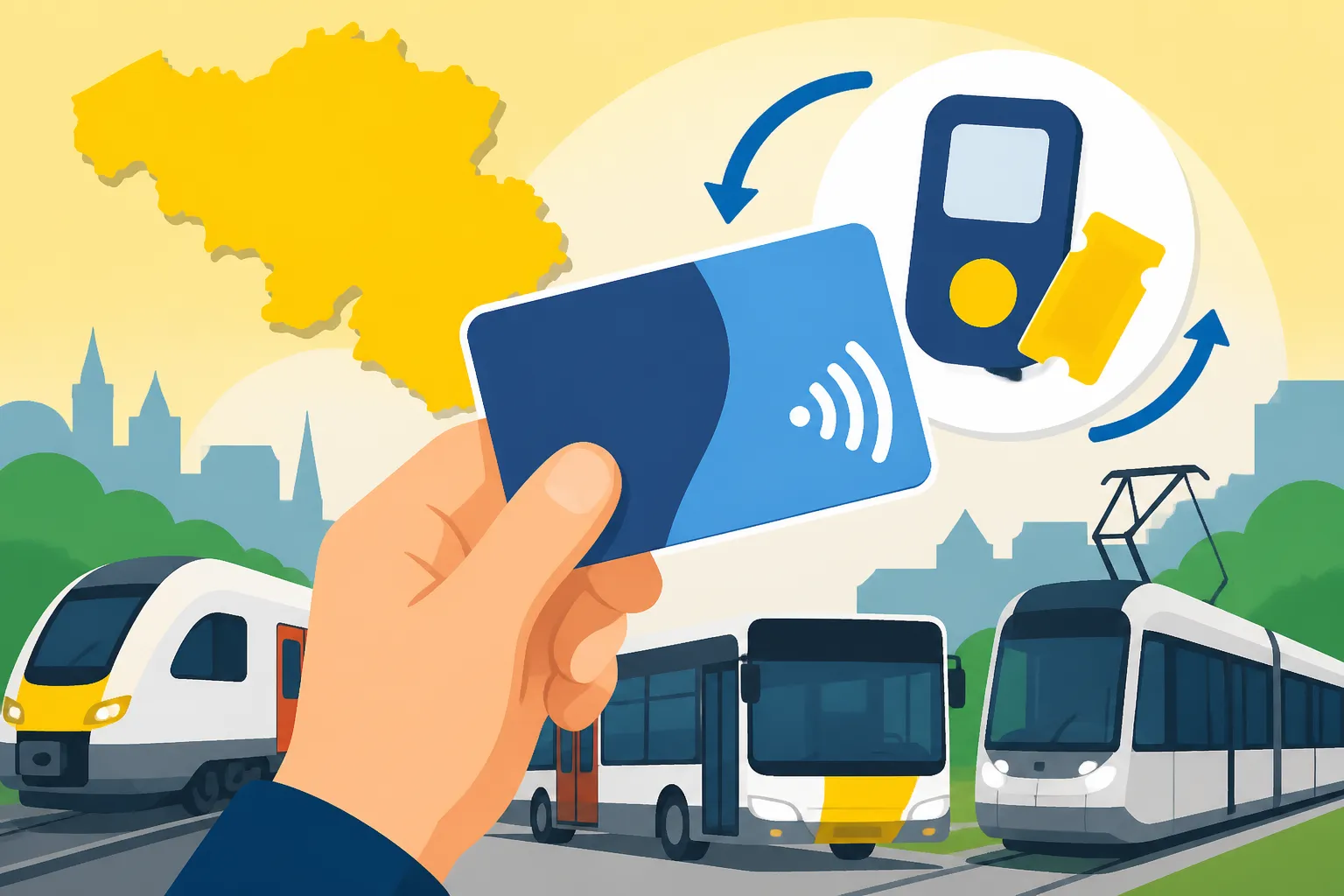
When you first arrive in Belgium, the transport system feels like a fragmented jigsaw puzzle. You have the STIB/MIVB for Brussels, De Lijn for Flanders, TEC for Wallonia, and the SNCB/NMBS for the national trains. The Mobib card is the plastic bridge that connects these four different kingdoms. It is a central electronic chip card—roughly the size of a credit card—that stores your tickets, whether they are single journeys, ten-trip packs, or monthly unlimited subscriptions.
There are two primary versions of the card: the Mobib Personal and the Mobib Basic. The Personal card is linked to your identity, requiring a photo and a small administrative fee (usually around five euros). It is the only way to load subsidized or monthly subscriptions. The Mobib Basic is anonymous, can be shared among friends or family members, but is limited to standard tickets and cannot hold your work-reimbursed rail pass. If you are moving here long-term, perhaps after finding a flat through HousingAnywhere, getting the Personal version is non-negotiable.
The Mobib Personal vs. Mobib Basic
The Personal card is registered in the national database. This is a lifesaver because if you lose it, your tickets can be recovered for a small replacement fee. I remember losing my wallet at a Christmas market in Antwerp; because I had a Personal card, my €50 monthly pass was transferred to a new card within ten minutes at a kiosk. The Basic card, however, is like cash. If you lose it, the tickets are gone forever.
Why You Need a Physical Card
While many of us prefer digital wallets, Belgium still relies heavily on the physical tap-and-go system for regional transfers. While you can use contactless bank cards for single rides on Brussels trams, you cannot load a "10-journey" discount pack or a "Brupass XL" onto a Visa or Mastercard. To get the best rates, the physical card remains the gold standard. You might even find yourself ordering a protective sleeve on Amazon Belgium just to keep the chip from wearing out during your daily commute.
Step-by-Step: How to Acquire Your First Mobib Card
Getting the card is your first real test of Belgian bureaucracy. If you are a resident, the easiest way is to head to a "BOOTIK"—these are the dedicated service centers for the STIB in Brussels or the SNCB in major train stations. You will need your Belgian eID card. If you are still waiting for your ID, you can use your passport and a small passport-sized photo.
The In-Person Kiosk Experience
Expect a wait. Belgian administrative offices are famous for their "ticket and queue" systems. When you reach the counter, specify that you want a Mobib Personal. They will scan your eID, take your five euros, and print the card on the spot. This is also a great time to ask about Transportation in Belgium: SNCB Trains, Trams, and Mobib Cards to see which specific zones you need covered.
Online Ordering and Shipping
If you prefer to avoid the queues, you can order your card through the MySTIB or MySNCB portals. You upload a digital photo and pay online. The card usually arrives in your mailbox within five to ten business days. This is where Itsme Authentication: How to Set Up Belgium's Vital Digital ID becomes incredibly useful, as it allows you to sign into these portals securely without needing a card reader.
The Role of the Commune
While the commune doesn't issue the cards directly, your status as a registered resident often dictates the price of your transport. Students under 25 and seniors over 65 get massive discounts—sometimes paying as little as €12 for an entire year of Brussels transport. You will often need to prove you have completed your Registering at the Commune: The 8-Day Rule After Arrival to unlock these specific social rates.
The Loading Process: Adding Tickets and Season Passes
Once you have the plastic in your hand, it is empty. You need to "load" it. This is where most expats get confused because each transport operator has its own "GO" machines and web shops. A common mistake is trying to load a Brussels tram ticket at a machine that only sells national train tickets.
Using the GO Machines
In every metro station and at many major tram stops, you will find red or grey GO machines. To load your card, place it in the designated cradle. Do not remove it until the screen says the transaction is finished! I once pulled mine out too early and the machine ate my €10. You can select "Purchase Tickets," choose your pack (like a 10-ride Brupass), and pay via Bancontact or credit card.
Online Loading and the 24-Hour Rule
You can load your card via the STIB or SNCB websites. However, there is a catch: the tickets are not instantly on your card. They are "pushed" to the validation machines. After buying a ticket online, you usually have to wait up to 24 hours before you can "pick it up" by tapping your card on a red validator at a station. If you need to travel immediately, always use a physical machine or the mobile app. To use the apps on the go without worrying about data, many newcomers use Airalo to keep their connection active while navigating the metro.
Managing Subscriptions
If your employer provides a transport allowance, they will often ask for your Mobib card number (the 19-digit code on the back). They can then remotely load your monthly or yearly pass. You will still need to tap your card on a GO machine or a validator to "activate" the new period each month. This is a crucial part of Healthcare Budgeting: Copays, DMG/GMD, and Reimbursements and general cost-of-living management, as transport is often 100% reimbursed by Belgian companies.
The Interoperability Headache: Using One Card Across Regions
The beauty of the Mobib card is that it is "interoperable." This means a card issued by the SNCB (trains) can hold a subscription for De Lijn (Flemish buses). However, just because the card can hold them doesn't mean they are the same ticket. You cannot use a De Lijn ticket to ride a Brussels metro, even if they are both on the same Mobib card.
Understanding Brupass and Brupass XL
Brussels and its "outer rim" have a special ticket called the Brupass. The standard Brupass covers the 19 communes of Brussels. The Brupass XL covers a wider radius, including places like Zaventem (the airport) and some suburbs in Flanders and Wallonia. This is the most "integrated" the system gets. With one Brupass, you can jump from an SNCB train to a STIB metro and then onto a De Lijn bus within the city limits. This is a core part of Public Transport: SNCB/NMBS (National Trains) Fares and Passes.
Adding De Lijn and TEC to Your Card
If you live in Brussels but travel to Ghent or Charleroi frequently, you can go to a De Lijn or TEC "Lijnwinkel" and ask them to link their system to your existing Mobib card. They will scan your card and "open" a slot for their tickets. You can then load "Lijnkaarten" or TEC journeys onto the same piece of plastic. It keeps your wallet slim but your brain might hurt trying to remember how many rides are left on each specific operator.
Validation Etiquette
In Belgium, you must validate your card every time you board, even if you have an unlimited yearly pass. This is for insurance and data purposes. If a "Contrôleur" (ticket inspector) boards and you haven't tapped, you can be fined even if you have a valid subscription. They are notoriously strict. I've seen tourists get €100 fines because they thought "having the pass" was enough without tapping the red machine.
Managing Your Card Digitally and Remotely
The future of Mobib is increasingly digital, but the transition is slow. Currently, the best way to manage your card is through the official apps: the STIB app, the SNCB app, and the De Lijn app. Each provides a different window into your card's contents.
Checking Your Balance
Nothing is more stressful than tapping your card and hearing the "angry beep" that signifies a zero balance. You can check your balance at any GO machine, but also through the STIB app if your phone has an NFC reader. Simply hold your card against the back of your phone, and the app will read the chip and display your remaining journeys. This is a lifesaver when you are running for the bus and need to know if you should stop at a machine.
The Role of Itsme in Transport
As mentioned, Setting Up Itsme While Waiting for Your Physical eID Card is vital. When you want to renew a yearly pass, the system needs to verify your address and age to give you the correct rate. Itsme acts as your digital signature, pulling your data from the National Register and instantly approving your student or senior discount without you needing to mail in paper forms.
Lost or Stolen Cards: The Recovery Protocol
If your Personal Mobib card is stolen, you must act fast. Log into your account (STIB or SNCB) and report it as lost. They will "blacklist" the card, preventing anyone else from using your balance. You then pay a small fee (usually €5 to €10) for a replacement. Your old tickets and subscriptions will be automatically loaded onto the new card. This is one of the "hidden" Common Charges (Charges Communes): What Exactly Are You Paying For? that expats should account for in their monthly budget.
| Ticket Type | Valid For | Best For | Approx. Cost |
|---|---|---|---|
| Single Journey | 60 minutes | Occasional rides | €2.10 – €2.50 |
| Brupass 10 Journeys | 10 x 60 minutes | Regular commuters | €15.00 – €17.00 |
| Brupass XL | Brussels + Suburbs | Commuters from outside the city | €22.00 (10-pack) |
| Monthly STIB | Unlimited Brussels | Resident workers | €49.00 |
| Yearly Student | Unlimited Brussels | Students < 25 | €12.00 |
Practical Tips for the Daily Commute
After years of navigating the "S-trains" and the "Premetro," I've developed a few survival tips that aren't in the official manuals. First, always carry a backup. Even though I have a Mobib card, I keep the STIB app installed and linked to my bank account. If the chip in my card fails—which happens more often than you'd think in the cold, damp Belgian winters—I can buy a digital ticket in seconds.
The "Tiers Payant" System
If you are working in Belgium, your employer is legally required to contribute to your transport costs. Most will cover 75% to 100%. Check if your company uses the "Tiers Payant" system. If they do, you don't even have to pay for your pass; the SNCB or STIB bills your company directly, and your Mobib card is updated automatically. It’s one of the best perks of Working in Belgium as an Expat: Jobs, Culture, and Hiring (2027).
Dealing with Delays and Strikes
Strikes ("Grèves") are a part of life here. When the trains stop, the Mobib card often becomes your ticket to a replacement bus. During major disruptions, transport operators sometimes open the gates for free, but don't count on it. Always validate your card anyway to stay on the right side of the law. If a delay is significant (usually over 60 minutes), you can claim compensation through the SNCB website using your Mobib card number as a reference.
Final Advice on "Intermodal" Travel
Don't be afraid to mix and match. You might use a bike-sharing service like Villo! to get to the station and then your Mobib card for the train. While Mobib doesn't currently store bike-share subscriptions, many people tape their Villo! card to the back of their Mobib card to keep everything together. Just be careful not to trigger two sensors at once when you tap at the gate!
Disclaimer
This guide is for informational purposes only and reflects the transport regulations and pricing in Belgium as of 2026. Transport operators (STIB, SNCB, De Lijn, TEC) frequently update their terms of service, fare structures, and technological requirements. Always verify the latest information on the official websites of the respective transport companies before making purchases. The author is not responsible for any fines, lost cards, or transit delays experienced while following this advice. For specific legal or administrative assistance, please contact the transport provider directly.