Waterl’eau vs Tap Water: Ordering Free Water at Belgian Restaurants
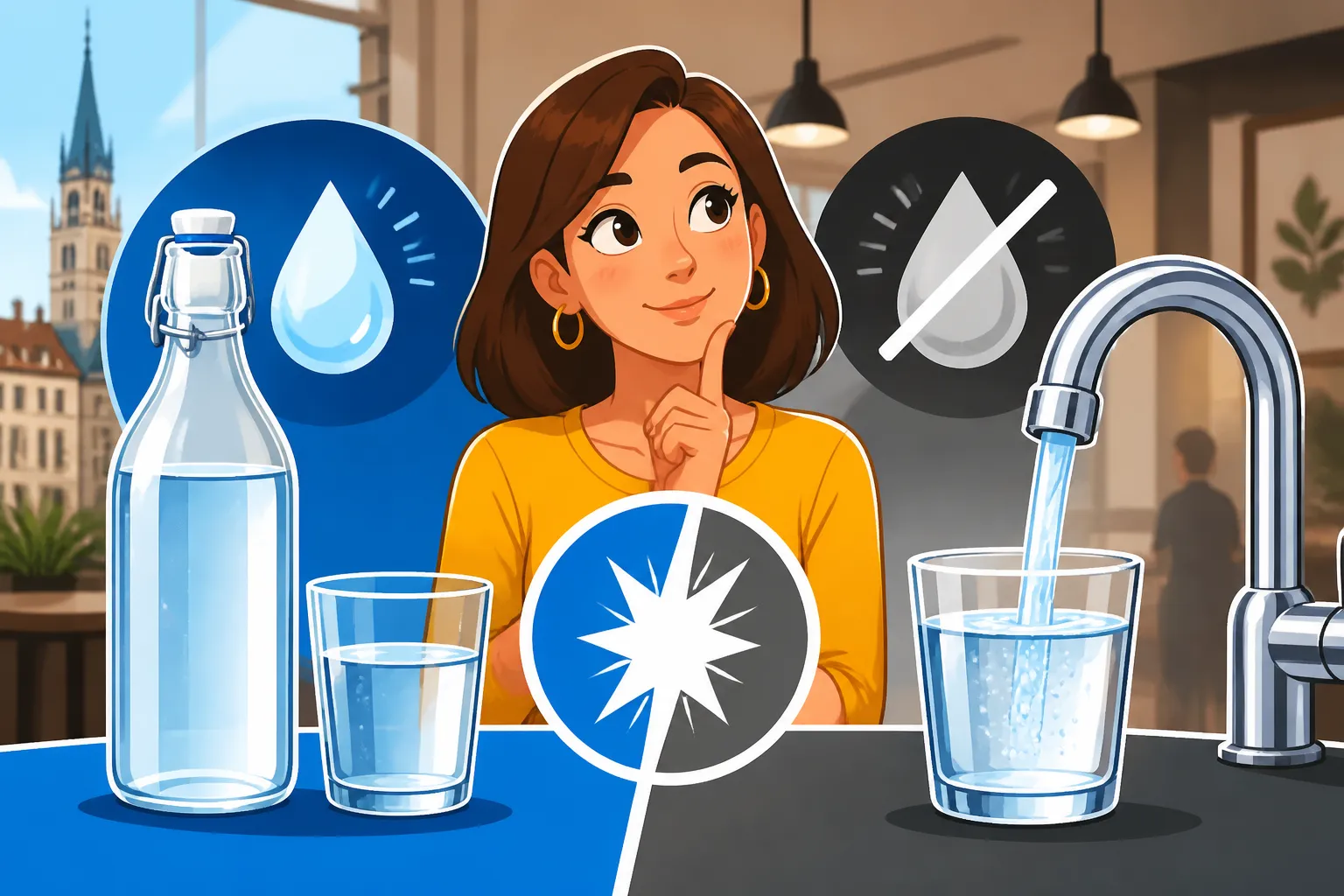
Walking into a Belgian brasserie and being charged seven euros for a bottle of water when you are already paying for a full meal is a classic expat shock. I remember my first month in Brussels, staring at a bill that cost more for water than for my coffee, feeling completely exploited. This guide explains how to navigate the Waterl'eau culture and the reality of tap water.
The Cultural Friction of Water in Belgian Dining
For many new arrivals, the "water situation" in Belgium feels like a deliberate hurdle designed to catch out the uninitiated. In North America, the UK, or even neighboring France, a carafe of tap water is often a basic right, arriving at your table as soon as you sit down. In Belgium, however, water is traditionally viewed as a commercial product. The hospitality sector, known here as Horeca (Hotels, Restaurants, Cafés), has historically relied on the high profit margins of bottled water to offset the relatively high labor costs and taxes associated with running a business.
When you sit down at a traditional establishment in the heart of Antwerp or the Marolles in Brussels, the waiter will almost always ask if you want "plat" (still) or "pétillant" (sparkling). If you simply say "water," they will bring a branded bottle—usually Chaudfontaine or Spa—and you will see a charge of €3.50 to €8.00 on your final bill. This can be particularly frustrating when you are trying to manage your Cost of Living in Belgium 2026: Budgeting for Cities and Families. I have spent countless dinners trying to explain to visiting friends that, no, the waiter isn't being rude; this is simply the established economic model of the Belgian restaurant scene.
Validation of this frustration is important. It feels counter-intuitive in a country that prides itself on sustainability and environmental consciousness to ship heavy glass bottles across the country. However, the culture is slowly shifting. Understanding the nuances of how to navigate this without offending the staff—or your wallet—is a key part of "becoming Belgian." While you are searching for your permanent home on a platform like HousingAnywhere, you will likely spend many nights eating out, and these small costs can add up significantly over your first few months.
What is the Waterl'eau Initiative
In recent years, a movement has emerged to bridge the gap between the traditional bottled-water model and the modern demand for sustainability. This is most notably represented by the "Waterl'eau" label. You might see a small sticker on a restaurant window or a note at the bottom of a menu featuring this branding. The Waterl'eau initiative is a voluntary program where restaurants commit to offering filtered tap water to their customers, often for free or for a very nominal "service fee."
The logic behind Waterl'eau is simple: it encourages restaurants to invest in high-quality filtration systems. By serving this water in reusable carafes, they reduce the carbon footprint associated with transport and glass recycling. For the expat, finding a Waterl'eau-certified restaurant is like finding an oasis. It signals a more modern, flexible approach to dining etiquette. If you are out exploring the city and using a local data plan from a provider like Airalo to find a place to eat, I highly recommend searching for "tap water friendly" spots or checking the official Waterl'eau maps online.
However, do not assume every restaurant is part of this. It remains a minority. Many old-school establishments still view the request for tap water as a sign of "cheapness" or a lack of respect for the house. The initiative aims to change this perception by allowing restaurants to charge a small fee—perhaps €1 or €2 per person—for "unlimited" filtered water. This covers the cost of the filtration equipment, the washing of the carafes, and the service, while still being significantly cheaper than buying three bottles of Spa for a family of four.
Legal Realities and the Cost of Hydration
One of the most common questions I get from newcomers is: "Is it illegal for them to refuse me tap water?" The short answer is no. Unlike France, where a 1967 decree (and subsequent updates) mandates that a "carafe d'eau" must be provided for free with a meal, Belgium has no such national law. There have been several legislative attempts in the Brussels-Capital Region and Wallonia to mandate free tap water, but the Horeca federations have lobbied hard against them, citing the thin margins of the industry.
In 2024 and 2025, we saw some movement toward "incentivizing" free water, but as of 2026, it remains at the discretion of the owner. This is why you must be careful. If you are trying to stay within a strict budget, especially after paying for your Mobile Phone Plans: Prepaid vs Subscriptions (Orange, Base, Proximus) and other initial setup costs, you need to know the price before you pour. Some restaurants have even started charging for tap water at a price nearly identical to bottled water, justifying it through "service and filtration costs."
| Type of Establishment | Typical Water Offering | Estimated Cost | Etiquette Note |
|---|---|---|---|
| Traditional Brasserie | Bottled Only (Spa/Chaudfontaine) | €4.00 – €8.00 | Asking for tap may be met with a "no." |
| Trendy/Modern Bistro | Waterl'eau / Filtered Carafe | €0.00 – €3.00 | Often "all you can drink" per person. |
| Quick Service / Snack | Canned or Small Plastic | €2.50 – €3.50 | Very rarely offer tap water. |
| High-end Gastronomy | Bottled or House-Filtered | €7.00+ | Usually included in a "wine/drinks package." |
It is also worth noting that in certain tourist-heavy areas of Brussels or Bruges, some establishments may even refuse to serve you if you don't order a "paying drink." This is extreme and generally a sign of a "tourist trap," but it happens. If you are still in the process of Finding an Apartment: Immoweb, Immovlan, and Facebook Groups, you might find yourself in these central areas often. My advice? Always check the menu board outside for "soft" prices before committing to a table.
How to Successfully Order Tap Water
If you want to try your luck at ordering tap water in a place that doesn't explicitly advertise it, the "how" matters just as much as the "what." In Belgium, a direct demand for "free water" can be seen as aggressive. Instead, use the "carafe" approach. In French-speaking areas (Brussels and Wallonia), ask for "une carafe d'eau du robinet, s'il vous plaît." In Flanders, you would ask for "een karaf kraantjeswater, alstublieft."
The "Veteran Expat" trick is the Golden Rule of the Second Drink. I have found that waiters are much more likely to bring a carafe of tap water if you have already ordered a paying drink, such as a glass of wine, a beer, or a coffee. By doing this, you are acknowledging that the restaurant needs to make a profit. Once that first round is on the table, asking for a carafe of water to accompany your meal is much more socially acceptable. If they say they only have bottled water, you can then decide if you want to proceed.
Another tip is to look for "Drinking Water" apps. There are community-driven maps that list establishments known for being "tap water friendly." Using your Airalo data to check these while walking through Ghent or Liege can save you €10 on a lunch for two. Also, keep an eye on the Tipping Culture in Belgium: Restaurants, Cafes, and Deliveries. If a place is kind enough to provide free water without making a fuss, it’s good form to be a bit more generous with your rounding up when the bill arrives.
Tap Water Safety and Quality at Home
While the restaurant struggle is real, the good news is that tap water in Belgium is perfectly safe to drink. In fact, it is among the most strictly controlled substances in the country. However, many expats find the taste "off." This is because Belgian water—especially in the Brussels and Flanders regions—is very "hard," meaning it has a high mineral content, specifically calcium and magnesium.
This hardness leads to two things: a slightly chalky taste and a massive buildup of limescale (calcaire/kalk) in your appliances. When you are Setting Up Electricity and Gas: Engie, Luminus, and Peak Tariffs, you should also think about your water heater. To deal with the taste at home, I highly recommend a filtration pitcher. You can easily find Brita filters and carafes on Amazon Belgium. Filtering the water not only makes your morning tea taste better but also saves you from the literal heavy lifting of carrying packs of bottled water from the supermarket to your apartment.
If you are living in an older building, which is common if you used HousingAnywhere to find a charming "maison de maître," you might want to run the water for a minute in the morning to clear any standing water from old pipes. Many Belgians still insist on buying bottled water for the table at home, but this is more about prestige and habit than safety. For more on the quirks of Belgian domesticity, check out our guide on Everyday Rules in Belgium: Garbage Sorting, Noise, and Etiquette.
Managing Expectations in Different Regions
The "water war" isn't uniform across the country. In Wallonia, particularly in the Ardennes, there is a certain pride in local springs (like Spa), but there is also a slightly more relaxed attitude toward tap water in smaller, local bistros. In Brussels, because of the massive international population, many "international" style cafes (think avocado toast spots or specialty coffee shops) offer a self-service water station with mint or lemon as a matter of course. These spots are the easiest for expats to navigate.
Flanders can be a bit more hit-or-miss. In cities like Antwerp or Leuven, modern establishments are very "Waterl'eau" friendly, but the more traditional "Bruin Café" might still look at you sideways if you ask for water without ordering a beer first. Always remember The 'Friterie/Frituur' Etiquette: Ordering Fries Like a Local—in a frituur, you almost always buy a bottled or canned drink; tap water is virtually unheard of in that setting.
If you are a student or a freelancer working from cafes, be mindful of the "one drink per hour" unspoken rule. If you sit for three hours with a single laptop and only ask for free tap water, you will likely be asked to leave. Use your Airalo connection to stay productive, but keep the drinks flowing—even if it's just one coffee followed by a "paying" water. It’s all about maintaining the balance between your budget and the local business's survival.
Practical Advice for New Arrivals
Navigating the first 90 days in Belgium is a whirlwind of bureaucracy and cultural adjustments. Between registering at the commune and figuring out where to buy lightbulbs (Amazon Belgium is your friend here), the water issue might seem small, but it’s a daily occurrence. My advice is to carry a high-quality reusable water bottle with you. While you can't exactly pull it out and drink from it in a nice restaurant, it’s perfectly acceptable in parks, at the train station, or while you're sitting in a waiting room.
Belgium is slowly catching up to the rest of the world regarding free public drinking fountains, but they are still relatively rare. You will find some in the major parks in Brussels (like Parc de Bruxelles or Bois de la Cambre). If you are out and about, look for the "Refill" stickers on shop windows, which indicate that the business will refill your bottle for free.
Finally, don't let the water issue sour your dining experience. Belgian food—from carbonnade flamande to moules-frites—is incredible. The hospitality culture here is focused on quality and taking your time. If you have to pay a few euros for a bottle of water to enjoy a three-hour lunch without being rushed, sometimes it's worth the "peace of mind" tax. Just remember to check the labels and ask politely.
Disclaimer
This guide is intended for informational purposes only. While I have lived in Belgium for many years and have navigated these restaurants personally, policies regarding free tap water can change by municipality or individual establishment. Always check the menu or ask the staff to avoid unexpected charges on your bill. Prices and initiatives like Waterl'eau mentioned are based on the current landscape in 2026.