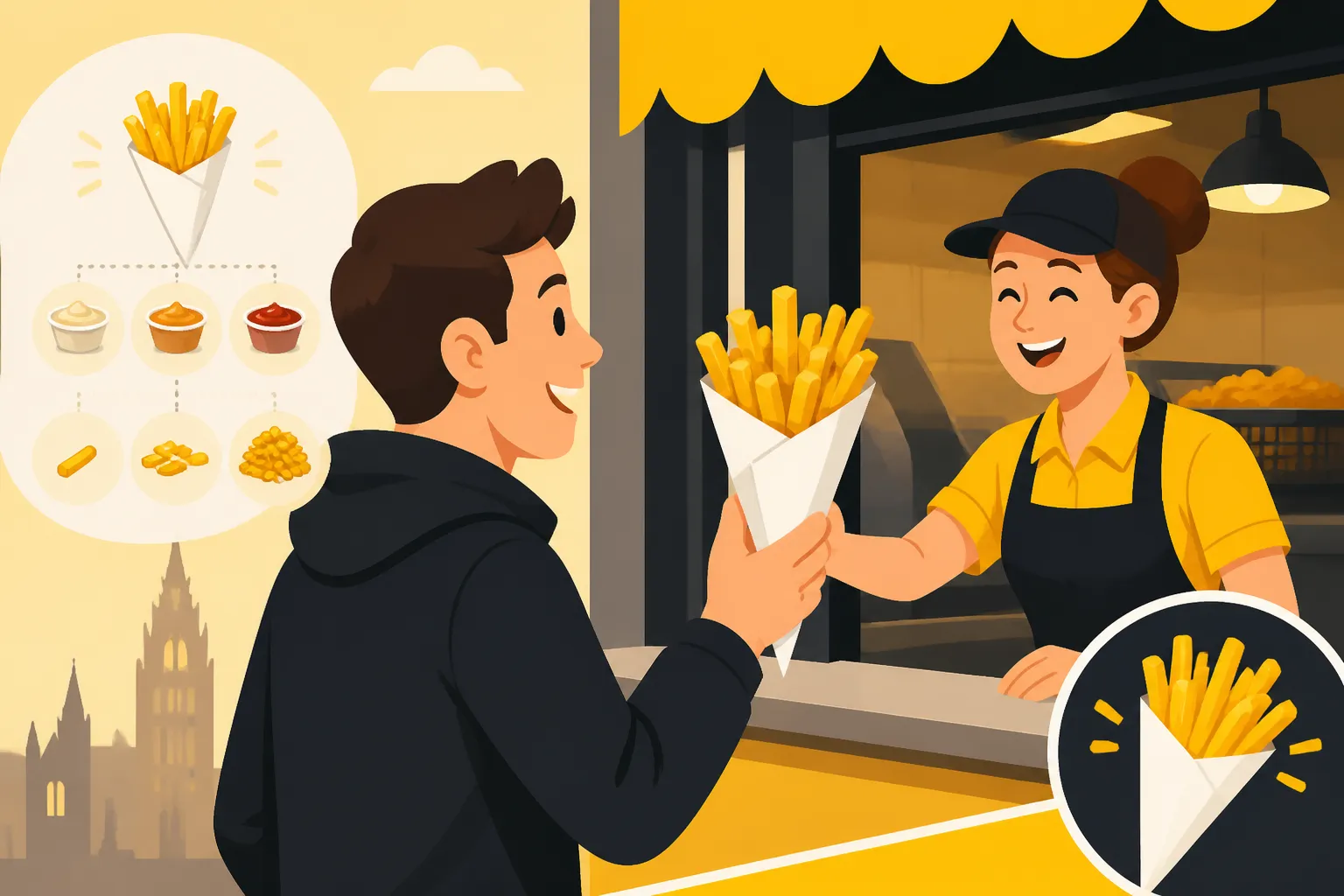
The ‘Friterie/Frituur’ Etiquette: Ordering Fries Like a Local
Walking into a Belgian fry shop for the first time can feel surprisingly intimidating. You stand in a bustling queue, surrounded by locals rapidly shouting out complex orders of golden fries, obscure sauce combinations, and deep-fried meat snacks, while the owner works at breakneck speed behind a roaring tub of beef fat. This comprehensive guide breaks down the unwritten rules of the Belgian friterie or frituur, helping you navigate the ordering flow, master the menu terminology, and blend in seamlessly like a true local.
Understanding the Belgian Frituur Culture and Unwritten Rules
To the uninitiated, a Belgian fry shop might look like any standard fast-food takeaway counter. To locals, however, it is a sacred cultural institution. Belgian fry culture is so deeply woven into the nation’s identity that UNESCO has recognized it as intangible cultural heritage. When you step into a friterie in French-speaking Wallonia or Brussels, or a frituur in Dutch-speaking Flanders, you are participating in a weekly, if not daily, social ritual that spans across all socioeconomic classes.
Understanding the mechanics of this environment will prevent you from making classic newcomer mistakes, like asking for “French fries” or expecting plain tomato ketchup.
The Difference Between a Fast Food Joint and a True Frituur
A real Belgian fry shop is defined by its preparation method and dedication to craft. True Belgian fries are never frozen, pre-packaged strips thrown mindlessly into vegetable oil. They are freshly cut Bintje potatoes, cooked twice: first at a lower temperature to soften the inside into a pillowy texture, and second at a higher temperature to produce an intensely crispy, golden exterior. Traditionally, this frying takes place in ossenvet (in Dutch) or graisse de bœuf (in French)—refined beef tallow—which gives the fries their signature savory aroma and rich flavor profile.
When settling into a new city after completing your Surviving the First 90 Days: Ultimate Move-in Checklist, finding your neighborhood fry shop is one of the ultimate comfort milestones. When arriving in Belgium and setting up your new apartment through HousingAnywhere, one of the first neighborhood rites of passage is finding your local shack or storefront. You will encounter two main forms: the standalone mobile trailer or wooden shack (baraka à frites in French or frietkot in Dutch) usually stationed in town squares, and the permanent brick-and-mortar neighborhood shop. While both serve delicious food, the mobile shacks often carry an old-school charm where community members chat in line late into the night.
The Sacred Order Queue and Flow
Order flow in a crowded frituur moves at high speed, especially during peak dinner hours between 6:00 PM and 8:30 PM, or after midnight on weekends. The golden rule of frituur etiquette is to know what you want before you reach the front of the line. Deciding your order while standing face-to-face with an exhausted fry chef who has ten orders firing simultaneously is considered a major faux pas.
In smaller or more traditional shacks where physical lines blur into a casual crowd, you should always keep track of who arrived immediately before you. It is polite practice to make eye contact or ask quietly: “Qui est le dernier?” in French or “Wie is de laatste?” in Dutch (“Who is last?”). Respecting this informal queue is vital for maintaining order. When it is your turn, state your fry size first, followed by your preferred container type, your sauce selection, and finally any meat snacks you want to add to the fryer. Following this exact sequence helps the operator organize their workflow efficiently.
Seating, Takeaway, and Dining Etiquette
When ordering, the staff will ask whether you are eating on-site (sur place in French / ter plaatse in Dutch) or taking your food home (à emporter in French / meenemen in Dutch). This distinction matters deeply. If you eat on-site at a shop with tables, some establishments charge a very small seating supplement, or they may serve your meal on a plastic tray rather than wrapping it tight in paper.
For takeaway orders, your fries will typically be wrapped in thick, heat-retaining paper. If you choose a cone (cornet or puntzak), the sauce is squirted directly on top of the fries. If you prefer your fries to stay crisp during a long walk or commute home, ask for the sauce on the side (sauce à part or saus apart). The chef will pack your sauce into a tiny plastic tub, keeping the top layer of fries from turning soggy. Remembering these basic dining norms fits into the broader picture of learning Everyday Rules in Belgium: Garbage Sorting, Noise, and Etiquette.
Decoding the Frituur Menu: Portions, Sauces, and Side Items
The menu board of a Belgian fry shop can look like an intimidating wall of text filled with regional jargon, obscure snack names, and dozens of colorful sauce varieties. Beginners often default to simple choices out of panic, but exploring the menu is where the true joy of the frituur lies.
TYPICAL FRITUUR ORDERING FLOW
STEP 1: Pick Fry Size –> Small / Medium / Large
STEP 2: Pick Container –> Paper Cone (Puntzak) or Box (Ravier/Bakje)
STEP 3: Select Sauce –> On top (Sur les frites) or Separate (Apart)
STEP 4: Select Snacks –> Frikandel, Boulet, Bicky Burger, etc.
STEP 5: Choose Dining Style –> Takeaway (Meenemen) or On-Site (Ter plaatse)
Portion Sizes and the Science of Belgian Fries
Portion sizes in Belgium are notoriously generous. Do not let modest culinary habits from back home fool you; a Belgian “small” fry is frequently larger than a large order at standard global fast-food chains.
- Small (Petite / Klein): Perfect for a single person with a normal appetite, or to accompany a meat snack.
- Medium (Moyenne / Middel): Generous portion, easily enough for a hungry adult or two light eaters sharing a side snack.
- Large (Grande / Groot): A massive mound of fries designed for serious appetites or for sharing among family members at home.
You will also be asked to choose between a paper cone (cornet in French / puntzak in Dutch) or a rectangular plastic/cardboard tray (ravier in French / bakje or bakken in Dutch). Purists almost always favor the paper cone. The conical shape traps heat at the bottom while allowing excess moisture to escape from the top, keeping the fries hot and crispy for longer. The tray, however, offers a wider surface area, making it easier to share with friends or dip fries without getting sauce on your knuckles.
Understanding local food costs helps you keep your daily spending under control, as covered in our guide on Cost of Living in Belgium 2026: Singles, Couples, and Families.
The Mind-Boggling Sauce Hierarchy
If fries are the body of the meal, sauce is its soul. Walking into a shop and simply asking for “ketchup” is considered a lost opportunity. While plain tomato ketchup exists, it is rarely ordered by locals. Instead, you will be confronted by a display of 15 to 30 custom sauce dispensers.
If you have just landed and are using an e-SIM from Airalo to translate the menu boards on your phone, don’t worry—the process is simpler than it looks once you know the core terms. Here are the foundational sauces every resident must know:
- Belgian Mayonnaise: Rich, creamy, and noticeably tart. Unlike sweeter Anglo-American versions, Belgian mayo contains a higher percentage of oil and mustard, giving it a sharp, tangy kick that cuts through the richness of fried potatoes.
- Andalouse: A legendary local favorite made from a mayonnaise base mixed with tomato paste, finely diced onions, bell peppers, and mild spices.
- Samouraï: A spicy, fiery sauce blending mayonnaise with red chili peppers or harissa paste. It packs a genuine punch and is extremely popular across Brussels.
- Joppiesaus: Originating near the Dutch border, this is a sweet, yellowish sauce made with mayonnaise, curry powder, mild spices, and sweet onions.
- Bicky Sauces: A unique trio of sauces (yellow dressing, brown hot sauce, and red ketchup-style sauce) used primarily on the famous Bicky Burger, but often requested over fries.
- Special (Spéciale / Speciaal): Not a single sauce, but a style! Ordering your fries or snack “Speciaal” means it will be topped with a combination of mayonnaise, curry ketchup (or tomato ketchup), and a heavy handful of finely chopped raw onions.
When living in neighborhoods with rich culinary tapestries, such as those highlighted in Living in Brussels: Top Expat Neighborhoods (Ixelles, Etterbeek), you will quickly discover that every local shop takes enormous pride in its proprietary house sauce recipe.
Essential Snacks Beyond the Fries
A visit to the frituur is incomplete without ordering at least one deep-fried meat snack from the glass display case. These snacks are cooked to order alongside your fries.
- Fricandelle / Frikandel: A skinless, cylindrical spiced meat sausage. It is smooth on the inside and crispy on the outside. Ordering a Frikandel Speciaal (cut down the middle, stuffed with raw onions, mayo, and curry ketchup) is an absolute rite of passage.
- Boulet / Gehaktbal / Mitraillette ball: A large, seasoned meatball made from pork, beef, or poultry. In Wallonia, it is often served with Sauce Lapin (a sweet, dark raisin and onion sauce).
- Mexicano / Carrero: A rectangular, spicy, heavily ribbed meat patty with a firm, springy texture and a fiery pepper flavor profile.
- Poulycroc / Viandelle: Poulycroc is a deep-fried poultry patty with an ultra-crunchy cornflake coating, while Viandelle is a frikandel wrapped in a crispy, crunchy pastry crust.
- Kroket / Croquette: Available in various forms, most notably Garnaalkroketten (gray shrimp croquettes with a creamy béchamel filling) or Kaaskroketten (cheese croquettes).
For those settling into Flanders, exploring the street food scene is just as important as finding your way around the city, as detailed in our guide on Living in Antwerp: Port City Vibe and Best Areas for Foreigners.
Regional Language Differences and Ordering Etiquette
Belgium is a trilingual country divided into distinct language regions: Dutch-speaking Flanders in the north, French-speaking Wallonia in the south, and bilingual Brussels in the middle. Ordering etiquette and vocabulary adapt to local language norms.
Friterie vs Frituur: French vs Dutch Terminology
While the quality of the fries remains exceptionally high across all regions, the vocabulary on the menu boards changes completely once you cross linguistic borders.
In Brussels and Wallonia, you will visit a Friterie. You order a cornet de frites (paper cone of fries) or a ravier (tray). If you want your meat snack sliced up and placed directly on top of your fries, you ask to have it coupé sur les frites. If you want a truly legendary street meal, order a Mitraillette (literally “submachine gun”). This consists of a half-baguette stuffed with grilled or fried meat, topped with a massive handful of fries, and drenched in your choice of sauce.
In Flanders, you will visit a Frituur. You order a puntzak frieten (paper cone) or a bakje friet (tray). The Flemish counterpart to the Mitraillette is often referred to as a Rambo or simply a Baguette Friet.
When interacting with locals, learning basic polite phrases in their native language goes a long way toward receiving warm service. Check out our advice on Making Friends Without Speaking Fluent French or Dutch to build your confidence in local social settings. Similarly, student-heavy hubs like those discussed in Living in Leuven: Student City Vibe and Expat Professional Life feature ultra-welcoming fry shops where English is widely spoken, though attempting the local dialect is always appreciated.
Payment Methods, Hours, and At-Home Recreation
Traditional fry shacks historically operated strictly on cash. While modern card payments have expanded rapidly across Belgium, many smaller independent shacks still maintain cash-only rules or require a minimum purchase amount for card transactions.
It is always wise to keep small euro coins or a active local payment app on your smartphone when heading out late at night. Apps like Bancontact or Payconiq are widely accepted across the country; you can learn how to set them up in our guide to Essential Belgian Apps to Download: SNCB, Itsme, Payconiq, and TooGoodToGo.
Most neighborhood fry shops open for lunch, close during the late afternoon, and reopen for dinner until late into the night. On Sundays and Mondays, many independent shops close down completely for rest days, so plan your cravings accordingly!
If you want to recreate the experience at home, you can easily find specialized dual-basket fryers or authentic sauce squeeze bottles on Amazon Belgium, though nothing quite beats the atmosphere of the local shack. Having the right tools in your kitchen is part of making a new house feel like home after navigating Renting in Belgium: Apartments, Contracts, and Tenant Rights (2027).
Quick Reference Guide for Ordering Like a Local
To help you order smoothly on your next trip to the local counter, keep this handy reference table saved on your phone:
| Order Component | French Term (Friterie) | Dutch Term (Frituur) | Expat Etiquette & Usage Tip |
|---|---|---|---|
| Establishment | Friterie / Baraka à frites | Frituur / Frietkot | Look for shops with long queues of locals for the freshest batches. |
| Paper Cone | Cornet | Puntzak | Holds heat best; keeps top fries crisp while keeping the bottom warm. |
| Plastic/Paper Tray | Ravier | Bakje / Bakken | Best option if you want to share fries or sit down at a table. |
| Small Portion | Petite | Klein | Surprisingly large! Sufficient for one person alongside a meat snack. |
| Medium Portion | Moyenne | Middel | Generous portion; ideal for hungry eaters or light sharing. |
| Sauce on the Side | Sauce à part | Saus apart | Prevents your fries from turning soggy if taking food home. |
| Sauce on Top | Sauce sur les frites | Saus erop | The classic street style; squirted generously over the top layer. |
| The “Special” Style | Spéciale | Speciaal | Adds mayonnaise, curry/tomato ketchup, and diced raw onions. |
| Baguette Sandwich | Mitraillette | Baguette Friet / Rambo | A half-baguette packed with fried meat, fries, and sauce. A full meal! |
| Takeaway | À emporter | Meenemen | Food is wrapped securely in thick paper to preserve heat. |
| Eat On-Site | Sur place | Ter plaatse | Food is served open on a tray; check if there is a seating surcharge. |
By keeping these simple cultural norms, language tips, and ordering steps in mind, you can walk into any friterie or frituur across Belgium with confidence. Order your portion, pick an adventurous sauce, add a crispy side snack, and enjoy one of the finest street-food experiences Europe has to offer!
Disclaimer
This article is for general informational purposes only and does not constitute professional advice. Laws, prices and regulations vary by location and change over time. Consult a qualified professional for guidance on your specific situation.