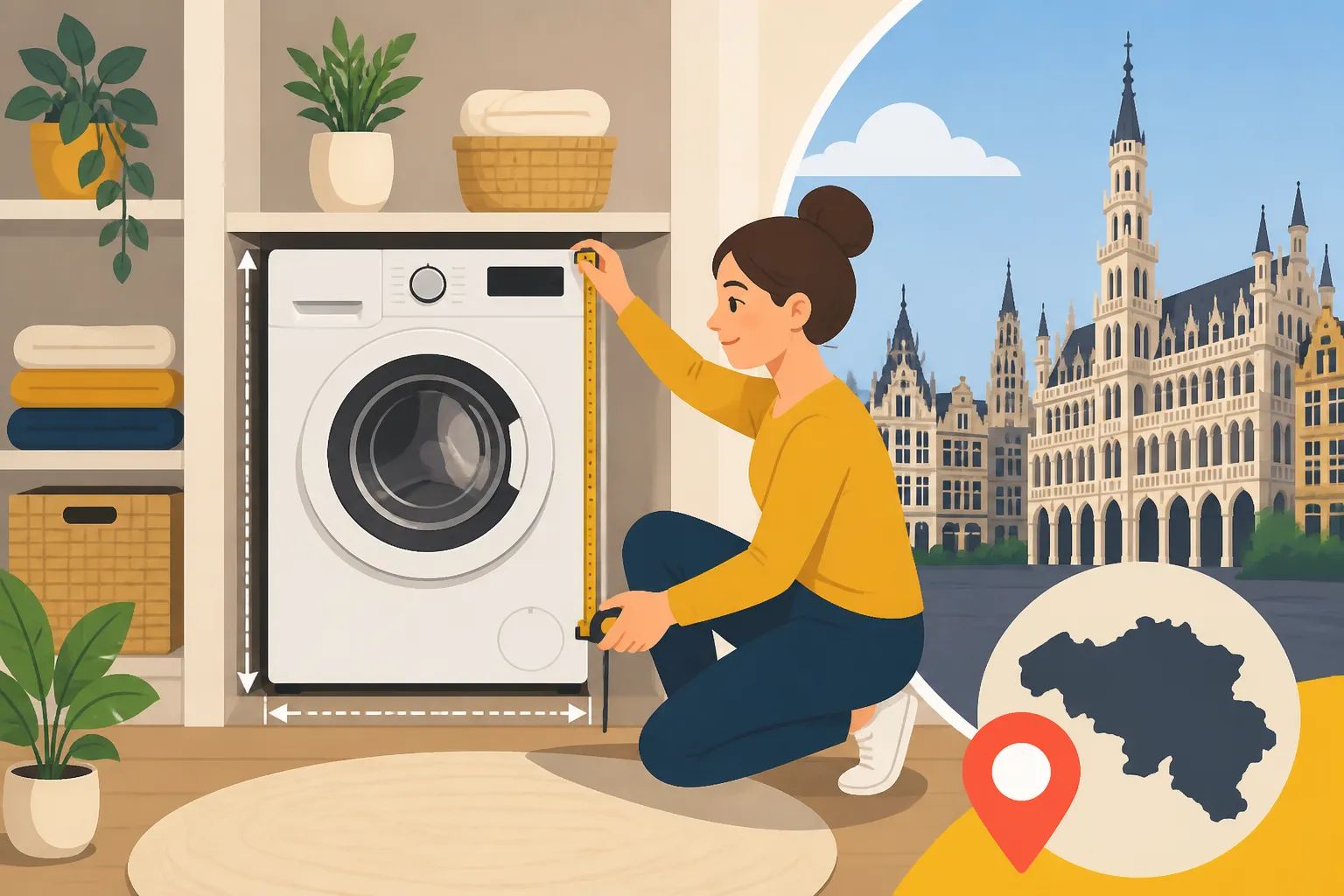
Washing Machines in Belgium: Finding Compact Sizes for Apartments
Finding a washing machine that actually fits into a Brussels apartment without requiring you to remove a doorframe is a legitimate expat rite of passage. I once spent three miserable hours measuring a laundry closet in Ixelles only to realize the doorway was exactly two centimeters narrower than every standard machine at the store. This guide solves the headache of finding compact laundry solutions in the unique, often cramped, Belgian housing market.
Understanding the Belgian Laundry Landscape
The first thing you will notice when Renting in Belgium: Apartments, Contracts, and Tenant Rights (2027) is that "unfurnished" often means truly empty—no fridge, no oven, and certainly no washing machine. While modern developments in suburbs like Evere or Auderghem might have spacious utility rooms, the classic "maison de maître" or older apartment blocks in the city center usually relegate your laundry setup to a tiny corner of the bathroom or a narrow hallway closet.
The "standard" width for a washing machine in Europe is 60cm. In many Belgian apartments, especially those converted from older townhouses, the architects clearly didn't get the memo. You might find hookups tucked under a sink or in a kitchen nook where every millimeter counts. Before you even look at a catalog, you need to perform a rigorous Inventory of Fixtures (État des Lieux): Why It's Crucial Before Moving In. This includes measuring the width of the hallway, the swing of the bathroom door, and the depth of the space where the pipes are located. If you are still in the search phase, platforms like HousingAnywhere are excellent for filtering for places that specifically mention included appliances, which can save you this entire logistical nightmare.
Another uniquely Belgian factor is the "lift" requirement. If you live on the third floor of an old building with a beautiful but tiny birdcage elevator, your new washing machine will not fit in it. You will likely need to hire an external furniture lift (un lift) to bring the machine through the window. Most major Belgian appliance retailers offer this service for an extra fee, but it is a cost you must budget for when calculating your Common Charges (Charges Communes): What Exactly Are You Paying For?.
Top Solutions for Small Belgian Apartments
When space is at a premium, you have three primary paths to take. The most common mistake expats make is assuming that a front-loader is the only option. In Belgium, we have access to a variety of "slimline" models that are specifically designed for our cramped urban living conditions.
The Top-Loading Hero
In North America, top-loaders are often massive, industrial-looking things. In Belgium, a top-loader is usually a sleek, narrow machine that is only 40cm wide. These are the absolute gold standard for tiny studios or narrow bathrooms. Instead of needing 60cm of width plus space for the door to swing outward, these machines open at the top and slide into the tightest of gaps.
Most top-loaders available on Amazon Belgium or at local shops like Vanden Borre come with wheels or a "mobility lever" that allows you to pop the machine up and roll it away from the wall if you need to clean behind it—a lifesaver in dusty old buildings. The trade-off is capacity; you are looking at 6kg to 7kg loads rather than the 9kg or 10kg you might get with a full-sized unit. However, for a single expat or a couple, this is more than enough.
Slimline Front Loaders
If you absolutely must have a front-loader (perhaps because you want to stack a dryer on top or use the top as a counter), look for "slim depth" models. While the width remains 60cm, the depth is reduced from the standard 60-65cm down to 40-45cm. This is crucial if your hookups are in a hallway where a standard machine would block the path.
When you are setting up your Utilities and Home Setup: Electricity, Water, Gas, and Internet, ensure you check the drainage pipe's location. A slimline machine often has less internal space for the drain hose to coil, so a precise fit is mandatory. I have seen many expats buy a slim machine only to find that the protruding pipes at the back added another 5cm of depth, making the "slim" purchase redundant.
The All-in-One Washer-Dryer Combo
Given the Belgian climate—which involves a fair amount of grey, humid days—drying clothes on a rack can lead to humidity issues in small flats. A washer-dryer combo (une lavante-séchante) is a popular choice. It takes up the footprint of one machine but handles both cycles.
However, be warned: these machines are notorious for their small drying capacities. You might be able to wash 8kg of clothes, but you can only dry 4kg. This means you either do half-loads or spend your Sunday afternoon doing multiple cycles. If you go this route, check the energy rating carefully. With the way Setting Up Electricity and Gas: Engie, Luminus, and Peak Tariffs works, a low-efficiency combo machine can significantly spike your monthly bills.
| Machine Type | Typical Width | Typical Depth | Best For |
|---|---|---|---|
| Standard Front Loader | 60 cm | 60-65 cm | Modern apartments with utility rooms |
| Slim Front Loader | 60 cm | 40-45 cm | Kitchen under-counter or narrow halls |
| Top Loader | 40 cm | 60 cm | Narrow bathroom gaps / tiny studios |
| Washer-Dryer Combo | 60 cm | 45-60 cm | Eliminating the need for a drying rack |
Where to Buy and How to Install
Once you have your measurements, you need to decide where to buy. If you are just moving in and still waiting for your fiber internet to be connected, you might be relying on a temporary data solution like Airalo to browse your options.
Physical Stores vs. Online Retailers
The two big players in Belgium are Vanden Borre and Krefel. Both offer excellent delivery and installation services. If you speak limited French or Dutch, Vanden Borre’s "Service Après Vente" (after-sales service) is generally highly regarded and they often have staff who can help in English.
Alternatively, Amazon Belgium has become a powerhouse for appliances. The advantage here is the transparent review system and the ability to find niche "compact" brands that might not be stocked in a traditional showroom. Regardless of where you buy, always look for the "Eco-chèque" logo. In Belgium, many employers provide eco-vouchers as a tax-free benefit, and you can use these to pay for high-efficiency washing machines (usually A or B rated).
The Installation and the Siphon Trap
In many older Belgian apartments, the "siphon" (the U-bend in the drain pipe) is positioned quite high or in an awkward spot. If you aren't comfortable with basic plumbing, I strongly suggest paying the €20-€30 for professional installation. Belgian delivery teams are incredibly efficient; they will unbox the machine, level it (crucial for those uneven 19th-century floors), and ensure the "transport bolts" are removed.
Forget to remove those bolts, and your machine will try to "walk" across the room during its first spin cycle, likely taking a chunk out of your drywall and complicating your Everyday Rules in Belgium: Garbage Sorting, Noise, and Etiquette standing with your neighbors.
Maintenance and the Belgian "Hard Water" Problem
One thing no one tells you about moving to Brussels or Flanders is that the water is incredibly "hard" (full of calcium and magnesium). If you don't treat your machine, the heating element will be coated in limescale within a year, leading to higher energy use and eventual breakdown.
Using Water Softeners
You will see "Calgon" commercials everywhere in Belgium for a reason. Every time you run a load, you should add a water softening tab or liquid. If you prefer a more natural approach, a splash of white vinegar in the fabric softener compartment works wonders for both the machine and keeping your towels from feeling like sandpaper.
This is particularly important for Moving to Belgium with Family: Housing, Schools, and Childcare, as baby clothes can become quite stiff and irritating to the skin when washed in untreated Belgian hard water. You can find large, affordable jugs of cleaning vinegar at stores like Action or Colruyt.
Laundry Etiquette and Quiet Hours
Belgians value their "rust" (peace). Most apartment buildings have strict rules about noise after 10:00 PM and on Sundays. If you have a high-decibel machine, avoid running it late at night. Even if your contract doesn't explicitly forbid it, it's a quick way to sour relations with the people living below you. Check your building's house rules (le règlement de copropriété) to see if there are specific "quiet hours" for appliances. This is a key part of navigating Noise and Apartment Etiquette: Quiet Hours and Sunday Rules in a culture that takes its sleep very seriously.
If you find yourself in a situation where your machine is broken or you haven't bought one yet, don't panic. Belgium has a robust network of laundromats. You can easily spend an hour Using Laundromats (Lavoirs) in Brussels Without a Cash Card while enjoying a coffee at a nearby café.
Navigating the Rubbish: Disposal of Old Machines
If you are replacing an old machine that the previous tenant left behind, you cannot simply put it on the curb. You must follow the Garbage Sorting Rules: Blue, Yellow, White, and Green Bags Explained for oversized waste.
In Belgium, when you buy a new appliance, you pay a "Recupel" fee. This fee ensures that the retailer is legally obligated to take your old machine away for free when they deliver the new one. This is the "1-for-1" rule. If you are just disposing of one without buying a new one, you will need to book a "propreté" (junk removal) appointment with your local commune or drive it to a Recypark yourself.
A Short Disclaimer
The information provided in this guide is based on personal expat experience and current market trends in Belgium. While we strive for hyper-local accuracy, plumbing standards and municipal regulations can vary between Brussels, Flanders, and Wallonia. Always consult your specific rental contract and building rules before installing major appliances.