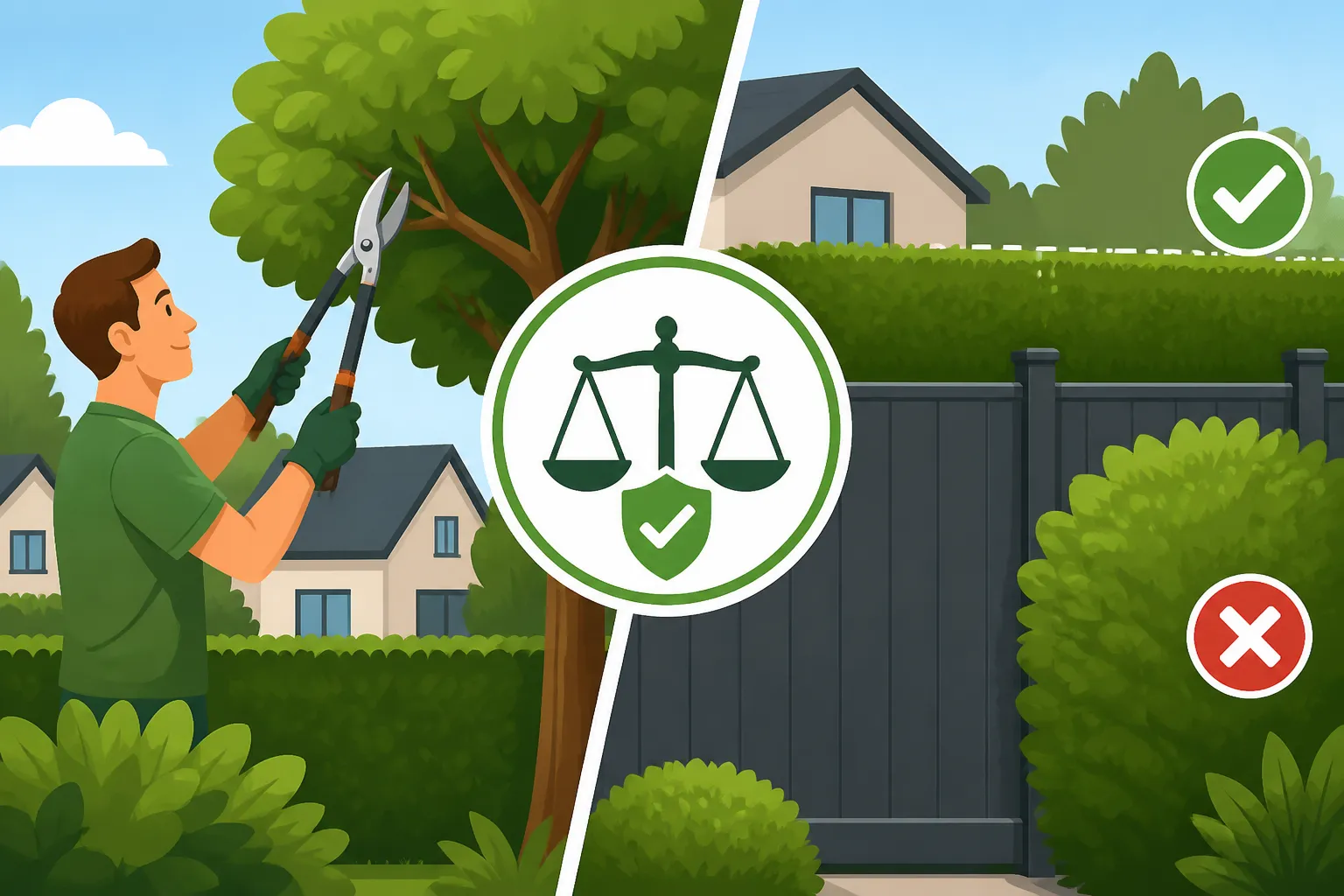
Gardening Rules: Pruning Trees and Fence Heights in Suburbs
You finally move into a house with a beautiful garden in the Belgian suburbs, only to receive a formal letter from your neighbor because your hedge is two centimeters over the legal limit. I remember the sinking feeling in my stomach when my neighbor first pointed at my oak tree with a scowl; I had no idea that "just gardening" was a legal minefield here. This guide solves the mystery of Belgian gardening laws so you can prune in peace.
Navigating the Belgian Civil Code and Local Commune Ordinances
When you first arrive and start looking for a home through platforms like HousingAnywhere, the dream of a private garden is often at the top of the list. However, in Belgium, your garden is not just your kingdom; it is a space governed by the federal Civil Code and, more importantly, your specific commune's regulations. The first thing you need to understand is that while there are national frameworks, the Reglement d'Urbanisme in your local town hall often has the final say on what is allowed.
The federal law generally stipulates that "high-stem" trees (those that grow tall, like oaks or maples) must be planted at least two meters from the boundary line. For smaller plants, low hedges, and fruit trees, the distance is reduced to 50 centimeters. I learned this the hard way when I realized the previous owner of my house had ignored these rules entirely, leaving me with a potential legal dispute from day one. If you are planning to renovate or landscaping, it's worth checking Buying Property in Belgium as an Expat: Process and Taxes to see how property boundaries are officially recorded.
Beyond the distance rules, there is the concept of "good neighborliness." In Belgium, this isn't just a polite suggestion; it is a legal principle. You are expected to maintain your garden in a way that doesn't cause "excessive neighborhood disturbance." This includes managing shadows cast by large trees and ensuring that your greenery doesn't become a sanctuary for pests that might migrate next door. If you're out in the garden trying to translate these complex rules on your phone, having a reliable connection through Airalo can be a lifesaver when you need to quickly look up a specific Dutch or French term at the garden center.
The Legalities of Pruning and Overhanging Branches
One of the most common frustrations for expats is the "overhanging branch" dilemma. You might think that if a neighbor's tree is dropping leaves into your gutters or blocking your sunlight, you have the right to just lop the branches off. In Belgium, that is a recipe for a court date. According to the law, you cannot cut branches that hang over your property yourself. Instead, you must formally request that your neighbor does it. If they refuse, you can eventually take them to the Juge de Paix (Peace Judge) to force the issue, but you can never take the shears into your own hands across the property line.
Interestingly, the rule for roots is completely different. If your neighbor’s tree roots are physically damaging your driveway or lifting your patio tiles, the Civil Code actually allows you to cut those roots back to the boundary line yourself. Why the difference? Branches are considered part of the tree’s "crown" and health, while roots are seen as encroaching on your physical land. It’s these types of quirks that make Everyday Rules in Belgium: Garbage Sorting, Noise, and Etiquette so important to study before you pick up your tools.
When you do get around to pruning, you’ll need the right gear. Many expats find that specialized tools are easier to source via Amazon Belgium rather than trying to navigate the massive local Brico stores without knowing the technical vocabulary. Just remember that once you’ve cut those branches, you can’t just throw them in the regular trash. You’ll need to follow the specific green waste schedules or head to the local dump, which we cover in detail in our guide on Oversized Waste (Encombrants): Booking a Pickup or Using Recyparks.
Fence Heights and the Concept of Mitoyenneté
Fences in Belgium are not just about privacy; they are about shared responsibility. The concept of Mitoyenneté means that a fence or wall built exactly on the property line is owned by both neighbors. This means both parties are responsible for the costs of maintenance and repair. If you want to put up a new fence, you generally cannot exceed a height of 1.80 meters to 2.00 meters in most suburban areas without a specific permit. I once saw a neighbor try to install a 2.5-meter wooden panel for "extra privacy," only to be forced by the commune to tear it down three weeks later.
The materials you use also matter. Some communes in Flanders have strict rules about "natural" boundaries, preferring hedges over plastic or metal fences. If you choose a hedge, remember the 50cm rule mentioned earlier. If you choose a wall, it must be aesthetically consistent with the neighborhood. This is where Building Community: Making Friends and Cultural Integration becomes vital; having a friendly chat with your neighbor before you build can save you thousands of euros in legal fees and reconstruction costs.
| Feature | Standard Distance from Boundary | Common Height Limit | Permit Required? |
|---|---|---|---|
| High-stem Trees | 2 Meters | No limit (but watch shadows) | Usually no |
| Low Hedges/Bushes | 0.5 Meters | 2 Meters | No |
| Shared Fences | 0 Meters (On line) | 1.8 – 2 Meters | Sometimes |
| Garden Sheds | Varies by Commune | 2.5 – 3 Meters | Often (if >10sqm) |
Noise Restrictions and Sunday Gardening Rules
If you’re planning a big gardening weekend, you need to be very careful about when you turn on your lawnmower or hedge trimmer. Belgium takes its "quiet time" very seriously. In almost all communes, using loud power tools is strictly forbidden on Sundays and public holidays. On Saturdays, you are usually safe between 9:00 and 18:00, but even then, some neighborhoods have local "siesta" hours where noise is discouraged.
I remember my first Sunday in a quiet suburb of Waterloo. I thought I was being productive by tackling the overgrown grass at 10:00 AM, only to have three different neighbors come out to their balconies to stare at me in silent judgment. It wasn't long before I realized that Sunday is for the Apero, not the lawnmower. If you find yourself needing help with larger tasks that require professional equipment, you might look into Finding English-Speaking Plumbers and Electricians via RingTwice as many of those service providers also offer gardening and landscaping help.
Violating these noise ordinances can result in administrative fines from the commune, often starting at 50 to 100 euros for a first offense. These are the same authorities that manage Noise and Apartment Etiquette: Quiet Hours and Sunday Rules, and they do not make exceptions for "not knowing the law." Always check your local commune website (usually under the "Leefmilieu" or "Environnement" section) for the specific hours allowed in your post code.
Protecting Local Biodiversity and Protected Species
Belgium has become increasingly strict about the removal of large trees, even if they are on your private property. If a tree has a circumference of more than 40 to 80 centimeters (the exact measurement depends on the region) at a height of 1.5 meters, you almost certainly need a permit to cut it down. Even if the tree is dead or dying, the commune may require a professional arborist's report before you can touch it.
This focus on the environment extends to the "pruning window." To protect nesting birds, many regions discourage or outright ban heavy hedge trimming between March and July. If you are moving with pets, you should also be aware of how your garden choices affect them; our guide on Expat Pet Relocation: Bringing Cats and Dogs to Belgium mentions how certain local plants can be toxic to dogs, which is something many new arrivals overlook when landscaping.
Furthermore, if your garden borders a forest or a protected "green zone," the rules become even more stringent. You might be forbidden from using certain pesticides or required to plant only native species. When you are setting up your new home and sorting out your Setting Up Electricity and Gas: Engie, Luminus, and Peak Tariffs, take a moment to look at your property's "green" status on the regional mapping tools (like Geopunt for Flanders or WalOnMap for Wallonia) to ensure you aren't living in a high-protection zone that limits your gardening freedom.
Dealing with Garden Disputes and the Peace Judge
Despite your best efforts, you might still find yourself at odds with a neighbor over a rogue branch or a disputed boundary. In Belgium, the first step is always an informal conversation. If that fails, the next step is a registered letter (Mise en demeure / Ingebrekestelling). This letter outlines the problem and gives the neighbor a specific timeframe to fix it. It sounds aggressive, but in the Belgian legal system, it is a mandatory step to show you tried to resolve the issue before going to court.
If the letter is ignored, the matter goes to the Juge de Paix. This is a simplified court designed for neighborhood disputes. You don't necessarily need a lawyer, and the judge will often come to your garden personally to see the tree or fence in question. They are known for being pragmatic and will usually suggest a compromise. It’s a very Belgian way of solving things—finding a "middle ground" that makes everyone slightly unhappy but keeps the peace.
Ultimately, gardening in Belgium is about balance. It’s about the joy of growing your own vegetables or having a space for your kids to play, while respecting the very close-knit nature of suburban life. By following these rules, you won't just have a beautiful garden; you'll have a peaceful relationship with the people living on the other side of the hedge.
Disclaimer
The information provided in this guide is for general informational purposes only and does not constitute legal advice. Gardening laws and commune regulations in Belgium are subject to change and can vary significantly between different regions and municipalities. Always consult with your local town hall (Maison Communale or Gemeentehuis) or a legal professional before undertaking significant gardening projects or resolving boundary disputes.