Hiring a Domestic Cleaner via Titres-Services (Dienstencheques)
Keeping your Belgian apartment clean while navigating a 40-hour work week and the endless administrative paperwork of life abroad is a recipe for burnout. I remember my first month in Brussels, staring at a dusty parquet floor and realizing I had no idea how the "cheque" system worked or why everyone kept talking about Sodexo. This guide breaks down exactly how to use Titres-Services to reclaim your weekends and maintain your sanity.
Understanding the Titres-Services System in Belgium
The first thing you need to realize is that you aren't just "hiring a cleaner" in the traditional sense. In Belgium, the domestic help system is heavily regulated and subsidized by the government to combat the "black market" for labor and to provide cleaners with social security, insurance, and fair wages. This system is known as Titres-Services in French or Dienstencheques in Dutch. Essentially, the government pays a large portion of the cleaner’s hourly wage, and you pay a fixed, subsidized rate via a voucher for every hour worked.
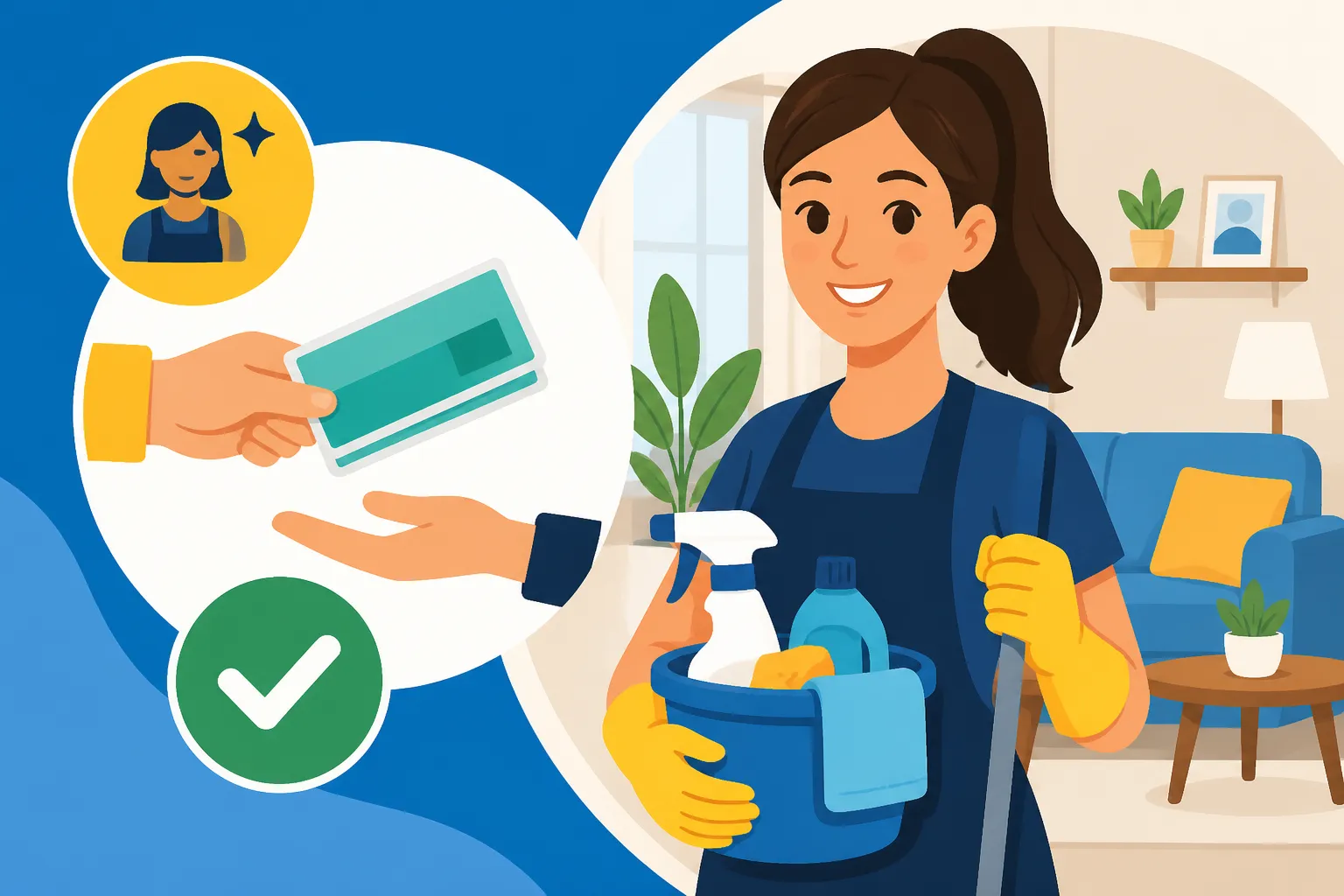
When I first arrived, I searched for a place on HousingAnywhere and was thrilled with my new flat, but the high ceilings and delicate flooring required more maintenance than I could manage alone. I quickly learned that you don't pay your cleaner in cash. In fact, paying in cash is illegal and leaves you with zero protection if an accident happens in your home. By using the voucher system, your cleaner is an employee of an authorized agency, meaning they are insured against workplace injuries.
There are two ways to manage these vouchers: paper or digital. In the past, everyone used paper vouchers that you had to sign and hand over physically. Today, almost everyone has migrated to the digital system managed by Pluxee (formerly Sodexo). Digital vouchers are far more convenient because you simply "confirm" the hours on an app after the cleaner leaves. If you are still setting up your local life, using an eSIM from Airalo can ensure you have the data needed to manage these apps the moment you step off the plane.
Why the Belgian Government Subsidizes Your Cleaning
You might wonder why the state is so generous. The goal is two-fold: creating stable jobs for less-skilled workers and helping residents achieve a better work-life balance. Because it’s a social project, there are strict rules about what a cleaner can do. They are there for domestic tasks only. This includes cleaning your living spaces, ironing, washing windows (from the inside), and even small meal preparation or occasional mending of clothes. However, they are strictly forbidden from doing "professional" work, such as cleaning your home office if you use it for business, or performing gardening and repairs.
Digital vs. Paper Vouchers: Pros and Cons
While the digital system is the gold standard, some people still prefer paper. Paper vouchers are ordered in blocks and mailed to your address. You sign one for every hour worked and give it to the cleaner. The risk here is loss or theft; if you lose a book of vouchers, it’s a headache to get them replaced. Digital vouchers, managed via the Pluxee app, are instant. You buy them online, and they appear in your "wallet." After the cleaner finishes, the agency logs the hours, and you get a notification to approve them. It’s seamless and prevents disputes over hours worked.
The Regional Price Difference
It is crucial to note that the price of a voucher depends on where you live. Belgium is a federal state, and the regions—Flanders, Wallonia, and Brussels—each set their own rates and tax deduction rules. As of 2026, prices have seen slight indexations. In Flanders, the first 400 vouchers usually cost one price, and anything above that costs more. In Brussels, the price is slightly higher, reflecting the higher cost of living. Always check the current rate for your specific commune before placing a large order.
| Feature | Paper Vouchers | Digital Vouchers |
|---|---|---|
| Delivery Time | 5-10 business days (via mail) | Instant (after payment) |
| Validation | Physical signature required | One-tap approval in app |
| Risk | Can be lost, stolen, or damaged | Secured by login and Itsme Authentication: How to Set Up Belgium's Vital Digital ID |
| Organization | Requires manual tracking | Automatic history and expiry alerts |
| Tax Ease | Need to keep track of receipts | Automated annual tax statement |
How to Register and Get Started
The administrative hurdle is usually what stops expats from hiring help, but it’s actually quite logical once you break it down. You cannot buy vouchers until you have a "User Number." To get this, you must register with the regional issuing body. You will need your Belgian National Register number, which you can find on the back of your eID card or your Annex 15. If you are still waiting for your physical card, you can often use your temporary documents, but the process is much smoother once you have Itsme Authentication: How to Set Up Belgium's Vital Digital ID.
Once registered, you will receive your login details for the Pluxee portal. This is where you will "buy" your vouchers. You must buy a minimum of 10 at a time. The payment is usually done via bank transfer or a direct link to your banking app. Be careful: the "communication" field in the bank transfer must exactly match the code they give you, or your money will bounce back, delaying your vouchers by a week. I learned this the hard way during my first attempt, which left me scrubbing floors on a Saturday morning when I should have been at a cafe.
The Real Cost and Tax Deductions
The "sticker price" of a voucher (let's say €10 for example) isn't the actual cost. One of the biggest perks of being a taxpayer here is the tax deductibility of these vouchers. When you file your Taxes in Belgium for Expats: Personal Income Tax System 2026, you report the amount spent on Titres-Services. You will receive a percentage of that back as a tax credit. This often brings the effective cost of an hour of cleaning down significantly.
Every year in March or April, Pluxee will issue an "Attestation Fiscale" (Tax Certificate) in your online portal. You don't even need to do the math yourself; when you use How to File Your Income Tax via Tax-on-web (MyMinfin), the data is often pre-filled. If it’s not, you simply enter the total from the certificate. This makes the system one of the most affordable ways to get legal, insured help in Europe.
Finding an Agency (Entreprise Agréée)
You do not hire the cleaner; you hire the agency. You can search for "Titres-Services" agencies in your commune or use the official search tool on the regional website. Big names like Partena, Daoust, and Helan have massive networks, but smaller local agencies often provide more personalized service. When you call them, ask specifically if they have "availability in your area for a new client."
Many agencies have waiting lists, especially in popular expat hubs like Ixelles or Etterbeek. Be prepared to call 5 or 6 places. When you finally find one, they will ask for your User Number and your address. They will then assign a cleaner to you, usually for a fixed block of time (e.g., every Thursday from 8:00 AM to 12:00 PM).
Managing the Relationship and Expectations
In Belgium, the relationship between a household and a cleaner is professional and governed by strict safety rules. Your cleaner is not a "servant"; they are a professional providing a subsidized service. Most cleaners speak the local language (French or Dutch), but in cities like Brussels or Antwerp, many speak English, Spanish, or Arabic. If communication is a concern, I recommend using a translation app or having a printed list of tasks in the local language.
One thing that surprises many newcomers is that you are responsible for providing all cleaning materials. Unlike some countries where the cleaner brings their own vacuum and sprays, in Belgium, you must have a "standard" set of tools. If your equipment is broken or unsafe, the cleaner has the right to refuse to work. For example, if you have Standard vs Bi-Hourly Electricity Meters: Day and Night Tariffs and are trying to save money by having them run the dryer during specific hours, make sure your appliances are in good working order.
What Your Cleaner Can and Cannot Do
Safety is a huge priority for the agencies. For example, a cleaner is generally not allowed to:
- Clean windows on the outside if they have to stand on a ladder higher than three steps.
- Move heavy furniture (like a sofa) to clean behind it.
- Clean in temperatures that are excessively high or low.
- Work in a house where there is construction or heavy renovation happening.
- Use dangerous chemicals like pure bleach without proper ventilation.
They are great for the heavy lifting of Everyday Rules in Belgium: Garbage Sorting, Noise, and Etiquette, such as taking the correct colored bags to the curb or ensuring the recycling is properly rinsed and sorted. If you are unsure, just ask the agency for their "Worker Safety Sheet," which outlines these boundaries clearly.
Essential Cleaning Supplies to Buy
To get the best results, I always suggest ordering a high-quality kit from Amazon Belgium before your cleaner’s first visit. You will need:
- A powerful vacuum cleaner with spare bags.
- A mop and bucket (the "Vileda" style is very common here).
- Microfiber cloths (color-coded for bathroom vs. kitchen).
- All-purpose cleaner, descaler (vital for Belgian hard water), and floor soap.
- A sturdy step-ladder (max 3 steps).
If you’ve just moved in and are still Buying Furniture and Appliances: IKEA, Krefel, and Second-Hand Shops, make sure the cleaning supplies are on your Day 1 list. There is nothing more awkward than a cleaner arriving and you having nothing but a roll of paper towels and some dish soap.
Practical Tips for a Smooth Experience
Trust is the foundation of this system. In the beginning, I recommend being home for the first two or three sessions. This allows you to show the cleaner where everything is, explain the quirks of your apartment—like that one window that doesn't close quite right—and establish a rapport. Once you are comfortable, many expats choose to give the cleaner a key.
If you give a key, always do so via the agency. They often have a "Key Deposit" form that protects both you and the worker. If you are Renting in Belgium: Apartments, Contracts, and Tenant Rights (2027), check your lease to see if there are any restrictions on who can hold keys to the property, though typically this is never an issue.
Handling Access and Keys
If you live in a building with a "concierge" or a complex entry system, make sure the cleaner knows the codes. Many modern apartments in Brussels use electronic badges. If you don't want to hand out keys, you can look into smart locks, but check with your landlord first. Remember that if the cleaner arrives and cannot get in through no fault of their own, you still have to pay for the scheduled hours using your vouchers.
What to Do If Things Go Wrong
If a glass is broken or a surface is scratched, don't panic. Because the cleaner is employed by an agency, they have civil liability insurance. You should contact the agency immediately to report the damage. This is why you should never hire someone "under the table"; if a "black market" cleaner breaks your €2,000 OLED TV, you have no recourse. With the Titres-Services system, there is a clear process for filing a claim.
If you are unhappy with the quality of the cleaning, talk to the cleaner first. If things don't improve, call the agency and ask for a replacement. It’s a standard request, and you don't need to feel guilty about it. The goal is for you to be happy with your home while providing a fair job for the worker.
Preparing for the Future
If you eventually decide to move on from Belgium and need a Getting a Model 8 (Modèle 8) De-registration Certificate for Taxes, remember to close your Pluxee account. You can request a refund for any unused vouchers that haven't expired. Vouchers typically have a 6-month to 1-year validity period, so don't stockpile hundreds of them at once. Also, keep in mind that tasks like Boiler Maintenance (Entretien Chaudière): Tenant Duty in Belgium cannot be done by your cleaner; you will still need to hire a specialized technician for those technical requirements.
By navigating this system correctly, you transform your living experience from one of constant chores to one of organized comfort. The Belgian system might seem like a lot of steps initially, but once your Pluxee account is funded and your agency is set up, it runs on autopilot. You get a clean home, a tax break, and the satisfaction of knowing you are part of a system that treats workers with dignity and legal protection.
Disclaimer
The information provided in this guide is for informational purposes only and does not constitute legal, financial, or tax advice. While every effort has been made to ensure the accuracy of the 2026 rates and regulations, Belgian laws and regional subsidies are subject to change. Always consult with the official Pluxee (Sodexo) portal or a qualified tax professional regarding your specific situation.