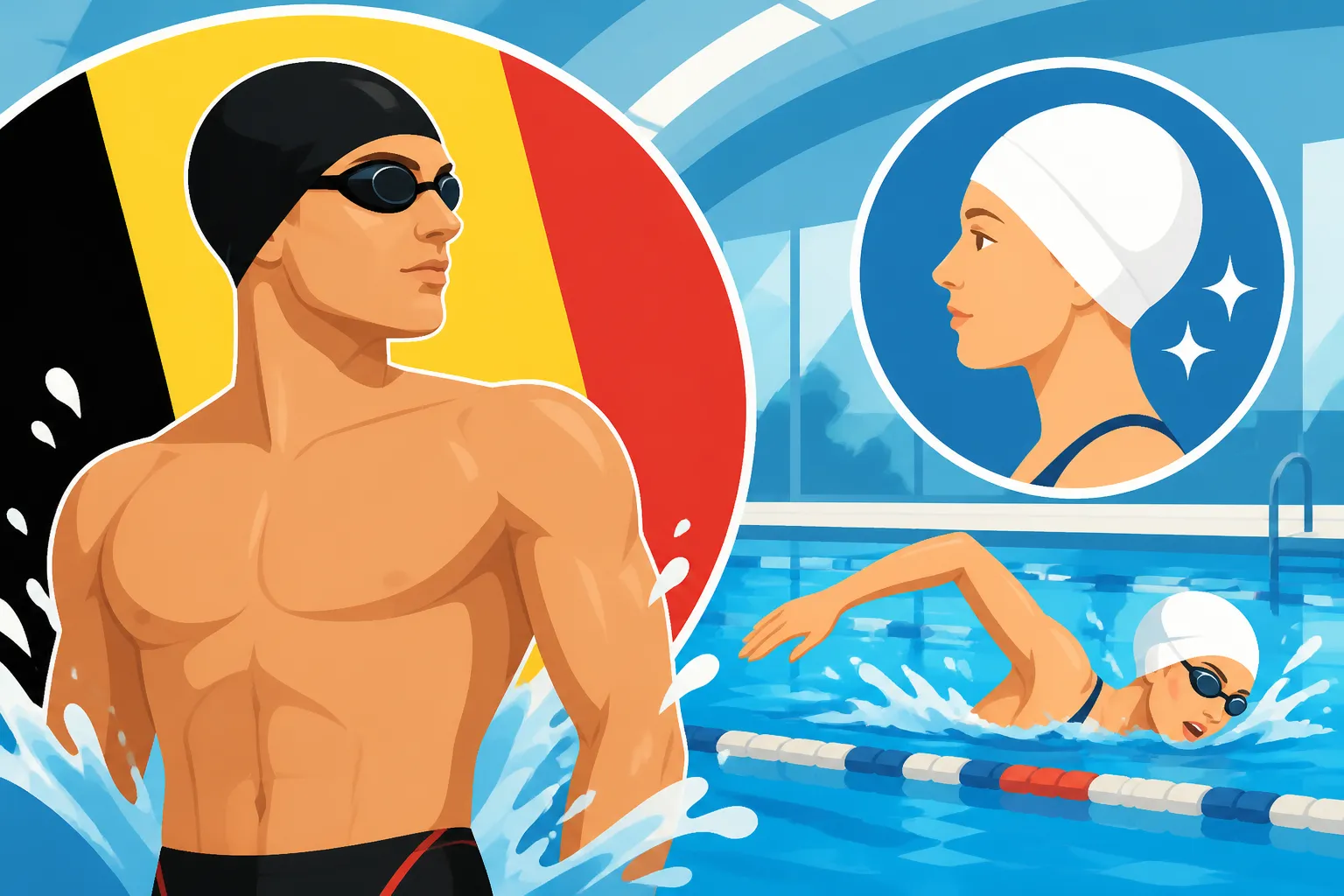
Swimming Pools in Belgium: Speedo Rules and Hygiene Caps
Walking to the edge of a pristine Belgian public pool only to be whistled at by a lifeguard because of your perfectly normal swim trunks is a rite of passage for many newcomers. I remember my first week in Brussels, standing there in my board shorts, feeling the collective gaze of fifty locals in tight spandex. This guide settles the confusion around Belgium’s strict swimming regulations once and for all.
The Infamous Briefs Only Rule: Why Your Board Shorts Aren't Welcome
The most jarring cultural hurdle at the local piscine or zwembad is the mandatory dress code for men. In most public facilities across the country, baggy swim trunks, board shorts, or any swimwear that resembles casual shorts are strictly prohibited. You will likely be required to wear "classic" swimming briefs or "jammers"—the tight-fitting, lycra-style shorts that leave very little to the imagination. This is often referred to locally as the "Speedo rule," though any brand is fine as long as the fit is aerodynamic.
The rationale behind this isn't a Belgian obsession with 1980s Olympic fashion; it is rooted in hygiene and water filtration. Public pools in Belgium operate on incredibly tight filtration cycles. The authorities argue that baggy shorts are often worn as casual wear outside the pool, bringing in dust, sweat, and lint from the street. Furthermore, the extra fabric in board shorts carries a higher volume of water out of the pool, leading to significant water loss and a higher concentration of chemicals needed to maintain balance. To avoid a last-minute shopping emergency, you can find a wide range of regulation-compliant swimwear on Amazon Belgium before your first visit.
If you show up in the wrong gear, don't expect a pass. I’ve seen seasoned expats argue their way through three languages, only to be pointed toward a vending machine in the lobby that sells overpriced, tight trunks in only two sizes. If you are just moving and still searching for a permanent home via HousingAnywhere, make sure to check the specific rules of the neighborhood pool in your potential commune, as some newer "sporting oases" are slightly more relaxed, though they remain the exception rather than the rule.
Understanding the Hygiene Logic
The strictness of the Belgian swimming environment is a direct extension of the country's general approach to public order and cleanliness. Just as you’ll learn in our guide on Everyday Rules in Belgium: Garbage Sorting, Noise, and Etiquette, the rules are designed for the "collective good." In the eyes of a Belgian pool manager, your board shorts are a giant sponge for contaminants. By enforcing tight-fitting lycra, they ensure that only the person enters the water, not the debris from their last walk in the park.
From a technical perspective, the chlorine levels in Belgian pools are often kept lower than in other countries to protect swimmers' skin and eyes. To achieve this, the physical "bacterial load" brought into the water must be kept to an absolute minimum. Tight swimwear doesn't have pockets—another common culprit for "forgotten" tissues or wrappers that can clog expensive filtration systems. This meticulousness is why Belgian public pools are some of the cleanest in Europe, even if the fashion choices feel restrictive.
What Qualifies as Acceptable Swimwear
To stay on the right side of the lifeguard's whistle, you need to look for "Maillot de bain classique" or "Zwemshort (aansluitend)." For men, this means the leg should ideally not extend too far down the thigh, or if it does, it must be skin-tight (like cycling shorts). For women, the rules are generally more aligned with international standards, though "monokini" (topless) swimming is virtually non-existent in public municipal pools and is usually strictly forbidden.
If you are unsure, look for the signage at the entrance. Most pools display a "Yes/No" graphic showing a crossed-out pair of baggy Bermuda shorts next to a green-checked pair of briefs. If you’re traveling between cities to try different facilities, using Airalo to keep your data active will allow you to quickly check the website of a specific pool like the Victor Boin in Saint-Gilles or the Wezenberg in Antwerp, as their internal regulations can vary slightly regarding material types.
Swimming Caps and Hygiene Protocols: Beyond the Spandex
While the "briefs" rule is famous, the swimming cap requirement—the bonnet de bain or badmuts—is the second hurdle that catches expats off guard. In many French-speaking communes and several Flemish ones, wearing a cap is mandatory for everyone, regardless of hair length. This isn't just about keeping hair out of the drains; it’s about preventing the oils and products from your scalp from reacting with the pool chemicals.
If you have lived in a country where caps are optional, this can feel like an unnecessary annoyance. However, in Belgium, it is a non-negotiable part of the entry process. If you forget yours, most pools will not let you past the second shower area. Much like the trunks, you can find durable silicone or fabric caps on Amazon Belgium that won't rip after two uses. Fabric caps are often more comfortable for casual swimmers, while silicone is better for those doing serious laps to keep their hair relatively dry.
The Swimming Cap Requirement
The enforcement of caps often depends on the age and management of the facility. Older municipal pools are almost always "cap-mandatory." Newer, more commercialized "sub-tropical" swimming paradises (which feature slides and wave pools) might allow you to go hat-free, but if you are heading to a pool for exercise, assume the cap is required. Lifeguards are remarkably vigilant about this; I once saw a swimmer's cap slip off mid-lap, and the lifeguard was at the lane-end before he finished his turn.
For those with long hair, the cap must tuck in every single strand. This is part of the broader hygiene culture you will encounter as you navigate Finding Medical Care in Belgium: GPs, Specialists, and Hospitals, where prevention and strict adherence to protocol are valued. The benefit, of course, is that you rarely ever encounter a "hairball" floating in a Belgian lane, which is a small price to pay for a slightly goofy-looking headpiece.
Showering and Footbaths: The Compulsory Rituals
Before you even touch the pool water, you are required to pass through a "pre-swim" ritual. This starts in the changing cabins, which are usually individual cubicles. In Belgium, most pools are "mixed" in the locker area, but the cabins themselves are private. Once changed, you must walk through a shower zone. This is not a "quick rinse" suggestion; it is a mandatory soap-and-water scrub-down in many facilities.
After the shower, you will encounter the pédiluve or voetbad—a shallow trough of heavily chlorinated water that you must walk through to enter the pool deck. Do not try to hop over it. It is there to kill any bacteria or fungi on your feet. These steps are part of the rigid structure of Belgian life that can sometimes lead to Dealing with Belgian Bureaucracy Burnout: Mental Health for Expats, but if you embrace the process as a sign of a well-maintained society, it becomes second nature.
Navigating Public Pool Logistics: Prices, Passes, and Procedures
Public pools in Belgium are heavily subsidized by the local commune. This means that your residency status directly affects what you pay. If you live in Ixelles and swim at the Ixelles pool, you will pay significantly less than someone visiting from Uccle. This is why having your Belgian ID card is essential. To understand how to get this card, check our guide on Itsme Authentication: How to Set Up Belgium's Vital Digital ID.
The price difference can be as much as 50%. When you arrive at the "Caisse" (register), the staff will usually ask for your eID. They scan it to verify your address and apply the "Habitant" rate. If you haven't received your physical card yet, a paper "Annex" from the commune is usually sufficient to prove you are a local. Most pools also offer "10-session" cards, which offer a further discount and are valid for a year.
Finding a Pool: Communes and Intercommunal Centres
Belgium doesn't just have "pools"; it has a hierarchy of facilities. Most neighborhoods have a "piscine communale," which is often a beautiful, if slightly older, 25-meter tank. If you are Living in Antwerp: Port City Vibe and Best Areas for Foreigners, you might find yourself at the iconic Wezenberg, which is an Olympic-sized 50-meter pool. If you are Living in Leuven: Student City Vibe and Expat Professional Life, the Sportoase Philipssite offers a more modern, multi-pool experience.
When looking for a place to swim, don't just search "pool near me." Look for "Sportcentrum" or "Centre Sportif." These hubs often combine the pool with gyms and cafes. If you are comparing these to private options, our analysis of Gym Memberships in Belgium: Basic-Fit vs Premium Clubs can help you decide if a municipal pool pass or a high-end club like Aspria is better for your lifestyle.
| Feature | Municipal Pool (Communal) | Sportoase / Private Centers |
|---|---|---|
| Price | Low (€3 – €5 for residents) | Mid-High (€10 – €15) |
| Speedo Rule | Very Strict | Moderately Strict |
| Cap Rule | Mandatory in most | Often Optional |
| Vibe | Sporty/Traditional | Family/Leisure |
| Access | Via eID for discounts | Subscription or day-pass |
Entrance Fees and the All-Important eID
Entering the pool without an eID is possible, but you will pay the "exterior" rate. For a family of four, this can add up quickly. If you are still in your first 30 days and Registering for Public Health Insurance: Step-by-Step at Your Commune, you might find that the pool is one of the first places where you realize just how integrated the eID system is in Belgian daily life.
Most pools have moved to a "badge" system. You pay a small deposit for a plastic card that you load with sessions. You scan this badge at the turnstile to enter. If you lose the badge, you usually lose the sessions, so keep it in a safe place. Also, check the opening hours carefully—Belgian pools often have "public hours" that are interrupted by school groups or club training, so a quick check on your phone using Airalo before you leave the house is a smart move.
Practical Tips for a Stress-Free Swim in Belgium
To ensure your swim doesn't end in frustration, there are a few "unspoken" rules you should know. First, the locker systems are not all the same. Some older pools still require a specific €2 coin to lock the door (which you get back), while others use your entrance badge to electronically lock the locker. I always keep a €1 and a €2 coin in my swim bag just in case.
Secondly, lane etiquette is taken very seriously. Lanes are usually divided by speed: "Rapide," "Moyen," and "Lent." In Belgium, it is customary to swim in a circle (counter-clockwise) within the lane. If you are a slow swimmer in the fast lane, expect a gentle (or not-so-gentle) tap on the foot from the person behind you. It’s all part of the local efficiency.
Etiquette in the Lanes
Belgian swimmers are generally focused. There is very little "chatting at the wall." If you need to rest, move to the far corner of the lane to stay out of the way of people turning. If you are Living in Brussels: Top Expat Neighborhoods (Ixelles, Etterbeek), you’ll find that pools like the one in Etterbeek can get incredibly crowded during lunch hours, so knowing these etiquette rules is vital to avoid conflict.
If you are a foreigner who doesn't speak the local language well, don't worry. The "language" of the pool is universal. A nod of the head or a "Pardon" (which works in both French and Dutch) goes a long way. If you are in Flanders and need help with the rules, our guide on Ghent Healthcare for Expats: Finding Clinics and Translation Support touches on navigating linguistic barriers, which applies to the pool staff as well.
Post-Swim Logistics: Hairdryers and Cafes
One of the best parts of Belgian pool culture is the "après-swim." Most municipal pools have an attached cafe (often with a window looking over the water) where you can get a coffee, a heavy Belgian beer, or a croque-monsieur. It is a very social environment. After you use the (usually free) wall-mounted hairdryers, it’s common to see locals gathering in these cafes to dry off and chat.
If you are using Public Transport: SNCB/NMBS (National Trains) Fares and Passes to get to a larger regional pool, the cafe is a great place to wait for your train or bus. Just remember that you cannot bring your own food into these cafe areas; they are independent businesses. And finally, if you ever find yourself needing a repair for your home gym or pool equipment later on, Finding English-Speaking Plumbers and Electricians via RingTwice is a great resource for maintaining your own lifestyle standards in Belgium.
Disclaimer
The information provided in this guide is for general informational purposes only and reflects the typical regulations and cultural norms of public swimming pools in Belgium as of 2026. Rules, including swimwear requirements, pricing, and hygiene protocols, can vary significantly between different communes and private facilities. Always check the specific internal regulations of your local pool before visiting. We are not responsible for any changes in local laws or individual facility policies.