Traveling with a ‘Titre de Voyage’ for Refugees in Belgium
After the grueling and often emotional process of obtaining refugee status in Belgium, the desire to travel—whether to visit family in a third country or simply to take a well-deserved holiday—is a natural next step. However, for many, the blue "Titre de Voyage" feels like a riddle wrapped in Belgian bureaucracy rather than a ticket to freedom. This guide breaks down exactly how the refugee travel document works, where you can legally go, and how to avoid the administrative traps that could jeopardize your protected status in Belgium.
Understanding the Titre de Voyage: Your Blue Passport Alternative
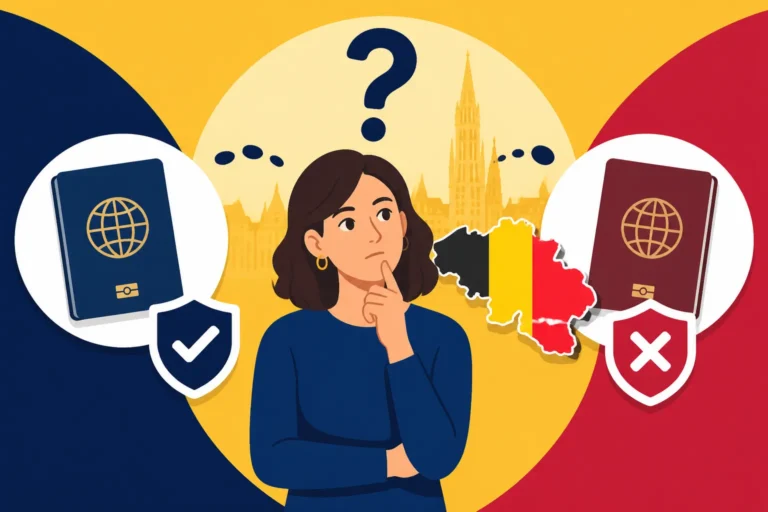
For those who have been officially recognized as refugees by the Commissariat général aux réfugiés et aux apatrides (CGRA), obtaining a national passport from your home country is usually impossible or dangerous. The Belgian government provides the Titre de Voyage (Travel Document for Refugees) as a valid alternative, designed specifically to allow you to cross international borders. It is a blue booklet that looks very similar to a standard passport but carries specific legal limitations and rights.
The Application Process at Your Commune
The journey to getting this document starts at your local town hall. Once you have received your final recognition and have been issued one of the relevant The Belgian eID Card Types: A Card, B Card, F Card, and Others, usually an A or B card, you are eligible to apply. You must go to the population department of your commune, often requiring a prior appointment made weeks in advance.
You will need to bring your valid residence permit, a recent passport-sized photo that meets strict Belgian biometric standards, and the required fee, which varies slightly by commune but generally hovers around 70 to 95 EUR for adults. If you are in a rush, most communes offer an "urgent" procedure for a significantly higher price, sometimes delivering the document within 24 hours. This is one of those moments where the Immigration Office (DOFI) Operations and Appointment Systems can feel overwhelming, but your local commune is your primary point of contact for this specific document, not the DOFI.
Document Validity and Renewal
The Titre de Voyage is typically valid for two years. It is crucial to remember that this document is inextricably linked to your residence status in Belgium. If your residence permit is nearing its expiration date, the commune may only issue the travel document for the remaining duration of your permit. It is a common frustration for refugees to find themselves with a travel document that expires in just a few months because they delayed their residence renewal.
Always check the expiration date before booking flights. Unlike a standard Belgian passport, which lasts seven years for adults, the shorter window for refugees means you will become very familiar with your commune’s population desk. If you are planning a long-term future in the country, you might eventually look into Becoming a Belgian Citizen: Naturalization Rules and 2026 Updates to eventually trade the blue booklet for a standard Belgian passport.
Destinations and Restrictions: Where Can You Actually Go
The most important rule of the Titre de Voyage is also the most absolute: you are strictly forbidden from traveling to your country of origin. Doing so is seen by the Belgian authorities as "re-availment" of the protection of your home country, which can lead to the immediate revocation of your refugee status. Even a transit flight through an airport in your home country can trigger an investigation by the CGRA.
Traveling Within the Schengen Area
As a holder of a Belgian refugee travel document and a valid residence permit, you enjoy visa-free travel within the Schengen Area for up to 90 days in any 180-day period. This includes most of the European Union plus countries like Switzerland, Norway, and Iceland. When crossing these borders, you must carry both your blue Titre de Voyage and your Belgian eID card.
The eID is your proof of residence, while the Titre de Voyage is your identification. Many refugees make the mistake of leaving their eID at home, thinking the travel document is enough, only to face significant delays or fines when checked by border police in countries like France or Germany. If you have recently moved, ensure you have completed Registering at the Commune: The 8-Day Rule After Arrival so your eID reflects your current address and status.
Traveling Outside the Schengen Area and Visa Requirements
For destinations outside the Schengen Area—such as the United Kingdom, the United States, or Turkey—the rules change drastically. Having a Belgian refugee document does not grant you the same visa-free privileges as a Belgian citizen. You must check the visa requirements of the destination country specifically for "holders of refugee travel documents."
Some countries are quite welcoming, while others may require extensive documentation, including proof of funds and a round-trip ticket. During these visa applications, you may be asked for official documents from your past. If you need to present birth or marriage certificates that were not issued in Belgium, you will likely need them translated. Using a professional service like RushTranslate can ensure your documents are accepted by foreign embassies. Additionally, you should check if your destination requires specific authentications like Apostille vs Legalization: Authenticating Documents for Belgium.
| Destination Type | Visa Requirement | Required Documents |
|---|---|---|
| Schengen Area (e.g., France, Spain) | No Visa Needed (up to 90 days) | Titre de Voyage + Belgian eID |
| Non-Schengen EU (e.g., Ireland) | Usually Requires Visa | Titre de Voyage + Visa + eID |
| Non-EU (e.g., USA, Canada) | Almost Always Requires Visa | Titre de Voyage + Visa + Support Docs |
| Country of Origin | Strictly Forbidden | N/A (Status may be revoked) |
Practical Logistics and Preparing for Your Trip
Traveling as a refugee requires more preparation than a standard holiday. Beyond the flights and hotels, you need to think about the legal and medical safety nets that most people take for granted. Belgian bureaucracy does not stop at the border, and neither does your need for protection.
Health Insurance and Medical Safety Abroad
Your Belgian "Mutuelle" or public health insurance provides some coverage within the EU through the European Health Insurance Card (EHIC). However, this coverage is often limited to emergency care and may not cover the full cost of private hospitals or medical repatriation. For refugees, who may have complex health needs or lack a financial safety net in their destination country, this is a major risk.
For travel outside the EU, or for more comprehensive peace of mind, many expats and refugees opt for private international coverage. Providers like Cigna Global offer plans that bridge the gap where public insurance fails. It is also wise to know the basics of Emergency Medical Care in Belgium: 112, Hospitals, and Pharmacies so you can compare the level of care you are used to with what is available abroad. For those traveling with specific medications, keep your prescriptions handy and consider having them translated by RushTranslate to avoid issues with foreign customs officials.
Proving Your Identity and Status
While the Titre de Voyage is your primary ID, you should always have digital copies of your recognition letter from the CGRA and your Belgian residence permit stored securely in the cloud. In the rare event that your physical documents are lost or stolen, these copies will be vital when visiting a Belgian embassy or consulate abroad.
If you are traveling with family members, ensure each person’s status is clearly documented. If you are in the process of Family Reunification Visas: Bringing Spouses and Children to Belgium, it is often better to wait until the process is fully finalized before attempting international travel together, as mismatched documentation can cause red lines at border control.
Common Pitfalls and Protecting Your Residency
The greatest fear for most refugees is not the travel itself, but the return. Belgium is very strict about residents staying away for too long. If you stay outside of Belgium for more than 90 consecutive days without notifying your commune, you risk being "stricken" from the national register, which can invalidate your residence permit and make your Titre de Voyage useless for re-entry.
Navigating Re-entry and Border Controls
When you land back at Brussels Airport (Zaventem) or Charleroi, you will pass through the "All Passports" or "Non-EU" lane unless there is a specific lane for residents. Be prepared for the border officer to scan both your blue booklet and your eID. They may ask how long you were away and what the purpose of your trip was.
If you have stayed away for a significant amount of time, they may check your records to see if you have maintained a "center of interest" in Belgium. For those who are working toward Permanent Residency (PR) in Belgium: Types and Timelines, these absences are tracked and can sometimes delay your eligibility for a 5-year permanent card (the B, C, or D card).
Document Preparation and Translations
Many destination countries require proof that you are indeed a legal resident of Belgium with the right to return. This is where Translating Birth and Marriage Certificates via Sworn Translators becomes essential. If a foreign embassy asks for proof of your civil status or your relationship to your traveling companions, a "sworn" translation is the only version they will accept.
Using an established brand like RushTranslate ensures that the terminology used matches international standards, reducing the chance of a visa rejection. Remember that many administrative tasks in Belgium, such as Registering for Public Health Insurance: Step-by-Step at Your Commune, require these same translated documents, so it is worth having a set of high-quality translations ready before you even plan your trip.
Final Checklist for Refugee Travelers in Belgium
Before you head to the airport, run through this checklist to ensure you haven't missed a critical administrative detail:
- Check that your Titre de Voyage is valid for at least six months beyond your return date.
- Confirm your Belgian residence permit (eID) is valid and will not expire while you are abroad.
- Verify visa requirements for your specific destination for "Refugee Travel Document" holders.
- Ensure you have a valid travel insurance policy, such as those from Cigna Global, especially for non-EU travel.
- Pack your Belgian eID card; the Titre de Voyage alone is not enough for Schengen travel.
- Keep digital copies of all recognition documents and sworn translations from RushTranslate.
- Inform a trusted friend or your lawyer of your travel dates and destination.
- Never, under any circumstances, plan a route that enters or transits through your country of origin.
By respecting these rules and preparing for the unique hurdles that come with refugee status, you can enjoy the freedom of travel while keeping your future in Belgium secure.
Disclaimer
The information provided in this guide is for informational purposes only and does not constitute legal advice. Immigration laws and travel regulations for refugees in Belgium are subject to change. Always consult with the official Belgian Immigration Office (DOFI), the CGRA, or a qualified immigration lawyer before making travel arrangements. The author and publisher are not responsible for any issues, status revocations, or entry denials resulting from the use of this information.